What Is 4PL Logistics and How It Differs from 3PL for Ecommerce
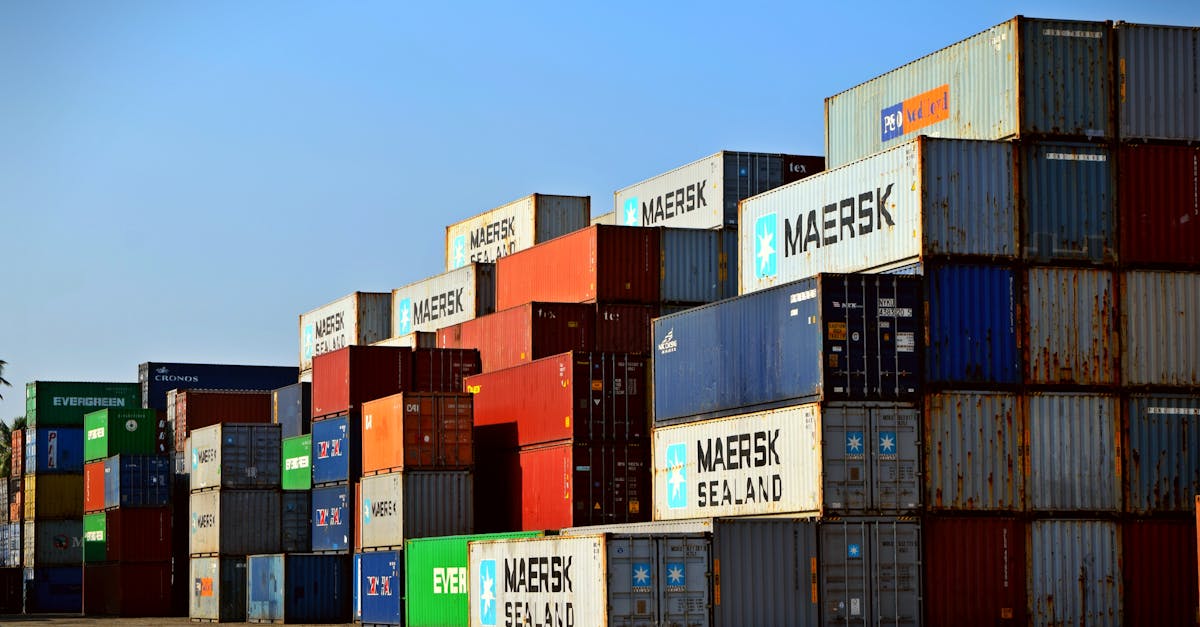
If you run an ecommerce operation that has grown past one warehouse, one marketplace, or one country, you have probably heard someone suggest you need a 4PL. The term gets thrown around in logistics circles as though it is self-explanatory, but most sellers have a hard time pinpointing what a 4PL actually does that a 3PL does not. The confusion is understandable. The line between the two models is not always obvious, and the logistics industry has done a poor job of drawing it clearly.
This guide breaks down what 4PL logistics means in practice for ecommerce sellers, how it compares to the 3PL model most brands already use, what real sellers report about costs and tradeoffs, and how to decide whether your operation has reached the point where a 4PL makes sense.
What 4PL Logistics Actually Means
A fourth-party logistics provider (4PL) is a company that manages your entire supply chain on your behalf. Unlike a 3PL, which operates warehouses, picks and packs orders, and ships products, a 4PL does not typically own physical assets. Instead, it acts as an orchestration layer. The 4PL selects and manages 3PLs, negotiates carrier rates, integrates technology systems, and provides a single point of accountability across your entire logistics network.
The concept emerged in the late 1990s when Accenture (then Andersen Consulting) coined the term to describe a model where one provider manages the full supply chain, including the 3PLs doing the physical work. In ecommerce, the 4PL model has gained traction over the past five years as brands have scaled across multiple warehouses, marketplaces, and geographies.
How the Logistics Model Tiers Work
To understand 4PL, it helps to see where it sits in the logistics hierarchy.
- 1PL: You handle everything yourself. Your own warehouse, your own trucks, your own staff.
- 2PL: You outsource transportation to a carrier (UPS, FedEx, a freight company) but manage warehousing and fulfillment internally.
- 3PL: You outsource warehousing, fulfillment, and shipping to a third-party provider. They store your inventory, pick and pack orders, and ship to customers.
- 4PL: You outsource the management of your entire logistics operation, including selecting and managing 3PLs, to a single orchestrator. The 4PL does not handle boxes. It handles strategy, coordination, and optimization.
The critical distinction: a 3PL executes logistics tasks. A 4PL manages the entities that execute those tasks. One is a specialist. The other is a general contractor.
Why the 4PL Model Is Growing
The global 4PL market was valued at approximately $69.8 billion in 2023 and is projected to grow at a 6.5% compound annual growth rate through 2032, according to Global Market Insights. The ecommerce-specific segment is growing faster, at roughly 12% annually, driven by cross-border selling, marketplace expansion, and the operational complexity that comes with omnichannel fulfillment.
In the US alone, the 4PL market for retail and ecommerce represents 27.55% of the total 4PL market share and is valued at $16.81 billion in 2026. The growth is not just about larger companies getting bigger. It reflects a structural shift: as ecommerce supply chains become more fragmented across regions and channels, the coordination cost of managing multiple 3PLs internally has crossed the threshold where outsourcing that coordination makes financial sense for many mid-market brands.
4PL vs. 3PL: A Direct Comparison
The differences between 3PL and 4PL are not just about scope. They affect how you operate day to day, what you control, and what you pay for. Here is a side-by-side breakdown.
| Dimension | 3PL | 4PL |
|---|---|---|
| Core function | Executes warehousing, fulfillment, and shipping | Manages and orchestrates the entire supply chain |
| Asset ownership | Owns or leases warehouses, equipment, and sometimes trucks | Typically non-asset-based. Uses other providers' infrastructure |
| Number of providers | You contract with one 3PL (or manage multiple yourself) | One 4PL manages multiple 3PLs and carriers for you |
| Technology | Provides a WMS for their own warehouse operations | Provides an integrated platform spanning all providers and channels |
| Visibility | Limited to that single 3PL's operations | End-to-end across all warehouses, carriers, and channels |
| Typical cost per order | $2.50 to $5.00 | $5.00 to $7.00 (includes orchestration markup) |
| Best suited for | Single-warehouse, single-region operations under $10M revenue | Multi-warehouse, multi-region operations above $10M revenue |
| Contract complexity | Straightforward SLA with one provider | Master services agreement covering the 4PL's management of multiple providers |
| Switching cost | Moderate. Migrate inventory and integrations to a new 3PL | High. Some 4PLs require 6-month exit notice and hold carrier relationships |
The cost difference is the first thing most sellers notice. A 4PL does not replace 3PL costs. It adds a layer on top. You are still paying for warehousing, pick-and-pack, and shipping. The 4PL fee covers the orchestration, technology platform, carrier optimization, and management overhead. Whether that additional cost delivers a positive return depends on your operation's complexity and scale.
What Real Sellers Say About 4PL
Online forums and review platforms contain years of seller experience reports that cut through the marketing language 4PL providers use. Here is what sellers actually report.
The Case For 4PL
Sellers who have switched to a 4PL arrangement most frequently cite visibility and optimization as the primary benefits. When your logistics span multiple warehouses and carriers, the 4PL's single-pane-of-glass view becomes genuinely valuable.
"Switched from a 3PL to a 4PL for our $10M/year fashion brand. They handle carrier negotiations, customs, and multi-warehouse optimization automatically. The visibility dashboard shows real-time ETAs across 5 countries. Our 3PL never gave us that. Reduced stockouts by 40%."
Reddit, u/ScaleOpsFounder (r/ecommerce, 2024)
The optimization benefits compound as order volume grows. Several sellers report that AI-driven routing and carrier selection through their 4PL saved 16% to 18% on shipping costs compared to their previous 3PL arrangements, enough to offset a significant portion of the orchestration premium.
"Switched at $20M revenue when 3PL fragmentation killed margins. Used a 4PL and their AI-driven routing saved 18% on shipping versus our old 3PL combo. The con is onboarding took 3 months, and they nickel-and-dime consulting fees, $50K upfront. Worth it for international expansion."
Reddit, u/EcommExecNYC (r/supplychain, 2025)
The Case Against 4PL
Not every seller comes away satisfied. The most common complaints center on cost, lock-in, and the loss of direct relationships with the people handling your products.
"4PL cons: You are paying a premium orchestrator, 15-25% markup on top of 3PL fees. We ditched our 4PL after 6 months. Costs jumped from $4.50/order with our 3PL to $6.20/order total. Fine for enterprises, but for mid-size ecommerce in the $2-5M range, stick to a 3PL unless you are global."
Reddit, u/LogisticsVet87 (r/ecommerce, 2024)
Vendor lock-in is the second most-cited concern. Several sellers report that their 4PL contracts included exit penalties, long notice periods, and proprietary carrier relationships that made switching back to direct 3PL management difficult and expensive.
The pattern across these experiences is consistent: 4PL delivers measurable value for complex, high-volume, multi-region operations, but the model can destroy margins for simpler operations that do not have enough complexity to justify the orchestration layer. If you are running a single warehouse shipping domestically, a 4PL is almost certainly the wrong choice.
When to Consider Moving from 3PL to 4PL
The decision to move from 3PL to 4PL is not about hitting a specific revenue number. It is about operational complexity. That said, revenue does correlate with complexity, and sellers in online discussions consistently report that the inflection point sits between $10M and $30M in annual revenue.
Here are the signals that suggest your operation may benefit from a 4PL arrangement.
Complexity Indicators
- You manage 3 or more 3PL relationships and spend significant internal time coordinating between them.
- You sell on multiple marketplaces (Amazon, Walmart, Shopify, your own DTC site) and struggle with inventory allocation across channels.
- You ship internationally and deal with customs, duties, and regional carrier selection for multiple destination countries.
- Your logistics team spends more time on coordination and firefighting than on strategy and optimization.
- You have experienced stockouts caused by inventory being in the wrong warehouse relative to demand.
- Peak season overwhelms your current 3PL coordination process every year.
Financial Readiness Indicators
- Your margins can absorb a 15% to 25% increase in per-order logistics costs, or you have enough volume that the 4PL's carrier optimization will offset the premium.
- You can commit to the upfront onboarding costs ($20K to $75K in setup and consulting fees is common) and a 3- to 4-month onboarding timeline before seeing full value.
- Your logistics spend is large enough ($1M+ annually) that a single-digit percentage improvement in efficiency produces meaningful dollar savings.
If your operation does not match these criteria, improving your current 3PL performance through better scorecarding is likely a higher-return investment. If you are experiencing integration failures between your systems and your 3PL, the problem may be integration-level issues rather than a need for a 4PL orchestrator.
How to Evaluate a 4PL Provider
If you have decided that a 4PL arrangement fits your operation, the evaluation process differs significantly from selecting a 3PL. You are not evaluating warehouse operations. You are evaluating management capability, technology, and strategic alignment.
Key Evaluation Criteria
- Technology platform: Does the 4PL offer a unified dashboard that integrates with your OMS, ERP, and marketplace channels? Can you see real-time inventory across all warehouses and in-transit stock in one view?
- 3PL network: What 3PLs does the 4PL work with? Can they bring in new 3PLs if your existing providers are underperforming? Or do they lock you into their preferred network?
- Carrier relationships: Does the 4PL have volume-based carrier agreements that will actually reduce your shipping costs? Ask for specific examples with numbers.
- Onboarding timeline and cost: Get a detailed breakdown of setup fees, consulting hours, integration timelines, and the expected ramp period before you see full operational value.
- Exit terms: Before you sign, understand exactly what happens if you want to leave. What is the notice period? Do you retain your carrier rates? Do you keep your 3PL relationships or does the 4PL hold those contracts?
- References from brands your size: Ask to speak with 2-3 ecommerce brands in your revenue range. A 4PL that works well for a $200M enterprise may be a poor fit for a $15M DTC brand.
The exit terms question is especially important. Multiple sellers have reported being surprised by lock-in clauses that made the 4PL relationship much stickier than they expected. Treat the exit clause with the same scrutiny you would give a commercial lease termination provision.
Red Flags During Evaluation
- The 4PL cannot provide specific, quantified cost savings from current clients in your vertical.
- Onboarding timeline is quoted as "a few weeks." Realistic onboarding for a multi-warehouse, multi-channel operation takes 3 to 4 months minimum.
- The 4PL wants to replace all your existing 3PLs with their preferred network before demonstrating value.
- No clear SLA structure for the 4PL's own performance (response times, issue resolution, reporting cadence).
- The technology demo shows dashboards but cannot demonstrate live data integration with a platform you actually use.
The Middle Ground: Managing 3PLs Like a 4PL Without Hiring One
Not every brand that needs better logistics coordination needs a 4PL. There is a growing middle ground where brands use technology to self-orchestrate their 3PL network, essentially acting as their own 4PL without paying the orchestration premium.
This approach works best for brands in the $5M to $15M range that have outgrown a single 3PL but do not have enough complexity to justify full 4PL fees. The key components of the self-orchestration approach include the following.
Building Your Own Orchestration Layer
- A centralized OMS that connects to all your 3PLs and routes orders based on inventory location, shipping zone, and carrier cost. This is the single most important piece. Without centralized order routing, you are manually allocating orders across warehouses, and that does not scale.
- A unified inventory view across all warehouses. If you cannot see total available inventory across all locations in real time, you will over-order in some locations and stockout in others. This is the problem that most frequently pushes brands toward a 4PL, but it can be solved with the right OMS configuration.
- Standardized 3PL scorecards so you can compare performance across providers using the same metrics. If one 3PL ships 96% of orders same-day and another ships 88%, you need that visibility to make allocation decisions and hold underperformers accountable.
- Direct carrier rate negotiations. You do not need a 4PL to negotiate carrier rates. At $5M+ in annual shipping spend, you have enough volume to negotiate competitive rates directly with UPS, FedEx, USPS, and regional carriers.
The tradeoff with self-orchestration is internal bandwidth. Someone on your team has to own the coordination function. If you do not have a logistics-focused hire or your ops team is already stretched thin, the coordination burden will fall on whoever handles it least badly, usually the founder, and that is a recipe for missed details and slow decisions.
For brands evaluating whether to self-orchestrate or use a 4PL, the decision often comes down to comparing the cost of a full-time logistics coordinator ($70K to $120K annually, depending on market) versus the 4PL orchestration premium. In many cases, the internal hire is cheaper and gives you more control, but it only works if you also invest in the technology layer. A coordinator without a proper OMS is just a person making phone calls.
If your current fulfillment model is a single 3PL plus FBA, you may want to start by evaluating whether FBA, FBM, or 3PL is the right framework before adding a 4PL layer on top.
Making the Decision
The 4PL model is not inherently better or worse than managing 3PLs directly. It is a different operating model suited to a specific level of supply chain complexity. The sellers who report the best outcomes from 4PL relationships share three characteristics: they have multi-region operations that genuinely benefit from centralized orchestration, they have enough volume to offset the orchestration premium through carrier optimization, and they evaluated exit terms before signing so they retained strategic flexibility.
The sellers who report poor outcomes typically moved to a 4PL too early, before their operation had enough complexity to justify the cost, or they signed contracts without understanding the lock-in implications.
If you are on the fence, start with the self-orchestration approach. Invest in a centralized OMS, build 3PL scorecards, and negotiate carrier rates directly. If you find that coordination is consuming more than 20 hours per week of internal time and mistakes are increasing despite process improvements, that is a strong signal that a 4PL could deliver positive ROI. If your coordination overhead is manageable and your 3PLs are performing well, save the orchestration premium and invest it in inventory or growth.
The right logistics model is the one that matches your current complexity, not the one that sounds more sophisticated. A well-managed 3PL relationship will outperform a poorly evaluated 4PL arrangement every time.
Frequently Asked Questions
A 3PL handles specific logistics tasks like warehousing, picking, packing, and shipping. A 4PL sits above the 3PL layer and manages your entire supply chain, including selecting and coordinating multiple 3PLs, negotiating carrier rates, and providing end-to-end visibility. Think of a 3PL as a specialist you hire for one job, and a 4PL as a general contractor who hires and manages multiple specialists on your behalf.
Most sellers reach the inflection point between $10M and $30M in annual revenue, or when they operate across 3 or more warehouses, sell on multiple marketplaces, or expand internationally. The trigger is usually operational fragmentation, where managing separate 3PL relationships, carrier contracts, and inventory pools across regions consumes more internal bandwidth than the business can sustain.
Sellers report a 15% to 25% premium on per-order costs when moving from 3PL to 4PL. A typical example: $4.50 per order with a 3PL versus $6.00 to $6.80 per order under a 4PL arrangement. However, 4PL providers often offset this through volume-based carrier discounts, reduced stockouts, and optimized routing that can lower total landed cost by 10% to 18% at scale.
Technically yes, but it rarely makes financial sense below $5M in revenue. 4PL providers charge orchestration fees, consulting fees (often $20K to $75K upfront), and monthly minimums that eat into margins for smaller operations. Brands under $5M typically get better value from a single strong 3PL relationship with direct communication and simpler SLA management.
The top risks are vendor lock-in (some 4PLs require 6-month notice periods to exit), loss of direct 3PL relationships, higher costs if volume does not justify the orchestration layer, and longer onboarding timelines (typically 3 to 4 months). You also add a communication layer between your team and the people physically handling your products, which can slow issue resolution.
No. A 4PL does not replace your 3PL. It manages your 3PLs. The 4PL acts as an orchestration layer that selects, coordinates, and monitors one or more 3PL providers on your behalf. Your products still sit in 3PL warehouses and get picked, packed, and shipped by 3PL staff. The 4PL handles the strategy, technology integration, and performance management across all of them.
Related Articles
View all
Shopify Just Democratized Wholesale. DTC-Only Brands Should Be Nervous
Shopify is bringing native B2B features to more merchants. That lowers the barrier to wholesale and pressures DTC-only brands to rethink channel strategy.
The DTC-Only Brand Is Dead. B2B Is the Comeback Channel
DTC brands are rediscovering B2B because paid acquisition is volatile and wholesale can create repeatable, larger, more predictable order flow.

AI Checkout Failed the First Test. Here's Why Shoppers Still Prefer Real Stores
AI shopping is moving fast, but checkout is proving harder than discovery. Retailers want AI traffic without surrendering the customer relationship.