Landed Cost Calculator for Ecommerce: True Cost of Imported Goods
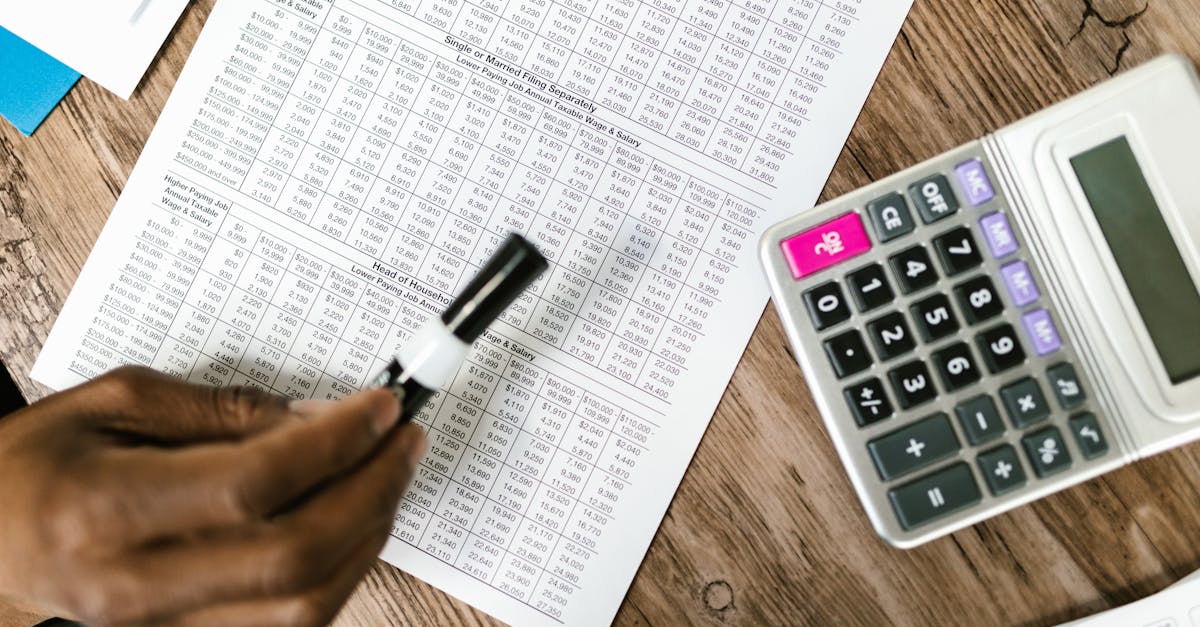
Most ecommerce sellers know what they pay their supplier. Fewer know what that product actually costs once it clears customs, travels across an ocean, and lands in their warehouse. That gap between supplier invoice and true per-unit cost is where margins quietly disappear.
Landed cost is the complete cost of getting a product from a factory overseas to a shelf in your fulfillment center. It covers every expense along the way: freight, duties, insurance, brokerage, port fees, and inland transport. If you price your products based on supplier cost alone, you are flying blind on your actual margins.
This guide walks through the full landed cost formula, breaks down each component with real numbers, and shows you how to calculate it for your own imported goods.
The Landed Cost Formula
The core formula is straightforward. Getting accurate inputs for each variable is the hard part.
Landed Cost = Product Cost + Freight + Customs Duties + Insurance + Brokerage and Handling Fees
Per-unit landed cost divides that total by the number of units in the shipment. Here is what each component includes.
- Product cost: The supplier invoice price, ideally on FOB terms (which means the supplier covers loading at the origin port).
- International freight: Ocean or air shipping from the origin port to the destination port. Ocean freight for a full container load (FCL) from Shenzhen to Los Angeles runs roughly $3,000 to $5,000 in early 2026. Air freight costs 4 to 8 times more per kilogram.
- Customs duties and tariffs: Calculated as a percentage of the declared value, based on the Harmonized Tariff Schedule (HTS) code assigned to the product and the country of origin.
- Cargo insurance: Typically 0.3% to 0.5% of the shipment value. Covers loss or damage during transit.
- Brokerage and handling fees: Customs broker fees ($100 to $250 per entry), Merchandise Processing Fee (MPF at 0.3464% of value), Harbor Maintenance Fee (HMF at 0.125% of value), port drayage, and inland trucking to your warehouse.
Each of these components varies by product category, shipment size, origin country, and current trade policy. A blanket "add 30%" estimate might work for a rough business case, but it will not give you accurate per-SKU margins.
Duty Rates by Product Category
Customs duties are the single largest variable in the landed cost formula, and they vary dramatically by product type. The Harmonized Tariff Schedule maintained by the US International Trade Commission contains over 16,000 product classifications, each with its own duty rate.
Here are representative duty rates for common ecommerce product categories, before any additional reciprocal or Section 301 tariffs:
| Product Category | Base Duty Rate | With China Reciprocal Tariff (2026) | Effective Total |
|---|---|---|---|
| Consumer electronics | 0% to 5% | +145% | 145% to 150% |
| Apparel and textiles | 12% to 32% | +145% | 157% to 177% |
| Footwear | 8% to 48% | +145% | 153% to 193% |
| Furniture and home goods | 0% to 10% | +145% | 145% to 155% |
| Toys and games | 0% to 6.8% | +145% | 145% to 152% |
| Health and beauty | 0% to 6% | +145% | 145% to 151% |
| Kitchenware (plastic) | 3.4% to 5.3% | +145% | 148% to 150% |
| Auto parts and accessories | 2.5% to 6% | +145% | 148% to 151% |
These rates apply to goods originating from China under the current reciprocal tariff structure. Products sourced from Vietnam face roughly 46%, from India 26%, and from Mexico 0% if they qualify under USMCA. For a full breakdown of 2026 tariff rates by country, see our guide to 2026 US tariff changes for ecommerce sellers.
"I thought I had a 45% margin on my kitchen products from Yiwu. After I actually calculated landed cost with the new tariffs, brokerage, and drayage, the real margin was 11%. Three of my top ten SKUs were losing money and I had no idea."
- r/ecommerce, 2026
Step-by-Step Worked Example
Let us walk through a real calculation. You import 2,000 units of a stainless steel water bottle from a factory in Guangzhou, China. The supplier quotes you $4.50 per unit FOB Guangzhou.
Here is the full landed cost breakdown:
- Product cost: 2,000 units at $4.50 = $9,000
- Ocean freight (LCL, shared container): $1,200
- Cargo insurance (0.4% of shipment value): $36
- US customs duty: The HTS code for stainless steel insulated drinkware is 7323.93.00, which carries a base rate of 3.4%. With the 2026 China reciprocal tariff of 145%, total duty rate = 148.4%. Duty = $9,000 x 148.4% = $13,356
- Merchandise Processing Fee (MPF): $9,000 x 0.3464% = $31.18 (minimum $31.67)
- Harbor Maintenance Fee (HMF): $9,000 x 0.125% = $11.25
- Customs broker fee: $175
- Port drayage (container from port to warehouse): $450
- Inland delivery and unloading: $200
Total landed cost: $9,000 + $1,200 + $36 + $13,356 + $31.67 + $11.25 + $175 + $450 + $200 = $24,459.92
Landed cost per unit: $24,459.92 / 2,000 = $12.23
Your $4.50 supplier price turned into a $12.23 landed cost. That is a 172% increase over the invoice price, driven almost entirely by the tariff component. If you were pricing based on the $4.50 supplier cost and targeting a 50% margin, you would set a retail price around $9.00 and lose $3.23 on every single unit sold.
"Biggest mistake I made starting out was using the supplier price as my cost of goods. Forgot freight, forgot duties, forgot the broker fee, forgot drayage. I was 'profitable' for six months before I realized I was actually underwater on half my catalog."
- r/FulfillmentByAmazon, 2025
Hidden Costs That Most Sellers Miss
The formula above covers the standard components. But several costs are easy to overlook and can add another 5% to 15% to your true landed cost.
- Currency conversion fees: If you pay your supplier in RMB or another foreign currency, your bank or payment processor charges a conversion spread, typically 1% to 3% of the transaction amount.
- Payment processing charges: Wire transfer fees ($25 to $50 per transaction) or letter of credit costs (1% to 3% of the shipment value for LC-backed orders).
- Customs delays: A shipment held for inspection or missing documentation can incur demurrage charges ($100 to $300 per day for container detention) and delay your inventory availability. One real-world example showed a three-day customs hold adding $3 per unit to landed cost on a 100-unit shipment.
- Compliance and testing: Products in regulated categories (children's toys, electronics, cosmetics) may require lab testing, certifications, or labeling that costs $500 to $5,000 per SKU before you can legally import them.
- Non-refundable duties on returns: Customs duties are paid on import. If a customer returns the product, the duty you paid is gone. At a 15% to 20% return rate, this adds a meaningful phantom cost to your effective landed cost per unit sold.
- Fuel and peak-season surcharges: Carriers add variable surcharges during high-demand periods (Q4) or when fuel prices spike. These can increase freight costs by 20% to 40% above quoted rates.
- Remote area delivery surcharges: If your warehouse is outside a major port metro area, last-mile trucking from the port can add $200 to $800 per shipment compared to warehouses near the port.
"Nobody warns you about the detention fees. My first container got held at Long Beach for a documentation issue. Four days at $275/day. That was $1,100 I never budgeted for, on a $6,000 shipment. Learned real fast to get my paperwork right."
- r/smallbusiness, 2026
Getting Your HS Codes Right
Incorrect HTS code classification is the most common and most expensive landed cost mistake. The difference between two similar-sounding codes can swing your duty rate by 10 to 30 percentage points.
Take a simple example: a plastic food storage container. Depending on how it is classified, the base duty rate can range from 3.4% (as a "plastic household article") to 7% (as a "plastic container for conveyance or packing of goods"). On a $50,000 shipment from China, that 3.6 percentage point difference in the base rate means $1,800 more in duties, before the reciprocal tariff multiplier is applied.
Three rules for getting classification right:
- Never guess. The HTS has over 16,000 classifications. Look up the exact code for your product in the official Harmonized Tariff Schedule database or work with a licensed customs broker.
- Classify by material and function, not by marketing name. Customs does not care what you call the product on your website. They care what it is made of and what it does.
- Audit annually. HS codes and their associated duty rates change. A code that was 0% last year might carry a 5% base rate this year, and that difference compounds with reciprocal tariffs.
If you are importing multiple product categories, the cost of an annual HS code audit by a customs broker ($500 to $2,000) almost always pays for itself in duty savings or penalty avoidance.
Reducing Your Landed Cost
You cannot eliminate duties or freight, but you can reduce your overall landed cost through better sourcing decisions, smarter logistics, and more accurate cost tracking.
- Source from lower-tariff countries: Vietnam (46% reciprocal tariff), India (26%), and Mexico (0% under USMCA) all offer significantly lower duty rates than China (145%). The product cost per unit may be slightly higher, but the total landed cost is often 30% to 50% lower once you factor in duties.
- Consolidate shipments: Fixed costs like brokerage fees, drayage, and documentation charges are per-shipment, not per-unit. Importing 5,000 units in one container instead of five shipments of 1,000 units spreads those fixed costs across more units.
- Use ocean freight instead of air: Air freight costs 4 to 8 times more per kilogram than ocean freight. For non-urgent restocking, the 25 to 35 day ocean transit time is worth the savings.
- Negotiate FOB vs. EXW terms: FOB (Free on Board) means the supplier handles inland transport and port loading in the origin country. EXW (Ex Works) puts those costs on you. If your supplier quotes EXW, you need to add inland China transport ($200 to $500 per shipment) to your landed cost calculation.
- Warehouse near a port: Every mile of inland trucking from the port adds cost. Warehouses within 50 miles of a major port (Los Angeles, Long Beach, Newark, Savannah) save $200 to $600 per container compared to inland locations.
Carrying costs are the other side of this equation. The money you have tied up in inventory that is sitting in your warehouse has its own cost. For a full breakdown of how to calculate and reduce those ongoing holding costs, see our inventory carrying cost formula guide.
Tracking Landed Cost Across Your Catalog
Calculating landed cost once is useful. Tracking it per SKU, per shipment, and over time is what actually protects your margins.
Every SKU in your catalog has a different landed cost profile. Different HS codes mean different duty rates. Different weights and dimensions mean different freight costs per unit. Different suppliers in different countries mean different base prices and tariff exposures. A single blended "average cost" across your catalog hides the fact that some products are highly profitable while others are quietly losing money on every sale.
What you need to track per SKU:
- Supplier cost (FOB or EXW, with the distinction noted)
- HS code and current applicable duty rate
- Freight cost per unit (updated with each shipment)
- Total landed cost per unit
- Landed cost as a percentage of retail price
- Landed cost trend over the last 3 to 4 shipments
When landed cost data lives in a spreadsheet that gets updated quarterly, you are always making pricing decisions on stale numbers. Tariff rates change, freight rates fluctuate, and surcharges appear without warning. An inventory management system that stores landed cost at the SKU level and updates it with each incoming purchase order keeps your margin calculations accurate in real time.
The sellers who know their landed cost to the penny for every SKU are the ones who can price confidently on marketplaces where fees already eat 15% to 50% of the sale price. Everyone else is guessing, and in a high-tariff environment, guessing gets expensive fast.
Run the formula. Calculate it for your top 20 SKUs this week. The number that comes back will almost certainly be higher than what you assumed, and that gap is the difference between the margin you think you have and the margin you actually have.
Frequently Asked Questions
Landed cost is the total price of a product once it arrives at your warehouse. It includes the supplier invoice price, international freight, customs duties and tariffs, cargo insurance, brokerage fees, port handling charges, and inland transportation. It represents the true per-unit cost you need to use for pricing and margin calculations.
Add together: product cost, international shipping, customs duties (based on your HS code and country of origin), insurance, brokerage fees, and any handling or inland freight charges. Divide the total by the number of units in the shipment. That gives you the landed cost per unit.
Landed cost typically adds 20% to 60% on top of the supplier invoice price, depending on the product category, country of origin, and shipping method. For goods imported from China under 2026 tariff rates, the added cost can exceed 100% of the original product price.
FOB (Free on Board) price is what the supplier charges to load goods onto a ship at the origin port. Landed cost includes everything after that point: ocean or air freight, insurance, customs duties, port fees, brokerage, and inland delivery to your warehouse. FOB is the starting point of the landed cost calculation, not the end.
Yes. Different SKUs may have different HS codes, duty rates, weights, and dimensions, all of which change the landed cost. Using a single blended rate across your catalog leads to mispriced products, where some SKUs quietly lose money while others appear more profitable than they are.
Related Articles
View all
Shopify Just Democratized Wholesale. DTC-Only Brands Should Be Nervous
Shopify is bringing native B2B features to more merchants. That lowers the barrier to wholesale and pressures DTC-only brands to rethink channel strategy.
The DTC-Only Brand Is Dead. B2B Is the Comeback Channel
DTC brands are rediscovering B2B because paid acquisition is volatile and wholesale can create repeatable, larger, more predictable order flow.

AI Checkout Failed the First Test. Here's Why Shoppers Still Prefer Real Stores
AI shopping is moving fast, but checkout is proving harder than discovery. Retailers want AI traffic without surrendering the customer relationship.