AI Product Photos Now Cost $0.10. Your $150/Shot Photographer Just Became Optional.
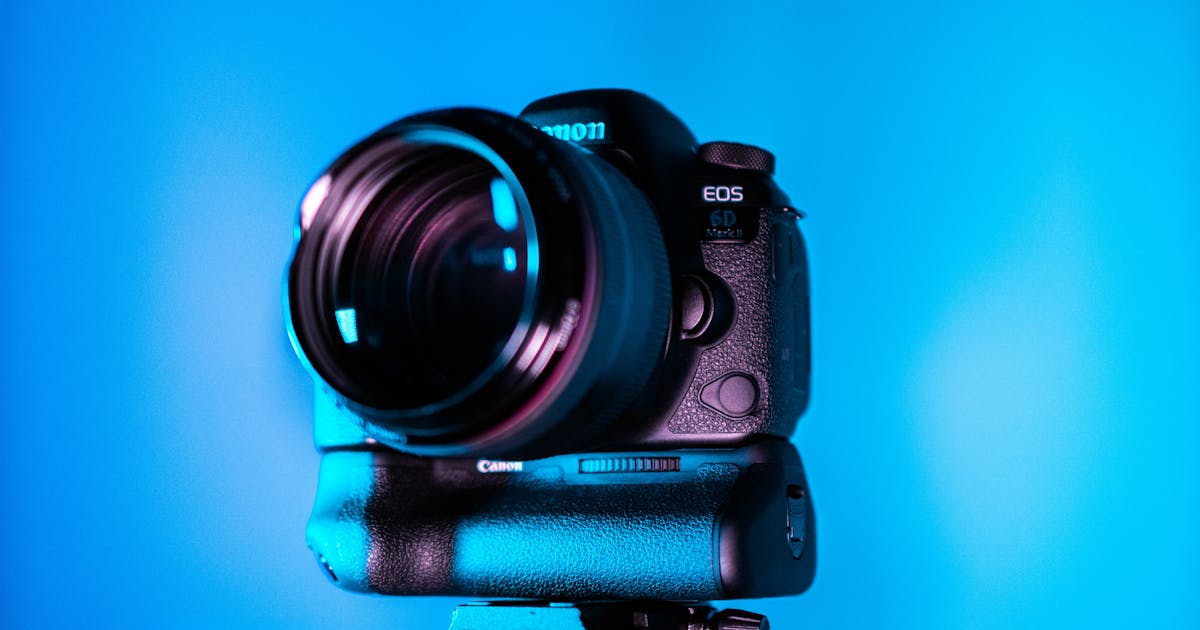
Last month, a seller in our community relaunched 340 product listings on Amazon with new images. Every single photo was AI-generated. Total cost for all 340 products, with 5 images each: $127.
The year before, she had paid a photography studio $18,700 for the same product line. Same SKUs. Same angles. Same white background hero shots and lifestyle scenes.
The conversion rate difference between the old professional photos and the new AI photos? Less than 2%.
That is not a typo. She saved $18,573 and her sales barely moved.
The Numbers Behind the AI Photography Explosion
Here is what happened: AI image generation crossed the quality threshold for ecommerce product photography sometime in mid-2025. By early 2026, the adoption curve went vertical.
- 40% of ecommerce product images are projected to be AI-generated by end of 2026
- Cost per image dropped from $75-$150 (traditional studio) to $0.05-$0.25 (AI generation)
- Time per image dropped from 2-5 days (scheduling, shooting, editing) to 30-90 seconds
- Major platforms including Shopify, Amazon, and eBay have not banned AI-generated product images
The economics are so lopsided that arguing against AI product photography is like arguing that you should hand-write invoices because the penmanship is better. You are technically correct and practically irrelevant.
Cost Comparison at Every Catalog Size
This table assumes 5 images per product (1 hero, 2 lifestyle, 1 detail, 1 infographic-style), the minimum for a competitive listing on any major marketplace.
| Catalog Size | Total Images Needed | Traditional Photography Cost | AI Generation Cost | Savings |
|---|---|---|---|---|
| 50 SKUs | 250 | $12,500-$25,000 | $25-$62 | $12,438-$24,938 |
| 100 SKUs | 500 | $25,000-$50,000 | $50-$125 | $24,875-$49,875 |
| 500 SKUs | 2,500 | $125,000-$250,000 | $250-$625 | $124,375-$249,375 |
| 2,000 SKUs | 10,000 | $500,000-$1,000,000 | $1,000-$2,500 | $498,500-$997,500 |
| 5,000 SKUs | 25,000 | $1,250,000-$2,500,000 | $2,500-$6,250 | $1,247,500-$2,493,750 |
Look at the 2,000-SKU row. A mid-size seller with a large catalog was looking at half a million to a million dollars in photography costs to properly image every product. With AI, the same job costs $1,000-$2,500.
That is not a marginal improvement. That is the complete elimination of a cost category.
The Tools That Make It Work
Not all AI photo tools are equal. Here is how the current landscape breaks down by use case:
For Background Removal and Replacement
Photoroom is the current leader. Upload a photo of your product, even a quick smartphone shot, and it removes the background instantly. Then choose from hundreds of AI-generated scenes or create custom ones from text prompts. Cost: free tier for basic use, $9.99/month for high-volume. At scale, this runs about $0.02-$0.05 per image.
For Lifestyle Scene Generation
Pebblely excels at placing your product in realistic lifestyle settings. Drop in your kitchen gadget, tell it "modern Scandinavian kitchen, marble countertop, morning light," and you get a photo that looks like it came from a $2,000 styled shoot. At $19/month for 1,000 images, the per-image cost is under $0.02 for active users.
For Fashion and Apparel
Booth.ai specializes in apparel imagery. It generates model shots from flat-lay photos of clothing, showing how a shirt looks on a body without hiring a model or booking a studio. The quality has improved significantly, though it still struggles with complex draping and translucent fabrics.
For Maximum Flexibility
Midjourney and DALL-E 3 handle anything but require more skill. They are best for creating unique brand imagery, conceptual lifestyle shots, and creative compositions that template-based tools cannot produce. The learning curve is steeper, but the creative ceiling is higher.
When AI Photos Work (and When They Do Not)
AI Photos Work Well For:
- Standard consumer products, electronics, home goods, accessories, tools, office supplies. These categories have straightforward visual requirements and AI nails them.
- White background hero images, AI is nearly indistinguishable from studio photography for clean, well-lit product shots on white.
- Lifestyle context shots: showing a product in use (a lamp on a nightstand, a mug on a desk) is where AI actually outperforms budget photography, because the scenes look more polished than what a $500 photo shoot produces.
- Scale and comparison images, AI easily generates images showing your product next to common objects for size reference.
- Seasonal and promotional imagery, need your product in a holiday setting? AI generates it in seconds, not weeks.
AI Photos Fall Short For:
- Luxury goods: customers buying a $500 handbag or $2,000 watch expect to see real material texture, stitching quality, and light reflection. AI cannot reliably reproduce the specific way light hits genuine leather or sapphire crystal. Conversion rates for luxury items drop 8-15% with AI imagery.
- Food products: AI-generated food still looks slightly off. The "uncanny valley" effect is strongest with food imagery. Colors are too saturated, textures too smooth, and the overall look feels synthetic. Professional food photography remains worth the investment.
- Fashion with specific fabric qualities: linen wrinkle patterns, silk sheen, cashmere softness. AI generates plausible-looking fabrics but cannot accurately represent the specific material your product is made from.
- Products where color accuracy drives purchases: paint, cosmetics, fabric swatches, and anything where the customer needs to match a specific color. AI color rendering is close but not exact enough for color-critical purchases.
- Regulated products: some categories (supplements, medical devices, safety equipment) have regulatory requirements around product imagery that may require authentic photographs.
The Operational Impact Nobody Is Talking About
Here is what gets lost in the "AI photos are cheap" conversation: the cost savings are not even the biggest benefit. The speed is.
Traditional product photography creates a bottleneck in the listing pipeline. You source a product, order samples, wait for delivery, schedule a photographer, shoot, wait for editing, receive images, upload them, and then your listing goes live. That process takes 2-6 weeks per product batch.
With AI, the moment you have a reference image of a product, even from your supplier's catalog, you can generate listing-ready photos in minutes. That reference image becomes your hero shot, lifestyle shots, and detail shots before the physical product even arrives at your warehouse.
This changes the economics of channel expansion. If you sell on Shopify and want to add Amazon, eBay, and Walmart, each marketplace has different image requirements and recommended image counts. Traditionally, that meant commissioning additional photography for each channel: different aspect ratios, different style guidelines, different required angles.
With AI, you generate marketplace-specific images from the same reference photo. A product that took $150 and two weeks to photograph for one channel now costs $0.50 and five minutes to image for four channels.
For multichannel sellers, this is the opening event. The photography bottleneck that used to slow down channel expansion disappears entirely. You can list on a new marketplace the same day you decide to sell there, images included.
The Hybrid Approach That Works Best
The smartest sellers are not going all-AI or all-traditional. They are running a hybrid approach:
- Main hero image: real photograph: a clean, well-lit product photo on white background. This can be a smartphone photo run through Photoroom for professional-grade results. Total cost: $0 to $5 per product.
- Lifestyle images: AI-generated: 2-3 scenes showing the product in context. AI excels here because the scenes look premium without a $2,000 styled shoot. Cost: $0.15-$0.50 per image.
- Detail shots: real photographs: close-ups of texture, construction quality, and key features. These need to be real because customers zoom in to inspect quality. Smartphone macro shots work fine. Cost: $0.
- Infographic images: AI + design: dimension callouts, feature highlights, comparison charts. AI generates the base image, a quick Canva edit adds the text overlays. Cost: $0.10-$0.25 per image.
This hybrid approach gives you 5-7 images per product at a total cost of $0.50-$2.00, compared to $375-$750 for all-professional imagery. And the performance difference, based on A/B tests across multiple sellers, is within the margin of error for most product categories.
What This Means for Product Photographers
Let me be direct: the market for standard ecommerce product photography is contracting rapidly. The $75-$150 per-shot model for basic white-background product photos is over for most categories.
What survives:
- Luxury and premium product photography, clients who need images that convey quality beyond what AI can produce
- Food and beverage photography, still the weakest category for AI
- Video content, product videos, 360-degree spins, and unboxing content are not yet replaceable by AI
- Brand campaign photography, creative direction, brand storytelling, and campaign-level imagery still needs human vision
- Photography direction for AI: a new role is emerging: photographers who specialize in creating the reference images that AI tools use as inputs. One well-crafted reference photo generates dozens of AI variations.
How to Make the Switch This Week
If you are still paying $75+ per product image, here is the 5-step process to switch:
- Pick 10 products from your catalog, choose a range of categories and complexity levels
- Take reference photos with your phone, good lighting, clean background, multiple angles. These do not need to be perfect, they are inputs, not outputs.
- Run them through Photoroom and Pebblely, generate 5 images per product: white background, 2 lifestyle scenes, 1 detail, 1 comparison
- A/B test against your existing photos, run both versions for 2 weeks on your highest-traffic listing. Measure click-through and conversion rate.
- Roll out to your full catalog, once you have conversion data, make the call. For most sellers, the data will confirm that AI images perform within 2-5% of professional photos at 99% lower cost.
The sellers with 500+ SKU catalogs will see the biggest impact. Not just in cost savings, though saving $100,000+ on photography is significant, but in speed to market. New products go live with full imagery in hours instead of weeks. New channels get populated with marketplace-specific images immediately instead of waiting for another photo shoot.
That speed advantage compounds. The seller who lists a trending product today with AI-generated images captures sales that the seller waiting three weeks for professional photos will never see. In ecommerce, being first with a good-enough listing beats being third with a perfect one every single time.
Your $150-per-shot photographer is not a bad photographer. The economics just shifted underneath both of you.
Frequently Asked Questions
The cost depends on the tool and the level of customization. Basic AI background removal and replacement runs $0.02-$0.05 per image. AI-generated lifestyle scenes with your product composited in cost $0.05-$0.15 per image. Fully AI-generated product renders from a reference photo cost $0.10-$0.25 per image. Compare this to traditional product photography which runs $75-$150 per shot for studio work, $200-$500 per shot for lifestyle photography, and $50-$100 per image for professional editing and retouching.
The leading tools as of early 2026: Photoroom (best for background removal and scene generation, free tier available), Pebblely (strong for lifestyle scenes, $19/month for 1,000 images), Flair.ai (best for brand-consistent scenes, $10/month), Booth.ai (focused on apparel and fashion, custom pricing), and Midjourney/DALL-E 3 (most flexible but require more prompting skill). For bulk catalog work, Photoroom and Pebblely handle high volume most efficiently. For premium brand imagery, Flair.ai and Booth.ai produce more polished results.
Split test data from multiple sellers shows AI-generated product photos perform within 2-5% of professional photography for conversion rate on standard consumer goods. For categories where texture and material quality matter (leather goods, fabrics, jewelry), professional photography still outperforms AI by 8-15% on conversion. The biggest factor is not AI vs real, it is multiple angles and context shots vs single hero images. Sellers who use AI to generate 6-8 images per product consistently outperform sellers with 2-3 professional photos.
Avoid AI-generated photos for: luxury goods where customers expect and inspect material quality, food products where AI struggles with appetizing realism, products where exact color accuracy matters for purchase decisions (paint, fabric, cosmetics), regulated products that require actual photos for compliance (supplements, medical devices), and any product where you make specific visual claims about quality or construction. Also avoid AI photos if your marketplace requires authentic product photography. Amazon's image policy requires actual photographs of the product, though enforcement varies.
Amazon's main image requirement states that products must be photographed against a white background. Technically, this means an actual photograph, not an AI render. In practice, Amazon's automated image review primarily checks for white background, proper framing, and absence of text overlays: not whether the image was AI-generated. Many sellers use AI for secondary images (lifestyle shots, infographics, comparison images) while keeping a real photograph for the main image. This hybrid approach is the safest strategy until Amazon clarifies its policy on AI-generated product images.
Start with a reference photo of each product: even a smartphone photo works. Upload to a bulk-processing tool like Photoroom or Pebblely. Generate 3-4 variations per product: white background hero, lifestyle scene, scale reference, and detail shot. Process your entire catalog in batches of 50-100 products. For a 500-SKU catalog, expect the entire process to take 2-3 days and cost $50-$125 total, compared to 4-8 weeks and $37,500-$75,000 with traditional photography.
Related Articles
View all
ChatGPT Can Now Buy Products for Your Customers. You Don't Get to Choose Which Ones.
AI agents are making purchasing decisions on behalf of consumers right now. 49% of Americans say AI recommendations already influence what they buy, and 91% of online stores are invisible to these agents. Here is what is actually happening, why your marketing copy is irrelevant, and what you need to fix before your competitors do.
AI-Powered Order Routing: How Smart Fulfillment Cuts Shipping Costs by 15-30%
Your shipping costs are high because your routing is dumb. Learn how AI-powered order routing reduces fulfillment costs by 30-46% and speeds up delivery.
Headless Commerce vs Monoliths: What Every CTO Needs to Know
Decoupling your frontend from your backend is the key to agility. We break down the architecture, costs, and strategic advantages of going headless.