Returns Restock Accuracy Framework
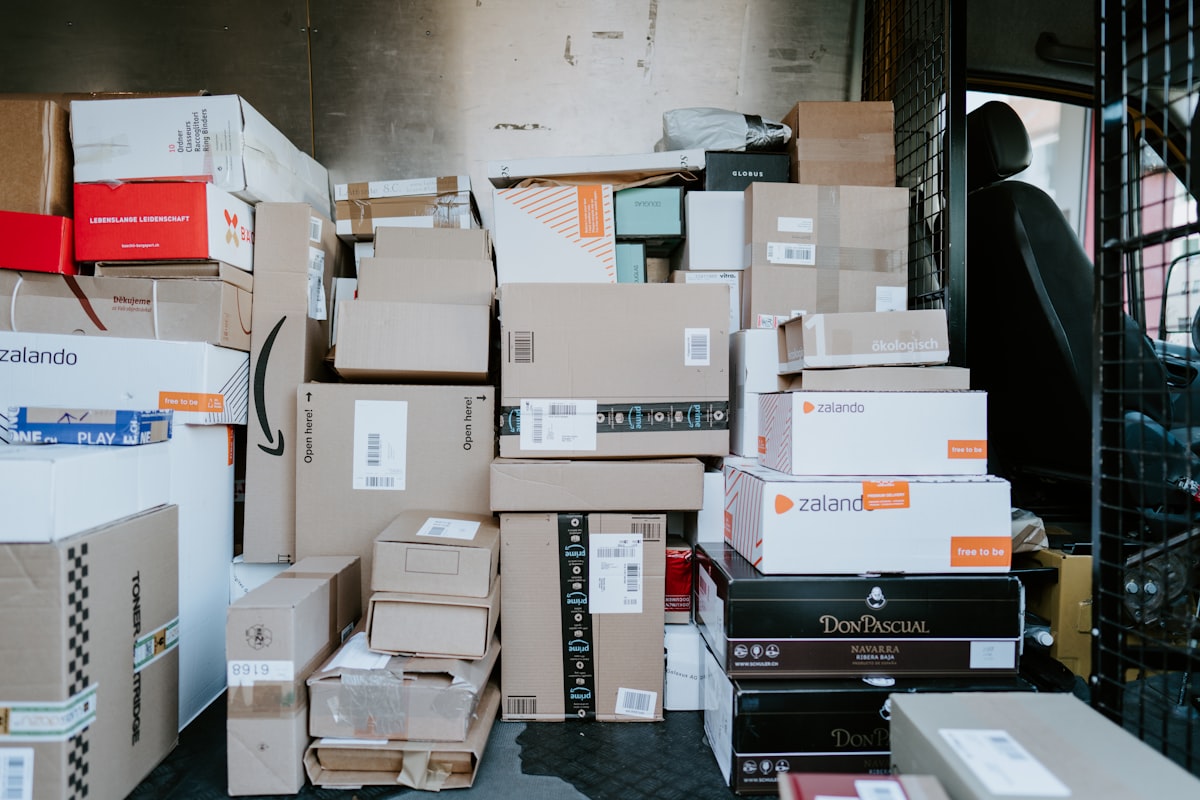
Why Returns Create Phantom Inventory Risk
Every returned product that re-enters your inventory creates a decision point: is this item sellable, refurbishable, or disposable? When that decision is made poorly — or worse, not made at all — the result is phantom inventory: units your system counts as available for sale that are actually damaged, incomplete, or otherwise unsellable.
Phantom inventory is insidious because it does not trigger a stockout alert. Your inventory count shows 50 units available. A customer orders. Your warehouse picks the unit and discovers it is a returned item with a broken seal, missing accessories, or cosmetic damage. Now you have a delayed shipment, a disappointed customer, and an inventory adjustment that may push you below your reorder point without warning.
For ecommerce businesses with return rates between 15% and 30% (the industry average depending on category), returns restock accuracy is not a backroom operational detail — it is a core driver of inventory reliability, customer experience, and financial accuracy. A 500-order-per-day business with a 20% return rate processes 100 returns daily. If 10% of those returns are restocked incorrectly, that is 10 phantom inventory units per day — 300 per month — corrupting your stock data.
Restock Decision Tree
Every returned item must follow a structured decision path. The decision tree eliminates subjective judgment and ensures consistent outcomes regardless of which warehouse worker processes the return.
Decision Flow
RETURN RECEIVED
  │
  ├─ Was the item opened?
  │   ├─ No → GRADE A → Restock as new (sellable inventory)
  │   └─ Yes ↓
  │
  ├─ Pass 5-point inspection?
  │   ├─ All pass → GRADE A → Restock as new (sellable inventory)
  │   ├─ Minor cosmetic fail only → GRADE B → Restock as open-box / discounted
  │   ├─ Functional but needs repair → GRADE C → Route to refurbishment queue
  │   └─ Fails functional or hygiene → GRADE D → Write-off / dispose
  │
  └─ Missing components?
      ├─ Replaceable components available → Restore and grade accordingly
      └─ Components unavailable → GRADE D → Write-off / dispose
Grade Definitions
| Grade | Condition | Disposition | Expected Recovery |
|---|---|---|---|
| A (Like New) | Unopened or perfect condition | Restock as sellable | 100% of retail |
| B (Good) | Minor cosmetic issues or repackaged | Sell as open-box / discount | 70–85% of retail |
| C (Refurbishable) | Functional but needs repair/cleaning | Refurbishment queue | 40–60% of retail |
| D (Unsalvageable) | Non-functional or hygiene fail | Write-off / dispose / donate | 0–10% (parts/salvage) |
Inspection and Reconciliation Workflow
Step 1: Quarantine Receipt
Every return is received into a designated quarantine zone — physically separated from sellable inventory. The item is scanned against the RMA (Return Merchandise Authorization) number to link it to the original order. At this point, the inventory system should show the unit as "in quarantine" — not available for sale, not counted as sellable stock. This quarantine status prevents the phantom inventory problem at the source.
Step 2: Standardized Inspection
A trained inspector runs the five-point inspection protocol:
- Packaging integrity: Original packaging present and intact? Seals unbroken? If repackaging is needed, is stock packaging available?
- Product completeness: All components present per the product manifest? Chargers, cables, manuals, mounting hardware — every component checked against a standard packing list.
- Cosmetic condition: Visual inspection under adequate lighting. Scratches, dents, stains, or signs of wear are documented with photos.
- Functional testing: Power-on test for electronics. Operation test for mechanical products. Fit verification for apparel. Each product category should have a specific functional test protocol.
- Hygiene verification: Required for personal care, food-contact, intimate apparel, and any product where resale of a used item poses health concerns. Fail-safe: if in doubt, classify as Grade D.
Step 3: Grade Assignment and Disposition
Based on the inspection results, the inspector assigns a grade (A through D) using the standardized criteria. The grade automatically triggers the disposition path — no additional approval required for standard dispositions. Exceptions (unusual damage, high-value items, potential fraud) escalate to a supervisor for review.
Step 4: Inventory Reconciliation
At the end of each day, reconcile:
- Returns received into quarantine (from shipping carrier scan data)
- Returns inspected and graded (from inspection log)
- Returns restocked to sellable inventory (from putaway scan data)
- Returns dispositioned to refurbishment, liquidation, or write-off
The sum of restocked + dispositioned should equal the total returns received minus any units still in the inspection queue. Any discrepancy indicates a process gap — a unit that was received but never inspected, inspected but never moved, or moved without a system update.
Data Capture Standards for Returns Events
Every returns event should capture a minimum data set that enables root-cause analysis, fraud detection, and process improvement.
Required Data Fields:
─────────────────────────────────────────────────
RMA number                  Links to original order
Original order ID           Enables customer history analysis
Return reason (customer)    What the customer reported
Return reason (inspection)  What the inspector found
Condition grade (A/B/C/D)   Standardized classification
Inspector ID                Accountability and training tracking
Inspection timestamp        Processing time measurement
Disposition action          Restock / refurbish / liquidate / write-off
Photos (if Grade B/C/D)     Evidence for fraud review and disputes
Restocking location         Where the unit was placed if restocked
This data set feeds three critical analyses: return rate by product and reason (which products are being returned and why), inspection consistency (are different inspectors grading the same conditions differently), and processing speed (how long does each stage of the return take).
Exception Handling and Fraud Flags
Not every return is straightforward. Your SOP needs explicit exception handling for unusual cases and fraud indicators.
Common Exceptions
- Wrong item returned: The customer returned a different product than what was ordered. Quarantine the item, flag the RMA, and initiate customer contact before processing the refund.
- Tampered product: Signs that the product was swapped, substituted, or modified (e.g., a product box containing a different item, weight discrepancies, serial number mismatches). Escalate to fraud review.
- Warranty vs. return: Products returned for defects within the warranty period may qualify for manufacturer credit rather than inventory write-off. Route to warranty processing for vendor recovery.
Fraud Indicators
- Serial number does not match the original sale record
- Product weight differs significantly from the expected weight
- Repeated returns from the same customer (3+ returns within 90 days)
- High-value item returned with different components than originally shipped
- Return reason does not match inspection findings (customer says "wrong size" but item shows heavy use)
Flag these indicators in the inspection workflow so they are escalated to a supervisor rather than auto-processed. Fraud prevention is part of restock accuracy — fraudulent returns that bypass inspection and enter sellable inventory create both phantom inventory and financial loss.
KPI Dashboard for Reverse Logistics Health
Metric                              Target           Review
Return-to-restock accuracy rate      ≥ 95%           Weekly
Return processing cycle time         < 48 hours      Weekly
Grade A restock rate                 ≥ 60% of returns Weekly
Phantom inventory incidents          0 per month      Monthly
Inspector grading consistency        ≥ 90% agreement  Monthly
Fraud flag rate                      Track trend      Monthly
Return-related customer complaints   Declining trend  Monthly
Quarantine backlog (units waiting)   < 1 day volume  Daily
The restock accuracy rate and processing cycle time are your primary health indicators. If accuracy is high but cycle time is long, you have a throughput problem — returns are being processed correctly but too slowly, creating inventory blind spots during the processing window. If cycle time is fast but accuracy is low, you have a quality problem — returns are being processed quickly but incorrectly, creating phantom inventory.
This framework connects directly to your broader warehouse error-proofing SOP and your RMA policy design. Restock accuracy is not a standalone process — it is one link in the reverse logistics chain that starts with the customer's return request and ends with the item either back on the shelf or properly dispositioned.
Close the Revenue Leakage
Returns restock accuracy is one of the most under-measured and under-managed processes in ecommerce operations. The revenue leakage from phantom inventory, mis-graded returns, and slow processing is real but invisible — it does not show up as a line item on your P&L until you look for it.
Start with three actions: implement a quarantine zone for all returns, standardize your inspection protocol with the five-point checklist, and run a daily reconciliation between returns received and returns dispositioned. These three steps alone will eliminate the majority of phantom inventory risk and give you clean data to measure and improve from.
See how Nventory improves reverse logistics accuracy across channels — Shopify integration | Full feature set.
Frequently Asked Questions
Restock accuracy fails for three primary reasons. First, returned products are added back to sellable inventory without proper inspection — creating phantom inventory where the system shows units available but the actual products are damaged, incomplete, or unsellable. Second, the time lag between receiving a return and processing it creates inventory blind spots where units are physically in the warehouse but not in the system. Third, inconsistent grading standards mean different warehouse workers make different resellability decisions on identical products, leading to either over-restocking (damaged goods sold as new) or under-restocking (sellable goods written off unnecessarily).
Phantom inventory prevention requires a three-step process: quarantine, inspect, and reconcile. Every returned item enters a quarantine zone where it is not counted as sellable inventory. Only after a standardized inspection confirms the item meets resale criteria is it moved to the sellable location and the inventory count updated. The reconciliation step compares return receipts to restocked quantities daily — any discrepancy between units received and units either restocked or dispositioned indicates a process breakdown that needs immediate investigation.
Every returned item should pass a five-point inspection: (1) packaging integrity — is the original packaging intact and resealable or does it need repackaging, (2) product completeness — are all components, accessories, and documentation present, (3) cosmetic condition — is the product free of scratches, stains, and signs of use, (4) functional testing — does the product power on, operate correctly, and meet specifications (for electronics and mechanical products), (5) hygiene verification — for personal care, apparel, and food-contact products, is the product safe to resell. Each inspection point should have a pass/fail criterion that is objective enough for different inspectors to reach the same conclusion.
Use a four-tier classification system: Grade A (like new — unopened or opened but in perfect condition, can be resold at full price), Grade B (good — minor cosmetic imperfections or repackaging needed, can be resold at a discount or as open-box), Grade C (refurbishable — functional but requires cleaning, repair, or component replacement before resale), and Grade D (unsalvageable — damaged beyond economical repair, appropriate for parts harvesting, recycling, or disposal). Each grade should have a pre-defined disposition path so the classification directly triggers the next action without requiring additional decision-making.
Return-to-restock accuracy rate — the percentage of returned items that are correctly dispositioned (restocked, refurbished, or written off) within your target processing time without requiring re-inspection or reclassification. Target 95% or higher. A secondary KPI is the return processing cycle time — the elapsed time from when a return is received at the warehouse to when it is either restocked as sellable inventory or dispositioned. Target less than 48 hours for standard returns. Together, these two metrics capture both the accuracy and speed of your reverse logistics operation.
Related Articles
View all
Ecommerce Returns Management: Turn Your Biggest Cost Center into a Retention Engine
Returns cost $21-$46 per order to process. Learn how to automate RMA workflows, reduce return rates, and turn returns into repeat purchases.

Warehouse Management Software: The Modern Playbook For Faster Picking, Fewer Errors And Scalable Fulfillment
A practical playbook to reduce pick errors, prevent inventory drift, and scale warehouse fulfillment across multiple sales channels.

Why Your 3PL Integration is Failing (and How to Fix It)
Is your warehouse blindly shipping orders? Discover the common pitfalls of 3PL connectivity and how to build a feedback loop that actually works.