Carbon-Aware Order Routing: Adding an Emissions Dimension to Fulfillment Logic
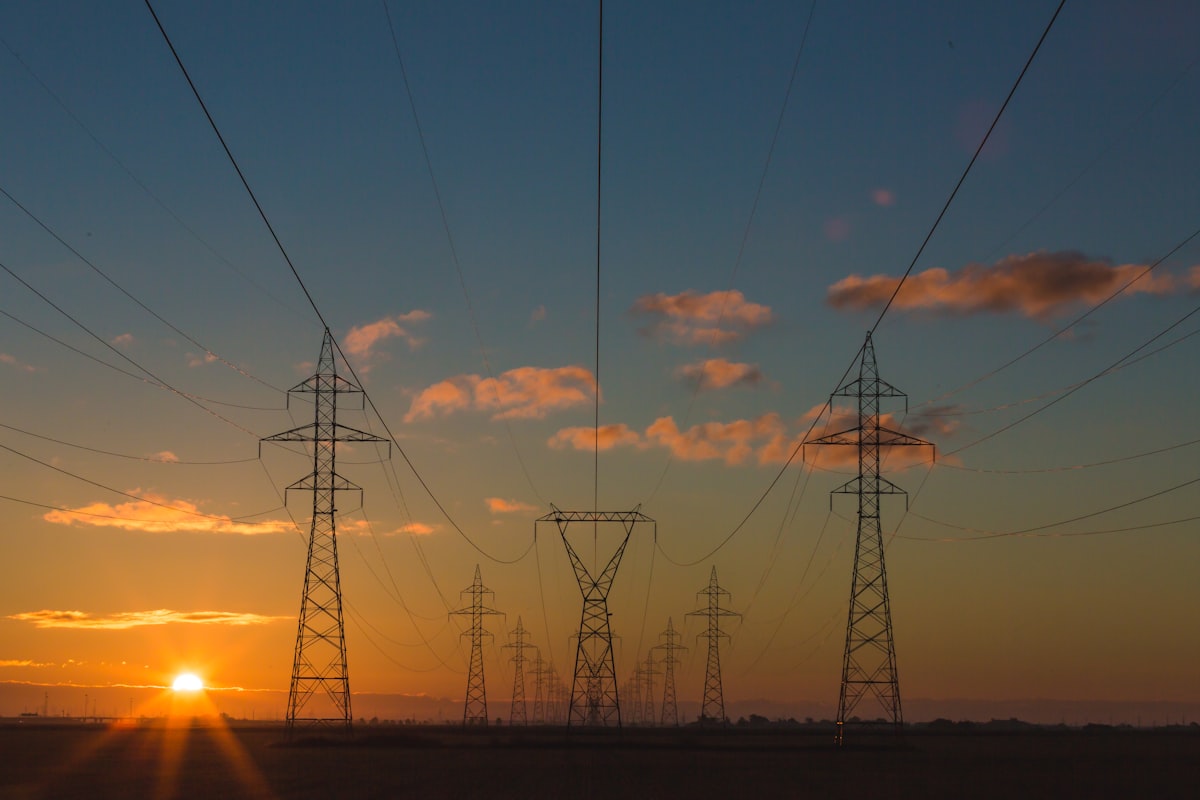
The Three-Variable Routing Equation
For a decade, order routing has optimized two variables: cost and speed. Ship from the cheapest location. Ship from the fastest location. Balance cost and speed based on the customer's delivery expectation. This two-variable model is incomplete.
In 2026, a third variable is entering the routing equation: carbon emissions. Not because of regulation alone (though that is coming), but because emissions reduction and cost reduction are frequently aligned — and brands that measure emissions discover routing inefficiencies that save money.
The Three Variables
Routing Decision = Optimize(Cost, Speed, Carbon)

Where:
  Cost   = Shipping rate + handling + packaging + zone surcharges
  Speed  = Transit days from warehouse to customer door
  Carbon = CO2e in kg for the specific route, mode, and package weight

Traditional routing:  Minimize Cost subject to Speed ≤ SLA
Carbon-aware routing: Minimize Cost + (Carbon × Weight Factor) subject to Speed ≤ SLA
Why Emissions and Cost Are Often Aligned
The counterintuitive finding from carbon-aware routing implementations is that the greenest option is usually the cheapest option. The physics are simple: moving a package a shorter distance by ground uses less fuel and costs less money than moving it a longer distance by air.
| Routing Scenario | Cost | Transit | CO2e | Outcome |
|---|---|---|---|---|
| Nearest warehouse, ground | $6.50 | 2 days | 0.8 kg | Best on all three variables |
| Distant warehouse, ground | $9.20 | 5 days | 2.1 kg | Worse on all three variables |
| Distant warehouse, air | $14.80 | 1 day | 8.5 kg | Fastest but most expensive and highest emissions |
| Split shipment (2 warehouses) | $12.40 | 2-3 days | 3.6 kg | Higher cost and emissions due to two packages |
The real trade-off appears only in specific scenarios: when the nearest warehouse is out of stock and the customer expects fast delivery. In that case, the system must choose between air-shipping from a distant warehouse (fast, expensive, high emissions) or ground-shipping from that warehouse (slower, cheaper, lower emissions). Carbon-aware routing introduces a measurable cost for the emissions difference, making the trade-off explicit rather than invisible.
Scope 3 APIs: Making Emissions Measurable
You cannot optimize what you cannot measure. Scope 3 emissions APIs provide per-shipment carbon calculations that integrate into your routing decision engine.
How Emissions APIs Work
API Request:
  origin:       "90210" (warehouse ZIP)
  destination:  "10001" (customer ZIP)
  weight_kg:    1.5
  mode:         "ground"    // or "air", "rail", "sea"

API Response:
  co2e_kg:      0.82
  distance_km:  3,944
  methodology:  "GLEC Framework v3"
Available Providers
- Climatiq: Comprehensive emissions factor database covering road, air, rail, and sea. REST API with per-call pricing. Supports custom emission factors for specific carriers.
- Cooler: Scope 3 carbon footprint API focused on supply chain and logistics. Includes offset marketplace integration for brands that want to neutralize emissions at the order level.
- EcoTransIT: Focused on freight and logistics emissions with detailed methodology documentation. Preferred by brands that need audit-grade emission calculations for ESG reporting.
Implementing Carbon-Aware Routing
Level 1: Simple Rules (No API Required)
Start with routing rules that reduce emissions without measuring them:
- Prefer ground over air: Default to ground shipping for all orders where the delivery SLA allows it. Only use air when the customer paid for expedited delivery.
- Minimize split shipments: A single package from one warehouse is almost always lower-emission than two packages from two warehouses — even if the single warehouse is farther away.
- Route from nearest warehouse: Shorter distance = less fuel = lower emissions and lower cost. This should already be your default, but verify it is actually happening.
- Consolidate multi-item orders: If a customer orders 3 items, ship in one box, not three. This requires inventory positioning that allows single-warehouse fulfillment for common order combinations.
Level 2: Measured Emissions (API Integration)
Add a Scope 3 API call to your routing decision engine to calculate emissions for each routing option:
- When an order enters the routing engine, identify all viable fulfillment paths (warehouse × carrier × mode combinations)
- For each path, calculate cost and transit time (your existing logic)
- For each path, call the emissions API to get CO2e
- Score each path:
Score = Cost + (CO2e × Carbon Price Weight) - Select the path with the lowest score that meets the delivery SLA
The Carbon Price Weight is a configurable parameter that determines how much you weight emissions relative to cost. Start at $0 (emissions are measured but do not influence routing) and gradually increase to find the point where emissions improve without meaningfully increasing costs.
Level 3: Pre-Positioning for Emissions Reduction
The highest-impact emissions reduction comes not from routing optimization at order time, but from inventory positioning decisions made weeks earlier. If 40% of your orders ship to the Northeast US, positioning inventory in a Northeast warehouse eliminates thousands of cross-country shipments.
- Analyze order destination data by ZIP code cluster
- Model the emissions impact of different warehouse network configurations
- Pre-position fast-moving SKUs in warehouses closest to demand centers
- Before peak season, move inventory to regional warehouses based on historical demand patterns
Measuring and Reporting
Carbon-aware routing generates data that serves both operational optimization and ESG reporting.
Operational Metrics
| Metric | Calculation | Target |
|---|---|---|
| CO2e per order | Total monthly CO2e ÷ Total orders | Decreasing trend month-over-month |
| Air shipping percentage | Air-shipped orders ÷ Total orders | <5% (non-expedited orders) |
| Split shipment rate | Orders shipped in 2+ packages ÷ Total orders | <10% |
| Average shipping distance | Total distance shipped ÷ Total orders | Decreasing as inventory positioning improves |
Common Mistakes
- Assuming carbon-aware routing always costs more: In 70–80% of routing decisions, the lowest-emission option is also the cheapest. Measure before assuming trade-offs exist.
- Optimizing routing while ignoring inventory positioning: Routing optimization at order time is a 10–15% improvement. Inventory positioning optimization is a 30–50% improvement. Fix where your inventory sits before fine-tuning how you route from it.
- Using a single average emission factor: "All ground shipments emit X kg per mile" is too imprecise. Emissions vary by carrier, vehicle type, fuel source, load factor, and route. Use shipment-specific API calculations for accuracy.
- Treating emissions as a marketing initiative rather than an operational metric: Carbon-aware routing delivers cost savings and operational efficiency, not just sustainability talking points. Teams that treat it as a marketing exercise miss the operational benefits.
Frequently Asked Questions
Carbon-aware order routing adds carbon emissions as a third optimization variable alongside shipping cost and delivery speed. Instead of routing every order to the cheapest or fastest fulfillment path, the system evaluates the CO2 equivalent (CO2e) of each routing option and factors it into the decision. In practice, this means preferring ground shipping over air when delivery timelines allow, consolidating multi-item orders instead of splitting them, and routing from the warehouse closest to the customer to minimize last-mile distance.
In most cases, carbon-aware routing actually reduces shipping costs. The lowest-emission option (ground from a nearby warehouse) is typically also the cheapest option. One DOM study showed carbon-aware routing cut last-mile emissions by 35.5% while saving $5.6 million annually. The conflict between cost and emissions is less frequent than most teams assume — it occurs mainly when the nearest warehouse is out of stock and the choice is between air-shipping from a distant warehouse (fast, expensive, high emissions) or ground-shipping from that warehouse (slower, cheaper, lower emissions).
Scope 3 emissions are indirect emissions that occur in a company's value chain — including transportation and distribution of sold products. For ecommerce, Scope 3 includes the carbon footprint of shipping every package to every customer. These emissions are increasingly subject to disclosure requirements (EU CSRD, SEC climate rules) and customer expectations. Scope 3 APIs from providers like Climatiq and Cooler calculate the CO2e of a shipment based on distance, weight, transport mode, and route, making it possible to measure and optimize emissions at the individual order level.
Use a Scope 3 emissions API. Send the shipment details — origin, destination, weight, transport mode (ground/air/rail/sea) — and receive the estimated CO2e in kilograms. Climatiq, Cooler, and EcoTransIT all offer APIs with this capability. The calculation factors in the distance, the carbon intensity of the transport mode, fuel type, and vehicle load factor. For a typical ecommerce package shipped ground domestically, expect 0.5–2.0 kg CO2e. Air shipping the same package produces 5–15x more emissions.
No. The practical starting point requires zero new technology: prioritize ground shipping over air when the delivery promise allows it, and route from the nearest warehouse when possible. These are routing rules any OMS can implement. For brands that want to measure and report emissions, Scope 3 APIs are available as pay-per-call services starting at $0.001–$0.01 per calculation. The cost to measure emissions for 50,000 orders per month is $50–$500 — a trivial expense relative to the shipping spend it optimizes.
Related Articles
View all
Ecommerce Returns Management: Turn Your Biggest Cost Center into a Retention Engine
Returns cost $21-$46 per order to process. Learn how to automate RMA workflows, reduce return rates, and turn returns into repeat purchases.
Warehouse Management Software: The Modern Playbook For Faster Picking, Fewer Errors And Scalable Fulfillment
A practical playbook to reduce pick errors, prevent inventory drift, and scale warehouse fulfillment across multiple sales channels.
Why Your 3PL Integration is Failing (and How to Fix It)
Is your warehouse blindly shipping orders? Discover the common pitfalls of 3PL connectivity and how to build a feedback loop that actually works.