Inside the Supply Chain of a Brand That Ships 10,000 Orders/Day From 4 Warehouses.
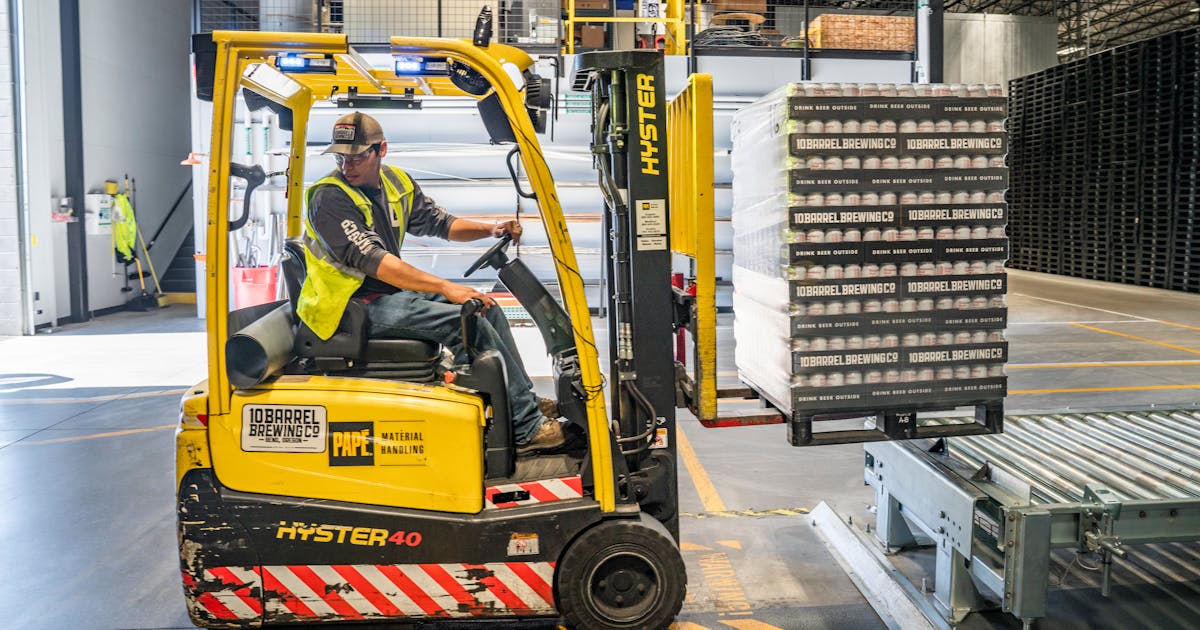
At 6:00 AM Eastern, a dashboard lights up in a small office above a warehouse in Elizabeth, New Jersey. It shows yesterday's final numbers: 10,247 orders shipped. 99.1% same-day fulfillment rate. 3 warehouses ran at capacity. One had a conveyor jam at 2 PM that took 40 minutes to fix.
This is the daily reality for Threadline (name changed), a DTC fashion brand that grew from a garage operation to $85 million in annual revenue in six years. They sell through their own website, Amazon, Nordstrom's marketplace, and a handful of boutique wholesale accounts. They ship from four warehouses on two continents.
I spent two days with their operations team. Here is how it actually works.
The Four Warehouses
| Location | Type | Sq Ft | Daily Capacity | % of US Orders | Primary Role |
|---|---|---|---|---|---|
| Elizabeth, NJ | 3PL | 45,000 | 4,000 orders | 38% | Northeast + Mid-Atlantic |
| Reno, NV | 3PL | 38,000 | 3,200 orders | 30% | West Coast + Mountain |
| Columbus, OH | Own | 52,000 | 3,500 orders | 22% | Midwest + returns processing |
| Tilburg, Netherlands | 3PL | 15,000 | 800 orders | , | EU + UK |
Three are operated by 3PLs. One, Columbus: is their own facility. They keep Columbus in-house because it handles returns and acts as their central inventory hub. "We need full control over returns processing," their VP of Operations told me. "A 3PL does not care about your product quality the way you do. When a return comes in, we decide if it goes back to sellable, gets refurbished, or gets donated. That decision affects our margin."
The Routing Algorithm
When an order comes in, the system decides which warehouse fulfills it in under 200 milliseconds. The logic runs through four decision layers:
Layer 1: Inventory Availability
Does the warehouse have all items in the order, in the correct sizes and colors? If a customer orders a Medium Blue T-shirt and Large Black Jeans, the system checks which warehouses have both. If only two out of four have both items, the other two are eliminated immediately.
This is where real-time inventory visibility is critical. The system needs to know what is on the shelf at each warehouse at this exact moment, not what was there an hour ago. A 15-minute sync delay during a flash sale could mean routing an order to a warehouse that already sold its last unit.
Layer 2: Proximity
Of the warehouses that have stock, which is closest to the customer? Threadline uses a zip-code-to-warehouse distance table precomputed for all 42,000 US zip codes. A customer in Denver gets routed to Reno. A customer in Atlanta gets routed to Columbus or NJ, depending on inventory.
Proximity determines not just shipping speed but shipping cost. Shipping a 1-lb package from NJ to California costs roughly $9.80 via UPS Ground (5-day delivery). The same package from Reno costs $5.20 (2-day delivery). Closer warehouse = cheaper shipping AND faster delivery. It is one of the rare cases where the better customer experience is also the cheaper option.
Layer 3: Carrier Rate Optimization
Within the proximity constraint, the system checks carrier rates. Threadline has negotiated rates with UPS, USPS, and FedEx. Rates vary by origin zip, destination zip, weight, and dimensions. The system queries all three carriers in real-time and selects the cheapest option that meets the delivery promise.
| Route | UPS Ground | USPS Priority | FedEx Home | Selected |
|---|---|---|---|---|
| NJ → Boston | $5.40 | $6.10 | $5.80 | UPS Ground |
| NV → San Francisco | $4.80 | $5.50 | $4.60 | FedEx Home |
| OH → Dallas | $6.20 | $7.10 | $6.50 | UPS Ground |
| OH → Miami | $7.40 | $7.80 | $7.10 | FedEx Home |
Over 10,000 orders/day, a $0.50 average savings from rate shopping adds up to $5,000/day or $1.8 million/year. This is not a rounding error. It is a full-time salary and benefits for 10 employees, funded entirely by an algorithm that takes 50 milliseconds to run.
Layer 4: Warehouse Capacity
Each warehouse has a daily shipping capacity based on staffing, equipment, and carrier pickup schedules. If NJ has already been allocated 3,800 orders (95% of its 4,000 capacity), the system starts routing NJ-bound orders to Columbus, even though Columbus is farther and shipping costs more. Better to pay an extra $2.50 in shipping than to miss the same-day cutoff and delay the order by 24 hours.
This capacity balancing happens dynamically throughout the day. At 8 AM, NJ might be at 10% capacity and getting all Northeast orders. By 2 PM, it is at 85% and the system is diverting overflow to Columbus. By 4 PM, it might be closed for the day and all remaining orders go elsewhere.
The Split Shipment Decision
Not every order can ship from one warehouse. A customer orders three items. NJ has two of them. Reno has one. Nobody has all three. Now what?
Threadline's rules for split shipments:
- Order under $50: Ship from whichever warehouse has the most items. Remaining items ship separately. The brand absorbs the extra shipping cost, which typically adds $4-$6 per split.
- Order $50-$100: Split only if both shipments can arrive within 1 day of each other. Otherwise, hold and consolidate at the nearest warehouse via internal transfer (takes 2-3 days).
- Order over $100: Always split. High-value customers get items as fast as possible. The $4-$6 extra shipping is a tiny percentage of a $100+ order.
- International orders: Never split. The cost of two international shipments is prohibitive. Consolidate at the Netherlands warehouse or ship from the US warehouse with the most items.
Split shipments represent about 8% of Threadline's daily orders. The extra shipping cost averages $4.40 per split, totaling roughly $3,500/day or $1.28 million/year. That sounds painful, but the alternative, holding orders for consolidation, increases delivery time by 2-3 days, which drops their repeat purchase rate by an estimated 12%. The math strongly favors splitting.
The Daily Operations Rhythm
5:00 AM: Overnight Orders Queue
Orders that came in between 8 PM and 5 AM sit in a queue. The system has already routed them to warehouses. When each facility opens, the queued orders release to the WMS (warehouse management system) in priority order: expedited shipping first, then standard, then economy.
6:00 AM: Morning Standup (Virtual)
The operations team has a 15-minute video call. Three items: yesterday's metrics (fulfillment rate, ship time, error rate), today's projected volume (based on marketing calendar, day of week, and seasonality), and any known issues (equipment down, staffing short, carrier delays).
7:00 AM - 2:00 PM, Peak Processing
70% of daily volume ships during this window. Warehouses operate in waves, the WMS releases orders in batches of 200-300, optimized for pick path efficiency. Pickers work zones, not individual orders. A picker in Zone A grabs all items from their zone for a batch of 200 orders, then those items flow to pack stations where they are matched to specific orders.
Pick accuracy is tracked in real-time. Each warehouse targets 99.7% pick accuracy. When accuracy drops below 99.5% for a zone, the zone gets flagged and a supervisor investigates. Common causes: mislabeled bins, similar-looking products adjacent to each other, or a new employee still learning the layout.
2:00 PM: Carrier Cutoff
UPS and FedEx pickups happen between 2:00 and 4:00 PM at each facility. Any order not packed by 2:00 PM may miss the same-day truck. The system tracks this in real-time and escalates orders that are at risk of missing the cutoff.
3:00 PM: Afternoon Rebalance
The operations team reviews inventory levels across all four warehouses. If NJ is running low on a popular item and Columbus has surplus, they initiate an internal transfer. Transfers ship via ground freight and take 2-3 business days between US warehouses. The goal is to prevent any warehouse from stocking out on a top-50 SKU.
5:00 PM: End of Day Report
Automated report showing: total orders shipped, fulfillment rate, average ship time, split shipment percentage, pick error rate, and any customer-impacting issues. This report goes to the CEO, VP of Operations, and all warehouse managers.
The Inventory Allocation Model
Threadline does not just spread inventory evenly across warehouses. They allocate based on regional demand data, updated monthly.
| Product Category | NJ (East) | NV (West) | OH (Central) | NL (EU) |
|---|---|---|---|---|
| Core basics | 35% | 30% | 25% | 10% |
| Seasonal (summer) | 25% | 40% | 20% | 15% |
| Seasonal (winter) | 40% | 20% | 30% | 10% |
| New launches | 30% | 30% | 30% | 10% |
Summer items skew West (40% to NV) because West Coast customers buy more warm-weather clothing. Winter items skew East (40% to NJ). New launches get even distribution until demand data shows geographic patterns.
The allocation is not set-and-forget. Every month, the supply chain team compares actual sell-through rates at each warehouse against the allocation model and adjusts. If NV is selling winter coats faster than expected (ski country demand), the next replenishment sends more to NV and less to NJ.
The Tech Stack
| Layer | Tool | Monthly Cost | Purpose |
|---|---|---|---|
| Storefront | Shopify Plus | $2,300 | DTC website |
| OMS / Inventory Sync | Multichannel OMS | $3,200 | Cross-channel + cross-warehouse visibility |
| Shipping | ShipStation | $1,800 | Label generation + rate shopping |
| WMS (NJ, NV) | 3PL native systems | Included in 3PL fee | Pick/pack/ship operations |
| WMS (Columbus) | Custom-built | $4,500 (hosting + maintenance) | In-house warehouse operations |
| Analytics | Looker | $3,000 | Cross-warehouse reporting |
| Middleware | Custom APIs | $3,200 (dev + hosting) | Connects all systems |
| Total | $18,000 |
$18,000/month sounds like a lot. Divide by 300,000 monthly orders and it is $0.06 per order. On an average order value of $68, the entire technology cost is 0.09% of revenue. The shipping savings from rate shopping alone ($1.8M/year) is 8x the annual software cost ($216K/year).
What Breaks at This Scale
I asked the VP of Operations: "What keeps you up at night?"
Three things:
1. Inventory Data Lag
"If our inventory data is 10 minutes stale, we have routed 100 orders based on wrong information. Some of those orders will go to a warehouse that just ran out of a product. That means either a split shipment or a delay. At 10,000 orders/day, data freshness is everything."
Their OMS syncs inventory across all warehouses and channels in near-real-time. Any system going above a 5-minute sync delay triggers an alert. They have had incidents where an API connection dropped silently, and inventory counts drifted for 2 hours before anyone noticed. Those 2 hours generated 140 misfulfilled orders.
2. Single Points of Failure
"If NJ goes down, power outage, flood, strike, we lose 38% of our shipping capacity instantly. Ohio and Nevada can absorb some overflow, but not 4,000 orders. We would be 2-3 days behind within 24 hours."
Their mitigation: every top-50 SKU is stocked at minimum two warehouses. If one facility goes down, the routing algorithm redirects to other facilities automatically. It costs more in shipping, but orders still go out.
3. Returns Processing Backlog
"Returns run at 18% for fashion. That is 1,800 returns per day flowing into Columbus. If we fall behind on processing, that inventory sits in limbo: it is not sellable online, it is not counted in our available stock, and it is not generating revenue. A 3-day processing backlog means $120,000 in inventory is invisible to our system."
Lessons for Growing Brands
Threadline did not start with four warehouses. They shipped from a garage for the first year, a single 3PL for years two through four, added a second location at $30M revenue, and the third and fourth at $60M. Here is what their VP of Operations would tell his past self:
- Get inventory visibility before you get the second warehouse. "We added NV before we had proper inventory sync. For three months, we were updating spreadsheets to track what was where. It was chaos. Get the OMS first."
- Your 3PL is not your partner. They are a vendor. "They will process your orders. They will not optimize your operations. That is your job. Audit them monthly. Visit quarterly. Trust but verify."
- Proximity beats negotiation for shipping costs. "We spent months negotiating carrier rates. Then we added a West Coast warehouse and our average shipping cost dropped 22% overnight. Location matters more than rate cards."
- Returns are a warehouse, not an afterthought. "We treated returns as a problem to deal with. Now we treat them as a facility to run. The day we gave returns their own team, space, and KPIs, our restocking rate went from 61% to 84%."
10,000 orders a day from four warehouses is complex. But the complexity is manageable because every decision, which warehouse ships, which carrier delivers, when to split, when to rebalance, is driven by data, not instinct. The data has to be accurate. It has to be real-time. And it has to span every location and every channel simultaneously.
That is the entire job. Keep the data clean, and the operations follow.
Frequently Asked Questions
The routing algorithm considers four factors in this order: inventory availability (does the warehouse have all items in the order?), proximity to the customer (closest warehouse with stock), carrier rate optimization (which location offers the cheapest shipping to that zip code?), and warehouse capacity (is the facility at its daily shipping cap?). The algorithm runs in milliseconds when the order is placed and assigns it to the optimal warehouse automatically.
The brand has two options: split the shipment (ship from multiple warehouses and pay multiple shipping charges) or transfer inventory between warehouses to consolidate the order. For orders under $50, they usually ship from the warehouse that has the most items to minimize splits. For orders over $100, they will split the shipment because the margin justifies the extra shipping cost and faster delivery matters more.
The brand allocates inventory to each warehouse based on regional demand data. The East Coast warehouse (New Jersey) holds 35% of total inventory because 38% of US orders ship to the Northeast and Mid-Atlantic. The West Coast warehouse (Nevada) holds 30%. The Midwest warehouse (Ohio) holds 25% and acts as overflow and returns processing. The Netherlands warehouse holds 10% for EU orders. Allocation is rebalanced monthly based on actual sales data.
Their core stack includes: Shopify Plus for their DTC storefront, a multichannel OMS for inventory sync and order routing across all channels and warehouses, ShipStation for label generation, a custom WMS (warehouse management system) at each facility, Looker for analytics, and a custom middleware layer that connects everything via APIs. Total software spend is roughly $18,000/month, about $0.06 per order in software cost.
All US returns are routed to the Ohio warehouse regardless of where the order originally shipped from. This centralizes return processing, quality inspection, and restocking into one facility. Returned items that pass inspection are restocked and redistributed to other warehouses during monthly rebalancing. EU returns go to the Netherlands warehouse. The centralized return model simplifies operations but means returned inventory is not available at the original shipping warehouse immediately.
Most brands start considering a second warehouse at 500-1,000 orders/day or when they notice a geographic concentration of orders far from their primary warehouse. If 40% of your orders go to the West Coast but your only warehouse is in New Jersey, a Nevada or California facility could cut 2-day shipping costs by 30-40%. Below 200 orders/day, the operational complexity of multi-warehouse usually outweighs the shipping savings.
Related Articles
View all
The Merchant Watchlist: 21 Signals to Track Before They Hit Your Margins
Most ecommerce sellers react after costs move. This watchlist shows what merchants should track weekly across freight, tariffs, fuel, suppliers, platforms, demand, and cash.

Amazon Delivery Is Now Measured in Minutes. Can Small Stores Compete?
Amazon is pushing delivery from days to hours to minutes. Small ecommerce brands cannot copy that network, but they can compete with clarity, trust, and smarter promises.

Unified Commerce Is the New Omnichannel, and Most Brands Are Still Behind
Omnichannel is no longer enough if every system still runs in silos. Unified commerce is becoming the operating standard for modern ecommerce.