Stockout Cost Calculation: Complete Guide
The Full Cost of a Stockout
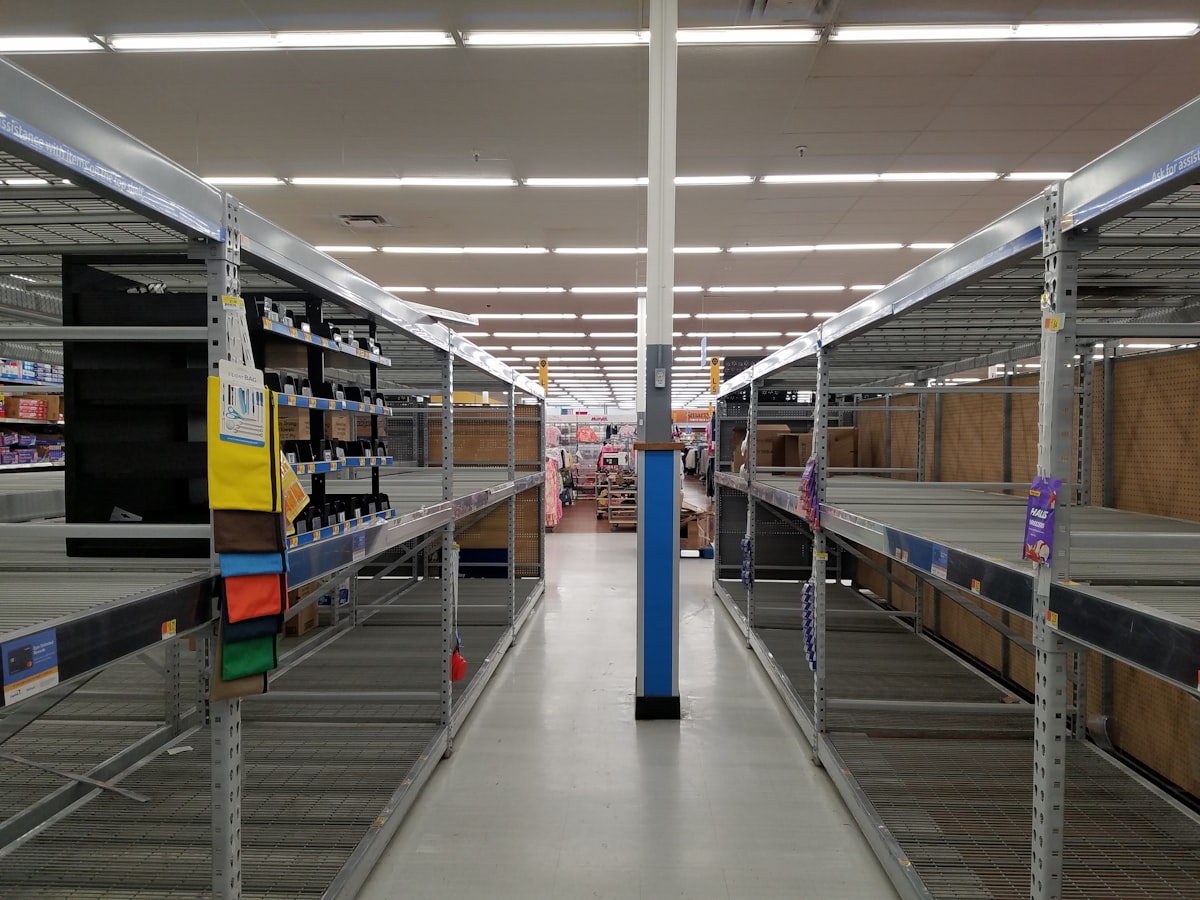
Most ecommerce operators think of a stockout as a simple lost sale. A customer wanted to buy, the product was unavailable, the customer left. Revenue missed. Move on.
That framing dramatically underestimates the true damage. A stockout is not a one-time event — it is a cascade of compounding costs that unfold over days and weeks. By the time your shelves are restocked, the financial wound is far deeper than the direct lost margin, and much of the damage is invisible in your sales dashboard.
Here is every cost category you need to account for when calculating the true impact of an inventory shortage.
1. Direct Lost Revenue
The most visible cost: customers who tried to buy and could not. This includes not just shoppers who arrived at an out-of-stock listing, but also customers who were mid-funnel — clicking ads, receiving emails, browsing your store — and encountered an unavailable product. Your ad spend continued. Your revenue did not.
2. Customer Lifetime Value Loss
A customer who hits an out-of-stock page does not simply wait. Research by the Grocery Manufacturers Association found that 70% to 80% of shoppers who encounter a stockout will substitute a competitor's product rather than wait for restocking. That substitution often becomes permanent. Once a customer forms a new purchasing habit with your competitor, winning them back costs 5x to 7x more than retaining them would have. The stockout that cost you one sale actually cost you years of repeat purchases.
3. Marketplace Ranking Suppression
Amazon, Walmart, and other marketplace algorithms reward sales velocity. When you go out of stock, your velocity drops to zero. Best Seller Rank degrades. Your organic search placement drops. In some cases your listing is suppressed entirely. The cruel reality: rebuilding that rank takes 2 to 4 weeks of consistent sales after restocking. So the ranking damage outlasts the stockout itself.
4. Paid Traffic Waste
If you are running Sponsored Product ads on Amazon or Google Shopping campaigns and your product goes out of stock, your ads may continue running (especially if the stockout happens gradually or if you use manual campaigns). You are paying for clicks to a page that cannot convert. Every dollar of wasted ad spend during a stockout period amplifies the cost.
5. Emergency Replenishment Costs
When you realize you are stocked out or approaching zero, the rational response is to reorder immediately — often via air freight rather than sea freight to minimize the recovery window. Air freight costs 4x to 10x more per unit than ocean shipping. Add PO rush fees from suppliers and expedited receiving fees from your 3PL, and the replenishment cost alone can erode the margin on the next several hundred units sold.
The Direct Stockout Cost Formula
Before calculating the cascading costs, start with the direct revenue impact. This is your baseline and the number most relevant to stakeholders who need a simple figure.
Direct Revenue Impact = Units Lost × AOV × Gross Margin %

Units Lost = Average Daily Unit Velocity × Days Out of Stock
Example calculation:
You sell a kitchen blender. Average daily sales velocity: 18 units per day. Average Order Value: $85. Gross margin: 38%. You were out of stock for 6 days.
Units Lost      = 18 units/day × 6 days = 108 units
Revenue Lost    = 108 × $85            = $9,180
Margin Lost     = $9,180 × 38%         = $3,488
That $3,488 in direct margin loss is just the starting point. It represents only what you can easily see. The full cost of that 6-day stockout is substantially higher once you apply the multipliers in the sections below.
Note: if you run paid traffic, add your wasted ad spend during the stockout period directly to this figure. If you spent $400/day on Google Shopping campaigns for this product and the ads kept running for 4 of the 6 days before you paused them, add $1,600 to your direct cost.
Customer Lifetime Value Impact
Direct margin loss is the tip of the iceberg. The LTV impact is the submerged mass that sinks profitability long after the stockout is resolved.
The Repeat Purchase Probability Drop
Customers who encounter a stockout are statistically less likely to return even after you restock. The exact probability depends on your category and competitive landscape, but industry benchmarks suggest:
- Low-substitution categories (proprietary products, niche goods): 15% to 25% of affected customers do not return.
- High-substitution categories (commoditized products, common household goods, supplements): 40% to 60% of affected customers switch to a competitor permanently.
LTV Churn Cost Formula
LTV Churn Cost = Unique Visitors During Stockout
                 × Estimated Purchase Intent Rate
                 × Churn Probability
                 × Customer LTV

Example:
Unique visitors to the out-of-stock page over 6 days: 1,200
Estimated purchase intent rate (visitors who would have bought): 8%
Estimated customers lost to stockout: 1,200 × 8% = 96 customers
Churn probability (% who will not return): 35%
Customers permanently churned: 96 × 35% = 33.6 customers
Average Customer LTV: $320

LTV Churn Cost = 33.6 × $320 = $10,752
That single 6-day stockout — which generated $3,488 in direct margin loss — also generated an estimated $10,752 in long-term LTV destruction. Total cost is now $14,240 before factoring in marketplace penalties and replenishment costs.
This is why stockout cost calculation must go beyond the income statement. The full damage only becomes visible when you apply an LTV lens.
Competitive Substitution Rate
In highly competitive categories, your stockout is a direct gift to your competitors. When a customer searches for your product on Amazon and finds it unavailable, the marketplace immediately surfaces alternatives — often your direct competitors with sponsored placements. Some of those competitors will convert that shopper and then retarget them with email and ads, locking in the relationship.
Track your competitive substitution rate by monitoring your category's Best Seller Rank movements during your stockout periods. If a competitor's BSR improves significantly while yours degrades, they are capturing your displaced demand. This data is actionable: it tells you exactly how much business you are handing to specific competitors and helps you prioritize which stockouts to prevent first.
Marketplace Penalty Costs
If you sell on Amazon, Walmart, or other third-party marketplaces, stockouts carry platform-specific penalties that compound your direct losses.
Amazon Best Seller Rank Degradation
Amazon's BSR is updated hourly based on recent sales velocity. A product that ranks #500 in its subcategory with consistent daily sales will drop to #2,000 to #5,000 within 48 to 72 hours of going out of stock, depending on category competition. Rebuilding from that position after restocking requires 2 to 4 weeks of strong sales performance.
The cost: every position lower in BSR means less organic visibility, which means fewer organic sales, which means you must spend more on sponsored ads to compensate. A rough rule of thumb: if your pre-stockout organic-to-paid ratio was 70/30 and your ranking drops, you may need to temporarily shift to 50/50 or worse to recover velocity, increasing your advertising cost of sale until ranking recovers.
Buy Box Loss
Out-of-stock products lose the Buy Box immediately. If you have third-party sellers on your ASIN who maintain inventory, they capture the Buy Box during your stockout. Every sale they make at the Buy Box price is revenue you lose — and they may price the Buy Box higher, eroding price perception for your brand. Recovering Buy Box ownership after restocking typically takes 2 to 7 days depending on your seller metrics.
Walmart WFS Penalties
Walmart Fulfillment Services tracks in-stock rate as a seller health metric. Sellers using WFS are expected to maintain high in-stock rates. Repeated stockouts can trigger:
- Reduced listing visibility in Walmart search results
- Loss of eligibility for Walmart's "Pro Seller" badge
- In severe cases, suspension of the listing or seller account
For high-volume Walmart sellers, the listing suppression that follows repeated stockouts can reduce organic revenue by 20% to 40% for weeks after restocking. Factor this revenue recovery period into your total stockout cost.
Organic Search Ranking Damage
Beyond marketplace algorithms, stockouts damage your SEO. If you have product pages indexed on Google that return a 404 or display "out of stock" with no purchasable alternative, those pages lose click-through rate. Google's algorithm interprets low CTR as reduced relevance. Long stockout periods can permanently reduce the organic ranking of product pages that took months or years of SEO investment to build.
Operational Recovery Costs
The costs of getting back in stock are frequently overlooked in stockout cost calculations. Here is a realistic breakdown of emergency replenishment expenses.
Air Freight Premium
Ocean freight from Asia to the US West Coast typically costs $0.50 to $1.50 per unit for a standard consumer product. Air freight for the same route costs $4.00 to $12.00 per unit. If your emergency restock quantity is 500 units, the air freight premium over sea freight is:
Air Freight Premium = (Air Cost per Unit - Sea Cost per Unit) × Units
                    = ($8.00 - $1.00) × 500
                    = $7.00 × 500
                    = $3,500 additional freight cost
Supplier Rush Fee
Many overseas suppliers charge a 5% to 15% rush fee for expedited production orders that jump the queue. On a $20,000 order, a 10% rush fee adds $2,000 directly to your COGS for that batch.
Expedited 3PL Receiving
Your 3PL or warehouse partner may charge premium rates for expedited receiving when you need inventory processed and available for sale immediately rather than on the standard 3 to 5 business day receiving schedule. Expedited receiving typically costs $0.50 to $1.50 per unit above standard rates.
Full Recovery Cost Example
Direct Margin Loss:           $3,488
LTV Churn Cost:              $10,752
Air Freight Premium:          $3,500
Supplier Rush Fee:            $2,000
Expedited 3PL Receiving:        $500
Wasted Ad Spend:              $1,600
─────────────────────────────────────
Total Stockout Cost:         $21,840
A 6-day stockout that appeared to cost $3,488 in direct margin actually cost $21,840 — a 6.3x multiplier on the surface-level loss. This is why prevention investment pays off at a much higher ROI than most operators expect. Real-time inventory management tools that cost a few hundred dollars per month can prevent tens of thousands in stockout damage.
The Stockout Cost Calculator: Step-by-Step Worksheet
Use this Excel-ready worksheet to calculate the full cost of any stockout event. Each section maps to a formula you can implement in a spreadsheet.
Section A: Direct Cost
[A1] Avg Daily Unit Velocity         = ___ units/day
[A2] Days Out of Stock               = ___ days
[A3] Units Lost                      = A1 × A2
[A4] Average Order Value (AOV)       = $___
[A5] Gross Margin %                  = ___%
[A6] Direct Margin Lost              = A3 × A4 × A5

[A7] Wasted Ad Spend During Stockout = $___ (daily spend × days ads ran)
[A8] Total Direct Cost               = A6 + A7
Section B: LTV Churn Cost
[B1] Unique Visitors to OOS Page     = ___
[B2] Estimated Purchase Intent Rate  = ___% (use 6-12% for product pages)
[B3] Customers Who Would Have Bought = B1 × B2
[B4] Churn Probability               = ___% (15-60% depending on category)
[B5] Customers Permanently Lost      = B3 × B4
[B6] Average Customer LTV            = $___
[B7] LTV Churn Cost                  = B5 × B6
Section C: Marketplace Penalty Estimate
[C1] Pre-Stockout Daily Organic Revenue  = $___
[C2] Estimated Organic Revenue Drop %   = ___% (20-40% for 2-4 weeks post-restock)
[C3] Recovery Period (weeks)             = ___ weeks
[C4] Marketplace Ranking Recovery Cost  = C1 × C2 × (C3 × 7)
Section D: Replenishment Premium
[D1] Emergency Restock Units         = ___
[D2] Air vs. Sea Freight Premium/Unit = $___
[D3] Air Freight Premium             = D1 × D2
[D4] Supplier Rush Fee               = $___ (5-15% of PO value)
[D5] Expedited 3PL Receiving         = $___ (D1 × $0.50 to $1.50)
[D6] Total Replenishment Premium     = D3 + D4 + D5
Section E: Total Stockout Cost
Total Stockout Cost = A8 + B7 + C4 + D6
Cost Multiplier     = Total Stockout Cost ÷ A6
(Target: understand how much the hidden costs multiply the direct margin loss)
Run this worksheet for your three most recent stockout events. If you do not have the data, use conservative estimates. The output will almost always reveal a cost multiplier between 3x and 8x — a number that justifies significant investment in safety stock and reorder point automation.
Prevention Stack: Stopping Stockouts Before They Start
Now that you understand the true cost of a stockout, the question becomes: what does an effective prevention system look like? The answer is a four-layer stack, each layer addressing a different failure mode.
Layer 1: Data-Driven Safety Stock
Most operators set safety stock based on intuition ("let's keep 2 weeks of buffer"). This approach is simultaneously over-stocked on slow movers and under-stocked on fast movers. The statistically correct formula accounts for both demand variability and lead time variability:
Safety Stock = Z × √((Avg Lead Time × σ_Demand²) + (Avg Demand² × σ_Lead_Time²))

Where:
Z             = Service level Z-score (1.65 for 95%, 1.28 for 90%)
σ_Demand      = Standard deviation of daily demand
σ_Lead_Time   = Standard deviation of supplier lead time
A product with volatile demand or an unreliable supplier needs far more safety stock than a steady-selling product with a consistent supply chain. The math makes this explicit. See our complete safety stock formula guide for worked examples across different product types.
Layer 2: Automated Reorder Points
Safety stock tells you how much buffer to hold. The reorder point tells you when to act:
Reorder Point = (Avg Daily Demand × Lead Time in Days) + Safety Stock
When inventory hits the reorder point, a purchase order should be triggered automatically — not when someone notices the shelves looking empty. Manual monitoring of reorder points introduces human error and response latency. At 200+ SKUs, it is operationally impossible. Automated alerts and PO triggers are non-negotiable at scale. Read more in our reorder point calculator guide.
Layer 3: Demand Forecasting
Static reorder points based on historical averages fail during demand spikes. A robust forecasting layer incorporates:
- Seasonal indices: Multiply base safety stock by a seasonal factor (e.g., 2.5x in November for most categories).
- Trend detection: If a SKU's 14-day rolling average is 30% above its 90-day average, it is trending. Adjust the reorder point upward before you run short.
- Promotional calendars: Planned sales, influencer posts, and email campaigns create predictable demand spikes. Pre-load inventory 3 to 6 weeks before campaigns launch.
- External signals: Seasonal weather events, competitor stockouts, and viral social moments drive demand changes that no historical model will predict. Build a lightweight monitoring process to catch these early.
Layer 4: Supplier Diversification
The most mathematically perfect safety stock level does not protect you if your sole supplier misses a delivery or faces a factory shutdown. Single-supplier dependency is an existential stockout risk. Best practices:
- Qualify at least two suppliers for every SKU that generates more than 5% of your revenue.
- Place 10% to 20% of your volume with your secondary supplier to keep the relationship active and the supplier capable.
- Negotiate split-shipment options so you can airfreight a partial order if a sea freight shipment is delayed.
- Build lead time variance data for each supplier separately, and use the more volatile supplier's data when calculating safety stock for that source.
Layer 5: Real-Time Inventory Alerts
Even with safety stock and reorder points in place, exceptions happen. A sudden demand spike can burn through safety stock faster than the model anticipated. A supplier delay can push lead time beyond the assumed average. Real-time alerts catch these edge cases before they become stockouts.
Configure alerts at three threshold levels:
- Yellow alert (approaching reorder point): Inventory is within 120% of reorder point. Verify PO status and expected delivery date.
- Orange alert (at safety stock level): You are burning into your buffer. Confirm incoming PO ETA and assess whether air freight is needed.
- Red alert (days of stock remaining below lead time): Imminent stockout. Immediate action required: expedite, air freight, or source emergency supply.
Explore how real-time inventory monitoring prevents both overselling and stockouts across multichannel operations. And see the full feature set available through Nventory's inventory management platform.
Acceptable Stockout Rate: Is 0% Realistic?
After reviewing the cost of stockouts, the instinctive response is: "Let's target zero stockouts." That instinct is understandable but economically flawed.
The Service Level vs. Carrying Cost Tradeoff
The relationship between service level and required safety stock is not linear — it is exponential. Going from a 90% service level to a 95% service level requires a meaningful increase in safety stock. Going from 95% to 99% requires dramatically more. Going from 99% to 99.9% requires so much additional inventory that the carrying cost (storage fees, capital tied up, obsolescence risk, insurance) often exceeds the revenue you are protecting.
Service Level   Z-Score   Safety Stock Multiplier (vs. 90%)
90%             1.28      1.0×  (baseline)
95%             1.65      1.3×
99%             2.33      1.8×
99.5%           2.58      2.0×
99.9%           3.09      2.4×
For most ecommerce businesses, the practical optimum is a 95% to 98% service level for Class A SKUs (top 20% by revenue) and a 90% to 95% service level for Class B SKUs. Class C SKUs (slow movers, long tail) can tolerate 85% to 90% service levels without meaningful business impact.
Diminishing Returns at the Margin
Consider a SKU where achieving 99% service level requires $15,000 in additional safety stock capital versus a 95% service level. Your annual carrying cost on that $15,000 (storage, capital cost, obsolescence risk) is approximately $3,000 to $4,500. The incremental stockout you prevent by moving from 95% to 99% service level — that one additional stockout per 20 replenishment cycles — needs to cost more than $3,000 to $4,500 to justify the additional investment. For most SKUs, it does not.
Run the worksheet from Section 6 on your top 10 SKUs. Divide the total stockout cost by the expected frequency of stockouts at each service level. That ratio tells you the maximum you should invest in preventing stockouts for each SKU — and it will almost always point to a service level between 95% and 99%, not 100%.
Stop Losing Revenue to Stockouts
Stockouts are not random bad luck. They are the predictable consequence of insufficient safety stock, delayed reorder triggers, single-supplier dependency, and absent real-time monitoring. Every element of that failure chain is preventable with the right systems and data.
The worksheet in this guide gives you everything you need to quantify the true cost of your current stockout problem. Once that number is on paper, the ROI case for prevention tools becomes obvious — and the question shifts from "can we afford to invest in inventory management?" to "how much have we already lost by not investing?"
Stop losing revenue to stockouts. See how Nventory prevents out-of-stocks with real-time alerts — request a demo.
Frequently Asked Questions
A single stockout event typically costs 1.5x to 3x the direct lost revenue once you factor in customer lifetime value loss, marketplace ranking damage, and emergency restock fees. A product with a $50 average order value and 30% margin that stocks out for 7 days can generate a direct revenue loss of thousands of dollars — plus long-term churn costs that dwarf the immediate impact. Studies estimate the global cost of out-of-stock events at over $1 trillion annually across retail.
The basic formula is: Direct Revenue Impact = Units Lost × Average Order Value × Gross Margin. Calculate units lost by multiplying your average daily unit velocity by the number of days you were out of stock. For example, if you sell 15 units per day at a $60 AOV with a 40% margin, a 5-day stockout costs 15 × 5 × $60 × 0.40 = $1,800 in direct margin loss. Add customer lifetime value churn and marketplace recovery costs to get the full picture.
Yes, significantly. Amazon's A9 algorithm uses sales velocity as a primary ranking signal. When a product goes out of stock, its sales velocity drops to zero and its Best Seller Rank (BSR) degrades rapidly. Depending on the category and competition, you can drop hundreds or even thousands of BSR positions within 48 to 72 hours of a stockout. Recovering your pre-stockout rank typically takes 2 to 4 weeks of normal sales velocity after restocking, meaning the ranking damage outlasts the actual inventory shortage.
Most supply chain experts recommend targeting a stockout rate below 1% to 2% for your top-selling SKUs (Class A items). A 98% to 99% service level is the standard for bestsellers. For Class B items a 95% service level (5% stockout rate) is generally acceptable, and for slow-moving Class C items 90% service level can be cost-effective. A 0% stockout rate is theoretically achievable but economically irrational — the carrying cost of excess safety stock required to eliminate all stockouts exceeds the revenue protected at some point for every SKU.
The three-part prevention stack is: accurate demand forecasting (use rolling 90-day averages adjusted for seasonality), data-driven safety stock (use the statistical formula based on demand and lead time standard deviation rather than gut feel), and automated reorder point alerts (trigger purchase orders at the mathematical reorder point rather than when shelves look low). Supplier diversification and real-time inventory monitoring round out a robust prevention strategy. The goal is not to buy more — it is to buy the right amount at the right time.
Related Articles
View all
Inventory Allocation by Channel: Strategy Guide
Allocating inventory across DTC, marketplace, and wholesale channels without overselling or starving your best opportunities is one of the most consequential decisions in multi-channel operations. This guide breaks down the models, the math, and the mechanics.
Safety Stock Formula for Ecommerce: Complete Guide
Master the safety stock formula for ecommerce with step-by-step calculations, service level tables, and real-world examples for DTC brands selling across multiple channels.
Reorder Point Calculator: Formula & Guide
Learn how to calculate your reorder point using the ROP formula, including lead time, safety stock, and demand variables — with worked examples for ecommerce.