Amazon FBA Prep Changes 2026: What Sellers Must Do Now
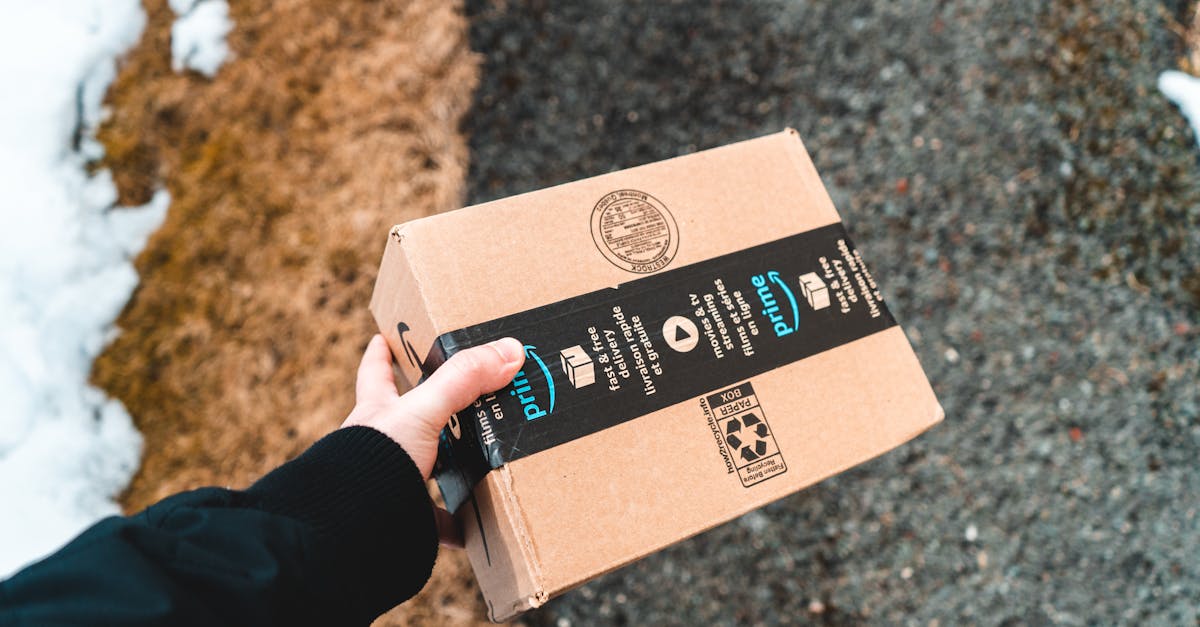
On July 28, 2025, Amazon announced it would end all in-house FBA prep and labeling services in the United States. The cutoff date was January 1, 2026. As of that date, Amazon no longer polybags, bubble wraps, boxes, labels, bundles, or kits any inventory on behalf of sellers. Every unit that arrives at an Amazon fulfillment center must be fully prepped, labeled, and compliant before it gets there.
Three months into this new reality, the dust has settled enough to see who adapted and who is still scrambling. This guide covers what changed, what it costs, and how to set up a prep workflow that keeps your FBA operations running without interruption.
What Amazon Actually Discontinued
Before the change, sellers could ship inventory to Amazon with minimal preparation and pay Amazon to handle the rest. Amazon would apply FNSKU labels, polybag items that needed protection, bubble wrap fragile products, and even assemble bundles. Many sellers, especially those new to FBA, relied on this service heavily.
As of January 1, 2026, all of the following services are gone:
- FNSKU barcode labeling
- Polybagging for loose or multi-piece items
- Bubble wrapping for fragile products
- Boxing and overboxing for oversized or irregular items
- Bundling and kitting assembly
- Taping and securing of product packaging
The change applies across every inbound channel. Whether you use Amazon Warehousing and Distribution (AWD), Amazon Global Logistics (AGL), SEND, or the Supply Chain Portal, the same rules apply. Amazon will not prep your inventory regardless of how it arrives.
"Amazon handled our labeling for 3 years. We never had to think about it. Then in Q4 2025 we got the notice and had 5 months to figure out a completely new workflow. It was a lot more involved than just buying a label printer."
- Amazon Seller Central Forums, FBA seller since 2022
For the API-side of things, the AMAZON value is no longer valid for prepOwner or labelOwner in Fulfillment Inbound API operations. If your software or integration still passes that value, your API calls will fail.
Why Amazon Made This Change
Amazon framed the decision as an efficiency measure. According to their announcement, "most sellers already manage prep independently," and removing the service allows fulfillment centers to focus on storage, picking, packing, and shipping rather than inbound processing.
The practical reasons go deeper. Amazon has been tightening its inbound supply chain for several years. The introduction of placement fees in 2024, the expansion of AWD, and the restructuring of FBA fee tiers all point toward a single goal: shifting upstream logistics costs and responsibilities to sellers.
From Amazon's perspective, prep services were a cost center that served a shrinking percentage of sellers. The margins on per-unit prep fees did not justify the warehouse labor, especially as fulfillment center capacity became more constrained. Removing prep services frees up receiving dock time and labor hours for higher-throughput operations.
"This is Amazon doing what Amazon always does. They subsidize a service until sellers depend on it, then pull it once they have enough market share to set the terms. The prep service was never a profit center for them. It was an onboarding ramp."
- r/FulfillmentByAmazon, discussion thread on prep service changes
Whatever the reasoning, the effect on sellers is the same: you now own every step of inbound preparation, and the cost of errors falls entirely on you.
The Real Cost of Non-Compliance
The financial risk of sending unprepped or mislabeled inventory to Amazon is higher now than it was before the change. Previously, Amazon would catch errors and fix them for a fee. Now, non-compliant shipments face a different set of consequences:
- Shipment rejection at receiving, with return shipping costs charged to the seller
- Inventory disposal if Amazon determines the items cannot be processed
- No reimbursement for items lost or damaged during the rejection process
- Account health warnings that can affect your overall seller standing
- Unplanned prep fees if Amazon chooses to process items anyway (at significantly higher rates)
The unplanned prep fee is worth noting. Amazon has not completely eliminated the possibility of prepping items on your behalf, but when they do, the fee is punitive rather than service-oriented. Sellers who previously paid $0.20 per label through the standard prep service are now seeing unplanned prep charges of $1.00 or more per unit when Amazon intervenes.
| Consequence | Before Jan 2026 | After Jan 2026 |
|---|---|---|
| Missing FNSKU label | Amazon applies label, charges $0.20/unit | Shipment rejected or unplanned fee of $1.00+/unit |
| No polybag on required item | Amazon polybags, charges $0.50/unit | Shipment delayed, possible disposal |
| Incorrect bundling | Amazon flags issue, seller notified | Inventory rejected, return shipping at seller cost |
| Damaged packaging | Amazon may rebox, charges fee | Inventory marked unfulfillable, disposal or removal |
| Wrong barcode type | Amazon corrects, charges fee | Shipment rejected, account health impact |
The math is straightforward. A seller shipping 1,000 units per month with a 5% error rate previously paid about $10 in correction fees. That same 5% error rate now costs $50 or more in unplanned fees, plus the operational disruption of rejected shipments and delayed availability. At scale, a 5% error rate on 10,000 monthly units means 500 problem units and potential costs exceeding $500 per month before accounting for lost sales from inventory being unavailable.
Three Prep Models and When Each One Works
Every FBA seller now faces the same question: who preps my inventory? There are three practical answers, and the right one depends on your volume, product type, and existing infrastructure.
In-House Prep
You handle all labeling, packaging, and compliance work yourself or with your own team. This gives you maximum control over quality and timing but requires equipment, space, and labor.
The minimum equipment list for in-house FBA prep includes:
- A thermal label printer (Zebra or DYMO commercial grade) for FNSKU labels
- Polybag sealer and appropriately sized bags with suffocation warnings
- Bubble wrap and void fill materials for fragile items
- A barcode scanner for verification before shipment
- Packing tape dispenser and shipping-grade tape
- A prep station with adequate workspace and lighting
Initial equipment cost runs between $500 and $2,000 depending on quality. Ongoing consumable costs (labels, bags, wrap) average $0.10 to $0.30 per unit. Labor is the variable. If you are doing it yourself, the cost is your time. If you hire, expect $15 to $20 per hour for trained prep staff who can process 40 to 60 units per hour once trained.
"We brought prep in-house after the announcement. First month was rough. Error rate was around 8%. By month three we had it down to under 1%. The key was building a checklist system and scanning every single label before it went into the box."
- Amazon Seller Central Forums, mid-volume FBA seller
Third-Party Prep Centers
You ship inventory to a prep center that handles labeling, packaging, and compliance, then forwards the prepped inventory to Amazon. This model eliminates the need for equipment and trained staff but adds cost per unit and lead time.
Typical prep center pricing in 2026:
| Service | Price Range (per unit) | Notes |
|---|---|---|
| FNSKU labeling only | $0.20 - $0.40 | Print and apply one barcode label |
| Polybagging | $0.30 - $0.75 | Bag, seal, apply suffocation warning |
| Bubble wrapping | $0.50 - $1.50 | Varies by item size and fragility |
| Full prep (label + bag + inspect) | $0.75 - $2.00 | Most common service package |
| Bundle assembly | $1.00 - $3.00 | Multi-item kitting and shrink wrapping |
| Storage per cubic foot/month | $0.50 - $1.50 | If inventory sits before forwarding |
Lead time at prep centers has increased since January 2026. Many centers report 3 to 7 business day turnaround times during normal periods, stretching to 10 to 14 days during Q4. If you use a prep center, build that lead time into your inventory planning cycle or risk stockouts from late arrivals at FBA warehouses.
Hybrid Model
You prep routine, high-volume SKUs in-house and send complex items (fragile products, multi-piece bundles, hazmat-category goods) to a prep center. This is the approach most mid-to-large sellers have landed on because it balances cost control with risk management.
The hybrid model works when you have at least some warehouse or prep space available. You run your standard SKUs through your own process, keeping per-unit costs low, and route the exceptions to specialists who handle them correctly the first time.
Setting Up a Compliant Prep Workflow
Regardless of which model you choose, the workflow follows the same basic structure. Here is what a compliant FBA prep process looks like in 2026.
Step 1: Identify Prep Requirements per SKU
Every ASIN has specific prep requirements that Amazon defines based on the product category. These requirements are available in Seller Central under the "Prep Guidance" section of each listing. Common prep categories include:
- Poly bagging required (apparel, textiles, plush items, multi-piece sets)
- Bubble wrap required (glass, ceramics, fragile electronics)
- No prep required (items in manufacturer packaging that meets Amazon standards)
- Special handling (liquids, sharp items, items with expiration dates)
Map your entire catalog against these requirements. This is not a one-time task. Amazon updates prep requirements by category, and new ASINs may have different requirements than similar existing products. Build a living document or spreadsheet that your prep team references for every shipment.
Step 2: Label Correctly
FNSKU labels must be scannable, properly sized (1" x 2" or 1" x 3" for most standard items), and placed so they do not cover existing UPC barcodes. If a unit has a manufacturer barcode that is not being used as the primary identifier, cover it with the FNSKU label or use an opaque sticker to prevent scanning confusion at the fulfillment center.
Label printing quality matters more than most sellers realize. A label that scans correctly in your warehouse under ideal lighting conditions may not scan under the high-speed conveyor scanners at Amazon's receiving docks. Use a thermal printer (not inkjet) and test label readability at multiple angles before committing to a label stock.
Step 3: Verify Before Shipping
The single most effective quality control step is scanning every labeled unit before it goes into a shipping carton. Use a handheld barcode scanner to verify that each FNSKU matches the expected product. This 3-second step per unit catches mislabeling errors that would otherwise result in rejected shipments or, worse, inventory commingling with another seller's products.
Build a verification checklist for each shipment:
- All FNSKUs scan correctly and match the shipment plan
- Polybagging is sealed and suffocation warning is visible
- Bubble-wrapped items have no exposed fragile surfaces
- Boxes are not overfilled or underweight relative to declared contents
- Shipping labels match the correct Amazon fulfillment center destination
Step 4: Track Prep Costs in Your Margins
Prep is now a line item in your cost of goods sold, not an Amazon service fee buried in your FBA reports. Track it accordingly. For every SKU, your landed cost calculation should include the per-unit prep cost, whether that comes from your own labor, consumable materials, or a prep center invoice.
If your margins were already tight on certain SKUs when Amazon was handling prep for $0.20 per label, those margins may now be negative after accounting for the full cost of compliant prep. This is a good time to audit your catalog and identify SKUs where the total FBA fee structure no longer supports profitable operations.
Inventory Planning and Next Steps
Prep is not an isolated task. It sits at the intersection of purchasing, warehousing, and inventory management. When prep goes wrong, the downstream effects ripple through your entire FBA operation.
Consider the sequence: you order 500 units from your supplier. They arrive at your warehouse or prep center. Prep takes 3 to 5 days. You create an inbound shipment plan in Seller Central. You ship to Amazon. Amazon receives and processes the shipment in 3 to 10 days. Total time from supplier delivery to units being available for sale: 6 to 15 days, sometimes longer.
That 6-to-15-day gap is time when your inventory is in transit and unavailable. If you do not account for it in your reorder calculations, you will stockout. If you overcompensate and order too early, you pay unnecessary storage fees at Amazon or at your own facility.
The sellers who have adapted most successfully to the prep changes are the ones who integrated prep lead time into their inventory planning and IPI management systems. They treat prep capacity as a constraint, just like warehouse space or shipping lane availability, and plan around it.
A practical approach: set your reorder point to account for supplier lead time plus prep lead time plus Amazon receiving time. If your supplier delivers in 14 days, prep takes 5 days, and Amazon receiving takes 7 days, your total lead time is 26 days. Your reorder point should cover 26 days of sales velocity plus a safety buffer for variability.
If you have already set up a prep process and it is running smoothly, focus on optimization. Track your error rate, reduce consumable waste, and negotiate better rates with your prep center if you use one.
If you are still figuring things out, here is a priority list:
- Audit every active ASIN for its specific prep requirements in Seller Central
- Choose your prep model (in-house, outsourced, or hybrid) based on your monthly unit volume
- Purchase or test equipment if going in-house, starting with a thermal label printer and barcode scanner
- Update your API integrations to remove the deprecated AMAZON prepOwner and labelOwner values
- Build prep lead time into your inventory reorder calculations
- Set up a quality control checkpoint with barcode verification before every shipment
- Track per-unit prep costs as a distinct line item in your cost of goods
The FBA prep change is not temporary. Amazon has made clear this is a permanent shift in how inbound inventory is handled. Sellers who build a reliable, repeatable prep process now will carry that operational advantage through every Q4 and every product launch going forward. Those who treat it as an inconvenience to work around will keep paying the unplanned prep tax on every shipment that does not meet the standard.
The good news: this is a solvable problem. It takes some upfront investment in process and equipment, but once your prep workflow is dialed in, it runs on autopilot. And unlike the old Amazon prep service, you control the quality, the timing, and the cost.
Frequently Asked Questions
Amazon ended all in-house FBA prep and labeling services in the US as of January 1, 2026. This includes polybagging, bubble wrapping, boxing, FNSKU labeling, bundling, and kitting. Sellers must now ensure every unit arrives at fulfillment centers fully prepped and labeled. The change affects all FBA inventory channels including AWD, AGL, SEND, and Supply Chain Portal.
Unprepped inventory sent after January 1, 2026 faces rejection at receiving, shipment delays, potential disposal, and no reimbursement for lost or damaged items. Amazon will not fix labeling or packaging errors on your behalf. Non-compliant shipments may also trigger account health warnings that affect your seller standing.
Third-party prep centers typically charge $0.50 to $3.00 per unit depending on services needed. In-house prep costs vary but generally run lower per unit at volumes above 500 units per month once you factor in equipment amortization. Below 200 units per month, outsourcing is usually more cost-effective because you avoid equipment and labor overhead.
If you previously relied on Amazon to apply FNSKU labels, yes. You now need to print and apply compliant FNSKU barcodes yourself or through a prep center. Labels must be scannable, properly sized, and placed according to Amazon guidelines. The AMAZON value is no longer valid for prepOwner or labelOwner in the Fulfillment Inbound API.
The best alternative depends on your volume. Sellers moving fewer than 200 units per month often use third-party prep centers. Sellers at 500+ units per month typically save money by bringing prep in-house. High-volume sellers above 2,000 units per month benefit most from a hybrid model where routine items are prepped in-house and specialty items go to prep centers.
Related Articles
View all
Amazon AI Enforcement 2026: How to Avoid Automated Suspensions
Amazon's AI enforcement system now triggers instant account suspensions without human review. Sellers report false positives on metrics, inauthenticity flags on legitimate products, and multi-week appeals. Here is how to stay ahead of the algorithms.
Amazon IPI Score Guide 2026: Storage Limits and How to Improve
Learn how Amazon calculates your IPI score in 2026, what thresholds trigger storage limits, and the proven strategies sellers use to raise their score and protect FBA capacity.

Amazon Reimbursement Rules 2026: What Changed and How to Claim
Amazon overhauled its FBA reimbursement policy in late 2025 and early 2026 with shorter claim windows, manufacturing-cost-based payouts, and stricter documentation. This guide covers every reimbursement type, the new filing deadlines, step-by-step claim instructions, and how to audit your account for money Amazon owes you.