One Product, Six SKUs, and a Warehouse Team That Hates You
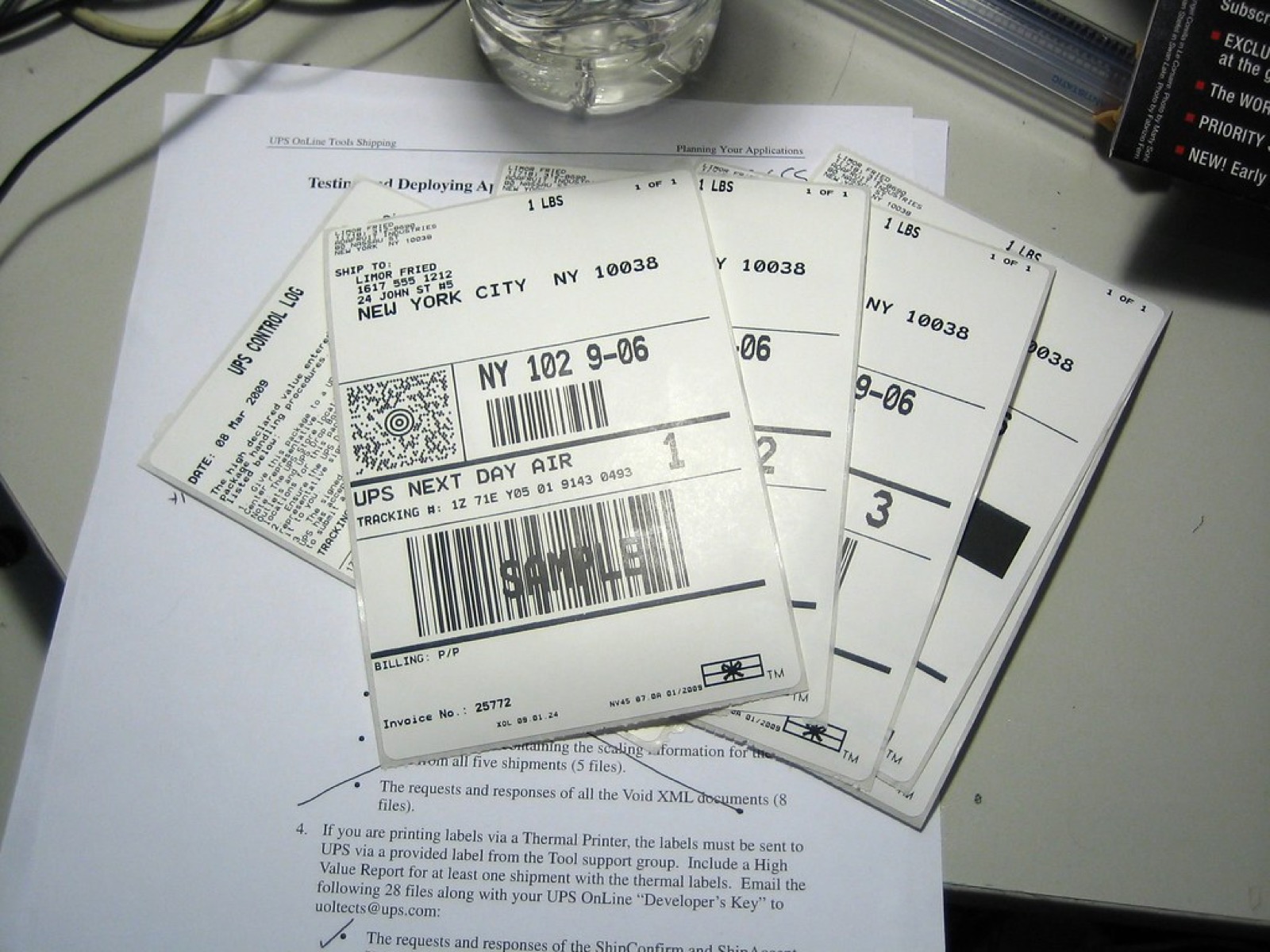
The warehouse does not hate your product. It hates the six names your systems gave it.
SKU chaos is not a naming problem. It is an identity problem. When the same physical item has different labels across Amazon, Shopify, eBay, Walmart, a supplier, and a 3PL, every inventory process becomes translation.
A product has an internal SKU, a Shopify handle, an Amazon merchant SKU, an FNSKU, a supplier code, and a 3PL pick code. Returns arrive under one identity, orders arrive under another, and reports group them inconsistently. The product is not fragmented. The identity layer is.
That is why one product, six skus, and a warehouse team that hates you is an operating test, not just a provocative headline. The question is whether the business can explain what happened, decide what should happen next, and prevent the same exception from becoming a weekly manual ritual.
In canonical SKU identity, the failure is not effort. It happens when SKU, bundle, alias, and variant rules drift apart across channels. The storefront knows the promise, the marketplace knows the sale, the warehouse knows the pick, and finance sees the result too late.
Start with canonical SKU identity
A canonical SKU map separates the permanent internal SKU from every external alias. The internal SKU owns inventory truth; channel and supplier SKUs are translations.
Use canonical SKU identity as a practical diagnostic, not a slide-deck phrase. A good inventory control idea should change what the operator checks on Monday morning. It should make a bad count easier to explain, a risky channel easier to throttle, a bundle easier to trust, or a warehouse handoff easier to audit.
The useful version is specific enough to run against real data. Pick the SKU, channel, order, warehouse, and timestamp. Then trace the chain of events. If the team cannot trace the chain behind sKU risk, the next priority is not forecasting, AI, or another dashboard. The next priority is event quality.
Why canonical SKU identity gets worse across channels
A single-channel store can survive some canonical SKU identity cleanup because the truth lives close to the sale. Once the same inventory is published across Amazon, Shopify, Walmart, eBay, TikTok Shop, wholesale, and POS, manual cleanup becomes a liability. Every channel has its own timing, retries, order states, cancellation pressure, and support expectations.
Amazon can penalize cancellations and late corrections. Shopify exposes inventory at location level, which means location mistakes can become promise mistakes. Walmart and other marketplaces add their own feed behavior, latency, and operational expectations. The seller has to keep sKU risk defensible across systems that do not behave the same way.
The problem compounds because each channel can be technically correct in isolation. The marketplace can show the last published count, the warehouse can show the last scanned count, and the OMS can show the last imported order. The customer only experiences the combined promise. If canonical SKU identity makes that promise wrong, the architecture is wrong even when every individual system has an excuse.
Build the audit trail before changing the rule: canonical SKU identity
Do not begin with a summary report. Begin with the event trail. For the SKU or workflow in question, collect order creation time, reservation time, channel update time, warehouse release time, pick time, ship time, return time, and every manual adjustment. The timeline matters because sKU risk is not just a quantity. It is a quantity at a moment in a process.
The minimum useful record for canonical SKU identity includes SKU, channel SKU, marketplace item ID where relevant, warehouse location, inventory state, order ID, adjustment reason, owner, previous quantity, new quantity, and publish status. Missing fields are blind spots.
Separate physical stock from sellable stock. Physical stock answers what exists. Sellable stock answers what can safely be promised. Canonical SKU identity fails when those two ideas are treated as the same number.
- Order events: created, paid, reserved, cancelled, fulfilled, refunded, and returned.
- Inventory events: receipt, reservation, pick, shipment, adjustment, damage, quarantine, transfer, and release.
- Channel events: publish request, accepted update, rejected update, retry, throttle, and direct manual edit.
- Warehouse events: bin movement, pick exception, substitution, short pick, pack correction, and carrier handoff.
The calculation that makes the gap visible: canonical SKU identity
Use this as the working model for canonical SKU identity before you buy another app, add another channel, or blame the warehouse. It will not be perfect on the first pass, but it will expose the part of the system that needs attention.
SKU risk = active aliases x channels x warehouses x unmapped exception rateRun it on the top 20 SKUs by order volume, then run it again on the SKUs that create the most exceptions. The painful SKUs are usually the better teachers because they reveal where canonical SKU identity is weakest.
Do not let the team debate the sKU risk formula forever. The first version only needs to identify a repeated gap between what was available, what was promised, and what was fulfilled.
Run the canonical SKU identity model by channel and warehouse, not only by SKU. A SKU that is safe in one warehouse can be risky in another. A count that works on a low-velocity storefront can fail during a marketplace promotion. A bundle that behaves in DTC can break when a marketplace requires a different SKU structure.
What sKU risk should tell operators
A healthy sKU risk result has two qualities: the number is acceptable and the explanation is clear. Low variance with no event history is not healthy. It only means the current count happens to look right.
Look for repeated patterns. If the same channel creates most retries, the integration needs attention. If the same warehouse creates most adjustments, the receiving or pick process needs attention. If the same SKU creates most exceptions, the catalog, bundle, alias, or product setup needs attention. If every team has a different explanation for canonical SKU identity, the source of truth is not strong enough.
Set thresholds for canonical SKU identity before the next incident. Decide what level of variance, retry count, manual adjustment volume, cancellation risk, or support volume triggers action. Thresholds keep the operation from depending on whoever happens to notice a problem first.
Failure points that make the count look healthy: canonical SKU identity
The failure modes below are the traps that make operators think canonical SKU identity is healthier than it is.
1. Channel-specific SKUs are treated as separate products.
For canonical SKU identity, "Channel-specific SKUs are treated as separate products" is not a generic mistake. It is the moment SKU, bundle, alias, and variant rules drift apart across channels, and that means the customer promise is already weaker than the dashboard suggests.
Replay the last affected order and mark the first event that made the promise unreliable. If the team cannot connect that evidence back to sKU risk, the next fix will be another manual cleanup instead of a durable inventory control.
2. Supplier SKUs are used as internal SKUs without ownership rules.
For canonical SKU identity, "Supplier SKUs are used as internal SKUs without ownership rules" is not a generic mistake. It is the moment SKU, bundle, alias, and variant rules drift apart across channels, and that means the customer promise is already weaker than the dashboard suggests.
Compare the channel record, OMS event, and warehouse scan before deciding which system is wrong. If the team cannot connect that evidence back to sKU risk, the next fix will be another manual cleanup instead of a durable inventory control.
3. Warehouse pick codes are not linked to marketplace return identifiers.
For canonical SKU identity, "Warehouse pick codes are not linked to marketplace return identifiers" is not a generic mistake. It is the moment SKU, bundle, alias, and variant rules drift apart across channels, and that means the customer promise is already weaker than the dashboard suggests.
Look for the private workaround that fixed the symptom, because that workaround is often the missing product rule. If the team cannot connect that evidence back to sKU risk, the next fix will be another manual cleanup instead of a durable inventory control.
4. Duplicate listings create duplicate inventory pools.
For canonical SKU identity, "Duplicate listings create duplicate inventory pools" is not a generic mistake. It is the moment SKU, bundle, alias, and variant rules drift apart across channels, and that means the customer promise is already weaker than the dashboard suggests.
Separate physical stock, sellable stock, reserved stock, and published stock before drawing conclusions. If the team cannot connect that evidence back to sKU risk, the next fix will be another manual cleanup instead of a durable inventory control.
Controls to install for canonical SKU identity
The playbook turns canonical SKU identity into repeatable work. Use it during normal operations, not only after a bad sale event.
Step 1: Choose one internal SKU as the durable identity for each physical item.
Write "Choose one internal SKU as the durable identity for each physical item" as an operating rule, not a suggestion. The rule should name the owner, the trigger, the system of record, the data used, and the decision that follows.
The control should reduce the next exception, not merely explain the last incident. If the team cannot run "Choose one internal SKU as the durable identity for each physical item" the same way twice, canonical SKU identity is still dependent on memory.
Step 2: Map every channel SKU, barcode, FNSKU, supplier SKU, and 3PL code to that identity.
Write "Map every channel SKU, barcode, FNSKU, supplier SKU, and 3PL code to that identity" as an operating rule, not a suggestion. The rule should name the owner, the trigger, the system of record, the data used, and the decision that follows.
The owner should be able to replay the event trail without asking another team for a spreadsheet. If the team cannot run "Map every channel SKU, barcode, FNSKU, supplier SKU, and 3PL code to that identity" the same way twice, canonical SKU identity is still dependent on memory.
Step 3: Block new channel launches until SKU mapping coverage reaches 100% for launch products.
Write "Block new channel launches until SKU mapping coverage reaches 100% for launch products" as an operating rule, not a suggestion. The rule should name the owner, the trigger, the system of record, the data used, and the decision that follows.
The first version should be narrow enough to ship this week and measurable enough to defend next month. If the team cannot run "Block new channel launches until SKU mapping coverage reaches 100% for launch products" the same way twice, canonical SKU identity is still dependent on memory.
Step 4: Audit exception orders where the warehouse or channel could not match a SKU automatically.
Write "Audit exception orders where the warehouse or channel could not match a SKU automatically" as an operating rule, not a suggestion. The rule should name the owner, the trigger, the system of record, the data used, and the decision that follows.
The rule is only finished when the channel promise, warehouse action, and OMS event agree. If the team cannot run "Audit exception orders where the warehouse or channel could not match a SKU automatically" the same way twice, canonical SKU identity is still dependent on memory.
Step 5: Assign one owner for SKU creation and alias approval.
Write "Assign one owner for SKU creation and alias approval" as an operating rule, not a suggestion. The rule should name the owner, the trigger, the system of record, the data used, and the decision that follows.
The control should reduce the next exception, not merely explain the last incident. If the team cannot run "Assign one owner for SKU creation and alias approval" the same way twice, canonical SKU identity is still dependent on memory.
First 30 days for canonical SKU identity
Days 1-7: choose the highest-risk slice for canonical SKU identity. That might be the top 20 SKUs by order volume, the channel with the most cancellations, the warehouse with the most short picks, or the product group with the most bundle complexity. Export the raw events and keep every missing field visible.
Days 8-14: build the first sKU risk event timeline. Trace each selected SKU or workflow from inventory receipt to channel publication, order reservation, warehouse release, fulfillment, and return. Mark every place where the team relies on a spreadsheet, a manual edit, a private message, or a dashboard number that cannot be replayed.
Days 15-21: convert the highest-risk manual step into a rule for sKU risk. That rule might be a channel buffer, a quarantine state, a bundle component rule, a reserve-first workflow, a SKU alias cleanup, or an approval queue for manual adjustments. The rule should reduce the next incident, not merely document the last one.
Days 22-30: measure whether the canonical SKU identity rule changed behavior. Compare exception count, cancellation rate, retry count, manual adjustments, and support tickets before and after the change. If the metric improves but the team still needs the same manual cleanup, the root cause has not been fixed yet.
Metrics that prove canonical SKU identity is improving
- SKU mapping coverage by channel. Track this for canonical SKU identity on a fixed cadence and review it by SKU, channel, and warehouse whenever possible. The blended number is useful for leadership, but the segmented number tells operators where to act.
- Orders requiring manual SKU matching. Track this for canonical SKU identity on a fixed cadence and review it by SKU, channel, and warehouse whenever possible. The blended number is useful for leadership, but the segmented number tells operators where to act.
- Duplicate active listings for one internal SKU. Track this for canonical SKU identity on a fixed cadence and review it by SKU, channel, and warehouse whenever possible. The blended number is useful for leadership, but the segmented number tells operators where to act.
- Return mismatches caused by alias confusion. Track this for canonical SKU identity on a fixed cadence and review it by SKU, channel, and warehouse whenever possible. The blended number is useful for leadership, but the segmented number tells operators where to act.
Metrics for canonical SKU identity should create action. If a metric is reviewed every week but never changes a rule, buffer, SKU setup, routing path, or owner, it is probably a vanity metric. Keep the dashboard small enough that every number has a decision attached to it.
Mistakes that turn the audit back into manual work: canonical SKU identity
The first mistake with canonical SKU identity is solving the visible symptom only. Overselling, negative inventory, phantom stock, and bad routing usually point to a missing event, delayed reservation, weak SKU map, bad state transition, or unaudited override.
The second mistake is treating every channel equally while reviewing sKU risk. Channels have different update speeds, penalties, order velocity, return behavior, and customer expectations.
The third mistake is letting spreadsheets remain the hidden control plane. Spreadsheets are useful for analysis. They are dangerous when they become the place where the real canonical SKU identity rule lives. If a spreadsheet decides what can be sold, the OMS is no longer the source of truth.
The fourth mistake is buying software before defining ownership for canonical SKU identity. Name owners for SKU mapping, returns quarantine, bundle logic, channel buffers, and manual adjustments before expecting a system to fix the workflow.
Useful companion reads: canonical SKU identity
For canonical SKU identity, use multichannel inventory management software to evaluate the platform layer, order lifecycle tracking to trace customer promises, and marketplace inventory management to pressure-test channel-specific rules.
The operating record this problem needs: canonical SKU identity
Nventory can act as the canonical SKU map across channels. That means Amazon can keep its FNSKU, Shopify can keep its product handle, and the warehouse can still pick from one reliable internal product identity.
Nventory fits here because canonical SKU identity does not live inside one channel. It lives between channels, warehouses, products, orders, feeds, and people making manual fixes under pressure. A multichannel inventory system only earns its cost when it turns those moving parts into one operating record the team can trust.
Centralization does not remove judgment around canonical SKU identity. Operators still decide when to hold stock, when to favor a channel, when to accept backorders, when to quarantine returns, and when to override a rule. The difference is that those decisions become explicit events instead of hidden edits.
That is the OMS quality bar: it should not merely show sKU risk. It should explain the count, defend the promise, and show which system or person changed the state.
Before the fix is considered done: canonical SKU identity
- Pick five recent problem orders and trace every inventory event from order creation to fulfillment or cancellation.
- Document the current owner for SKU mapping, channel buffers, bundle rules, warehouse handoff, and manual adjustments.
- Mark any step that depends on a spreadsheet, private Slack message, or direct marketplace edit.
- Convert the highest-risk canonical SKU identity step into a rule, approval queue, or automated sync event.
- Review the result after 30 days using exception count, cancellation rate, support tickets, and manual adjustment volume.
Frequently Asked Questions
SKU chaos is not a naming problem. It is an identity problem. When the same physical item has different labels across Amazon, Shopify, eBay, Walmart, a supplier, and a 3PL, every inventory process becomes translation.
Start with this working model: SKU risk = active aliases x channels x warehouses x unmapped exception rate. Then run it on the SKUs, channels, or workflows creating the most exceptions.
The failure usually appears between systems: one channel sells, another channel lags, the warehouse sees a different SKU, or a manual edit bypasses the source of truth.
Nventory can act as the canonical SKU map across channels. That means Amazon can keep its FNSKU, Shopify can keep its product handle, and the warehouse can still pick from one reliable internal product identity.
Related Articles
View all
The SKU Alias Debt Bomb: How Old Marketplace Codes Break New Channels
Old workaround SKUs become operational debt when brands add channels, warehouses, bundles, and suppliers.

Your Bundles Are Lying: The Component Math Behind Every Oversold Kit
Bundles do not have inventory. Their components do. The safest bundle quantity is the bottleneck component after buffers and reservations.

The Multipack Trap: How Selling 2-Packs and 6-Packs Burns Inventory Twice
Multipacks raise AOV, but they can create fake supply when every channel treats each pack size as separate inventory.