Every Platform Is Tightening the Screws on Your Cash, Catalog, and Account at Once
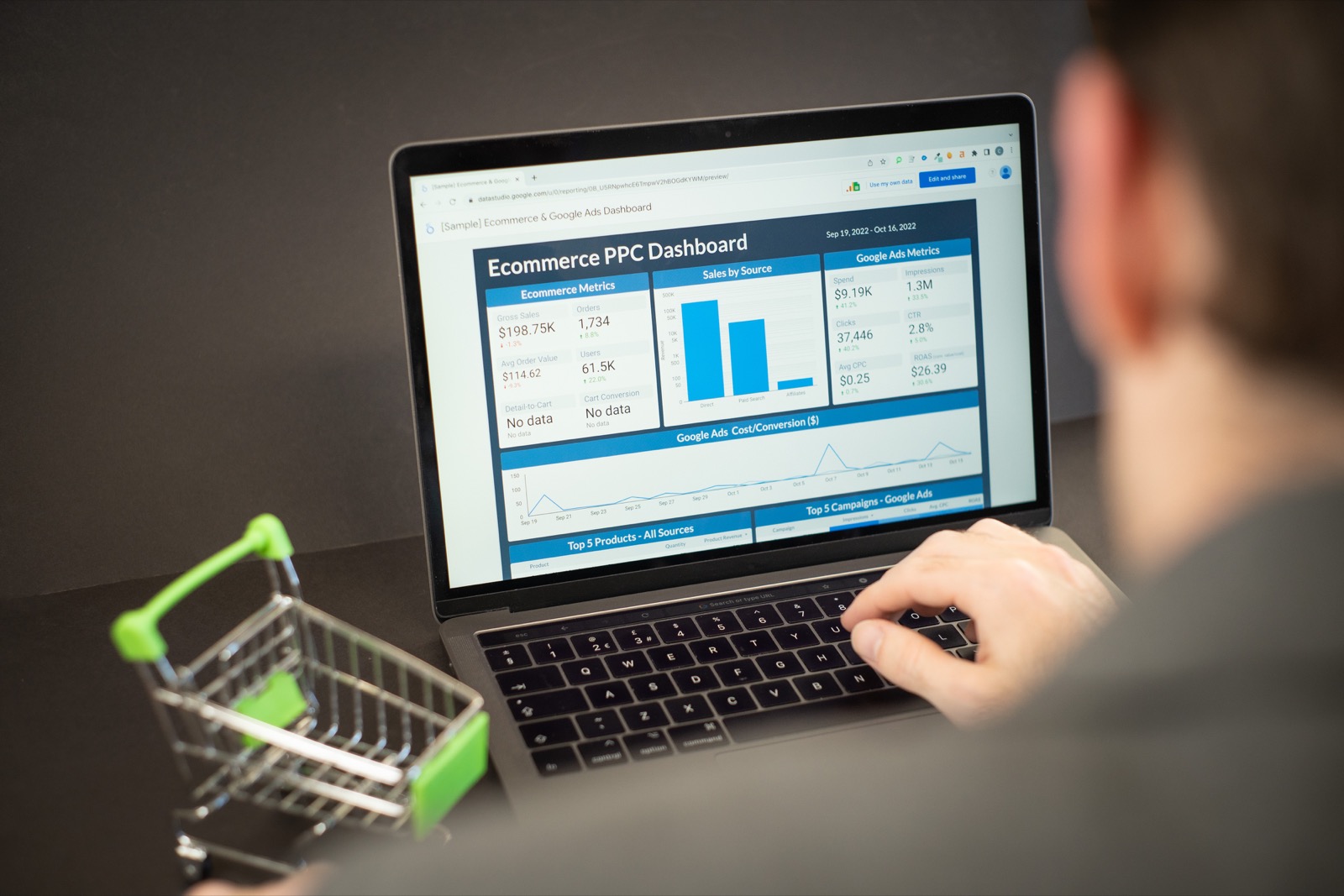
Each platform optimizes for itself. Your business pays when those optimizations collide.
The 2026 pattern is bigger than one Amazon fee, one AI shopping headline, or one returns policy. Platforms are tightening control over seller cash, catalog visibility, account rules, fees, and fulfillment expectations at the same time.
This batch connects the recurring pressures: payout delay, fee stack, return fraud, de minimis, dead stock, phantom inventory, dependency, and catalog control.
For the platform risk map, this is not theory. It shows up as a gap between what the dashboard says and what the business can actually defend. Teams miss it because sales, orders, warehouse movement, and accounting each show only part of the operating record.
Read every platform is tightening the screws on your cash, catalog, and account at once as an operating routine. By the end, the platform risk map should have a calculation, a review owner, a channel check, and a clear rule for what changes when the number moves.
Start with the platform risk map
A seller can be profitable, in stock, and compliant on Monday, then face a payout delay, unauthorized listing, fee change, or account-health flag by Friday.
The point is not to memorize another metric. The point is to expose the specific operating gap behind the platform risk map before the platform, customer, or bank account exposes it for you. Strong sellers do not wait for quarterly reports to learn which products, channels, or workflows are weakening the business.
Use the platform risk map as a working lens. It should help you decide whether to reprice, pause a SKU, change a fulfillment path, renegotiate a supplier term, or stop spending on a product that looks successful only because the costs are scattered.
The teams affected by the platform risk map
The platform risk map matters most for sellers operating across more than one channel, more than one fulfillment route, or enough SKUs that manual review has become selective. A single-channel seller can often catch the issue by looking directly at the storefront and bank account. A multichannel seller cannot. The same order can touch Amazon, Shopify, Walmart, eBay, TikTok Shop, a 3PL, a carrier, a return portal, an ad campaign, and an accounting export.
The warning sign is not complexity by itself. Complexity is normal once the business grows. The warning sign is when the team cannot say who owns the platform risk map and which system proves the answer. When the answer depends on who you ask, the operation is already carrying hidden risk.
Founders should care because the platform risk map can reduce cash without reducing revenue. Operators should care because it creates recurring exception work. Finance should care because blended reports hide cross-subsidy. Support should care because customers feel the downstream effects as cancellations, late shipments, refund confusion, and inaccurate promises.
The evidence pack for the platform risk map
Do not start with a dashboard. Start with the raw facts behind platform risk for every Platform Is Tightening the Screws on Your Cash, Catalog, and Account at Once: ninety days of orders, SKU-level cost, channel fees, fulfillment cost, return outcomes, ad spend where relevant, and every adjustment that changed the result.
Each row for every Platform Is Tightening the Screws on Your Cash, Catalog, and Account at Once should answer five questions: what sold, where it sold, what it really cost, what happened after purchase, and what decision changed because of it. If a field is missing, mark it unknown rather than hiding it inside an average.
Separate channel data before judging the platform risk map. Amazon fees, Shopify payment costs, Walmart marketplace rules, eBay buyer behavior, TikTok Shop spikes, and wholesale exceptions do not behave the same way. A product can deserve promotion in one channel and deserve a pause in another.
- Order-level sales, refunds, discounts, and shipping revenue.
- SKU-level landed cost, packaging cost, marketplace fee, and payment cost.
- Fulfillment method, warehouse, carrier, promised date, and delivery result.
- Returns, reimbursements, claims, cancellations, and support contacts.
- Manual overrides, spreadsheet edits, direct channel changes, and approval notes.
The platform risk math
Use this as the first-pass calculation for the platform risk map. It is not perfect accounting, but it is enough to decide whether the issue is worth a deeper audit.
Platform risk = cash exposure + catalog exposure + account exposure + fee exposureRun platform risk for every Platform Is Tightening the Screws on Your Cash, Catalog, and Account at Once across your top 20 SKUs, then run it again by channel. A product that looks healthy in blended reporting can become a cash drain once marketplace fees, payout timing, return behavior, storage cost, or fraud are separated.
Do not argue about precision on the first pass of the platform risk map. A rough but complete model beats a precise model that ignores a major cost bucket. The first version should be good enough to sort the catalog into four groups: obviously healthy, probably healthy, questionable, and dangerous.
The most useful every Platform Is Tightening the Screws on Your Cash, Catalog, and Account at Once model is reviewed on a cadence. Weekly is right for fast-moving sellers, monthly is acceptable for slower catalogs, and every major fee, supplier, ad, or fulfillment change deserves a fresh run.
When platform risk needs action
A good result is not simply a higher number. A good result is a number the team can explain. If platform risk in every Platform Is Tightening the Screws on Your Cash, Catalog, and Account at Once points to a problem but nobody can identify the cause, keep drilling. The cause may be a fee change, mapping error, return pattern, fulfillment mismatch, stale promotion, or channel-specific SKU behavior.
Look for direction before perfection in every Platform Is Tightening the Screws on Your Cash, Catalog, and Account at Once. If the result has worsened for three consecutive review cycles, it deserves attention even while the exact dollar amount is being refined. If the result swings by channel, the product is probably being managed too broadly.
Use thresholds. Decide in advance that the seller treats each platform issue as an isolated event triggers review. Thresholds remove politics from the process. The team is no longer debating whether a problem feels urgent; it is following an operating rule.
Failure points to check before the next cycle: the platform risk map
The recurring failure modes around the platform risk map are predictable, but the exact leak depends on this article's operating context. They are not signs that the team is careless. They are signs that the business has outgrown manual stitching between systems.
1. The seller treats each platform issue as an isolated event.
For the platform risk map, "The seller treats each platform issue as an isolated event" is the point where the post stops being analysis and becomes an operating audit. It tells the team which assumption must be proven before anyone changes price, inventory, channel exposure, or policy.
Start with the most recent ten affected orders and rebuild the timeline from order creation to final adjustment. Use platform risk for every Platform Is Tightening the Screws on Your Cash, Catalog, and Account at Once as the scorecard. If the team cannot trace the number without opening private spreadsheets, the issue is not a reporting issue. It is a control issue.
2. Critical data lives only inside marketplace dashboards.
For the platform risk map, "Critical data lives only inside marketplace dashboards" is the point where the post stops being analysis and becomes an operating audit. It tells the team which assumption must be proven before anyone changes price, inventory, channel exposure, or policy.
Compare the channel export with the warehouse or finance record and mark the first timestamp where they disagree. Use platform risk for every Platform Is Tightening the Screws on Your Cash, Catalog, and Account at Once as the scorecard. If the team cannot trace the number without opening private spreadsheets, the issue is not a reporting issue. It is a control issue.
3. Inventory and catalog truth are not portable.
For the platform risk map, "Inventory and catalog truth are not portable" is the point where the post stops being analysis and becomes an operating audit. It tells the team which assumption must be proven before anyone changes price, inventory, channel exposure, or policy.
Look for the manual workaround that made the last incident disappear, because that workaround is often the hidden control point. Use platform risk for every Platform Is Tightening the Screws on Your Cash, Catalog, and Account at Once as the scorecard. If the team cannot trace the number without opening private spreadsheets, the issue is not a reporting issue. It is a control issue.
4. The business cannot answer profit, cash, and stock questions without exports.
For the platform risk map, "The business cannot answer profit, cash, and stock questions without exports" is the point where the post stops being analysis and becomes an operating audit. It tells the team which assumption must be proven before anyone changes price, inventory, channel exposure, or policy.
Separate the SKU, channel, fulfillment route, and owner so the review does not collapse into a blended average. Use platform risk for every Platform Is Tightening the Screws on Your Cash, Catalog, and Account at Once as the scorecard. If the team cannot trace the number without opening private spreadsheets, the issue is not a reporting issue. It is a control issue.
Turn the finding into an operating decision: the platform risk map
Once the platform risk map is visible, avoid vague next steps. Every reviewed SKU, channel, or workflow should land in a decision table: keep, reprice, re-channel, bundle, restrict, renegotiate, automate, or cut.
A decision table keeps the work practical. It stops the platform risk map from becoming another interesting analysis that does not change operations. The team should know what will be different next week because the issue was found.
- Keep: the economics and operating workload are healthy enough to leave unchanged.
- Reprice: the product works only if price reflects current fees, returns, or fulfillment cost.
- Re-channel: the SKU is viable on one channel but weak on another.
- Bundle: low average order value or shipping economics need a larger basket.
- Restrict: inventory, fulfillment, or policy risk requires channel limits.
- Cut: the product consumes more attention and cash than it returns.
The field playbook for the platform risk map
The playbook below turns the platform risk map into repeatable work. Treat it as an operating SOP, not a one-time analysis.
Step 1: Map risk across cash, catalog, account, fees, and inventory.
In this strategy article, "Map risk across cash, catalog, account, fees, and inventory" is the control being installed. Name the owner, the source system, the exact report or event used, and the decision that changes when the answer is known.
The output should be a reusable operating check, not a one-off spreadsheet tab. When "Map risk across cash, catalog, account, fees, and inventory" is reviewed by finance, operations, and support, all three teams should reach the same conclusion without reconciling three versions of truth.
Step 2: Identify which data exists only inside each platform.
In this strategy article, "Identify which data exists only inside each platform" is the control being installed. Name the owner, the source system, the exact report or event used, and the decision that changes when the answer is known.
The owner should be able to explain which field changed, who approved it, and which downstream promise it affects. When "Identify which data exists only inside each platform" is reviewed by finance, operations, and support, all three teams should reach the same conclusion without reconciling three versions of truth.
Step 3: Create a channel-independent source of truth for SKU, stock, cost, and order data.
In this strategy article, "Create a channel-independent source of truth for SKU, stock, cost, and order data" is the control being installed. Name the owner, the source system, the exact report or event used, and the decision that changes when the answer is known.
The review is complete only when the next order, payout, return, or channel update follows the new rule automatically. When "Create a channel-independent source of truth for SKU, stock, cost, and order data" is reviewed by finance, operations, and support, all three teams should reach the same conclusion without reconciling three versions of truth.
Step 4: Use internal dashboards for decisions instead of marketplace-only reporting.
In this strategy article, "Use internal dashboards for decisions instead of marketplace-only reporting" is the control being installed. Name the owner, the source system, the exact report or event used, and the decision that changes when the answer is known.
Keep the scope narrow enough to ship this week, then expand it after the exception count falls. When "Use internal dashboards for decisions instead of marketplace-only reporting" is reviewed by finance, operations, and support, all three teams should reach the same conclusion without reconciling three versions of truth.
Step 5: Build optionality before the next policy change forces it.
In this strategy article, "Build optionality before the next policy change forces it" is the control being installed. Name the owner, the source system, the exact report or event used, and the decision that changes when the answer is known.
The output should be a reusable operating check, not a one-off spreadsheet tab. When "Build optionality before the next policy change forces it" is reviewed by finance, operations, and support, all three teams should reach the same conclusion without reconciling three versions of truth.
A 30-day fix plan for the platform risk map
Days 1-7: build the every Platform Is Tightening the Screws on Your Cash, Catalog, and Account at Once baseline. Export the relevant orders, costs, channel fees, fulfillment records, returns, and manual adjustments. Keep a list of every missing field and assumption so the team can see where the operating record is weak.
Days 8-14: run the first platform risk calculation for every Platform Is Tightening the Screws on Your Cash, Catalog, and Account at Once and sort the results. Pick the top 20 SKUs or workflows by order volume, margin risk, support tickets, or manual labor. Mark each one as healthy, watch, fix, or stop.
Days 15-21: make controlled changes tied to the platform risk map. Reprice only the SKUs that need repricing. Adjust channel buffers only where risk is proven. Fix mappings where data is clearly wrong. Move work out of private spreadsheets where it creates recurring disagreement.
Days 22-30: measure the change in the platform risk map. Compare contribution, cash timing, cancellation rate, return rate, support contacts, manual adjustments, and exception count. If the metric improves but manual workload stays high, the system still needs work.
Channel checks before you trust the number: the platform risk map
Amazon usually needs the strictest review because fees, storage, reimbursement, Buy Box pressure, returns, and payout timing can all affect the same SKU. Do not let Amazon volume hide weak contribution. A SKU that keeps sales rank healthy but weakens every Platform Is Tightening the Screws on Your Cash, Catalog, and Account at Once is still a problem.
Shopify and DTC channels often look cleaner because the seller controls the storefront, but that can create false confidence. Payment cost, free shipping, discounting, support, returns, and warehouse labor still need to be attached to the order before the platform risk map is trusted.
Walmart, eBay, Etsy, and TikTok Shop each add their own operating quirks. The mistake is to publish the same economics and inventory assumptions everywhere. The right question is whether every Platform Is Tightening the Screws on Your Cash, Catalog, and Account at Once still makes sense after that channel's fees, customer behavior, fulfillment expectations, and support workload.
How the model goes stale: the platform risk map
The first the platform risk map audit is useful, but the second and third audits are where the value compounds. Fees change, suppliers change, freight changes, return behavior changes, and marketplace rules change. A model that was accurate in January can mislead the team by April.
Decay usually starts with one shortcut: a copied cost, an unreviewed fee, an exception handled in Slack, a manual channel edit, or an old bundle rule. Together they create the gap between every Platform Is Tightening the Screws on Your Cash, Catalog, and Account at Once and real operating performance.
Maintenance for the platform risk map should be boring. Set a recurring review, automate the exports, keep ownership clear, and make exceptions visible. If the process depends on one person remembering to reconcile a spreadsheet, it is not a process yet.
Where Nventory fits in the workflow: the platform risk map
This is the clearest Nventory thesis: sellers need a channel-independent operating system because the platforms are not designed to be that system for them.
Nventory fits at that layer: orders, inventory, catalog data, channel mappings, and fulfillment decisions in one place. When the platform risk map lives between platforms, one platform cannot fix it alone.
The goal for the platform risk map is not to make every decision automatic. The goal is to make every decision start from the same operating record. The team can still override a price, hold inventory for a launch, pause a channel, or accept a lower margin for strategic reasons. The difference is that the choice is visible and traceable.
That is the standard for The platform risk map: fewer hidden assumptions, fewer private spreadsheets, fewer unexplained changes, and fewer arguments about which system is right.
The closing control list: the platform risk map
- Replace any category averages with your own last-90-day channel data.
- Confirm all current policy dates inside the relevant seller portal before publication.
- Add screenshots or exported reports that prove platform risk.
- Link this post to the related cash, margin, returns, or multichannel article in the batch.
Frequently Asked Questions
The 2026 pattern is bigger than one Amazon fee, one AI shopping headline, or one returns policy. Platforms are tightening control over seller cash, catalog visibility, account rules, fees, and fulfillment expectations at the same time.
Start with this formula: Platform risk = cash exposure + catalog exposure + account exposure + fee exposure. Then review it by SKU and channel, not only as a blended account number.
The risk gets worse when Amazon, Shopify, eBay, Walmart, TikTok Shop, warehouses, and accounting tools all hold different pieces of the truth.
This is the clearest Nventory thesis: sellers need a channel-independent operating system because the platforms are not designed to be that system for them.
Related Articles
View all
DTC Is Not Dead. It Is Paying the Sameness Tax.
DTC brands are still viable, but sameness raises CAC. Operational reliability is becoming a brand differentiator.
Sellers Hate Amazon Fees and Grow More Dependent Every Year
Amazon dependence is not irrational. Demand is real. The fix is optionality: profit mix, channel mix, and operational portability.

Fewer Than 8,000 Sellers Do Half of Amazon US Sales. What They Do Differently.
Top marketplace operators win through operating discipline: margin visibility, cash control, channel sequencing, and inventory truth.