The USMCA Review Could Change the Nearshoring Math for Ecommerce Sellers

Nearshoring has become the comforting answer to almost every ecommerce supply-chain problem.
China tariffs? Nearshore. Long ocean transit? Nearshore. Red Sea risk? Nearshore. Inventory volatility? Nearshore. Customer wants faster replenishment? Nearshore.
There is truth in that answer. There is also danger in how casually sellers repeat it.
USTR recently said U.S. and Mexican officials discussed trade and economic relations ahead of the USMCA Joint Review, including economic security, complementary trade actions, stronger rules of origin for key industrial goods, critical minerals collaboration, and unresolved bilateral trade issues. That is a signal ecommerce sellers should not ignore. The nearshoring math is political as well as operational.
If your brand has moved production to Mexico, is evaluating Mexican suppliers, or uses Mexico as part of a dual-sourcing plan, the USMCA review matters. Not because every seller needs to become a trade lawyer, but because rules of origin, labor enforcement, and trade-policy shifts can turn a good sourcing plan into a compliance problem.
Nearshoring is useful. It is not magic.
Mexico sourcing solves some problems and creates others
Mexico can reduce transit time, improve replenishment speed, simplify communication across time zones, support smaller batch production, and make North American fulfillment more responsive. For many sellers, those advantages are real.
But Mexico sourcing also requires discipline. Unit costs may be higher. Capacity may be limited. Supplier capabilities may differ from Asian factories. Materials may still come from Asia. Rules of origin may be misunderstood. Labor enforcement can affect specific facilities. Border crossings can create delays. Documentation still matters.
The mistake is treating Mexico as a clean replacement for offshore sourcing. It is better to treat it as a different operating model.
A seller moving from China to Mexico is not only changing a supplier address. It is changing production cadence, inventory buffers, purchase-order timing, compliance records, margin math, and supplier management. The payoff can be strong, but only if those changes are planned.
Nearshoring reduces some risks. It does not remove the need for a serious supply-chain system.
Rules of origin are the fine print
The phrase "made in Mexico" is not the same as "qualifies under USMCA." This distinction matters.
USMCA benefits depend on product-specific rules of origin. A product may need a certain regional value content, tariff-shift rule, or production process to qualify. If a seller imports components from Asia, performs minimal assembly in Mexico, and assumes the finished product qualifies, the seller may be wrong.
That mistake can create back duties, broker disputes, customs problems, marketplace margin surprises, and pricing errors. It can also make nearshoring look more profitable in the spreadsheet than it is in reality.
Before treating a Mexico-sourced product as preferential, sellers should get origin analysis from a qualified customs broker or trade advisor. The supplier's verbal assurance is not enough. The seller needs documentation tied to the SKU, bill of materials, component origin, and production process.
Nearshoring without origin proof is just a different kind of guess.
The USMCA review could sharpen enforcement expectations
The upcoming USMCA review is not happening in a vacuum. Trade policy is increasingly tied to economic security, rules of origin, labor enforcement, critical minerals, and industrial competitiveness. That means North American sourcing may face both opportunity and scrutiny.
For ecommerce sellers, the practical takeaway is that documentation standards may matter more, not less. If rules of origin become a bigger focus, brands need to know which SKUs qualify, why they qualify, and what records support the claim.
This is especially important for sellers using Mexico as a quick workaround for tariff pressure. A rushed supplier switch can create documentation gaps. A product that is assembled in Mexico from non-originating components may not deliver the expected duty advantage. A supplier that cannot provide origin data may not be ready for serious channel expansion.
Do not wait for the review outcome to clean up records. The clean-up work is useful either way.
A stronger origin file gives the brand better options.
Nearshoring should be modeled by SKU, not by country
Some products are excellent nearshoring candidates. Others are not.
High-velocity products with frequent replenishment needs may benefit from shorter lead times. Seasonal products with tight launch windows may benefit from faster reaction. Bulky products may save on freight. Custom products may benefit from closer supplier communication. Products with high tariff exposure may improve if they qualify under USMCA.
But low-margin commodity products may not survive higher unit costs. Products with specialized components may still depend on Asian inputs. Products requiring advanced factory capability may not have enough supplier depth. Products with very stable demand may not need the flexibility enough to justify the cost.
Run the math by SKU. Compare unit cost, freight, duties, lead time, minimum order quantity, defect rate, working capital, stockout risk, and demand volatility. A country-level decision will be too blunt.
The goal is not to move everything closer. The goal is to move the right things closer.
Lead-time reduction can pay for higher unit cost
A Mexican supplier may quote a higher unit cost than an Asian supplier. That does not automatically make it worse.
Shorter lead time can reduce safety stock, lower stockout risk, improve cash conversion, reduce markdowns, and let the seller respond to demand changes faster. Those benefits may offset the higher unit cost. In some cases, they exceed it.
The problem is that many sellers compare supplier quotes without valuing time. They look at the factory price and ignore cash tied up in transit, extra inventory required by long lead times, and the sales lost when forecasts are wrong.
Nearshoring should be evaluated through total operating cost, not only landed cost. A product that costs more per unit but requires less inventory may be financially healthier.
This is where supplier lead-time reduction becomes a margin strategy rather than an operations preference.
Labor enforcement is part of the nearshoring equation
Mexico sourcing can reduce some geopolitical and freight risk, but it does not remove labor-compliance exposure. USMCA includes labor enforcement mechanisms that can affect specific facilities and goods.
USTR recently sought Mexico's review of alleged worker-rights issues at a facility in Guadalajara that manufactures latex balloons. The specific case is not a broad judgment on all Mexican sourcing. It is a reminder that facility-level labor questions can become trade actions.
Ecommerce sellers should take that seriously. If your brand sources from Mexico, ask which facility produces the product, whether workers are employed directly or through affiliates, whether the supplier has labor policies, and whether any facility has been subject to complaints or reviews. Do not rely only on the distributor or trading company.
This does not mean sellers should avoid Mexico. It means nearshoring needs the same compliance discipline sellers should apply anywhere else.
A shorter route does not make supplier proof optional.
Border speed is not guaranteed
One of the selling points of Mexico sourcing is speed. Trucks can move faster than ocean containers. Replenishment can be more frequent. Communication can be easier. But border movement still depends on paperwork, customs processes, broker quality, capacity, inspections, and classification accuracy.
A seller that treats Mexico as "domestic-ish" can create problems. Cross-border shipments still need documentation. Product classification still matters. Origin claims still need support. Carrier and broker coordination still affects delivery timing.
Build border time into planning. Track actual crossing time, inspection frequency, broker delays, and receiving time. Compare planned lead time to real lead time. The advantage of nearshoring is not the shortest possible transit time; it is reliable, repeatable lead time.
If the seller does not measure border variability, it will overpromise speed.
Nearshoring only helps if the process is managed end to end.
Do not ignore component origin
A product assembled in Mexico may rely on fabric, electronics, packaging, chemicals, hardware, or subcomponents imported from outside North America. That can affect origin qualification, lead time, compliance, and disruption exposure.
Ask suppliers where key components come from. Ask which components are constrained. Ask whether alternate regional inputs exist. Ask whether component shortages can delay finished goods. Ask whether the bill of materials supports any USMCA claim.
Component origin is where many nearshoring plans become less clean than the sales pitch. The final assembly may be close, but the supply chain may still stretch across oceans.
That does not make the strategy bad. It means the seller should understand which risk has moved and which risk remains.
A map of only the final factory is an incomplete map.
Dual sourcing may beat full relocation
Some sellers frame sourcing as a binary choice: stay offshore or move to Mexico. A better answer may be dual sourcing.
Keep a lower-cost offshore supplier for predictable baseline demand. Add a Mexico supplier for replenishment spikes, seasonal reaction, customization, short runs, or high-risk SKUs. Use nearshore capacity as a flexibility layer rather than a complete replacement.
This can reduce risk without forcing the entire catalog into higher unit costs. It can also give the seller leverage, backup capacity, and faster response during disruption. The challenge is operational complexity. Dual sourcing requires SKU mapping, quality consistency, component equivalence, packaging control, and inventory segregation.
The framework in dual-sourcing strategy for ecommerce suppliers applies directly. Two suppliers are useful only if the business can manage them cleanly.
Redundancy without control becomes confusion.
Pricing should reflect the new sourcing purpose
If nearshoring improves reliability, the seller may not need to price only against the old offshore unit cost. Faster replenishment, fewer stockouts, lower markdown risk, and better service may justify a different margin model.
That does not mean customers will pay more because the brand says "nearshored." They pay for availability, speed, quality, and trust. The seller has to translate operational benefits into customer benefits.
For some products, faster replenishment allows tighter inventory and fewer discounts. For others, domestic or nearshore story may support premium positioning if the customer cares. For B2B or wholesale accounts, improved delivery reliability may be a selling point.
Do not bury nearshoring benefits entirely in operations. If the customer benefits from faster delivery or more reliable stock, merchandising and sales should know.
Sourcing strategy and pricing strategy should talk to each other.
Build a USMCA documentation folder by SKU
For every Mexico-sourced SKU, create a documentation folder. Include supplier identity, factory address, purchase orders, invoices, transportation records, bill of materials, origin certificates or supplier declarations where applicable, HS classification, country-of-origin support, and any broker analysis.
The folder should be easy to access during customs questions, channel audits, wholesale onboarding, or investor diligence. Do not let the proof live only with the supplier or broker. The brand owns the commercial risk.
This connects to ecommerce customs compliance. Classification, origin, and documentation are not once-a-year chores. They are part of how imported products stay commercially reliable.
Start with the highest-revenue and highest-risk SKUs. Then expand.
The point is not paperwork for its own sake. The point is being able to defend the sourcing model that the business depends on.
What sellers should do before the review heats up
First, list every SKU sourced from Mexico or being considered for Mexico sourcing. Second, identify whether each SKU is claimed as USMCA-qualifying or simply sourced from Mexico. Third, verify rules-of-origin support with a broker. Fourth, map component origins. Fifth, review facility-level supplier information and labor-risk exposure. Sixth, model the product under multiple duty and lead-time scenarios.
Then decide which products are strong nearshoring candidates, which need more documentation, which should remain offshore, and which need dual sourcing.
This process may reveal that Mexico is a stronger option than expected. It may also reveal that some assumptions were too optimistic. Both outcomes are useful.
The worst outcome is making sourcing decisions based on a slogan.
Nearshoring deserves better math.
The tariff advantage can disappear if the paperwork is weak
A seller can make the right sourcing move and still lose the financial benefit if the origin paperwork does not support the claim. That is the hidden danger in nearshoring. The factory may be close. The production may be real. The lead time may improve. But if the product does not qualify or the documents are incomplete, the expected duty advantage can shrink or vanish.
This is why purchase, finance, and customs work should happen together. The buyer should not approve a supplier only because the quoted unit cost looks competitive. Finance should not build margin based on assumed preferential treatment. The customs broker should not see the product for the first time after the order ships.
Bring origin analysis into supplier onboarding. If the supplier cannot support the claim, the seller can still buy from them, but the price model should reflect the real duty exposure.
Wholesale buyers may pressure-test the story
Nearshoring can help brands win wholesale accounts because buyers like shorter lead times, regional production, and lower disruption risk. But larger buyers also ask sharper questions. They may request country-of-origin support, factory details, compliance documents, production capacity, and evidence that the brand can replenish reliably.
If the seller has treated nearshoring mostly as a marketing line, those questions become painful. The founder has to chase supplier documents, reconcile conflicting statements, and explain why production details are unclear. That slows deals and can make a small brand look less mature.
Use the USMCA review period to get ahead of buyer diligence. Build the evidence file before a retailer asks for it. The same documents that protect customs treatment also help sales teams prove that the supply chain is real.
Do not rely on one border lane
Nearshoring can shorten the route, but it can also concentrate risk at a border crossing, broker, carrier, or receiving schedule. If every replenishment depends on the same truck lane and the same customs workflow, the seller has simply moved the bottleneck closer.
Ask suppliers and logistics partners which crossings they use, what backup lanes exist, how often inspections delay shipments, and whether alternate carriers can handle urgent moves. For high-velocity SKUs, test the backup route before it is needed. A route that exists only in theory will not save a launch.
The goal of nearshoring is not only shorter distance. It is more controllable replenishment.
That control should show up in the operating plan. Document the normal crossing, backup crossing, broker, carrier, expected transit, escalation contact, and receiving schedule for each important Mexico-sourced SKU. If the team cannot find those answers quickly, the nearshoring plan is still too informal for serious scale.
The bottom line
The USMCA review should put ecommerce sellers on alert. Not because Mexico sourcing is bad. Because Mexico sourcing is becoming more strategically important and more closely watched.
Sellers should use this moment to clean up origin documentation, supplier records, labor visibility, component mapping, and landed-cost models. Nearshoring can reduce route risk and improve replenishment, but it works best when the brand understands the rules underneath the advantage.
The winners will not be the brands that say they nearshored. They will be the brands that can prove why the move improves cost, speed, compliance, and resilience.
In trade policy, the fine print eventually becomes the invoice.
Frequently Asked Questions
Because changes or enforcement focus around rules of origin, economic security, labor, and trade irritants can change the nearshoring economics for goods sourced from Mexico or Canada.
No. Products must satisfy rules of origin and documentation requirements. Assembly in Mexico is not enough if components and processing do not qualify.
Sellers using Mexico for apparel, accessories, packaging, home goods, components, private label, or fast replenishment should review origin, labor, and supplier records.
Merchants should map Mexico-sourced SKUs, verify origin documentation, model alternate tariff scenarios, and avoid assuming nearshoring removes all compliance risk.
Related Articles
View all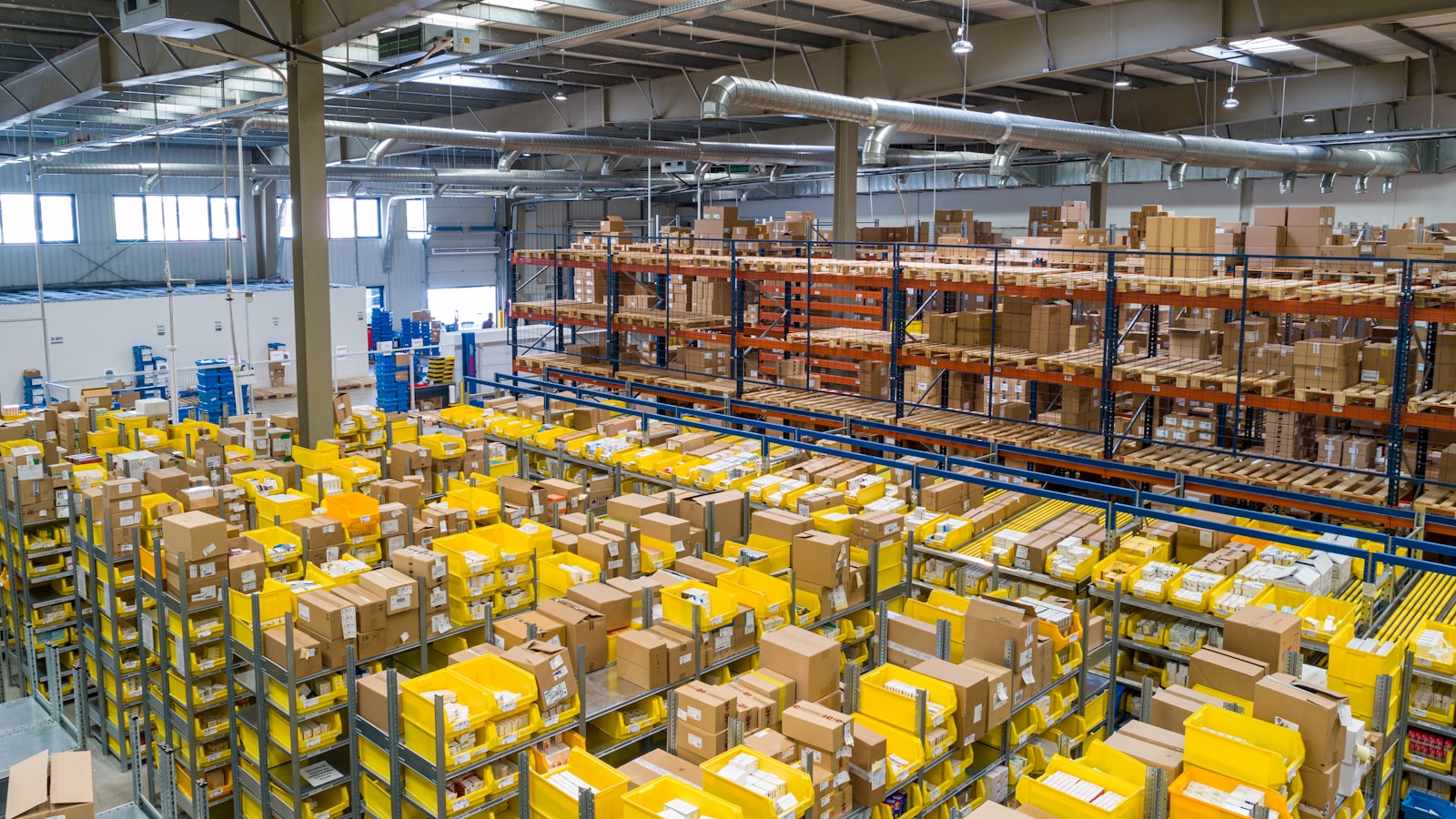
Target's New Receive Center Shows Why Inventory Positioning Beats Forecasting
Target's Houston receive center is a signal for ecommerce merchants: inventory positioning, upstream capacity, and timing control now matter as much as demand forecasting.
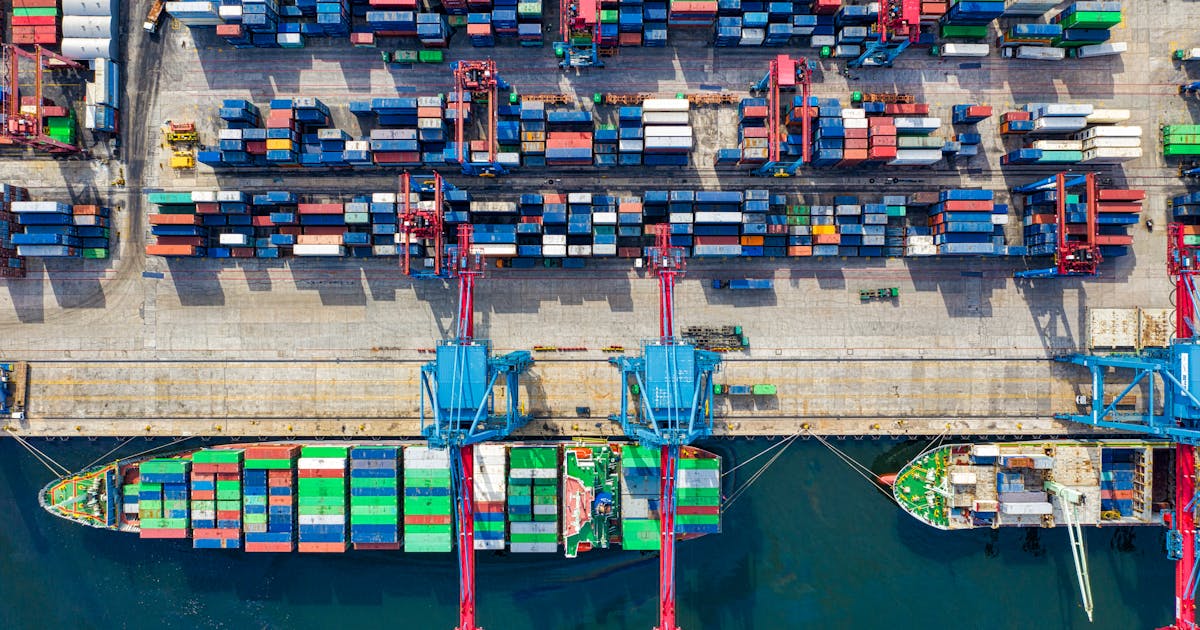
The Strait of Hormuz Is Back on Every Seller's Risk Map
Middle East shipping volatility is no longer only a freight-forwarder problem. Sellers need routing, inventory, insurance, and cash-flow plans before the next disruption hits.
Critical Minerals Are Not Just an EV Problem. Ecommerce Depends on Them Too
The U.S.-EU critical minerals action plan is a signal for every ecommerce seller with electronics, batteries, appliances, tools, wellness devices, or smart products.