Target's New Receive Center Shows Why Inventory Positioning Beats Forecasting
Most merchants talk about forecasting as if the forecast is the plan.
Target just gave a better lesson: where inventory sits can matter as much as what the forecast says.
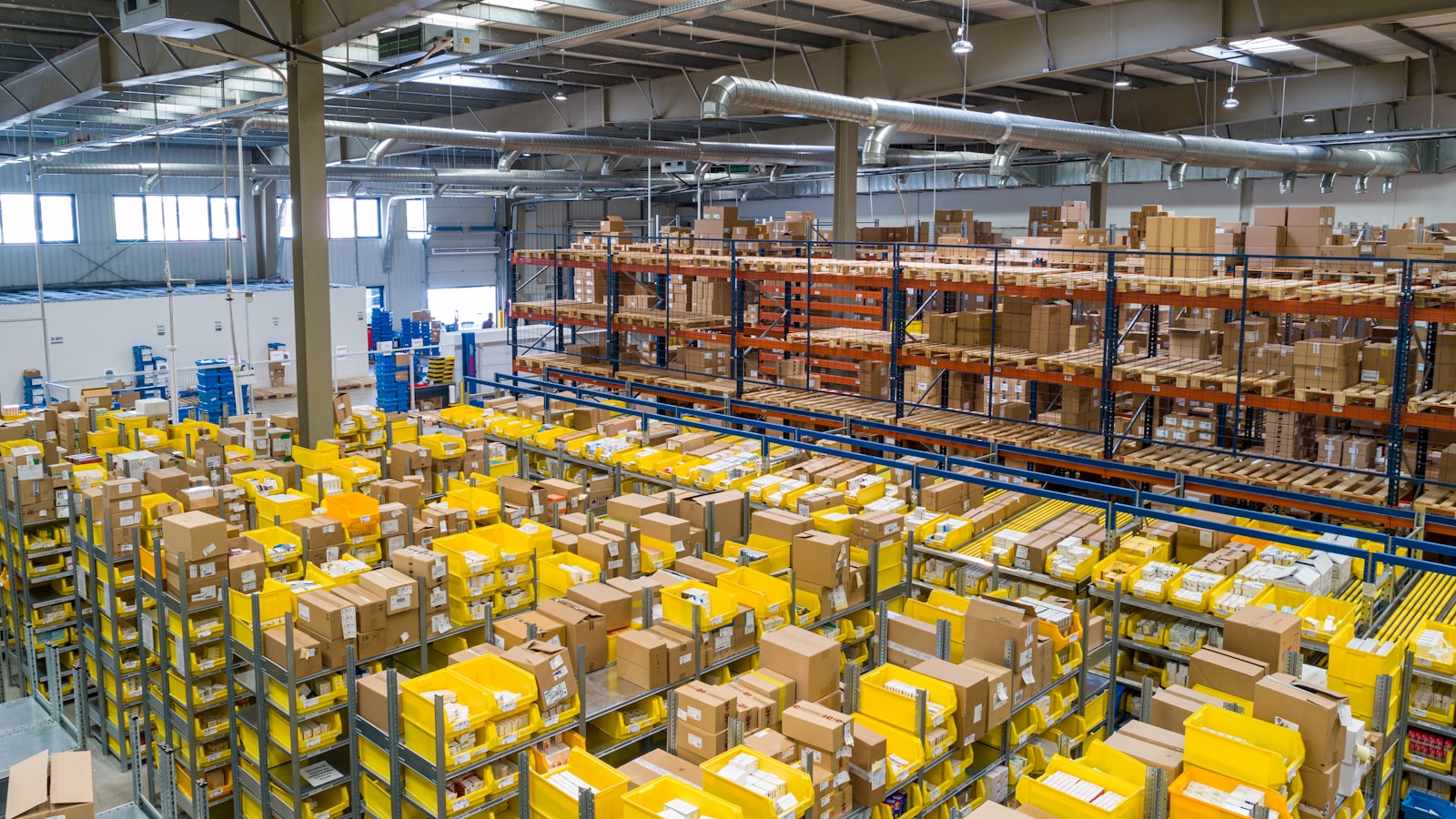
On April 29, Target announced its first Houston Receive Center, a new supply-chain facility that intakes goods directly from global vendors and holds products until needed elsewhere in the network. Target said the facility will serve six regional distribution centers and one flow center, adding capacity between import warehouses and downstream distribution. The company described it as a way to replenish inventory based on store and guest demand, reduce overcrowding, and handle seasonal, bulky, hard-to-forecast, or long-lead-time products more reliably.
That is a big-box retail story, but ecommerce merchants should pay attention.
Most small and mid-sized sellers do not need a 1.2 million-square-foot receive center. They do need the operating idea behind it: inventory should be staged where it preserves optionality. If inventory moves too late, stockouts happen. If inventory moves too early, storage cost and imbalance rise. If inventory is stuck in the wrong node, delivery promises get worse even when total stock looks healthy.
Target's receive-center announcement is really about timing control. Ecommerce merchants should translate it into their own scale.
The old model was warehouse-first
Many ecommerce brands think about inventory as a simple path: supplier, port, warehouse, customer. The warehouse is treated as the central truth. Once units are received, the store can sell. If the warehouse has stock, the product is available. If not, the product is out.
That model is easy to understand, but it is not enough when lead times are volatile, tariffs change landed cost, freight routes shift, and customers expect faster delivery. Inventory in one central place can create a clean spreadsheet and a weak customer promise.
The more useful question is not "Do we have inventory?" It is "Do we have inventory in the right stage, in the right place, with enough time to respond?"
Upstream capacity creates optionality
Target's receive-center concept sits earlier in the network than a normal store-facing replenishment move. It receives and holds product before it is pushed downstream. That gives the retailer a place to wait, observe demand, and then allocate.
Smaller merchants can use the same principle without owning a massive facility. A merchant can stage inventory at a 3PL before splitting channels. It can hold safety stock at the supplier's region until demand is clearer. It can use a bonded warehouse for duty timing. It can delay final channel allocation until sell-through appears. It can separate launch inventory from replenishment inventory.
Optionality is valuable because the first forecast is often wrong. The seller who can redirect inventory after the first demand signal has an advantage over the seller who committed everything too early.
Forecasting fails hardest on seasonal and bulky goods
Target specifically called out seasonal, bulky, hard-to-forecast, and long-lead-time items. That list should feel familiar to ecommerce operators. Patio products, holiday decor, fitness equipment, furniture, kids' products, toys, heaters, fans, storage products, school-season items, and gifting categories all punish bad placement.
If the seller brings too little inventory, the season is missed. If the seller brings too much, cash sits in dead stock. If the seller brings inventory into the wrong warehouse, shipping cost rises. If receiving capacity is tight, the product is technically owned but not available to sell.
That is why forecasting alone is not enough. The operating plan has to include where inventory can wait and when the decision to move it becomes final.
Inventory positioning beats panic transfers
When demand surprises a merchant, the common reaction is panic transfer: move units from one warehouse to another, air freight emergency stock, ask the 3PL for rush receiving, or oversell while waiting for inbound. These moves can protect revenue, but they are expensive and stressful.
Good positioning reduces panic. It does not eliminate uncertainty, but it gives the team better choices. If a seller knows which SKUs are regionally sensitive, which products are expensive to ship cross-country, and which launch dates cannot slip, it can stage inventory before the emergency.
The article on multi-warehouse fulfillment strategy is the practical version of this idea. Splitting inventory works only when the SKU, demand, and replenishment logic support it.
Receiving capacity is a hidden bottleneck
Merchants often plan around supplier lead time and transit time, then forget receiving time. A shipment can arrive at the 3PL and still be unavailable for days. During peak periods, receiving queues stretch. During labor shortages, inspection slows. During system migrations, units sit in limbo. During large launches, the warehouse may prioritize other clients.
Receiving capacity is part of inventory availability. If the warehouse cannot receive, count, label, inspect, and put away units fast enough, the product is not truly available. The storefront may say "in stock soon," but the customer cannot buy what the system cannot allocate.
Track appointment date, physical arrival, receiving start, receiving complete, quality hold, putaway complete, and available-to-sell timestamp. The gap between arrival and availability is one of the most ignored metrics in ecommerce operations.
Store-based competitors are turning location into speed
Target, Walmart, and other large retailers have a structural advantage: stores can become fulfillment nodes, pickup points, return centers, and local inventory buffers. That changes what customers expect from independent ecommerce brands.
A DTC seller may not have stores, but it can still respond. It can place best sellers closer to demand. It can use a 3PL network selectively. It can offer faster methods only where inventory is positioned correctly. It can create local pickup partnerships in dense regions. It can use marketplaces for speed-sensitive SKUs while keeping slower products on owned channels.
The important point is not matching Target. It is understanding when location is part of the offer.
Inventory placement should follow contribution margin
Do not split every SKU across every node. That creates imbalance, aging inventory, transfer cost, stockouts in one place and excess in another. Placement should follow contribution margin, demand density, shipping cost, and replenishment predictability.
A high-margin, predictable, fast-moving SKU may deserve regional placement. A bulky product that sells heavily in one geography may deserve a nearby node. A slow-moving long-tail SKU should usually stay centralized. A launch product may need a staged quantity with a second allocation decision after early demand is visible.
Merchants should score each SKU before moving it. Revenue alone is not enough. The right score includes margin, velocity, forecast error, shipping cost, stockout cost, receiving complexity, and how often the product is returned.
Upstream staging can protect cash
Staging inventory earlier in the network can sound like tying up more cash. Sometimes it does. But done carefully, it can protect cash by preventing wrong-location inventory, emergency freight, excess storage, and missed peak demand.
The key is decision timing. A merchant does not want to make every allocation decision at the factory. It wants some decisions later, when it has better demand data. If inventory can wait in a cheaper or more flexible node, the seller can avoid committing too much to a channel or region too early.
This is especially useful when advertising tests, influencer launches, wholesale orders, marketplace promotions, or regional demand patterns are uncertain.
Long-lead products need earlier decision points
Long-lead products punish late decisions. If production takes 60 days, ocean freight takes 35 days, customs takes a week, receiving takes a week, and replenishment decisions happen after stockout, the seller is already behind.
Create decision points before each stage. Before deposit, confirm demand signal. Before production, confirm forecast. Before shipment, confirm allocation plan. Before arrival, confirm receiving capacity. Before release, confirm channel split. Each decision point should have an owner and a date.
The goal is to keep long-lead inventory from drifting through the pipeline without anyone asking whether the plan still matches reality.
Bulky products need different math
Bulky products make bad placement expensive. A small cosmetic item can travel cross-country at reasonable cost. A large storage cabinet, chair, pet crate, table, or outdoor product cannot. One wrong inventory node can erase margin through parcel oversize charges, LTL cost, damage risk, or return freight.
For bulky SKUs, track cost by origin-destination pair. Do not rely only on average shipping cost. A product may be profitable from a West Coast node to California and unprofitable from that same node to New York. If demand is geographically concentrated, placement should reflect that.
Also review packaging. The cheapest fulfillment improvement may not be another warehouse. It may be reducing dimensional weight, strengthening packaging, or separating accessories so the main parcel becomes cheaper to ship.
Inbound visibility should be shared with marketing
Marketing teams often launch campaigns based on calendar dates. Operations teams often track inbound reality separately. That split creates problems. A campaign goes live before receiving is complete. A product gets promoted while inventory sits in customs. A discount sells through units that were supposed to support wholesale orders.
Inbound status should feed the campaign calendar. If inventory is at risk, marketing should know early enough to change the offer, shift budget, promote a substitute, or update delivery messaging. If inventory arrives early, marketing can pull demand forward.
Inventory positioning is not an operations-only decision. It decides what marketing can promise.
Watch store backroom logic even if you do not have stores
Target mentioned preventing downstream locations from getting overcrowded. Ecommerce merchants have the same issue in smaller form. A 3PL bin, warehouse receiving area, prep center, garage operation, or retail backroom can become overcrowded and slow down every order.
Inventory in the wrong physical location creates labor waste. Pickers walk farther. Counts become less reliable. Returns pile up. New receipts block old stock. Slow movers occupy prime space. Fast movers sit too far from packing stations.
This is why warehouse slotting optimization belongs in the same conversation. Positioning does not stop at which city holds the inventory. It includes where the SKU sits inside the building.
What merchants should track now
Build a placement dashboard with SKU, sales velocity, forecast error, margin, storage cost, shipping cost by zone, current node, recommended node, inbound ETA, receiving capacity, stockout date, and transfer cost. That sounds like a lot, but the first version can cover only the top 50 SKUs.
Then mark which products are best kept centralized, which products deserve regional placement, which products need upstream staging, and which products should not be reordered until demand is clearer. This turns inventory placement from a warehouse habit into a commercial decision.
Review the dashboard weekly during volatile periods and monthly during normal periods. The point is not to move inventory constantly. The point is to know when moving inventory is worth it.
Regional demand should change reorder timing
Most merchants reorder at the SKU level. Better merchants reorder at the SKU-and-region level when the data supports it. If a product sells twice as fast in the Southeast as it does on the West Coast, the reorder decision should not treat both regions as one pool. The same total units can create very different customer outcomes depending on where those units sit.
Regional demand does not need to be perfect to be useful. Start with shipping destination history, marketplace sales by state, wholesale buyer location, return location, and ad performance by region. If the same pattern repeats for several months, it should influence placement and reorder timing.
This matters most for products with long transit time, high shipping cost, or seasonal urgency. A merchant selling fans, heaters, pool accessories, school supplies, outdoor products, or holiday decor cannot afford to discover regional demand only after the season peaks.
Use lead-time buffers by product class
Not every SKU deserves the same buffer. A light, fast-moving, high-margin product with reliable replenishment may need a smaller safety window than a bulky, seasonal, import-heavy product with unpredictable demand. Treating all SKUs the same creates excess in some places and stockouts in others.
Create product classes: predictable replenishment, seasonal peak, bulky long lead, launch test, wholesale-critical, marketplace-critical, and slow long tail. Each class should have its own reorder review cadence, buffer target, and placement rule. This is more useful than one generic reorder formula across the whole catalog.
The article on setting ecommerce reorder points gives the formula baseline. The next level is adjusting those formulas based on where the inventory sits and how quickly the team can recover from a wrong call.
Separate launch stock from replenishment stock
Launch inventory and replenishment inventory should not be managed the same way. Launch stock is a test of demand. Replenishment stock is a response to known demand. When merchants confuse the two, they overcommit before learning or undercommit after validation.
For launches, stage enough inventory to support the first demand wave, but hold back a second allocation decision where possible. If early demand is strong in one region or channel, move the second wave there. If early returns or support tickets reveal product issues, slow the release before the entire PO is committed.
This is the small-merchant version of upstream flexibility. You do not need Target's facility. You need a way to avoid locking every unit into the wrong place before the market gives you information.
Receiving speed should be part of the 3PL scorecard
Many 3PL scorecards focus on pick accuracy, ship speed, and cost per order. Receiving speed deserves equal attention. If inventory arrives but waits seven days to become sellable, the seller's planning model is wrong. The customer does not care that the pallet is on the dock.
Track receiving SLA by shipment type: cartons, pallets, container unload, returns, kitting components, wholesale replenishment, and marketplace prep. Track exceptions separately. A 3PL that receives simple cartons quickly but struggles with kitting components may be fine for one product line and dangerous for another.
Ask for receiving capacity before peak season, not during it. The best inbound plan fails if the warehouse cannot process it.
Do not let storage cost make every decision
Storage cost matters, but it should not dominate placement strategy. Sometimes holding inventory upstream or closer to demand is expensive and still correct because the stockout cost is higher. Sometimes cheap storage is a trap because it creates slow delivery, more transfers, or poor visibility.
Compare storage cost against the full alternative: lost sales, emergency freight, marketplace-stockout penalties, late wholesale orders, support tickets, refund risk, and paid-media waste. A warehouse that looks cheap on a rate card may be expensive if it causes missed selling windows.
The right question is not "Where is storage cheapest?" It is "Where does inventory create the best combination of availability, speed, margin, and optionality?"
The bottom line
Target's receive center is not a blueprint for small merchants to copy. It is a signal about where retail operations are going. The winners are not only forecasting demand. They are building places where inventory can wait, move, and respond before customer promises break.
For ecommerce sellers, the lesson is clear: track inventory by stage and location, not just total units. Know which SKUs need optionality, which products punish bad placement, which warehouses create receiving bottlenecks, and which delivery promises depend on inventory being closer to demand.
Forecasting tells you what might happen. Inventory positioning decides whether you can react when it does.
Frequently Asked Questions
Target describes its Houston Receive Center as a new type of supply-chain facility that takes in goods from global vendors and holds them until they are needed downstream by regional distribution centers, flow centers, stores, or customer demand.
It shows that the biggest retailers are investing in upstream inventory capacity, not just last-mile speed. Smaller merchants can apply the same principle by staging inventory earlier, splitting stock carefully, and tracking where demand risk appears.
Track inbound timing, receiving capacity, regional demand, inventory aging, stockout risk, storage cost, long-lead items, bulky products, and which SKUs need to sit closer to demand.
No. The lesson is not to copy Target's footprint. The lesson is to know which SKUs deserve upstream staging or regional placement and which products should stay centralized.
Related Articles
View all
The Strait of Hormuz Is Back on Every Seller's Risk Map
Middle East shipping volatility is no longer only a freight-forwarder problem. Sellers need routing, inventory, insurance, and cash-flow plans before the next disruption hits.

The USMCA Review Could Change the Nearshoring Math for Ecommerce Sellers
The upcoming USMCA review is not only a trade-policy story. It could affect nearshoring, rules of origin, supplier choices, labor risk, and landed-cost models.

Critical Minerals Are Not Just an EV Problem. Ecommerce Depends on Them Too
The U.S.-EU critical minerals action plan is a signal for every ecommerce seller with electronics, batteries, appliances, tools, wellness devices, or smart products.