Ecommerce and Supply Chain Management: The Complete Guide for Multichannel Brands
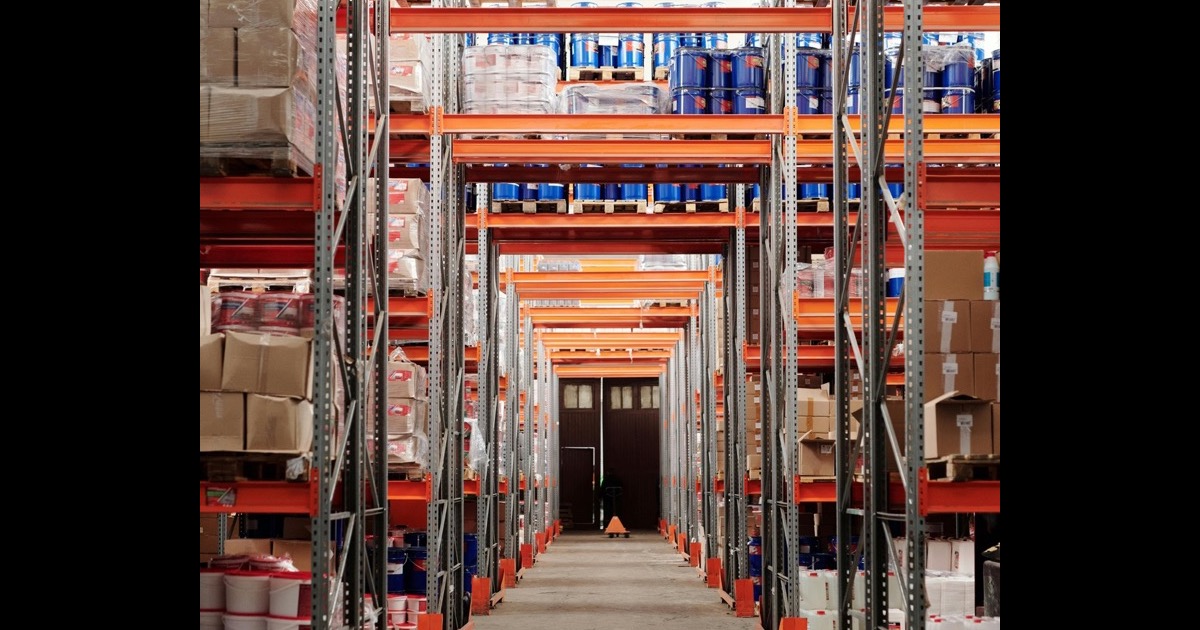
Every ecommerce brand eventually hits the same wall.
Orders are coming in. Channels are growing. But somewhere between the supplier and the customer’s door, things start breaking — stockouts on Amazon while Shopify shows inventory available, orders routed to the wrong warehouse, shipments delayed because no one caught the sync failure in time.
That wall has a name: ecommerce and supply chain management complexity.
For multichannel brands selling across Shopify, Amazon, eBay, Walmart, TikTok Shop, and beyond, getting ecommerce and supply chain management right is not optional. It is the difference between scaling with confidence and stalling under operational weight.
This guide covers everything — what ecommerce and supply chain management actually means, how it works across multiple channels, the most common failure points, the metrics that matter, and exactly what systems you need to run it without chaos.
What Is Ecommerce And Supply Chain Management?
Ecommerce and supply chain management (SCM) is the end-to-end coordination of everything that happens between a supplier and a customer’s doorstep — procurement, warehousing, inventory tracking, order processing, fulfillment, shipping, and returns.
According to Wikipedia, supply chain management encompasses the planning and management of all activities involved in sourcing, procurement, conversion, and logistics. In an ecommerce context, that definition expands significantly. You are managing those same activities simultaneously across multiple sales channels, multiple warehouses, and multiple carrier relationships — all competing for the same inventory pool in real time.
The goal of ecommerce and supply chain management is straightforward in theory: get the right product to the right customer at the right time, at a cost that protects your margin. In practice, especially across channels like Shopify, Amazon, eBay, Walmart, and TikTok Shop, that simplicity evaporates fast. Every new channel introduces new demand signals, new inventory movements, and new points of failure.
Understanding ecommerce and supply chain management as a connected system — not a series of isolated tasks — is the foundation for fixing it.
How Ecommerce And Supply Chain Management Differs From Traditional SCM
Traditional retail supply chains were linear and predictable. A manufacturer ships pallets to a distribution center. The distribution center ships to retail stores. Stores sell to customers. Demand signals arrived weekly. Volatility was relatively low.
Ecommerce and supply chain management breaks that model entirely. Instead of pallet-level shipments to a handful of locations, you are executing individual unit fulfillments to thousands of unique delivery addresses every day. Instead of one demand signal, you are managing simultaneous orders from multiple platforms — each with its own API behavior, SLA requirements, and seller penalty structures.
According to Investopedia, companies with optimized supply chain operations report up to 15% lower supply chain costs and significantly better delivery performance than those without. Those gains become even more significant when the operation spans multiple channels, because every efficiency multiplies across every platform simultaneously.
The brands capturing those results are not doing it manually. They are running ecommerce and supply chain management through a connected operational stack where data moves automatically and decisions are driven by rules — not people checking dashboards.
The 6 Core Stages Of Ecommerce And Supply Chain Management
Every stage of ecommerce and supply chain management presents its own challenge. Understanding each one is the foundation for knowing where to optimize and where things most commonly break.
Stage 1: Procurement and Sourcing
Ecommerce and supply chain management begins before a product ever reaches your warehouse. Procurement means building reliable supplier relationships that can deliver the right quality and quantity within lead times your operation can absorb.
Key decisions at this stage:
- Supplier lead times — how long between placing a purchase order and receiving stock, and how that aligns with your reorder points
- Order quantity planning — balancing minimum order quantities against your actual sales velocity across all active channels
- Supplier redundancy — never relying on a single source, especially as multichannel demand becomes harder to predict
- Total landed cost — factoring duties, freight, and tariffs into your true cost per unit before committing to inventory
Stage 2: Warehousing and Storage
Where your stock lives is one of the highest-leverage decisions in ecommerce and supply chain management. It determines shipping speed, cost per shipment, and your ability to respond to demand spikes across channels.
Your main options:
- Single warehouse — simple to operate, but creates distance and cost problems as your channel count and customer geography expands
- Multi-warehouse — reduces average transit time and shipping cost, but only works reliably when routing is fully automated
- 3PL (third-party logistics) — outsources storage and fulfillment to a specialist provider, reducing capital requirements but requiring tight integration with your order management system
- FBA (Fulfillment by Amazon) — Amazon holds and ships your inventory for marketplace orders, but creates a separate inventory pool that must be reconciled in real time against all your other channels
Each model carries different operational trade-offs. The right choice depends on your order volume, channel mix, and margin structure.
Stage 3: Inventory Tracking and Management
This is where most growing multichannel brands first break under the weight of ecommerce and supply chain management complexity.
Inventory is the heartbeat of the entire operation. If your stock data is inaccurate by even a few units, the downstream effects cascade — overselling on one channel while another sits idle, stockouts on high-margin SKUs, and reconciliation work that consumes hours your team does not have.
The core problem for multichannel brands: Shopify shows 50 units. Amazon shows 50 units. eBay shows 50 units. But you only have 50 total — not 50 per channel. Without real-time bi-directional sync, every sale on any channel risks creating an oversell somewhere else.
Effective inventory management at this stage of ecommerce and supply chain management requires:
- Real-time sync under 5 seconds — not a batch cycle that runs every 15 or 60 minutes
- Channel-specific buffer stock and safety thresholds to absorb demand spikes
- Reorder point automation based on lead time and actual sales velocity
- Multi-warehouse visibility so you always know what is on hand, where it is, and what is truly sellable
Nventory’s multichannel inventory management handles all of this from one platform — syncing stock across every connected channel and warehouse location in under 5 seconds.
Stage 4: Order Entry and Processing
Order entry is the moment a customer purchase becomes an operational event inside your ecommerce and supply chain management system. It gets recorded, validated, and sent into the fulfillment chain.
For single-channel brands this is manageable. For brands receiving simultaneous orders from Shopify, Amazon, eBay, Walmart, and TikTok Shop, managing order entry manually across five separate dashboards is not a viable strategy — it is a liability that grows with every channel you add.
Nventory’s unified order management pulls every order from every channel into one dashboard automatically, eliminating tab-switching and the manual errors that come with it.
Stage 5: Order Fulfillment and Shipping
Fulfillment is where ecommerce and supply chain management becomes directly visible to the customer. Pick, pack, label, carrier assign, ship, and track — every step affects delivery speed, cost efficiency, and marketplace SLA compliance.
The critical challenge here is routing. Which order goes to which warehouse? Which carrier? Which SLA does this channel require? Without automated routing logic, these decisions default to habit — and habit is rarely the cheapest or fastest option.
Smart fulfillment within ecommerce and supply chain management requires:
- Automated routing rules based on order value, destination, SKU weight, channel, and inventory location
- Carrier rate shopping to automatically select the most cost-effective option that meets the SLA
- Label generation without manual intervention at high volume
- Automatic tracking sync back to each channel and customer
Nventory’s shipping and fulfillment automation handles all of this in the background, so the right order gets to the right place via the right carrier without anyone making a manual decision.
Stage 6: Returns and Reverse Logistics
Returns are the most underestimated stage of ecommerce and supply chain management. At an average cost of $21–$46 per return to process, mishandled returns drain margin quietly while creating phantom inventory — stock that appears available in your system but is physically unfit for resale.
For multichannel brands, returns are especially complex because each channel runs its own return policies, and returned units must be properly inspected before they re-enter your live inventory. A returned item that auto-restocks without inspection is a future customer complaint or marketplace suspension waiting to happen.
Nventory’s returns and restock controls ensure returned stock goes through a proper inspection workflow before becoming available again — protecting both your inventory accuracy and your seller ratings.
Where Multichannel Supply Chains Break
Traditional ecommerce and supply chain management guides describe the supply chain as a straight line. In multichannel ecommerce, it is not a line — it is a web of overlapping demand signals all pulling from the same inventory pool simultaneously.
Three failure modes define this reality:
1. Inventory Drift
Each channel accumulates a slightly different version of your stock count over time. The divergence starts small — a unit here, a unit there — until the gap becomes large enough to cause an oversell, a stockout, or a reconciliation session that takes half a day. This is the most common silent cost in ecommerce and supply chain management.
2. Sync Latency
If inventory updates run on a batch schedule, a flash sale or viral social moment can generate hundreds of orders before stock levels update across channels. By the time the next sync runs, you have already sold the same units on three platforms. According to IBM, only 6% of companies report full supply chain visibility — meaning 94% are operating with incomplete, delayed, or inaccurate data at any given moment.
3. Routing Chaos
Without automated routing logic, fulfillment decisions default to whatever is easiest rather than what is optimal — wrong warehouse, wrong carrier, unnecessarily high cost per order — compounding with every shipment.
These are not problems that resolve themselves. They worsen with every channel you add and every order you ship, until the right infrastructure is in place.
How an OMS Connects Every Stage of Ecommerce and Supply Chain Management
An Order Management System (OMS) is the operational backbone of ecommerce and supply chain management. It does not just process orders — it connects every stage of your supply chain into one real-time control layer, sitting at the center of the entire operation.
| Supply Chain Stage | What a Connected OMS Does |
|---|---|
| Procurement | Reorder point alerts and safety stock automation prevent stockouts before they happen |
| Inventory tracking | Sub-5-second bi-directional sync across all channels and warehouse locations |
| Order entry | Every order from every channel flows into one unified queue automatically |
| Fulfillment routing | Configurable rules route each order to the optimal warehouse without manual decisions |
| Shipping | Carrier rate shopping, label generation, and tracking sync — fully automated |
| Returns | Inspection workflows ensure returned stock is validated before re-entering inventory |
| Reporting | Real-time visibility into channel-by-channel and SKU-level performance |
Without this layer, ecommerce and supply chain management is a collection of manual tasks held together by spreadsheets and effort. With it, it becomes a system — predictable, automated, and built to scale.
For a detailed breakdown of what to evaluate, read 10 Must-Have OMS Features for High-Growth Brands.
5 Signs Your Ecommerce and Supply Chain Management Needs an Upgrade
1. You have oversold on at least one channel in the last 90
days.
Overselling is the clearest signal that your ecommerce and supply chain
management infrastructure is not keeping pace with your sales volume.
Every incident costs you in marketplace penalties, customer refunds, and
seller account risk. If it has happened once without a structural fix,
it will happen again.
2. You are manually reconciling inventory at the end of each
week.
If reconciliation requires a human and a spreadsheet, you are not
running a supply chain — you are managing a document that resembles one.
The true cost of spreadsheet-based operations compounds silently until
it becomes undeniable.
3. Fulfillment decisions are made by default or
instinct.
Which warehouse ships this order? Which carrier? If the answer is
“whoever has stock” or “we always use the same one,” you are overpaying
on shipping costs across every order you fulfill.
4. Returns sit in a grey zone before being
restocked.
Auto-restocking without inspection builds ghost inventory — units that
show as sellable but are not. Every ghost unit is a future customer
complaint.
5. You cannot see your full stock position across all
channels in one place right now.
If a single dashboard cannot show you your complete real-time inventory
position across every channel and warehouse simultaneously, your
ecommerce and supply chain management is operating
without the visibility it needs to function reliably.
Key Metrics for Ecommerce and Supply Chain Management
You cannot improve what you cannot measure. These are the KPIs that define whether your ecommerce and supply chain management is performing — or quietly losing you money.
Inventory Turnover Rate
How many times your full inventory sells through in a given period. Too
low means capital tied up in slow stock. Too high means constant
stockout risk.
Order Accuracy Rate
Percentage of orders fulfilled without errors — wrong item, wrong
address, wrong quantity. Best-in-class target is 99% or higher.
Sync Latency
How long it takes for a sale on one channel to update stock levels
across all others. Best-in-class ecommerce and supply chain management
achieves this in under 5 seconds.
Fulfillment Cycle Time
Time from order placed to order shipped. The faster, the better — for
marketplace SLA compliance and customer satisfaction.
Return Rate by Channel
Returns vary significantly across platforms. Tracking this by channel
reveals both product issues and process gaps in your operation.
Inventory Carrying Cost
The true annual cost of holding stock — storage, insurance, opportunity
cost. Industry average runs 20–30% of total inventory value. Learn how to
calculate and reduce it.
Stockout Rate
Percentage of demand events you could not fulfill. Every stockout means
lost revenue plus algorithmic ranking penalties on marketplaces that
track fulfillment reliability.
Ecommerce and Supply Chain Management Strategies for 2026
1. Move From Batch Sync to Event-Driven Sync
Batch inventory sync — where stock levels update on a timer every 15 or 60 minutes — was manageable when brands sold on one or two channels. In 2026, with TikTok Shop capable of generating thousands of orders in under 90 minutes, batch sync is an active operational liability.
Event-driven sync pushes stock updates the moment a transaction occurs across any channel. This is now the baseline standard for reliable ecommerce and supply chain management at any meaningful scale.
2. Set Channel-Specific Safety Buffers
Not all channels carry the same risk profile. Amazon penalizes oversells with account-level consequences. eBay can delist listings for inventory errors. Shopify oversells affect your brand reputation directly with end customers.
Configuring channel-specific safety stock thresholds in your OMS — typically 2–5 units per channel — absorbs small sync delays without exposing you to oversell events on any platform. Nventory’s inventory sync controls make these configurable per channel without any code.
3. Build Routing Rules Before You Need Them
Most brands build routing logic reactively — after a painful misrouting incident has already cost them margin or marketplace standing. The right approach to ecommerce and supply chain management is to build routing rules proactively, based on order value thresholds, destination regions, SKU weight, warehouse proximity, and carrier SLA requirements.
A well-configured OMS lets you set these rules once and trust them to run without intervention. Nventory’s workflow automation handles this without writing any code.
4. Position Inventory Closer to Demand
One of the most underutilized levers in ecommerce and supply chain management is inventory proximity. Analyze where your orders are actually shipping to and position stock in warehouses that minimize average transit distance.
For US-based brands, a 2–3 node fulfillment network — East Coast, Central, West Coast — can reduce average shipping costs by 15–30% compared to single-warehouse operations while simultaneously improving delivery speed. Nventory’s multi-warehouse routing handles zone-based allocation automatically.
5. Connect Your Full Operational Stack
Ecommerce and supply chain management is only as strong as the integrations connecting it. Your OMS must communicate in real time with your sales channels, warehouses or 3PLs, carriers, and ERP or accounting software.
Every manual data transfer between systems is a failure point. Every timed API call is a latency risk. The goal of mature supply chain infrastructure is a fully connected stack where data flows automatically and your team only intervenes to handle exceptions — not to move data between systems.
Nventory connects to 30+ native integrations across marketplaces, platforms, carriers, ERP systems, and POS — with an AI Suite that lets you connect any additional REST API through plain conversation, no code required.
What Scalable Ecommerce and Supply Chain Management Looks Like
The brands that build durable multichannel businesses share one operational characteristic: they treat ecommerce and supply chain management as infrastructure, not an afterthought.
That means investing in the right systems before the pain becomes unavoidable — before the oversell that triggers an Amazon suspension, before the sync failure that generates hundreds of support tickets overnight, before the peak season that breaks fulfillment under volume.
Scalable ecommerce and supply chain management runs on three layers working together:
Layer 1 — Real-time data
Every channel, warehouse, and carrier feeds a single inventory source of
truth, updated in seconds — not hours. No drift, no delay, no manual
reconciliation.
Layer 2 — Automated decision-making
Every order is evaluated and routed without human decision-making —
based on rules set once and trusted to execute continuously, at any
volume.
Layer 3 — Proactive visibility
Alerts, dashboards, and exception handling surface problems before they
become customer-facing failures. Your team reacts to exceptions, not to
the entire operation.
When these three layers are in place, ecommerce and supply chain management stops being a source of operational drag and becomes a genuine competitive advantage — faster fulfillment, lower shipping costs, fewer errors, and customers who receive exactly what they ordered exactly when they expected it.
Frequently Asked Questions
What is ecommerce and supply chain management?
Ecommerce and supply chain management is the end-to-end coordination of
all activities between a supplier and a customer’s doorstep — including
procurement, warehousing, inventory tracking, order processing,
fulfillment, shipping, and returns — managed as a connected system
across all active sales channels.
What are the six stages of ecommerce and supply chain
management?
The six core stages are: procurement and sourcing, warehousing and
storage, inventory tracking and management, order entry and processing,
fulfillment and shipping, and returns and reverse logistics.
How does multichannel selling complicate supply chain
management?
Multichannel selling creates simultaneous demand across multiple
platforms, all drawing from the same inventory pool at the same time.
Without real-time sync and automated routing, this leads to inventory
drift, overselling, sync latency failures, and routing chaos across
channels.
What is the difference between a WMS and an
OMS?
A Warehouse Management System (WMS) manages physical operations inside a
warehouse — picking, packing, bin locations, and receiving. An Order
Management System (OMS) manages the broader supply chain across channels
and warehouses — inventory sync, order routing, fulfillment logic, and
cross-channel visibility. In ecommerce and supply chain management, the
OMS is the central hub that connects everything.
What causes overselling in ecommerce supply
chains?
Overselling is caused by inventory sync failures — typically batch
polling that updates stock levels too slowly to keep pace with
simultaneous demand across channels. Real-time bi-directional sync under
5 seconds, combined with channel-specific safety buffers, is the
operational solution.
How do I know if my supply chain is ready to
scale?
If you have real-time inventory visibility across all channels,
automated order routing, no manual reconciliation, and a returns process
that controls restocking — your ecommerce and supply chain management
infrastructure is ready to scale. If any of those four are missing, each
new channel you add will increase operational risk proportionally.
Nventory connects your entire ecommerce and supply chain management stack in one platform — real-time inventory sync across 30+ channels, automated order routing, and AI-powered workflow automation. Start your free 14-day trial
Frequently Asked Questions
It is the end-to-end coordination of procurement, warehousing, inventory tracking, order processing, fulfillment, shipping, and returns across every channel where a brand sells.
The six stages are procurement and sourcing, warehousing and storage, inventory tracking and management, order entry and processing, fulfillment and shipping, and returns and reverse logistics.
Because multiple platforms are drawing from the same inventory pool at the same time. Without real-time sync and automated routing, that creates inventory drift, overselling, sync latency, and expensive fulfillment mistakes.
A WMS manages physical warehouse operations like receiving, bin locations, picking, and packing. An OMS manages the broader operational layer across channels and warehouses, including inventory sync, order routing, and fulfillment logic.
If you have real-time inventory visibility, automated order routing, minimal manual reconciliation, and a controlled returns workflow, your infrastructure is much closer to scale-ready. If any of those are missing, each new sales channel increases operational risk.
Related Articles
View all
Amazon Just Changed When You Get Paid. Most Sellers Haven't Noticed Yet.
On March 12, 2026, Amazon started holding your money for 7 extra days after delivery. No announcement. No opt-out. If you sell $100K/month, you just lost access to $23K-$33K in working capital overnight, and that is only one of six ways Amazon is squeezing sellers this year.

How War and Fuel Prices Ripple Through Every Layer of E-Commerce Operations
Oil jumped from $72 to $126/barrel. Shipping surcharges hit $4,000/container. Polymer prices up 42%. This is how armed conflict translates into real cost increases across your entire e-commerce operation, warehouse to doorstep.
The Multichannel Seller's Playbook for Navigating the 2026 Supply Chain Crisis
Shipping costs up 40%, delivery times extended 10-14 days, inventory trapped in the Persian Gulf. A concrete, channel-by-channel playbook for multichannel sellers managing through the Hormuz disruption.