Walmart Built Another Milk Factory. Private Label Just Got More Dangerous

Walmart opening a milk facility may not sound like ecommerce news.
It is.
Walmart announced the grand opening of its third owned and operated milk processing facility in Robinson, Texas, calling it a step toward an end-to-end supply chain for affordable milk. The company says the more than 300,000-square-foot facility represents over $350 million in investment and will supply more than 650 Walmart stores and Sam's Clubs across the South Central U.S.
This is not just about milk. It is about retailer control.
When a retailer controls more of the supply chain, private label becomes more dangerous. It can become cheaper, more available, more predictable, and more tightly integrated into the retailer's merchandising strategy.
Brands should not dismiss this as a grocery-only move. The same logic is spreading across categories.
Private label is no longer just the cheap copy
Old private label was easy to mock. It looked generic, felt lower quality, and mostly competed on price. That world still exists in some categories, but the best retailers are building private label differently.
Modern private label can use retailer data, supply-chain scale, packaging discipline, shelf control, and customer trust. It can target specific price gaps, product complaints, and unmet needs visible in the retailer's own data.
That makes it more threatening to brands that are not truly differentiated.
If a branded product is only a slightly better version of a commodity, a retailer can attack it. If the retailer controls supply, pricing, placement, and data, the attack becomes even stronger.
Walmart's milk facility is a physical example of this control. The retailer is not only buying from suppliers. It is shaping the chain.
Supply-chain control creates pricing power
Retailers care about price because customers care about price. But price is not only a markup decision. It is a supply-chain decision.
If Walmart can source milk directly from local dairy farmers, process it through owned facilities, and distribute it across its store network, it has more levers than a retailer simply negotiating with a brand supplier. It can manage cost, availability, quality standards, and regional supply with more control.
That control can support private-label pricing. It can also reduce dependency on external brands.
For ecommerce and CPG brands, the lesson is clear: retailers are not only channels. They can become competitors with better data and better shelf access.
Brands that rely on retailer distribution without building consumer pull are exposed.
Availability is part of the private-label promise
Private label does not win only by being cheaper. It wins when the product is there when the customer needs it.
Milk is a high-frequency staple. Stockouts are visible. If a retailer can improve availability on a staple, it strengthens trust in the store and the private label.
The same principle applies online. A private-label product that is consistently available, reasonably priced, and easy to reorder can beat a branded product that is often out of stock or inconsistently fulfilled.
This is why supply-chain resilience matters to brand defense. If your product is better but unavailable, the customer's loyalty can switch quickly. The replacement product gets trial. If it performs well enough, the brand may not get the customer back.
Availability is not boring. It is brand protection.
Retailers have better demand data than most brands
Retailers see basket behavior, price sensitivity, substitutions, regional demand, repeat purchase, returns, search data, and promotional response. That data can inform private-label product development.
A retailer can see where customers trade down, where brands are overpriced, where pack sizes are wrong, where shoppers substitute during stockouts, and where reviews or returns expose weakness.
Brands often see only their own sales. Retailers see the category.
That creates an information asymmetry. If the retailer decides to build or expand private label, it may know exactly where the branded shelf is vulnerable.
For brands, the response is not paranoia. It is sharper differentiation and stronger direct customer insight.
Direct relationships become more important
If a brand relies entirely on retailer access, the retailer owns too much of the customer relationship. The retailer controls the shelf, price context, comparison set, and data. If private label improves, the brand has little defense beyond trade spend and negotiation.
Direct customer relationships give brands another asset. Email, SMS, subscriptions, community, education, warranty registration, content, and customer support all help the brand understand and retain buyers beyond the retailer shelf.
This does not mean every CPG brand should abandon retail. Retail can be essential. But retail should not be the only place the brand knows its customer.
The direct-site counteroffer discussed in Amazon Prime Is Selling Gas Now applies here too. Brands need reasons customers choose them directly, not only when they are placed in front of them.
Private label punishes brands with weak customer memory.
Commodity categories need sharper stories
Milk is a staple. Many ecommerce brands do not sell staples, but they sell products that customers treat as interchangeable: basics, accessories, consumables, home goods, supplements, replacement parts, simple apparel, and commodity beauty.
If the customer cannot explain why your version is different, private label has room to move.
Difference can come from quality, formulation, sourcing, design, community, service, expertise, sustainability, performance, compatibility, taste, or trust. It cannot come only from a nicer logo.
Brands should audit their own category honestly. If a retailer introduced a cheaper private-label alternative tomorrow, why would customers still choose you?
If the answer is weak, the brand is already vulnerable.
Private label can also expand the category
Not every private-label move is bad for brands. Sometimes retailer investment grows the category, improves availability, brings in new customers, and creates more total demand.
The question is who captures the value.
If private label brings more shoppers into a category, differentiated brands may still win premium segments. If private label improves the baseline, branded products need to justify their premium more clearly. If private label takes over the value tier, brands may need to move upmarket, specialize, or build bundles and services around the product.
The dangerous middle is being neither the best value nor the most distinctive option.
Retailers can squeeze the middle hard.
Supply-chain transparency can become a brand defense
When retailers invest in supply-chain control, brands need to decide whether their own sourcing story is strong enough.
Customers may care about local sourcing, freshness, sustainability, labor standards, ingredient quality, manufacturing location, or traceability. If those factors matter in the category, brands should make them visible and credible.
Do not bury supply-chain advantages in an about page. Put them where they influence buying: product pages, packaging, comparison guides, retail sell sheets, marketplace content, and post-purchase education.
But only use supply-chain story if it is real. Vague "ethically sourced" claims are weaker than specific facts.
Retailer private label is getting more operationally sophisticated. Brand storytelling needs the same discipline.
Retailer-owned supply chains affect smaller suppliers too
When a retailer takes more control of a category, suppliers may face different expectations. More consistent quality, tighter delivery windows, better cost control, regional sourcing requirements, and stronger data integration can all become more important.
For brands and manufacturers, this raises the operating bar. The supplier that cannot meet accuracy, compliance, lead time, and cost expectations becomes easier to replace.
At the same time, strong suppliers may gain opportunity if they can support retailer programs, specialty products, or regional needs.
The point is that private-label competition is not only a marketing issue. It is an operations issue.
The supplier lead-time discipline in Supplier Lead Time Reduction becomes part of competitive defense.
How brands should respond
First, identify where your products are most replaceable. Look for weak differentiation, price sensitivity, commodity ingredients, poor availability, and low brand search.
Second, strengthen the product truth. Better quality, clearer performance, stronger sourcing, or more specific customer fit.
Third, build direct customer data. Reviews, community, subscriptions, warranty registration, post-purchase surveys, and support tickets can reveal what retailer data may not show you.
Fourth, improve availability. A brand that goes out of stock invites substitution.
Fifth, create retailer-specific value. Help the retailer grow the category in a way private label cannot fully copy: education, innovation, premium products, or loyal audiences.
Finally, stop assuming private label is only low-end. The retailer knows more than it used to, and its supply chain is getting stronger.
Brands need a private-label war room
Private-label risk should not be discussed only when a retailer launches a competing SKU. By then, the brand is reacting from a weak position.
Create a simple quarterly review. Which categories are most exposed? Which retailers have private-label ambition? Where are price gaps widest? Which branded products have weak review moats? Which items suffer from availability issues? Which claims are easy to copy?
This review should include sales, operations, product, finance, and marketing. Private label attacks the whole business, not one department.
The output should be practical: defend, differentiate, discontinue, reprice, bundle, improve supply, or build direct demand. Not every SKU deserves defense.
Packaging and shelf education matter more
When a private-label product sits beside a branded product, the shopper makes a fast comparison. Price, pack size, claims, ingredients, use case, and trust cues all matter.
Packaging has to explain the reason to pay more. The same is true online. Product images and bullets need to make the value difference obvious before the customer defaults to the cheaper option.
If the brand's advantage requires a long explanation, the shelf may not carry it. Simplify the proof. Put the strongest differentiator where the comparison happens.
This is especially important for marketplace listings where private label and branded alternatives can appear in the same scroll.
Innovation cycles need to move faster
Retailers with supply-chain control can copy stable products. They have a harder time copying a brand that keeps learning, improving, and serving a specific customer community.
That does not mean launching random new SKUs. It means building a disciplined innovation loop from reviews, support tickets, direct customer surveys, community feedback, and retailer data.
Improve the product before the retailer exposes the weakness. Add the pack size customers keep asking for. Fix the complaint that shows up in reviews. Build the bundle that shoppers assemble manually. Update the ingredient, material, or design before private label catches up.
Private-label defense is easier when the brand is not standing still.
Do not let retailers own every proof point
If all proof lives on the retailer shelf, the retailer controls the comparison. Brands should build proof outside the retailer too: owned content, expert reviews, customer communities, creator demonstrations, email education, and direct-site product guides.
That outside proof can drive branded search and direct demand. It can also make retailer shoppers more likely to recognize the brand before seeing the private-label alternative.
The goal is not to avoid retailers. The goal is to enter the retailer relationship with customer memory already working for the brand.
A brand with no memory is easier to replace.
Margin pressure will show up before volume disappears
Private label does not always kill a brand immediately. Sometimes it first forces promotions, trade spend, smaller pack sizes, or lower wholesale pricing. The branded product still sells, but margin gets worse.
Brands should watch margin signals early. Are discounts getting deeper? Are retailers asking for more support? Are customers trading down during promotions? Are private-label pack sizes changing the price comparison? These signs matter before revenue falls.
A brand that waits until unit volume collapses has fewer options. A brand that notices margin pressure early can adjust assortment, positioning, cost structure, or channel strategy.
Private label raises the bar for operational reliability
A branded product can sometimes survive a price premium if it is more reliable. But if the brand has late shipments, inconsistent quality, stockouts, or slow issue resolution, private label looks safer to the retailer.
Operational reliability should be part of private-label defense. Fill rate, lead time, defect rate, packaging accuracy, forecast responsiveness, and compliance all matter. Retailers prefer suppliers that make the category easier to run.
Brand love helps, but retail execution keeps the shelf.
Direct-to-consumer can test premium angles faster
Owned channels give brands a place to test differentiation before bringing it to retail. New bundles, premium variants, subscriptions, education, refills, or limited editions can reveal what customers value enough to pay for.
If an angle works direct, the brand has evidence when talking to retailers. If it fails direct, the brand can learn before risking shelf space.
This makes DTC a learning channel even for brands that depend heavily on retail. Private label is harder to fight when the brand has no direct feedback loop.
Retailers are learning from every substitute
When a branded product goes out of stock and customers buy private label instead, the retailer gets a live trial. If customers keep buying the substitute, the retailer learns that the branded moat was weaker than expected.
This makes stockouts more dangerous. They are not only missed sales. They are sampling events for competitors and private label.
Brands should treat availability as part of private-label defense. If a product has loyal demand, keep it available. If supply is constrained, communicate clearly and protect the highest-value channels. Do not invite customers to discover that the cheaper alternative is good enough.
Brand premiums need fresh proof
A premium that made sense five years ago may not survive a stronger private-label competitor. Brands should refresh proof regularly: better testing, better ingredients, better design, better sourcing, better service, better community, or better outcomes.
The proof needs to be visible where customers compare. If a brand costs more, the page, package, and retail content should make the premium easy to understand.
Private label becomes more dangerous when the branded premium is assumed instead of proven.
That proof also has to survive operational comparison. If the premium brand is frequently out of stock, slow to replenish, or inconsistent in quality, the cheaper private-label product does not need to be better. It only needs to be reliable enough.
Brands should therefore defend both sides of the promise: why the product is worth choosing and why the retailer can trust the brand to keep delivering it. Private-label competition attacks weak stories and weak operations at the same time.
That is why the milk facility matters beyond milk. It shows the retailer investing in both story and operations: affordability, local sourcing, supply reliability, and owned capability. Brands that compete with that kind of machine need more than packaging refreshes.
They need a defensible reason to be chosen when the retailer has built its own answer.
That reason has to be obvious.
The bottom line
Walmart's new milk facility is not just a dairy story. It is a signal that large retailers are taking more control of supply chains that support private-label power.
Brands that sell interchangeable products should take that seriously.
The defense is not complaining about private label. The defense is sharper differentiation, stronger supply reliability, better customer relationships, and a product story that survives when the retailer has a cheaper option on the same shelf.
Private label is getting more dangerous because retailers are getting more operationally capable.
Frequently Asked Questions
Walmart opened its third owned and operated milk processing facility in Robinson, Texas, a more than 300,000-square-foot facility representing over $350 million in investment.
It shows retailers taking deeper supply-chain control, which can strengthen private label pricing, availability, and category power.
Retailers with supply-chain control can compete on price, availability, shelf placement, data, and trust, making weak branded products more vulnerable.
Brands should sharpen differentiation, improve product quality, build community, control direct customer relationships, and avoid competing only as interchangeable SKUs.
Related Articles
View all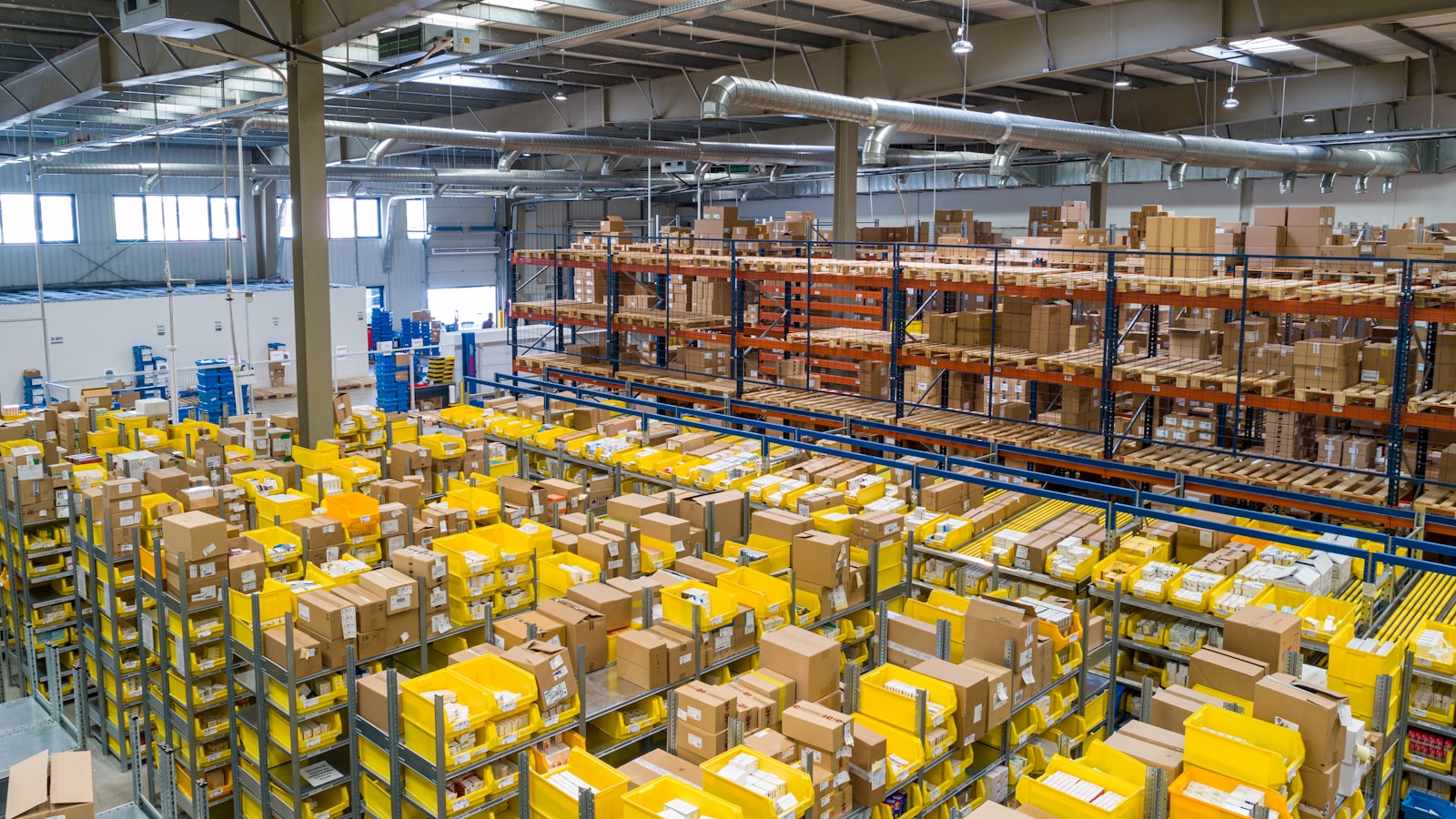
Target's New Receive Center Shows Why Inventory Positioning Beats Forecasting
Target's Houston receive center is a signal for ecommerce merchants: inventory positioning, upstream capacity, and timing control now matter as much as demand forecasting.
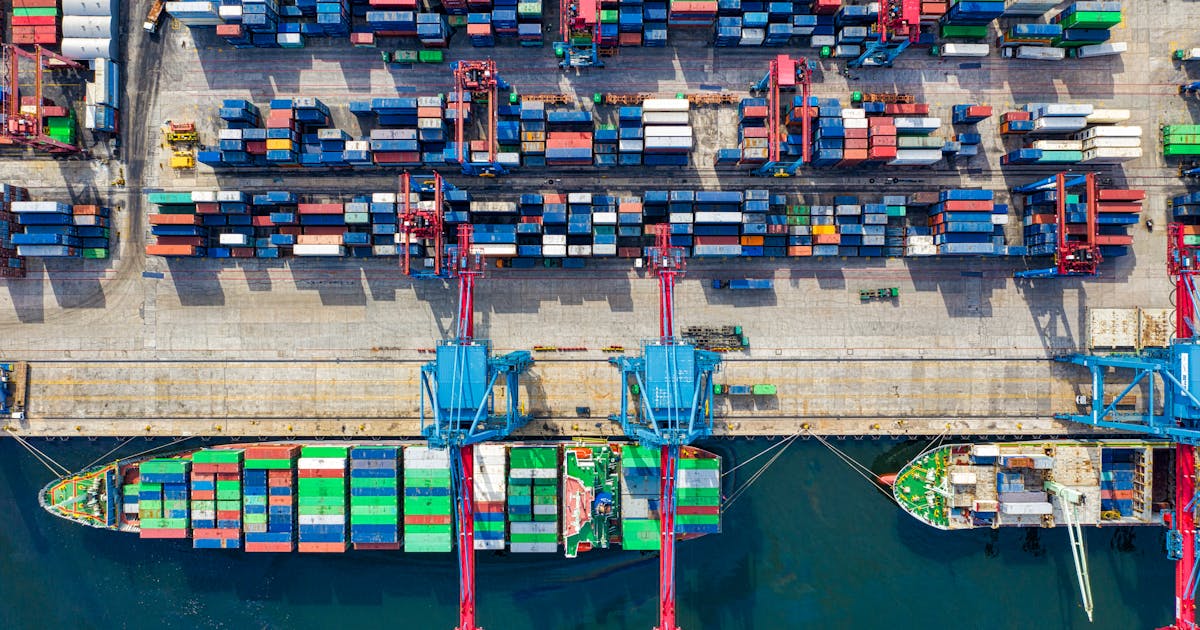
The Strait of Hormuz Is Back on Every Seller's Risk Map
Middle East shipping volatility is no longer only a freight-forwarder problem. Sellers need routing, inventory, insurance, and cash-flow plans before the next disruption hits.
The USMCA Review Could Change the Nearshoring Math for Ecommerce Sellers
The upcoming USMCA review is not only a trade-policy story. It could affect nearshoring, rules of origin, supplier choices, labor risk, and landed-cost models.