WooCommerce Inventory Management: 2026 Playbook

WooCommerce gives founders something rare in ecommerce, full control. You own your data, your storefront, your checkout, and the customer relationship. The trade-off is that operations do not come built in. WooCommerce inventory management is a discipline you have to build deliberately, especially once you sell on more than one channel. Get it right and you scale without friction. Get it wrong and you spend half your week reconciling spreadsheets and apologizing to customers for cancelled orders.
This guide is the playbook we wish more WooCommerce founders had access to before they hit their first overselling crisis. It covers what good WooCommerce inventory management actually looks like in 2026, what to avoid, and how to build a system that grows with your store.
What WooCommerce Inventory Management Actually Covers
The phrase "WooCommerce inventory management" gets used loosely. To set expectations clearly, here is what it really includes at any serious scale:
- Real-time stock tracking across simple and variable products
- Multi-channel synchronization to marketplaces and other storefronts
- Multi-warehouse and 3PL inventory allocation
- Variation-level SKU management
- Purchase order generation for suppliers
- Demand forecasting based on sales velocity
- Stock movement audit trails for accounting and compliance
- Low-stock alerts and reorder triggers
- Bulk editing and import/export workflows
A complete WooCommerce inventory management setup handles most of these. A weak setup handles only quantities and out-of-stock badges, leaving the rest to spreadsheets and human error.
Where Native WooCommerce Inventory Stops Working
WooCommerce ships with basic inventory tools, set quantities, mark items out of stock, get notified when stock is low. That is intentional. WooCommerce is designed to be a flexible storefront, not a full operations platform.
The native tools work fine for stores under 200 SKUs selling on one channel from one warehouse. Beyond that point, the limits become obvious fast:
- No bidirectional sync to marketplaces
- No multi-warehouse allocation
- Weak handling of variations at scale
- No purchase order or supplier management
- No real reporting or forecasting
- Manual stock updates that do not survive contact with peak season
If any of those are blockers for your business, native WooCommerce inventory management is not enough. You need either plugins, a dedicated inventory platform, or both.
The Plugin Stack Trap
The path most growing WooCommerce stores follow looks like this: install a basic stock plugin, then a marketplace connector for Amazon, then another for eBay, then a shipping plugin, then a reporting plugin. Within a year, the WordPress admin has 8 to 12 inventory-related plugins, and they are all writing to the same WooCommerce database tables.
This is the plugin stack trap. The symptoms appear gradually:
- Stock numbers drift between channels
- Orders complete without reducing inventory
- Refunds do not restore stock correctly
- Variations show inconsistent counts across plugins
- The admin dashboard slows to a crawl
- Random checkout failures that no one can reproduce
These problems do not usually have one cause. They emerge from plugins competing to update the same data without coordination. According to Wikipedia's overview of inventory management, centralized data ownership is one of the foundational principles of accurate stock control, and stacked plugins violate that principle by design.
The fix is structural. Replace overlapping plugins with one platform that handles inventory, orders, and channel sync as a unified system.
What Good WooCommerce Inventory Management Looks Like
A mature WooCommerce inventory management setup follows the same handful of principles, regardless of which specific tool you use.
Single Source of Truth
One system owns the canonical stock count. WooCommerce, Amazon, eBay, and your warehouse all read from and write to that source. No two systems claim authority over the same data.
Webhook-Driven Updates
Stock changes propagate through webhooks instead of scheduled polling. According to Cloudflare's webhook documentation, event-driven architectures handle high-velocity stock changes far more reliably than time-based polling, especially during peak sales periods.
Variation-Level Granularity
Each SKU, including every variation of a parent product, has its own stock count, its own reorder threshold, and its own sync rules. Plugins that only track parent products break at scale, especially for apparel and configurable goods.
Buffer Stock by Default
Hold back 1 to 3 units per SKU as a safety buffer. This absorbs the brief windows when channels disagree, eliminating most overselling risk without complicated math.
Clean Ownership Boundaries
Decisions about which system owns which data type are explicit, not implicit. WooCommerce typically owns the catalog and storefront; the inventory platform owns stock counts, order routing, and sync logic.
Comprehensive Logging
Every stock change, order import, and webhook event is logged. When something goes wrong (and at scale, something always does), the logs let you reconstruct exactly what happened.
Building Your WooCommerce Inventory Management Workflow
Here is the sequence we see working consistently for growing WooCommerce stores.
1. Standardize SKUs across every channel. Inconsistent naming is the #1 cause of sync failures. Apply one format everywhere before you connect any sync tool.
2. Audit your current state. List every channel, every warehouse, every plugin currently touching inventory. Document your overselling rate, manual reconciliation hours, and current SKU count. This is your baseline.
3. Pick one tool that fits your three-year horizon. Not your current state, not your dream state, the realistic mid-term where you will be in 18 to 36 months.
4. Pilot on staging. Clone your production environment and test the inventory tool with synthetic orders for at least 7 days before going live.
5. Migrate one channel at a time. Start with your highest-volume marketplace. Validate accuracy for a week before adding the next.
6. Set up monitoring before peak season. Low-stock alerts, sync failure notifications, webhook health checks, configure all of these in advance.
How Nventory Approaches WooCommerce Inventory Management
Nventory.io is built specifically for the WooCommerce stores that have outgrown stacked plugins but are not ready for ERP-level complexity. The platform handles inventory, orders, and channel sync as one unified system instead of a collection of competing plugins.
The free Nventory plugin on WordPress.org connects WooCommerce to Amazon, eBay, Walmart, TikTok Shop, Etsy, Shopify, and 30+ other channels through a single API key. Stock updates flow bidirectionally in under 5 seconds. Variations sync at the SKU level. Every event is logged with retry logic for failed deliveries.
Importantly, Nventory does not replace WooCommerce, it complements it. WordPress remains your storefront, your customer-facing experience, and your content hub. Nventory handles the operational layer behind the scenes, on dedicated infrastructure, so your WooCommerce admin stays fast.
Performance and Hosting Considerations
Heavy inventory plugins can quietly drag your WordPress admin and checkout speeds down by hundreds of milliseconds. When evaluating any WooCommerce inventory management tool, ask:
- Does it run database queries on every page load, or only on admin pages?
- Does it process sync operations as background jobs, or block user requests?
- Is it compatible with your caching plugin (WP Rocket, W3 Total Cache, etc.)?
- What are the PHP memory and version requirements?
- Has it been tested with your hosting provider?
The best inventory tools run heavy operations off your WordPress instance entirely, on dedicated platform infrastructure. That is the architectural advantage of platforms like Nventory: heavy lifting happens externally, so your hosting account does not carry the weight.
When to Move Beyond Plugins
Eventually, even the best WooCommerce inventory management plugin hits limits. Signs you have reached that point:
- 5,000+ SKUs across 4+ channels
- Multiple warehouses or 3PL relationships
- Compliance requirements (lot tracking, expiration dates, batch records)
- Demand forecasting becoming a strategic priority
- Dedicated operations staff who need ERP-style workflows
At that scale, your inventory platform should be the system of record, with WordPress as one of several connections. Modern platforms like Nventory are designed for exactly this transition, start as a WooCommerce plugin, grow into a full operating layer without ripping anything out.
Final Thoughts
Good WooCommerce inventory management is not about finding one perfect plugin. It is about choosing a system that scales with your business, avoiding plugin conflicts, and treating stock data as a single source of truth. Webhook-driven sync, variation-level tracking, and centralized ownership are the principles that separate setups that scale from setups that break.
If you are running a WooCommerce store on multiple channels and ready to consolidate from a stacked plugin setup to a unified platform, download Nventory free from WordPress.org and try it on staging this week. Visit nventory.io to compare integrations and see how the platform fits your stack.
Frequently Asked Questions
For multi-channel WooCommerce stores, Nventory offers the broadest free-tier feature set on WordPress.org, including real-time sync, variation-level tracking, and 30+ native marketplace integrations. ATUM and Smart Manager are solid options for single-channel stores that do not need multi-channel sync.
It should, but only if the tool supports variation-level tracking. Each variation needs its own SKU and its own sync rules. Plugins that only track parent products fail at scale, especially for apparel and configurable products.
Generally, no. Two plugins writing to the same stock data create silent conflicts that cause overselling and data corruption. Pick one tool that handles your full inventory workflow rather than stacking overlapping plugins.
The platform monitors stock changes across every connected channel in real time. When a sale happens anywhere, it immediately reduces the count everywhere else. Combined with safety stock buffers, this brings the overselling risk window down to a few seconds.
A well-built plugin should add minimal load. Look for tools that use webhooks (not polling), run heavy operations on external servers, and are compatible with caching plugins. Always test on staging with realistic traffic before going live.
Start with an audit of your current plugins and document what each one does. Set up the new platform on staging, validate that it covers all the functionality you currently use, then migrate one channel at a time. Disable old plugins only after the new platform is fully validated.
Related Articles
View all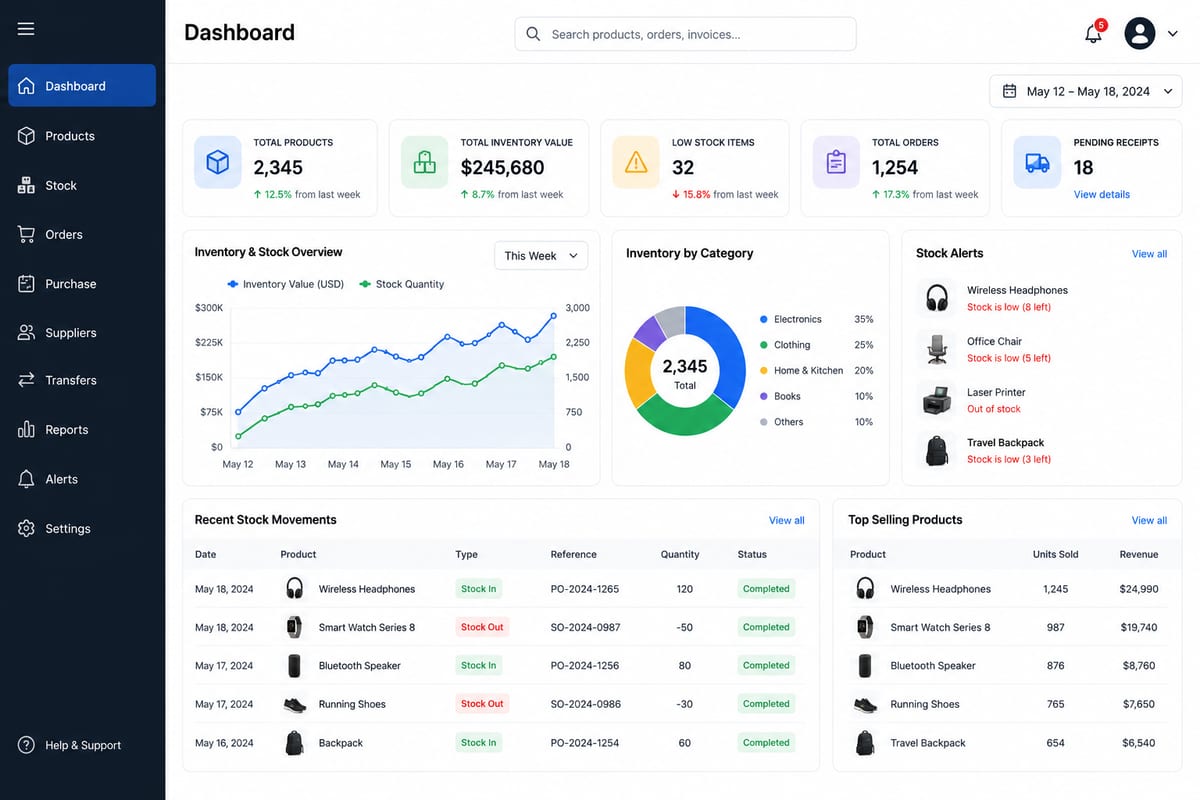
Inventory Management Software Free: Real vs Marketing
Inventory management software free options are not all real. Tell the difference between genuine free tools and crippled marketing funnels.
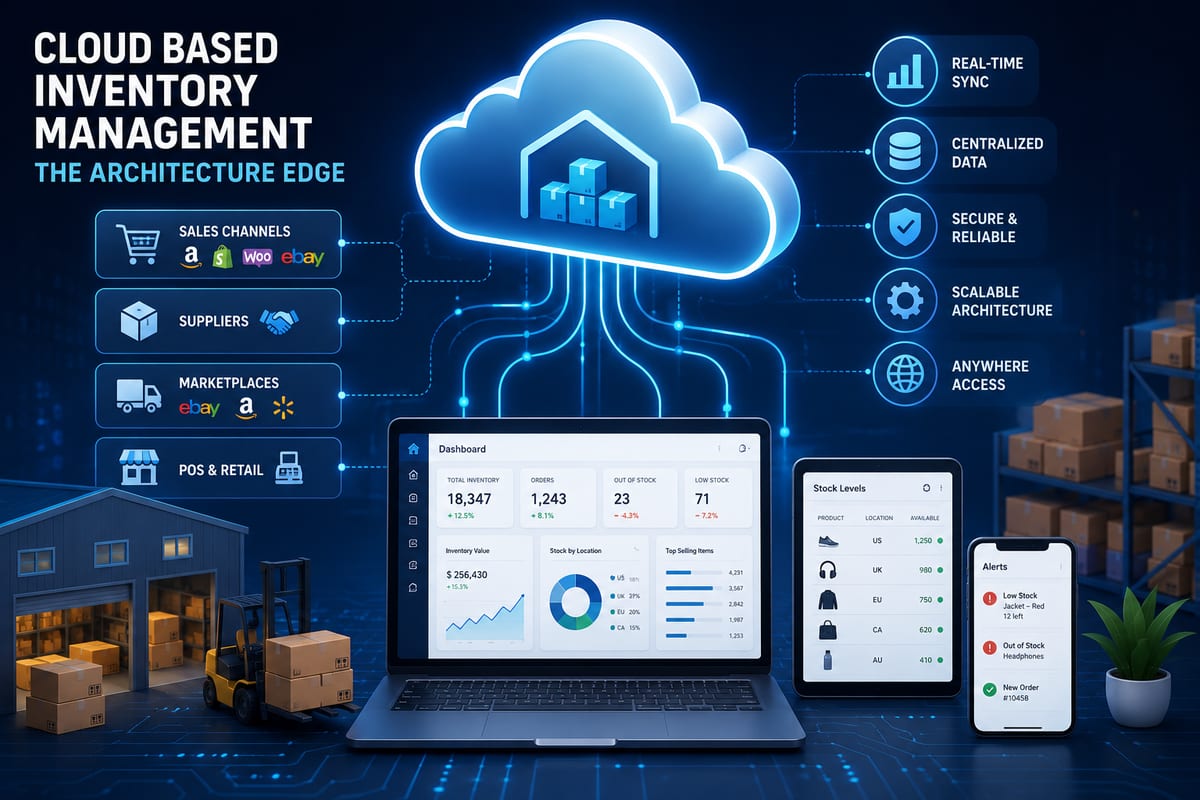
Cloud Based Inventory Management: The Architecture Edge
Cloud based inventory management is not just about the cloud. The architectural advantages that determine whether the platform actually scales for you.

Multichannel Inventory Management: Complete 2026 Guide
Master multichannel inventory management with real-time sync, smart routing, and zero overselling. Built for ecommerce sellers ready to scale.