Dropshipping Sites Behind Real Six-Figure Stores
Most articles about dropshipping sites read like affiliate marketing in disguise. They rank platforms by referral commissions, slap "best of 2026" on the title, and hope nobody notices that every recommendation conveniently happens to pay the highest affiliate cut. This article is different. It is drawn from looking at what actually-successful dropshipping operations run on, the platforms behind real six-figure stores, not the platforms with the best affiliate programs.
If you are evaluating dropshipping sites for your own operation, the patterns below will help you separate the platforms that scale from the ones that look great in onboarding videos and collapse under volume.
What Real Dropshipping Sites Actually Need to Do
Before listing options, it helps to define what dropshipping sites have to handle for serious operations. Five capabilities separate platforms that work from platforms that look like they work.
Supplier integration depth. The platform needs reliable, real-time connections to product catalogs from suppliers, AliExpress, CJDropshipping, Spocket, US-based suppliers, niche specialists. Surface-level integrations that import once and forget are not enough.
Inventory synchronization. When a supplier marks something out of stock or changes pricing, your store should reflect the change automatically. Operations that run on stale supplier data accumulate cancelled orders fast.
Order routing automation. When a customer places an order, the system should route it to the right supplier, tag it with the right SKU, and pass tracking back to the customer without manual touches. Dropshipping at scale lives or dies on this automation.
Profit margin protection. Pricing rules that adjust automatically when supplier prices change, currency conversion accuracy, fee accounting. Operations that do not protect margins systemically watch their profitability erode invisibly.
Multi-channel readiness. Modern dropshipping is not single-channel. Successful operations sell on their own dropshipping site plus Amazon, eBay, Etsy, and increasingly TikTok Shop. The platform needs to handle the multi-channel layer.
Dropshipping sites that handle three of these well are common. Dropshipping sites that handle all five are rare.
The Three Categories of Dropshipping Sites in 2026
Most dropshipping operations end up running on one of three platform types.
Category 1: Storefront Builders With Dropshipping Extensions
WooCommerce, Shopify, and BigCommerce all support dropshipping through plugins or apps. The storefront handles your customer-facing experience; the extensions handle supplier integration. This is the most flexible option and the most common path for serious operators.
Strengths: control, customization, ownership of customer data, no platform-imposed margin caps.
Weaknesses: requires assembling the stack yourself, more operational complexity than turnkey solutions.
Category 2: All-in-One Dropshipping Platforms
Spocket, DSers, AutoDS, Modalyst, CJDropshipping. Purpose-built for dropshipping, with supplier networks and order routing baked in.
Strengths: faster to launch, less stack assembly, supplier networks already in place.
Weaknesses: less storefront flexibility, often locked into specific supplier networks, harder to scale beyond a single channel.
Category 3: Marketplace-Native Dropshipping
Amazon FBA dropshipping, eBay dropshipping, TikTok Shop dropshipping. The marketplace is both your storefront and your sales channel. Different rules and risk profiles.
Strengths: instant traffic, no separate site to build.
Weaknesses: limited brand control, marketplace-imposed margin pressure, account suspension risk.
Successful six-figure operations almost always run primarily on Category 1 (a real storefront) and supplement with Category 3 (marketplaces) for traffic. Category 2 is most commonly used as a supplier integration layer rather than a complete platform.
What Successful Dropshipping Operations Have in Common
Looking at the operations actually doing real revenue, a few patterns repeat.
They own their storefront. Almost universally, six-figure dropshipping operations run on Shopify or WooCommerce with full ownership of customer data, design, and brand experience. Operations that run only on marketplaces hit ceilings fast.
They sell on multiple channels. Single-channel dropshipping is fragile. Diversification across the storefront plus 2 to 4 marketplaces is the norm.
They have real inventory data. Even though the physical inventory is held by suppliers, successful operators maintain accurate, real-time inventory data internally. According to Wikipedia's overview of inventory management, centralized data ownership is foundational to operational accuracy regardless of who physically holds the stock.
They automate ruthlessly. Manual order processing breaks at any meaningful volume. The successful operations have automated order routing, tracking syncing, and customer communication.
They manage margins systemically. Pricing rules, currency conversion, fee accounting, all handled by software, not manual spreadsheets.
The dropshipping sites these operations choose reflect these patterns. They prioritize ownership, automation, and multi-channel readiness over the cheapest or fastest-to-launch option.
The Inventory Sync Problem Most Dropshipping Sites Underestimate
Even though dropshipping does not involve holding physical inventory, inventory synchronization is one of the biggest operational headaches in the model. When a supplier marks an item out of stock, your storefront and every marketplace listing need to reflect that change immediately. Otherwise, customers buy items that cannot be fulfilled.
According to Cloudflare's documentation on webhooks, event-driven sync handles high-velocity inventory changes far more reliably than polling-based alternatives. For dropshipping operations specifically, this matters because supplier inventory shifts happen unpredictably and missing one change can produce a cascade of cancelled orders across channels.
Dropshipping sites that get this right use webhook-driven sync between supplier APIs, the storefront, and connected marketplaces. Dropshipping sites that get this wrong rely on scheduled polling and accept regular cancellation rates as a cost of doing business. The difference shows up in customer reviews, marketplace account health metrics, and refund processing volume.
How Nventory Fits Into a Dropshipping Stack
Nventory.io is not a dropshipping platform, it is a multi-channel inventory and order management platform. But it solves a specific problem dropshipping sites face: keeping inventory data synchronized across the storefront, supplier feeds, and every connected marketplace in real time.
The free Nventory plugin on WordPress.org connects WooCommerce to Amazon, eBay, Walmart, TikTok Shop, Etsy, Shopify, and 30+ other channels through a webhook-driven platform with sub-5-second sync. For a dropshipping operation running on WooCommerce with multi-channel selling, this provides the inventory synchronization layer that the dropshipping plugins themselves often handle poorly.
Setup takes about 10 minutes. The free tier includes the full multi-channel sync without a credit card. Variations track at the SKU level. Every event logs with retry logic.
The architectural value for dropshippers specifically: when supplier feeds update inventory in WooCommerce, those changes propagate outward to every marketplace listing in seconds rather than minutes. That is the difference between a dropshipping operation that scales cleanly and one that perpetually fights cancellation rates.
What to Look For When Evaluating Dropshipping Sites
A practical checklist for evaluating any dropshipping platform.
Supplier network depth. How many active suppliers, how reliable, what categories. A platform with 1,000 suppliers but only 50 actively shipping is not useful.
Inventory sync speed. How fast supplier stock changes propagate to your storefront. Sub-5-second sync is the standard; anything slower creates risk.
Order routing reliability. What percentage of orders route correctly without manual intervention. Reliable operators report 95%+ automation rates.
Pricing rule flexibility. Can you set margin floors, automatic adjustments based on supplier price changes, currency conversion accuracy.
Multi-channel readiness. Does the platform handle inventory across multiple sales channels or only your own storefront.
Customer data ownership. Do you own your customer email list and order history, or does the platform claim joint ownership.
Pricing structure. Flat monthly, transaction-based, supplier-based, each model has different scaling economics.
Common Mistakes Dropshipping Operators Make
Three patterns show up repeatedly in operations that struggle.
Picking platforms based on launch speed alone. Faster-to-launch platforms often sacrifice the operational features that matter at scale. The platforms that take longer to set up usually scale further.
Running everything on one channel. Single-channel dropshipping is fragile. Account suspensions, algorithm changes, or supplier disruptions can wipe out the entire operation overnight.
Underestimating inventory sync complexity. Dropshipping sites that do not handle real-time inventory sync produce regular cancellations that compound into customer service costs, marketplace penalties, and review damage.
Ignoring data portability. Platforms that lock your customer data and order history become expensive prisons over time. Always verify export capability before committing.
Buying based on affiliate-driven reviews. Most dropshipping site comparison content is affiliate-driven. Independent review sources are rarer but more reliable.
Final Thoughts
Dropshipping sites that actually power six-figure operations share a small set of operational characteristics: owned storefronts, multi-channel diversification, real-time inventory sync, automated order routing, and systemic margin protection. The platforms that deliver these characteristics scale. The platforms that do not, even the popular ones, eventually create more problems than they solve.
If you are running a dropshipping operation on WooCommerce and the multi-channel inventory sync layer is the operational gap holding you back, download Nventory free from WordPress.org and connect your first channel today. Visit nventory.io to compare integrations and see how the platform handles inventory synchronization across the channels successful dropshipping operations rely on.
Frequently Asked Questions
Most run on WooCommerce or Shopify as their primary storefront, with supplier integration through specialized plugins or apps, and multi-channel sync handled by inventory platforms like Nventory.io. The exact mix varies, but the pattern of owned storefront plus supplier layer plus multi-channel sync is consistent.
For operators who handle the operational complexity correctly, yes. The successful operations focus on niche markets, real branding, and serious inventory automation. Generic, low-margin general-store dropshipping is much harder to run profitably than it was five years ago.
Inventory synchronization issues that produce cancellation cascades. Customers buy items the supplier no longer has, refunds pile up, marketplace account health metrics degrade, and the operation eventually loses its sales channels.
For most operators, a custom stack on WooCommerce or Shopify scales further than turnkey platforms. The setup takes longer but the long-term flexibility and ownership pay off significantly past six figures in revenue.
The cleanest approach uses a webhook-driven inventory platform that sits between your storefront and connected marketplaces. The free Nventory plugin on WordPress.org is one example built for the WooCommerce-plus-marketplaces use case.
Most successful operations diversify across 3 to 5 channels. Fewer than 3 creates fragility. More than 5 creates operational complexity that outpaces the marginal revenue gain.
Related Articles
View all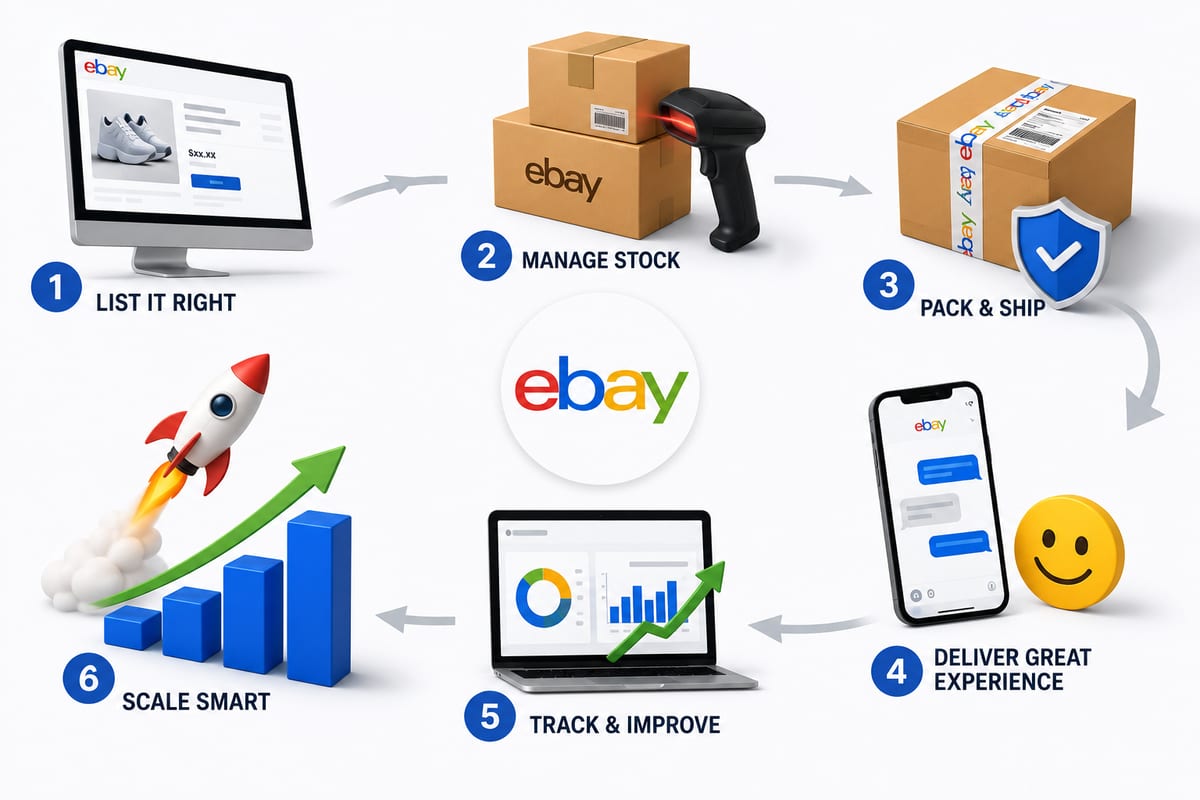
Tips on How to Sell on eBay: Operational Practices at Scale
Tips on how to sell on eBay alongside multiple channels. The operational practices that protect seller standing and produce sustainable margin.
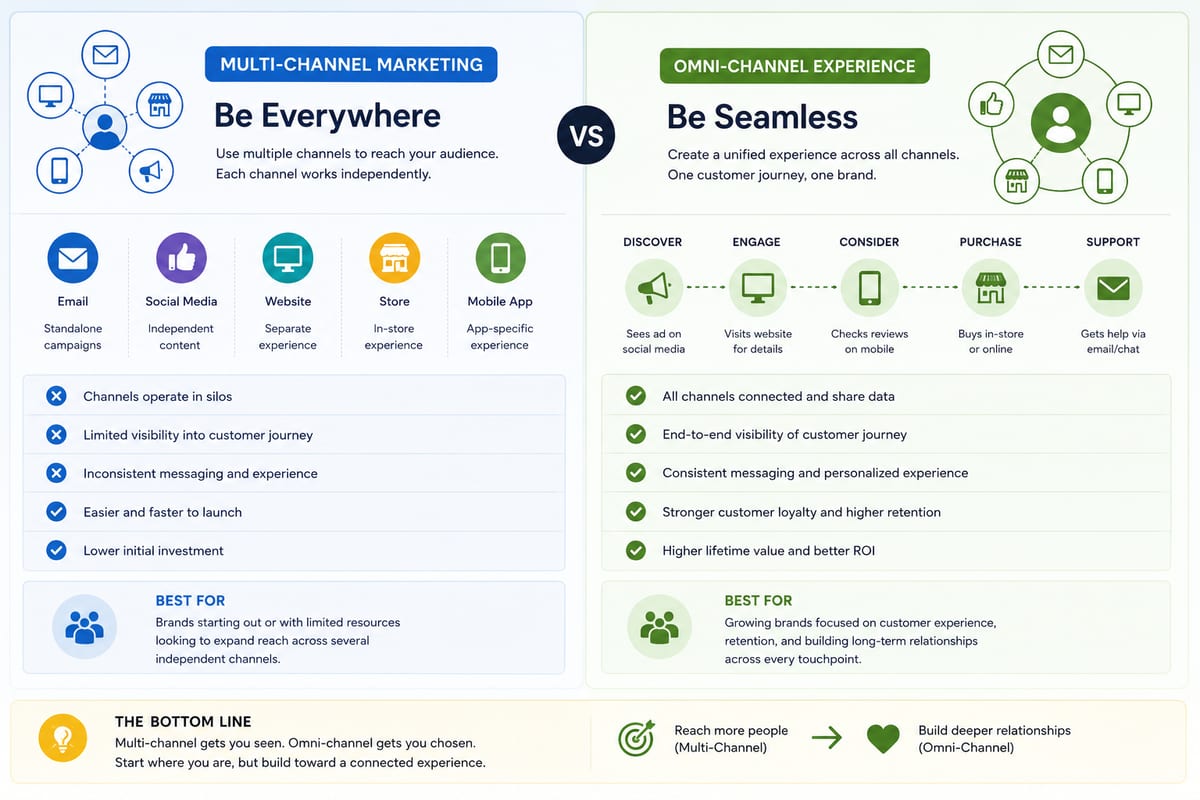
Multi Channel Marketing vs Omni Channel: Honest Comparison
Multi channel marketing vs omni channel breakdown for ecommerce operations. The operational differences that determine which approach fits your business.
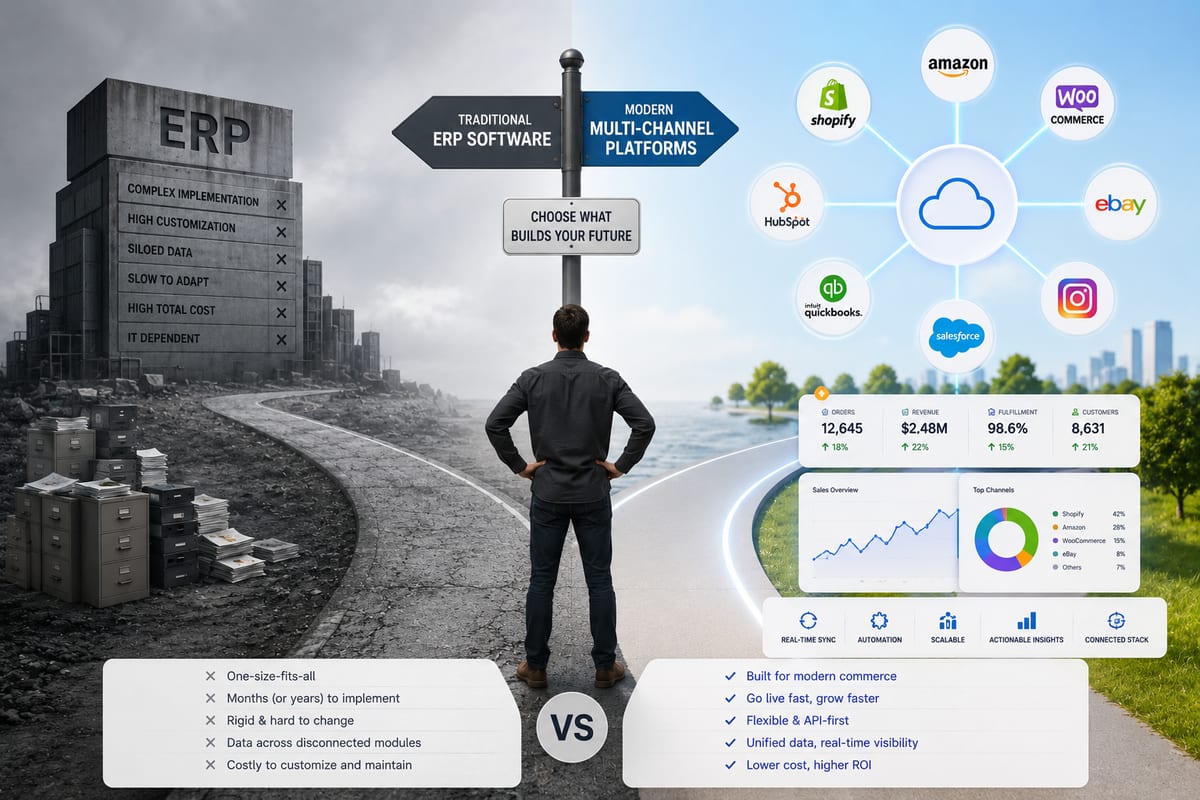
ERP Software vs Multi-Channel Platforms: Honest Choice
ERP software comparison for growing ecommerce brands. When ERP fits and when multi-channel platforms produce better outcomes at lower cost.