ERP Software vs Multi-Channel Platforms: Honest Choice
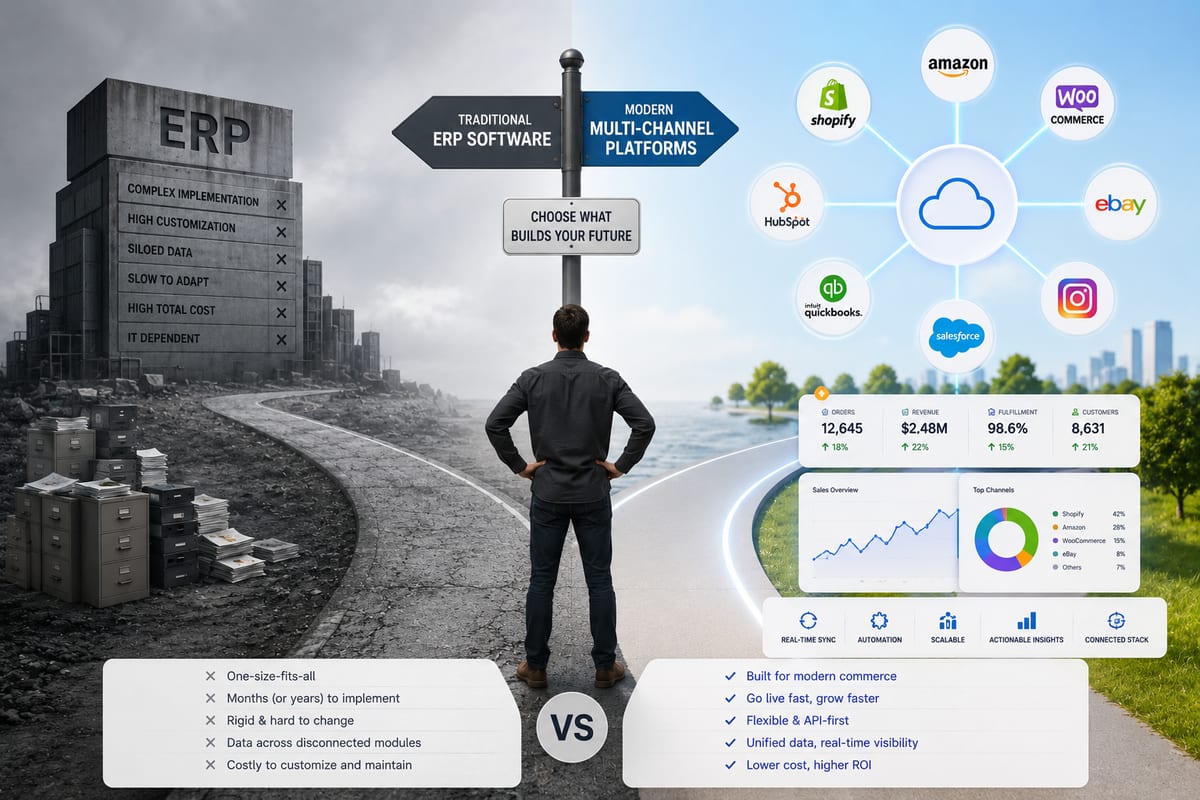
ERP software comes up in every growing ecommerce brand's conversation eventually. NetSuite, SAP Business One, Microsoft Dynamics, Sage X3, the big names occupy serious sales attention as brands cross specific revenue thresholds. The pitch is compelling: one system handling inventory, accounting, manufacturing, HR, CRM, and reporting. The reality is more nuanced. ERP software fits enterprise operations beautifully. For most growing multi-channel ecommerce brands, ERP is overkill that produces worse outcomes than purpose-built multi-channel platforms at significantly lower cost.
This article walks through where ERP software actually fits, where it does not, and the honest comparison between ERP and multi-channel inventory platforms that brands should make before committing to either path.
What ERP Software Actually Does
ERP (Enterprise Resource Planning) software unifies multiple operational disciplines into one integrated system. The category includes:
Inventory management. Stock tracking, purchasing, supplier management.
Accounting and finance. General ledger, accounts payable/receivable, financial reporting.
Manufacturing and production. Bill of materials, production planning, capacity management.
Customer relationship management (CRM). Customer data, sales pipeline, service management.
Human resources. Employee data, payroll, time tracking.
Supply chain and procurement. Vendor management, procurement workflows, contract management.
Reporting and analytics. Cross-functional reporting, dashboards, business intelligence.
The value proposition is integration, all these functions in one system with shared data and consistent workflows. The cost is complexity, implementing and operating ERP systems requires significant investment in software, services, and ongoing operations.
Where ERP Software Genuinely Fits
ERP software produces excellent outcomes for operations with specific characteristics. Brands matching these characteristics should consider ERP seriously.
Manufacturing operations. Operations producing goods rather than just reselling them benefit from ERP's bill of materials, production planning, and capacity management capabilities.
Multi-entity operations. Operations running multiple legal entities, subsidiaries, or international operations benefit from ERP's multi-entity accounting and consolidation features.
Significant revenue scale. Operations past $10M annual revenue typically have the complexity and resources that justify ERP implementation.
Heavy compliance requirements. Industries with specific compliance requirements (medical devices, food safety, defense) often need ERP's audit and traceability capabilities.
Public company readiness. Operations approaching IPO or significant institutional investment benefit from ERP's enterprise-grade financial reporting capabilities.
Cross-functional integration needs. Operations where finance, operations, sales, and HR all need shared real-time data benefit from ERP's unified architecture.
Brands matching three or more of these characteristics should evaluate ERP options seriously. Brands matching one or two are usually better served by purpose-built solutions for the specific functional areas they actually need.
Where ERP Software Does Not Fit (But Often Gets Sold Anyway)
ERP vendors aggressively pursue growing ecommerce brands well before the brands actually need ERP capabilities. The result is significant ERP misallocation among brands between $1M and $10M revenue.
Multi-channel ecommerce without manufacturing. Brands selling products they purchase from suppliers (rather than manufacturing themselves) do not need ERP's production capabilities. Purpose-built multi-channel platforms handle the operations more effectively at lower cost.
Brands under $5M revenue. ERP implementation costs typically run $100K to $500K plus ongoing subscription fees of $30K to $150K annually. The economics rarely justify ERP at this scale.
Operations with simple accounting needs. Brands with single-entity operations and straightforward accounting needs do not benefit from ERP's enterprise financial capabilities. QuickBooks or Xero handles their needs cleanly.
Brands without complex compliance requirements. Standard ecommerce compliance (tax collection, basic data privacy) does not require ERP's audit capabilities.
Operations that move fast. ERP implementations typically take 6 to 12 months. Operations that need to move faster benefit from purpose-built tools with faster deployment.
For most growing multi-channel ecommerce brands, the right answer is not ERP yet. The right answer is purpose-built multi-channel platforms that handle the specific operational complexity these brands face.
The Multi-Channel Platform Alternative
For ecommerce-specific operations, multi-channel inventory and order management platforms address the operational complexity ERP would handle, at a fraction of the cost.
Multi-channel inventory sync. Real-time stock coordination across storefronts and marketplaces. The capability ERP addresses through complex configuration; multi-channel platforms address by design. For deeper architectural context, see inventory sync.
Order management. Unified order processing from multiple sources. Same capability as ERP order management at significantly lower cost.
Multi-warehouse coordination. Stock allocation and order routing across locations. Multi-channel platforms typically include this; ERPs require configuration work.
Channel-specific integrations. Native API connections to Amazon, eBay, Walmart, Shopify, and other channels. Multi-channel platforms typically have deeper native integrations than ERP marketplaces.
Operational reporting. Inventory, sales, and channel performance reporting. Multi-channel platforms typically handle ecommerce-specific reporting better than generic ERP reporting.
What multi-channel platforms do not do: complex accounting, manufacturing planning, HR, multi-entity consolidation. For operations needing these capabilities, ERP is still the right answer. For operations not needing these capabilities, multi-channel platforms produce better outcomes.
For comprehensive context, see multichannel ecommerce operational patterns and inventory management frameworks.
The Cost Comparison Most Buyers Do Not Do
ERP and multi-channel platforms have dramatically different cost structures. Understanding the actual numbers helps brands make informed decisions.
ERP cost structure:
- Software licensing: $20K to $100K annually depending on user count and modules
- Implementation services: $50K to $500K depending on complexity
- Ongoing operations: $30K to $150K annually for support and maintenance
- Internal IT support: 1 to 3 FTE depending on operation size
- Total annual cost: $150K to $1M+
Multi-channel platform cost structure:
- Software subscription: $0 to $30K annually depending on tier
- Implementation services: $0 to $15K depending on complexity
- Ongoing operations: included in subscription
- Internal IT support: 0 to 0.5 FTE for typical operations
- Total annual cost: $0 to $60K
The cost difference is roughly 10 to 20x. For operations that do not actually need ERP capabilities, this difference represents resources that could fund 5 to 10 years of business growth.
According to Wikipedia's overview of inventory management, inventory management is one operational discipline among many that ERP addresses. For brands where inventory management is the primary operational complexity, dedicated inventory platforms produce better outcomes per dollar invested than ERPs handling inventory as one capability among many.
The Migration Path Between Platforms and ERP
Brands typically move between operational platform categories as they scale. Understanding the migration paths helps avoid wrong-direction decisions.
Storefront-native to Multi-channel platform. Standard growth path for multi-channel brands. Most brands make this transition between $500K and $3M revenue.
Multi-channel platform to ERP. Standard growth path for brands adding significant operational complexity. Typically happens between $10M and $30M revenue when manufacturing, multi-entity, or significant compliance complexity emerges.
Storefront-native to ERP. Direct jump that is almost always wrong. Brands without intermediate operational sophistication cannot extract value from ERP capabilities they are paying for.
Multi-channel platform to multi-channel platform. Lateral migration between purpose-built platforms. Occurs when the original platform does not fit operational needs as scale changes.
The progression matters because skipping steps usually does not work. Brands that jump from storefront-native directly to ERP typically underutilize the ERP for 2 to 3 years before the operations actually need its capabilities.
How Nventory Fits the Multi-Channel Platform Category
Nventory.io is a purpose-built multi-channel inventory and order management platform designed specifically for the operational space ERP would address poorly. The platform handles inventory sync, order management, multi-warehouse coordination, and channel-specific integrations natively rather than as ERP modules.
According to Cloudflare's documentation on webhooks, event-driven architectures handle the high-velocity operational data ecommerce produces far more reliably than the batch-oriented architectures that characterize most ERP systems. Multi-channel platforms with webhook-driven architectures produce operational reliability that ERPs typically cannot match for ecommerce-specific workflows.
For WordPress and WooCommerce stores, download Nventory free from WordPress.org. For Shopify operations, install Nventory from the Shopify App Store. Both versions connect to the same multi-channel platform with identical capabilities.
The free tier includes core multi-channel functionality without subscription cost. Paid tiers add advanced routing and fulfillment workflows for operations approaching enterprise complexity. Most operations between $1M and $10M revenue find Nventory's paid tiers handle their needs at 5 to 10% of equivalent ERP costs.
For broader context on the architectural choices that distinguish purpose-built platforms from generic enterprise software, see our inventory software framework.
Common ERP vs Multi-Channel Platform Mistakes
A few patterns that produce expensive misalignment.
Buying ERP for marketing reasons. Brands sometimes buy ERP for the credibility signal rather than the actual capabilities. The result is expensive systems that nobody uses fully.
Underestimating ERP implementation timelines. ERP implementations consistently take longer than vendors estimate. Operations expecting fast deployment get frustrated by the actual timeline.
Overestimating multi-channel platform limitations. Modern multi-channel platforms handle more operational complexity than brands often realize. ERP is not necessary as early as ERP vendors suggest.
Ignoring the cost difference. The 10 to 20x cost difference between ERP and multi-channel platforms represents real resources. Brands should make the choice deliberately rather than defaulting to whichever vendor markets more aggressively.
Picking based on demo polish. ERP demos look impressive because they cover broad capability surface. Operational fit matters more than demo polish for actual outcomes.
Final Thoughts
The ERP software vs multi-channel platform choice does not have one right answer, it depends on operational characteristics that brands should evaluate honestly. ERP fits enterprise operations with manufacturing, multi-entity, or significant compliance complexity. Multi-channel platforms fit ecommerce-specific operations without these complications, at a fraction of the cost and implementation effort. Most growing ecommerce brands between $1M and $10M revenue produce better outcomes from purpose-built multi-channel platforms than from ERP implementations that consume resources better invested in growth.
If you want to test a multi-channel platform built specifically for ecommerce operations rather than enterprise resource planning, install Nventory on your platform of choice. For WordPress and WooCommerce stores, download Nventory free from WordPress.org. For Shopify stores, install Nventory from the Shopify App Store. Visit nventory.io to review platform capabilities and see how multi-channel platforms address the operational complexity ERP would handle at significantly higher cost.
Frequently Asked Questions
Typically when adding manufacturing complexity, multi-entity operations, significant compliance requirements, or revenue past $10M with cross-functional integration needs. Below these thresholds, multi-channel platforms produce better outcomes.
For ecommerce-specific operations without manufacturing or complex accounting needs, yes. For operations with broader ERP needs, multi-channel platforms complement rather than replace ERP. Nventory handles the multi-channel piece, available on WordPress.org and the Shopify App Store.
For ecommerce operations, total ERP cost typically runs $150K to $1M annually including software, implementation, and ongoing operations. Multi-channel platforms typically run $0 to $60K annually for equivalent ecommerce-specific capabilities.
Almost never. Implementing ERP before operational needs justify it produces underutilization and frustration. Wait until specific ERP capabilities address specific operational pain.
Yes, this is a common pattern at enterprise scale. ERP handles accounting, manufacturing, and HR; multi-channel platforms handle ecommerce-specific operations. The combination produces better outcomes than ERP alone for operations needing both.
Buying ERP too early. Brands consistently implement ERP before operational complexity justifies it, producing 2 to 3 years of underutilization before the ERP capabilities become useful.
Related Articles
View all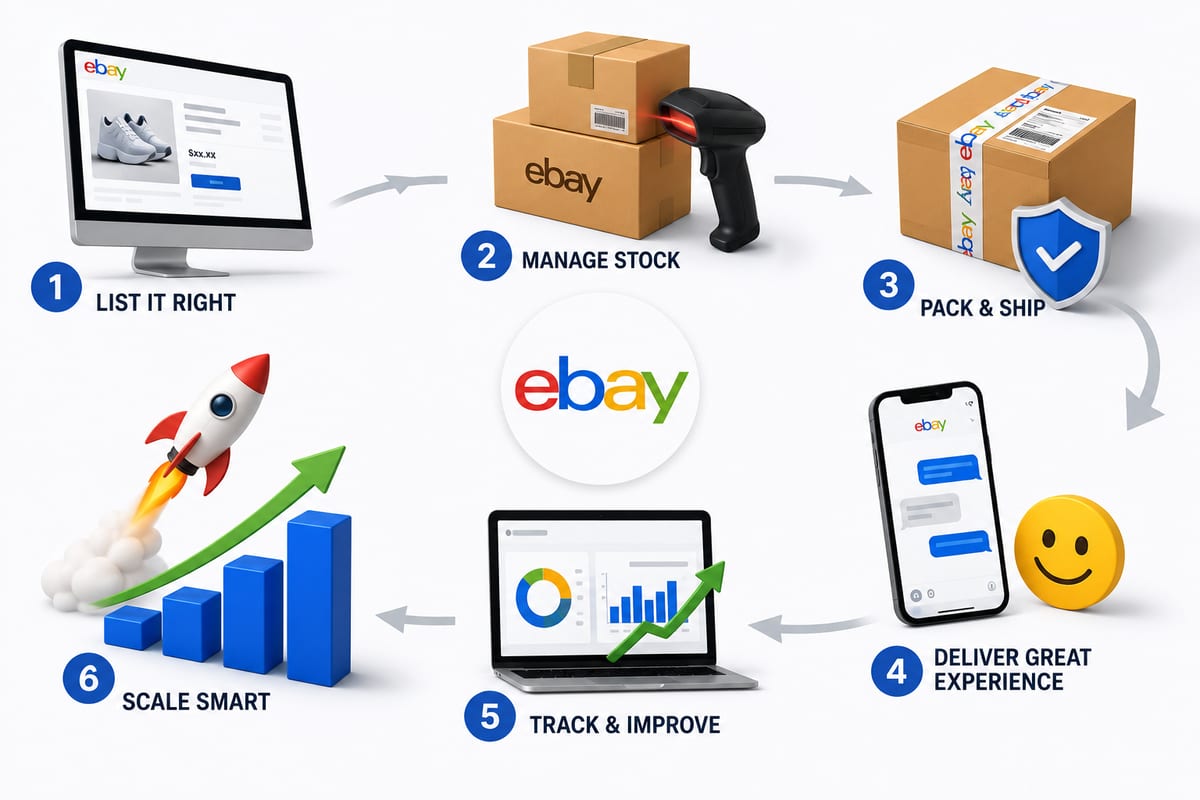
Tips on How to Sell on eBay: Operational Practices at Scale
Tips on how to sell on eBay alongside multiple channels. The operational practices that protect seller standing and produce sustainable margin.
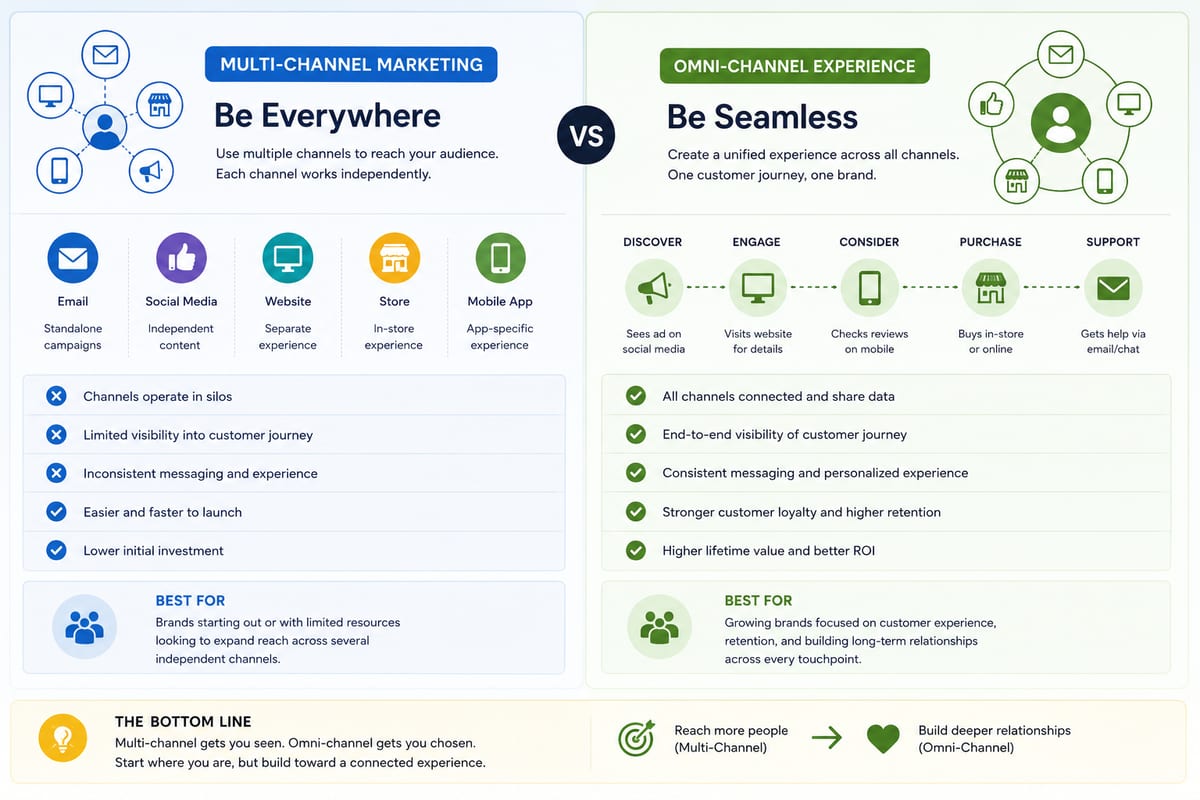
Multi Channel Marketing vs Omni Channel: Honest Comparison
Multi channel marketing vs omni channel breakdown for ecommerce operations. The operational differences that determine which approach fits your business.
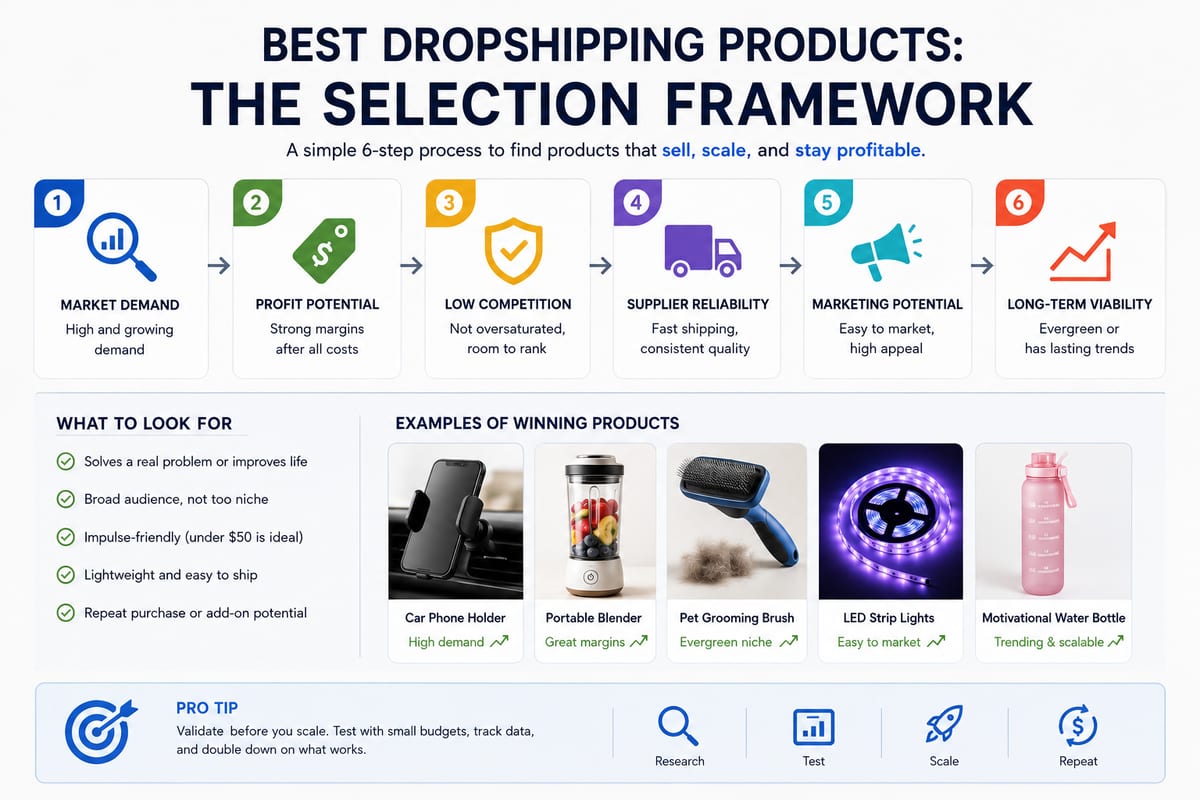
Best Dropshipping Products: The Selection Framework
Best dropshipping products selection framework for serious operators. The criteria that distinguish profitable categories from saturated ones.