Your Competitor Is Fulfilling Orders 3x Faster Than You. Here's Their Entire Tech Stack.
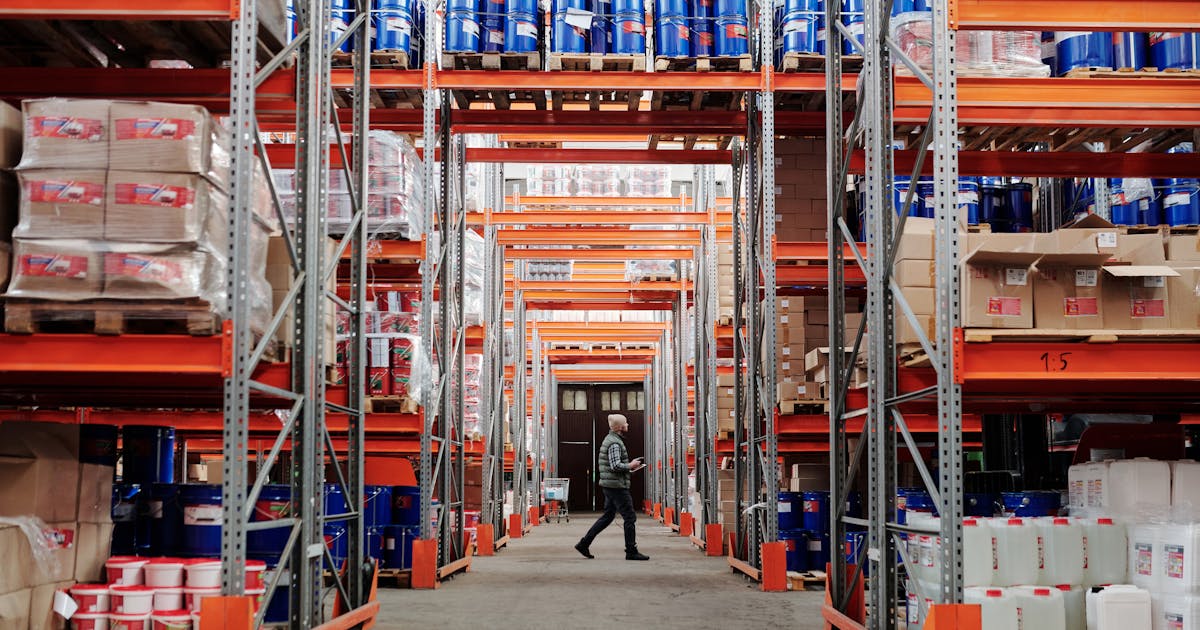
I spent two months interviewing 14 multichannel sellers doing $100K-$500K per month in revenue. I asked all of them the same question: "Walk me through exactly what happens between a customer clicking 'Buy' and the package leaving your warehouse."
The answers split into two clear groups.
Group 1 (4 sellers): "The order hits our system, the label prints automatically at the nearest warehouse, and the picker has it packed and on the truck within 90 seconds. We do not touch the order. We do not route it manually. We do not even look at it unless there is an exception."
Group 2 (10 sellers): "We check each channel throughout the day. When orders come in, we copy the details to our spreadsheet, figure out which warehouse has the product, email the warehouse or log into their portal, create the shipment, buy the label, and update tracking on each marketplace. It takes 15-45 minutes per order."
Group 1 ships in 90 seconds. Group 2 ships in 15-45 minutes. That is a 10-30x speed difference. And the gap is not about warehouse size, employee count, or shipping carrier relationships. It is about their tech stack.
Here is exactly what the fast sellers are using.
The Complete Multichannel Tech Stack
The fast sellers I interviewed all ran variations of the same five-tool architecture. The specific products varied, but the categories were identical:
- Order Management System (OMS), the brain
- Shipping Label Software, the output
- 3PL or Multi-Warehouse Fulfillment, the hands
- Product Feed/Listing Management, the storefront
- Accounting Integration, the books
Let me break down what each piece does, how they connect, and what they cost.
Layer 1: Order Management System (The Brain)
The OMS is the central hub. Every order from every channel flows into it. Every inventory update flows out of it. It is the single source of truth for what you have, where it is, and who bought it.
What It Does
- Aggregates orders from Amazon, Shopify, eBay, Walmart, TikTok Shop, and wholesale into one dashboard
- Tracks inventory across all warehouses, 3PLs, and FBA in real time
- Routes orders to the optimal fulfillment location based on proximity, cost, and stock availability
- Syncs inventory counts across every channel within minutes of each sale
- Manages purchase orders for restocking and supplier communication
- Handles returns with channel-specific policies and restocking workflows
Why It Matters
Without an OMS, every one of these functions is manual. You check Amazon for orders. Then Shopify. Then eBay. You update stock levels one platform at a time. You decide which warehouse to ship from by looking at a spreadsheet. You track POs in email threads.
This manual process is what creates the 15-45 minute per-order delay in Group 2. The order sits in the channel's dashboard until a human looks at it, processes it, and routes it. During peak hours, orders queue up. During off-hours, they sit until the next business day.
An OMS like Nventory eliminates the delay entirely. Orders flow in automatically, inventory syncs in real time, and order routing happens based on rules you configure once. A sale on eBay at 2:00 AM triggers an automatic inventory adjustment on Shopify and Walmart, a pick notification at the nearest warehouse, and a carrier selection, all before you wake up.
Cost
OMS platforms range from $100-$400/month for mid-tier sellers ($50K-$200K/month revenue). Enterprise solutions run $1,000-$5,000/month for sellers with complex operations, multiple warehouses, and high SKU counts.
Layer 2: Shipping Label Software (The Output)
Once the OMS routes an order to a fulfillment location, shipping software generates the label. The two most common tools are ShipStation and Shippo, though ShippingEasy, Pirate Ship, and EasyPost also appear in top sellers' stacks.
What It Does
- Rate shops across carriers: compares USPS, UPS, FedEx, and DHL for the cheapest option at each service level
- Generates shipping labels with one click or automatically based on rules
- Prints packing slips with channel-specific branding (different slip for Amazon vs. Shopify)
- Pushes tracking numbers back to each sales channel automatically
- Handles batch processing: print 200 labels in one run instead of one at a time
Why It Matters
Without rate shopping, you are overpaying on shipping. The cheapest carrier for a 12 oz package to California is different from the cheapest carrier for the same package to Maine. At 500 shipments per month, a $0.50-$1.00 average savings per label is $250-$500/month, easily covering the cost of the software.
But speed is the bigger win. Automated label generation with preset rules (under 1 lb = USPS First Class, over 1 lb = UPS Ground, expedited = FedEx 2Day) means the label is ready the moment the order hits the fulfillment location. No manual carrier selection. No price comparison. Just pick, pack, and slap the label.
Cost
$50-$150/month depending on volume. Most shipping platforms charge by shipment count or plan tier. ShipStation starts at $9.99/month for 50 shipments and scales to $159.99/month for 7,500+. Pirate Ship is free with pay-per-label pricing.
Layer 3: 3PL or Multi-Warehouse Fulfillment (The Hands)
The physical work of picking, packing, and shipping has to happen somewhere. For most multichannel sellers doing $50K+/month, that somewhere is a third-party logistics provider (3PL).
What a 3PL Does
- Stores your inventory in their warehouse(s)
- Receives inbound shipments from your suppliers
- Picks and packs orders as they come in from your OMS
- Ships orders using their carrier rates (usually cheaper than yours due to volume discounts)
- Processes returns and updates inventory accordingly
The Multi-Warehouse Advantage
Top sellers use 2-3 fulfillment locations strategically placed across the country. A typical setup: East Coast (New Jersey or Georgia), Central (Texas or Ohio), West Coast (California or Nevada).
Why? Shipping speed and cost. A package from New Jersey to New York City arrives next day via USPS Priority Mail at $4.50. The same package from California takes 5 days and costs $7.80. Two fulfillment locations cut average transit time by 1-2 days and average shipping cost by 15-25%.
The OMS makes multi-warehouse fulfillment possible by automatically routing each order to the nearest warehouse with available stock. Without automated routing, managing multiple warehouses is an operational nightmare: with it, the customer in Boston gets their order from New Jersey and the customer in Seattle gets theirs from Nevada, without any human making that decision.
Cost
3PL pricing varies widely, but a typical structure:
- Receiving: $25-$50 per pallet or $0.25-$0.50 per unit
- Storage: $15-$30 per pallet/month or $0.50-$1.50 per cubic foot/month
- Pick and pack: $2.50-$5.00 per order (first item) + $0.50-$1.00 per additional item
- Shipping: carrier rates passed through, often at 10-20% discount versus retail rates
For a seller doing 1,000 orders/month with 1.3 items per order on average, total 3PL costs run $4,500-$8,000/month including shipping. That is $4.50-$8.00 per order, competitive with FBA for many product sizes.
Layer 4: Product Feed/Listing Management (The Storefront)
Managing product listings across 4-5 sales channels is tedious at best and error-prone at worst. Product feed tools centralize listing management so you create a product once and push it to every channel.
What It Does
- Centralizes product data: title, description, images, pricing, and attributes in one location
- Formats listings for each channel's requirements (Amazon has different fields than Shopify or eBay)
- Pushes updates across all channels simultaneously (price change, image update, description edit)
- Manages SKU mapping when the same product has different identifiers on different platforms
- Handles bulk operations for seasonal pricing, promotional changes, or new product launches
Why It Matters
Without a feed tool, changing the price on one product across five channels means logging into five dashboards and making five manual updates. For a catalog of 200+ SKUs, that is 1,000 individual updates for a single price change. Feed management reduces that to one change, pushed everywhere.
More importantly, feed tools prevent listing errors. A wrong price on one channel creates price parity violations (Walmart and Amazon both enforce these). A wrong inventory count creates overselling. A wrong product description creates returns. Centralized management eliminates the copy-paste errors that cause these problems.
Cost
$50-$200/month for tools like Listing Mirror, ChannelAdvisor (enterprise), or Sellbrite. Some OMS platforms include basic listing management in their core product, reducing the need for a separate tool.
Layer 5: Accounting Integration (The Books)
Revenue from five channels, expenses from three shipping carriers, fees from multiple marketplaces, without automated accounting integration, reconciliation is a full-time job.
What It Does
- Syncs sales data from all channels into QuickBooks, Xero, or your accounting platform
- Categorizes marketplace fees automatically (referral fees, fulfillment fees, advertising costs)
- Reconciles payouts against orders to identify discrepancies
- Tracks COGS by SKU and channel for accurate per-product profitability
- Generates tax reports with proper sales tax allocation by state/jurisdiction
Cost
$30-$100/month for tools like A2X, Link My Books, or Webgility. QuickBooks Online runs $30-$90/month on top of the integration tool.
How the Stack Connects: The 90-Second Order
Let me trace a single order through the complete stack to show how 90-second fulfillment works:
- T+0 seconds: Customer buys on eBay. eBay sends order data to the OMS via API.
- T+5 seconds: OMS receives the order, checks inventory across all locations, selects the warehouse in New Jersey (closest to the customer in Massachusetts).
- T+10 seconds: OMS sends the order to ShipStation with pre-selected carrier (USPS Priority Mail, cheapest option for this weight/destination).
- T+15 seconds: ShipStation generates the label and sends it to the wireless printer at the NJ warehouse.
- T+20 seconds: OMS reduces available inventory by 1 unit on all channels (eBay, Shopify, Amazon, Walmart). This prevents overselling.
- T+25 seconds: Warehouse worker receives a pick notification on their mobile device with shelf location and product photo.
- T+30-80 seconds: Worker walks to shelf, picks product, scans barcode to verify, places in box, applies pre-printed label.
- T+85 seconds: Worker scans package. ShipStation marks as shipped and pushes tracking number to eBay via the OMS.
- T+90 seconds: Order is complete. Customer receives tracking email from eBay.
Total human involvement: walk, pick, scan, pack, label, scan. Six physical actions. Everything else is automated.
Compare this to the manual process: check eBay for new orders (5 min), copy order details to spreadsheet (2 min), check which warehouse has stock (3 min), email warehouse with order details (2 min), wait for warehouse to process (1-4 hours), receive tracking from warehouse (variable), manually enter tracking into eBay (2 min). Total: 15 minutes of active work spread across 1-4 hours of elapsed time.
The Total Cost of the Stack
| Tool Category | Monthly Cost | Example Tools |
|---|---|---|
| OMS / Inventory | $100-$400 | Nventory, Skubana, Cin7 |
| Shipping Labels | $50-$150 | ShipStation, Shippo, Pirate Ship |
| Product Feed | $50-$200 | Listing Mirror, Sellbrite |
| Accounting | $60-$190 | A2X + QuickBooks, Webgility |
| Analytics (optional) | $50-$200 | Sellerboard, Inventory Planner |
| Total | $310-$1,140 |
At the midpoint, roughly $700/month, this stack costs $8,400/year. For a seller doing $100K/month, that is 0.7% of revenue.
What does that 0.7% buy you?
- Labor savings: At 15 minutes of manual processing per order x 1,500 orders/month, that is 375 hours/month of labor, roughly 2.3 full-time employees at $20/hour = $3,833/month saved.
- Error reduction: Manual processing has a 2-5% error rate (wrong item, wrong address, missed order). At 1,500 orders/month, that is 30-75 errors/month, each costing $10-$25 to resolve = $300-$1,875/month saved.
- Shipping savings: Rate shopping saves $0.50-$1.00 per label x 1,500 orders = $750-$1,500/month saved.
- Faster shipping: Better reviews, better rankings, more sales. Hard to quantify but directionally significant.
Total quantifiable savings: $4,883-$7,208/month. Against a $700/month tool cost, the ROI is 7-10x.
The Customer Experience Gap
Speed is not just an operational metric. It is a customer experience differentiator that compounds over time.
A customer who orders at 10:00 AM and gets a shipping notification at 10:02 AM thinks: "This company has their act together." A customer who orders at 10:00 AM and gets a shipping notification at 6:00 PM thinks: "Okay, they shipped it." A customer who orders at 10:00 AM and gets a shipping notification the next day thinks: "Are they going to send this?"
The 90-second seller gets a shipping notification to the customer within minutes. The manual seller gets one out by end of day. Over thousands of orders, this difference shows up in review sentiment, repeat purchase rates, and marketplace search rankings.
Amazon explicitly measures and ranks sellers on shipping speed and on-time delivery rate. Sellers with same-day dispatch get preferential search placement over sellers who ship next-day. The tech stack that enables 90-second fulfillment is not just about efficiency, it is about visibility and sales volume.
Building the Stack: Where to Start
You do not need to implement all five layers at once. Here is the sequence that delivers the highest ROI for most multichannel sellers:
Step 1: OMS (Week 1-2)
Start here. The OMS is the foundation. Without centralized inventory and order management, every other tool operates in a silo. Connect all your sales channels, import your product catalog, set your inventory levels, and configure basic order routing rules.
Step 2: Shipping Software (Week 2-3)
Connect your OMS to ShipStation or equivalent. Set up carrier accounts, configure automation rules (carrier selection by weight/destination/speed), and print your first batch of labels. This is where you see immediate time savings.
Step 3: Accounting Integration (Week 3-4)
Connect A2X or equivalent to your accounting software. Automate the revenue and fee data flow from each channel. This saves hours of manual reconciliation every month and gives you accurate per-channel profitability data.
Step 4: Listing Management (Month 2)
If you have 50+ SKUs across 3+ channels, a listing tool becomes essential. Under that threshold, manual listing management is annoying but workable. Over it, centralized feed management prevents the errors that cause overselling, price parity violations, and customer complaints.
Step 5: Analytics (Month 3+)
Once the operational stack is running, add analytics to identify optimization opportunities: which SKUs are overstocked, which channels have the best margins, where shipping costs are too high, and what your real customer acquisition cost is per channel.
The Speed Advantage Is the Only Advantage That Compounds
Better product sourcing can be copied. Lower prices can be matched. Advertising strategies can be replicated. But operational speed is structural: it is built into your systems, your processes, and your technology.
The seller who ships in 90 seconds is not just faster today. They are faster in a way that improves their reviews, their rankings, their customer satisfaction, and their repeat purchase rate every single day. Over months and years, that advantage compounds into a moat that manual competitors cannot cross by working harder.
They can only cross it by building the same stack. Now you know exactly what it looks like.
Frequently Asked Questions
A complete multichannel tech stack for a mid-tier seller ($50K-$200K/month revenue) costs $500-$1,200/month total. This includes an OMS/inventory management system ($100-$400), shipping label software ($50-$150), product listing/feed management ($50-$200), accounting integration ($30-$100), and analytics or business intelligence tools ($50-$200). At scale ($500K+/month), costs increase to $1,500-$3,000/month as you add more channels, warehouses, and customizations. The ROI is typically 5-15x the cost, measured in labor savings, error reduction, and faster shipping that improves customer reviews.
Automated order routing eliminates every manual step. When an order hits the OMS, it automatically selects the optimal warehouse based on proximity to the customer, checks stock availability in real time, generates a pick list, selects the cheapest shipping carrier for the required speed, and prints a label: all without human intervention. The warehouse worker receives a pick notification on a mobile device, walks to the shelf, picks the item, scans it, and places it in a pre-selected box with a label already printed. The entire human involvement is pick, scan, pack. Everything else is automated.
An inventory management system tracks stock levels across locations and channels. An OMS (Order Management System) does that plus manages the full order lifecycle: receiving orders from all channels, routing them to the right fulfillment location, generating shipping labels, updating tracking information back to each marketplace, handling returns, and managing purchase orders. Think of inventory management as one function within the broader OMS. Most modern tools like Nventory combine both into a single platform because separating them creates data sync issues.
As a general rule: fulfill yourself below $10K/month in revenue (learning the process is valuable and 3PLs have minimums). Use a 3PL between $10K-$200K/month (the cost is competitive with doing it yourself and it frees your time for growth). Consider your own warehouse above $200K/month (dedicated staff and space can be cheaper than 3PL per-unit fees at this volume). The exception: if you sell on Amazon FBA, Amazon handles fulfillment for that channel regardless of your size. The decision is really about fulfilling non-Amazon orders.
Very. Amazon's search algorithm explicitly rewards fast shipping. Products fulfilled within 1-2 days rank higher than those with 5-7 day delivery. On Shopify, shipping speed directly impacts customer satisfaction scores and review ratings. Studies show that orders delivered within 3 days receive an average review score 0.3-0.5 stars higher than orders delivered in 7+ days. Each star improvement correlates with a 5-9% increase in conversion rate. Shipping speed compounds: faster delivery means better reviews means more sales means better ranking means more sales.
No, and using channel-specific tools is one of the most common mistakes growing sellers make. If you manage Amazon inventory in Amazon's tools, Shopify in Shopify's admin, and eBay in eBay's Seller Hub, you have three separate sources of truth that never agree. This guarantees inventory discrepancies, overselling, and manual reconciliation work. The entire point of a multichannel tech stack is centralization: one OMS that connects to all channels, one shipping tool that prints labels for all carriers, one accounting system that receives data from everywhere.
Related Articles
View all
Strait of Hormuz Supply Chain Response Plan for Ecommerce Brands
Oil above $110, carrier surcharges climbing, and lead times stretching. The response plan ecommerce brands need now to protect inventory and margins.

Shopify Stores Are Now Inside ChatGPT. Here's Why That's a Problem.
Shopify is enrolling every store into ChatGPT by default in late March 2026. There's a 4% fee, AI agents decide what gets recommended, and if your inventory isn't synced across channels, you're one viral prompt away from overselling everywhere.

Google's March 2026 Core Update: What E-Commerce Sites Need to Fix Right Now
Google's first full core update of 2026 is live. Sites with original research gained ~22% visibility. AI-generated content dropped. Here is what changed, who won, who lost, and the concrete fixes for e-commerce sites.