Dark Store Fulfillment Operations: Convert Retail Space to Ship-from-Store
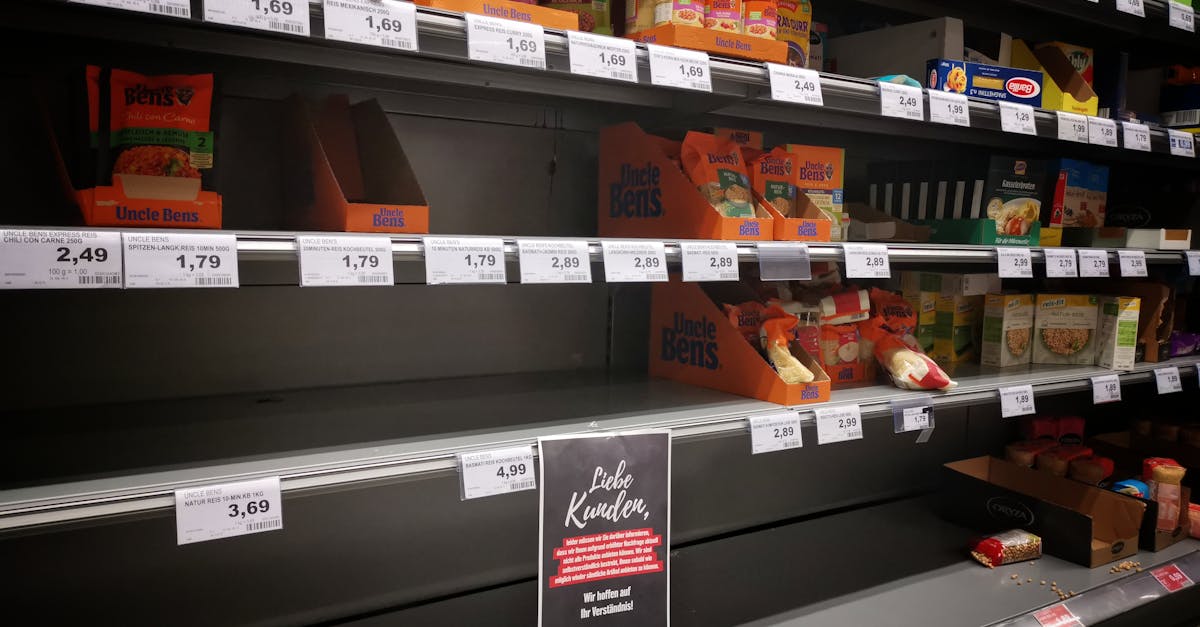
You have a retail location that used to pull in steady foot traffic. Over the past two years, the foot traffic dropped while online orders from the same zip codes climbed. The rent is the same. The staff is the same. But the economics shifted. The store now costs more to keep open for walk-in customers than it earns from them.
This is the scenario driving the dark store conversion trend across ecommerce. Instead of closing underperforming retail space, brands are converting it into closed-to-public fulfillment hubs that pick, pack, and ship online orders. The building stays. The lease stays. But the function changes from selling to shipping.
This guide covers the full conversion process: how to evaluate whether a location qualifies, how to restructure the layout, what the cost math looks like, and how to set up order routing and inventory controls so the operation actually works at scale.
What a Dark Store Is and Why Retail Brands Are Converting
A dark store is a retail-format space that has been closed to walk-in shoppers and dedicated entirely to ecommerce fulfillment. The shelving stays. The climate control stays. The loading access stays. What gets removed is everything customer-facing: signage, display fixtures, fitting rooms, checkout counters, and the staff roles associated with them.
The term "dark" refers to the storefront being unlit for public entry, not to any particular technology. The concept started in grocery (Tesco and Sainsbury's in the UK were early adopters) and has since spread to general merchandise, apparel, home goods, and DTC brands.
"Dark stores are a major shift. No customers in the aisles, just grab and go. Fulfilled 30 batches in 4 hours. Beats shopping in a crowded store any day."
- Reddit, r/InstacartShoppers
The conversion trend accelerated for three reasons:
- Retail foot traffic in mid-tier locations dropped 18 to 25 percent between 2022 and 2025, while ecommerce order volume from the same geographic areas grew 30 to 40 percent.
- Last-mile delivery costs represent up to 53 percent of total shipping spend. A dark store sitting 2 miles from the customer base cuts that cost dramatically compared to shipping from a centralized warehouse 200 miles away.
- Customer expectations for delivery speed tightened. Same-day and next-day delivery went from a competitive advantage to a baseline expectation. A dark store within the delivery radius makes that timeline achievable without premium carrier surcharges.
The result is a fulfillment model that uses existing real estate to solve a logistics problem. Instead of signing a new warehouse lease in an industrial park, you repurpose a space you already control.
How to Evaluate a Location for Conversion
Not every retail store is a good dark store candidate. The decision depends on a handful of measurable factors, not gut feel.
Revenue per Square Foot
Calculate the trailing 12-month revenue from walk-in customers divided by the total square footage. If that number falls below $200 per square foot annually, the space is underperforming as retail. Compare it to the projected revenue from fulfilling online orders in the same space. A dark store handling 150 to 300 orders per day in a 10,000 sq ft footprint typically generates higher revenue per square foot than a low-traffic retail store.
Delivery Radius Demand
Pull order data for the past 6 months. How many online orders shipped to addresses within a 10-mile radius of this location? If you already have concentrated demand in the area, the dark store model works because the delivery distances are short enough for same-day or next-day service using local couriers or your own drivers.
Lease and Zoning
Review your lease agreement for use restrictions. Some commercial leases require a retail-facing operation. Converting to a dark store may need landlord approval or a lease amendment. Zoning matters too: some municipalities treat fulfillment operations differently from retail stores regarding loading dock hours, truck traffic, and noise regulations.
"Visited a dark store operation in Ohio. Robots and staff picking orders side by side. Cut fulfillment time by 40 percent per their metrics. The layout looked nothing like a store anymore."
- Reddit, r/supplychain
Use this checklist to score a location:
- Walk-in revenue per square foot below $200 annually
- Online order concentration within 10 miles exceeds 30 percent of total orders
- Lease allows fulfillment operations or landlord is open to amendment
- Zoning permits commercial shipping and receiving activity
- Loading dock or rear access exists for carrier pickups
- Building has adequate electrical capacity for packing stations and scanners
If a location scores four or more of these six criteria, it is worth modeling the conversion economics.
The Cost Math: Conversion vs. New Warehouse
The primary financial argument for dark store conversion is capital efficiency. You are repurposing an asset you already have instead of acquiring a new one. Here is how the numbers compare.
| Cost Category | Dark Store Conversion (10,000 sq ft) | New Warehouse Lease (10,000 sq ft) |
|---|---|---|
| Upfront buildout | $50,000 to $150,000 | $200,000 to $400,000 |
| Monthly rent | Existing lease ($25 to $60/sq ft retail) | $9 to $15/sq ft industrial |
| Time to operational | 4 to 8 weeks | 3 to 6 months |
| Shelving and racking | Reuse existing retail shelving (partial) | Full installation required |
| Technology (WMS, scanners) | $15,000 to $40,000 | $15,000 to $40,000 |
| Last-mile delivery cost per order | $3 to $7 (local radius) | $8 to $15 (regional shipping) |
| Inventory turns (typical) | 8 to 12x per year (curated SKU set) | 4 to 6x per year (broader catalog) |
The rent line is the trade-off. Retail space rent runs 2 to 4 times higher than industrial warehouse rent. But you avoid the upfront buildout cost differential ($150K to $250K in savings), the time-to-operational gap (months vs. weeks), and the last-mile cost reduction often covers the rent premium. A dark store shipping 200 orders per day at $5 less per order in last-mile costs saves $1,000 per day, or roughly $30,000 per month, which offsets a significant rent premium.
The break-even calculation is straightforward:
- Monthly rent premium over warehouse rate (e.g., $15,000 more per month)
- Minus last-mile savings per order times daily volume times 30 (e.g., $5 x 200 x 30 = $30,000)
- Minus avoided warehouse buildout cost amortized monthly (e.g., $200,000 / 36 months = $5,556)
- Net monthly benefit: $30,000 + $5,556 - $15,000 = $20,556
These numbers vary by market. Run them with your actual lease rate, order volume, and carrier contracts. The math works best in dense urban and suburban areas where last-mile costs are high and delivery speed expectations are tight.
Layout and Workflow: How to Restructure the Space
The physical conversion involves removing customer-flow design and replacing it with picker-flow design. In retail, the layout guides customers through discovery zones to encourage browsing. In a dark store, the layout guides pickers through the shortest possible path to complete an order.
Zone Allocation
A 10,000 sq ft dark store typically breaks down as follows:
- 60 to 70 percent for picking aisles (shelving arranged by pick frequency, highest-velocity SKUs nearest to packing stations)
- 15 to 20 percent for packing and staging (workbenches, packaging materials, label printers, scale stations)
- 10 to 15 percent for receiving and storage (inbound inventory staging, overstock buffer)
- 5 percent for operations support (office space, break area, charging stations for handheld scanners)
Pick Path Optimization
Arrange products so that the 20 percent of SKUs that appear in 80 percent of orders sit within the first two aisles closest to the packing stations. This reduces average pick time per order from 8 to 12 minutes (typical retail backroom) down to 3 to 6 minutes. Every second saved on pick time compounds across hundreds of daily orders.
Group products by category affinity within orders, not by product type. If customers who buy Product A frequently also buy Product D, place them in adjacent positions even if they belong to different departments. Order data, not merchandising logic, should drive the planogram.
Packing Station Design
Each packing station needs: a barcode scanner, a label printer, a scale, packaging materials within arm's reach, and a clear staging area for completed orders awaiting carrier pickup. A single well-designed packing station handles 25 to 35 orders per hour. For a 200-order-per-day dark store, two to three stations running during peak hours provide adequate throughput.
"As a customer, dark store pickup is flawless. Orders ready in 15 minutes. But the behind-the-scenes operation is intense. Saw someone sprinting with 50-pound totes."
- Reddit, r/grocerystore
Order Routing and Inventory Control
Converting the physical space is the visible part. The harder part is connecting the dark store to your order management and inventory systems so that the right orders flow to the right location and stock levels stay accurate across all channels.
Routing Rules
Not every order should route to the dark store. The routing logic needs to account for:
- Customer proximity: orders within the dark store delivery radius (typically 10 to 15 miles) route to the dark store. Orders outside that radius ship from a centralized warehouse or 3PL.
- SKU availability: if the dark store does not carry a particular SKU (it runs a curated subset, not the full catalog), the order routes elsewhere.
- Capacity: if the dark store hits its daily order cap, overflow routes to the next-best location to avoid backlog.
- Split order logic: if an order contains items available at the dark store plus items only available at the warehouse, decide whether to split-ship or fulfill entirely from one location. Split shipments cost more but deliver faster for the in-stock items.
For a detailed breakdown of routing rule design, see our ecommerce order routing rules guide.
Inventory Allocation
The dark store carries a curated subset of your catalog, typically the 500 to 2,000 fastest-moving SKUs for the local market. This is not a full warehouse. Inventory allocation to the dark store should follow demand signals from the delivery radius, not overall company demand. A product that sells well nationally but poorly in the dark store's zip codes should not take up shelf space there.
Replenishment frequency matters. High-velocity dark stores replenish 2 to 3 times per day from a regional distribution center or directly from supplier shipments. The goal is to keep 2 to 3 days of stock on hand for fast movers, which keeps the space lean and inventory turns high (8 to 12x annually vs. 4 to 6x in a traditional warehouse).
For broader inventory strategy across multiple fulfillment nodes, see our multi-warehouse fulfillment strategy guide.
Real-Time Sync Across Channels
A dark store that also feeds marketplace orders (Amazon, eBay, Walmart) and your DTC storefront needs real-time inventory sync. When a picker pulls a unit off the shelf, that deduction must propagate to every sales channel within seconds. A 15-minute batch sync cycle creates overselling risk, especially for SKUs with fewer than 10 units on hand at the dark store.
Event-driven sync, where each sale triggers an immediate inventory update to all connected channels, is the standard for dark store operations. Pair it with a reconciliation poll every 5 to 10 minutes as a safety net for any events that the webhook delivery missed. Nventory's dark store fulfillment guide covers the sync architecture in more detail.
Measuring Whether the Conversion Works
A dark store conversion is an operational bet. You need metrics to validate that the bet is paying off within the first 90 days.
Core Metrics to Track
| Metric | Target Range | Why It Matters |
|---|---|---|
| Orders per day | 150 to 300 (10,000 sq ft) | Below 100, the fixed costs of the space are not justified. Above 300, you are likely hitting capacity constraints. |
| Pick-to-pack time | 3 to 8 minutes per order | Longer than 8 minutes indicates layout problems or SKU placement issues. |
| Order accuracy | 98 percent or higher | Dark stores should hit 98 to 99 percent accuracy. Below 96 percent, check scanning compliance and pick list design. |
| Last-mile cost per order | $3 to $7 | The primary financial advantage. If this exceeds $10, the dark store is not providing enough delivery radius benefit. |
| Inventory turns | 8 to 12x annually | Low turns mean you are overstocking the dark store. Tighten the SKU assortment. |
| Revenue per square foot (fulfilled orders) | $300+ annually | Must exceed what the space generated as a retail store to justify the conversion. |
The 90-Day Review
At the 90-day mark, compare:
- Revenue per square foot: dark store mode vs. last 12 months of retail mode
- Total fulfillment cost per order: dark store vs. shipping the same orders from your centralized warehouse
- Delivery speed: average time from order placed to delivered for dark store orders vs. warehouse orders to the same zip codes
- Customer satisfaction signals: delivery-related complaints, return rates, and repeat purchase rates for dark-store-fulfilled orders
If the dark store outperforms on at least three of these four dimensions, the conversion is working. If it underperforms on two or more, revisit the SKU assortment, routing rules, and staffing model before scaling.
Common Mistakes and How to Avoid Them
Dark store conversions fail for predictable reasons. Here are the patterns that surface most often in operator discussions.
Overstocking the Dark Store
The instinct is to fill the space because the shelves are empty. Resist it. A dark store works because it carries a tight, high-velocity SKU assortment. Loading it with slow movers drops inventory turns, ties up cash, and creates picking inefficiency because staff walk past rows of products that rarely appear in orders. Start with 500 SKUs. Add more only when data shows demand.
Ignoring the Rent Premium
Retail rent is higher than warehouse rent. That is a fact. The dark store model works only if the last-mile savings and speed advantages offset that premium. If your order volume is too low (under 100 orders per day for a 10,000 sq ft space), the math does not work. Either increase demand through the location or consider a hybrid model that keeps partial retail operations alongside fulfillment.
Treating It Like a Warehouse
A dark store is not a scaled-down warehouse. It is a local fulfillment node with different operating rhythms. Warehouses optimize for bulk throughput and palletized storage. Dark stores optimize for single-order picking speed and last-mile proximity. Applying warehouse SOPs to a dark store creates friction: oversized pick carts, unnecessary staging steps, and batch-processing delays that negate the speed advantage.
No Routing Fallback
What happens when the dark store runs out of a SKU mid-day? If your routing system does not have a fallback rule to redirect orders to the next-best fulfillment node, those orders sit unfulfilled until the next replenishment. Build automatic failover into your order routing logic from day one.
"Dark store vet here: claustrophobic layout, error-prone under time pressure. One misplaced item tanks your accuracy rating. Not sustainable long-term without good SOPs and scanner discipline."
- Total Retail Community forum
Skipping the Pilot
Convert one location first. Run it for 90 days. Measure everything. Fix the problems that surface. Then decide whether to convert additional locations. Brands that convert three or four locations simultaneously before validating the model at one site multiply their risk. The operational learning from the first conversion is worth more than the time you save by running conversions in parallel.
The dark store model is not theoretical. It is a proven conversion path for brands with underperforming retail space and growing ecommerce demand in those same markets. The economics work when order volume justifies the rent, the SKU assortment stays tight, and the routing and inventory systems keep the operation connected to every sales channel in real time. Start with one location, measure relentlessly, and expand based on data.
Frequently Asked Questions
A dark store is a retail-format building closed to walk-in customers and used only for picking, packing, and shipping online orders. It uses existing retail infrastructure (shelving, climate control, loading docks) but removes customer-facing elements like signage, displays, and checkout counters to maximize fulfillment throughput.
A typical 10,000 sq ft conversion costs between $50,000 and $150,000 depending on the extent of layout changes, shelving density upgrades, and technology (WMS, barcode scanners, packing stations). This is 60 to 80 percent less than building a new warehouse of comparable capacity from scratch.
A well-run dark store processes orders 40 percent faster than a traditional retail backroom operation. Average pick-to-pack times run between 3 and 8 minutes per order, and same-day or next-day local delivery becomes standard because the store sits within the delivery radius of its customer base.
They overlap but are not identical. A micro-fulfillment center (MFC) typically involves automation such as robotic picking systems and is purpose-built or heavily retrofitted. A dark store is a simpler conversion that uses manual picking in an existing retail footprint. Dark stores cost less to set up but rely more on labor.
Convert when the location generates more online orders than walk-in revenue per square foot, when local delivery demand is growing, and when the lease terms still make the space cost-effective. A store doing under $200 per square foot annually in foot traffic revenue but sitting in a dense delivery zone is a strong candidate.
Related Articles
View all
Ecommerce and Supply Chain Management: The Complete Guide for Multichannel Brands
A complete guide to ecommerce and supply chain management for multichannel brands, covering the six core stages, failure points, metrics, and systems that keep operations running in real time.

Amazon Just Changed When You Get Paid. Most Sellers Haven't Noticed Yet.
On March 12, 2026, Amazon started holding your money for 7 extra days after delivery. No announcement. No opt-out. If you sell $100K/month, you just lost access to $23K-$33K in working capital overnight, and that is only one of six ways Amazon is squeezing sellers this year.
How War and Fuel Prices Ripple Through Every Layer of E-Commerce Operations
Oil jumped from $72 to $126/barrel. Shipping surcharges hit $4,000/container. Polymer prices up 42%. This is how armed conflict translates into real cost increases across your entire e-commerce operation, warehouse to doorstep.