Faire Wholesale Inventory Sync for DTC Brands Selling Wholesale

Over 100,000 brands now sell through Faire, and the platform facilitated roughly $3 billion in gross merchandise volume in the past year. For DTC brands, Faire represents the fastest path into wholesale without trade shows, cold outreach, or Net 60 invoicing headaches. But every brand that adds Faire to an existing DTC operation runs into the same problem within the first month: inventory that was supposed to be available on Shopify just got claimed by a wholesale order on Faire, or the reverse.
The root cause is not carelessness. Wholesale and DTC channels move inventory at fundamentally different rates and in fundamentally different quantities. A DTC order is one or two units. A Faire wholesale order is 12, 24, or 48 units. When both channels draw from the same pool without coordination, overselling is a matter of when, not if.
"Faire gets me into boutiques I couldn't reach otherwise, but their fees eat 25 percent on first orders. DTC margins are higher, so I price Faire products 20 percent lower to retailers. The key is not letting Faire buyers poach DTC customers." - DTC brand owner, r/ecommerce
This guide covers the inventory sync mechanics, allocation models, and margin math that DTC brands need to run Faire alongside their direct channels without chronic stock conflicts.
Why Faire Inventory Sync Is Different from Marketplace Sync
If you already sell on Amazon or eBay alongside your DTC store, you might assume adding Faire is the same type of integration. It is not, for three reasons that affect how you think about inventory.
- Order size is larger. A single Faire retailer order can consume 10 to 50 times the inventory of a single DTC order. One wholesale purchase order arriving during a weekend sale on your Shopify store can wipe out stock that hundreds of DTC customers expected to be available.
- Payment timing is delayed. Faire pays on Net 30 after delivery, and retailers may use Net 60 terms. The cash from a Faire sale is unavailable for restocking for weeks, while a DTC sale funds your next purchase order immediately.
- Reorder patterns are seasonal and lumpy. Retailers on Faire tend to place large orders at predictable intervals (before holidays, at the start of seasons) rather than the steady daily trickle of DTC orders. This creates demand spikes that a simple shared inventory pool handles poorly.
These three differences mean that the sync strategy you use for Amazon, where the concern is primarily latency and preventing double-sells on the last unit, does not fully address the Faire problem. With Faire, you also need to manage allocation depth, cash flow timing, and seasonal demand concentration.
The Three Allocation Models for DTC Plus Wholesale
There is no single correct way to split inventory between your DTC store and Faire. The right model depends on your SKU count, order velocity, and how much working capital you have to absorb Faire's longer payment cycle. Here are the three primary approaches.
Shared Pool with Channel Buffers
You maintain one inventory count and apply a percentage buffer per channel. If you have 300 units of a product, you might show 270 on Shopify (10 percent buffer) and 255 on Faire (15 percent buffer). The buffers absorb sync latency and protect against simultaneous claims on the same units. This is the simplest model and works well for brands with fewer than 500 SKUs and moderate velocity on both channels.
Dedicated Channel Reserves
You set aside a fixed quantity for each channel. Of 300 units, 180 go to DTC and 120 go to Faire. Each channel can only sell against its own reserve. This eliminates cross-channel conflicts entirely but creates a new problem: trapped inventory. If DTC demand exceeds its 180-unit allocation while 40 units sit unused in the Faire reserve, you have a stockout on your highest-margin channel while holding excess on your lower-margin one.
Dynamic Demand-Based Allocation
Allocations shift weekly or daily based on each channel's trailing sell-through rate. If Faire sold 40 percent of your total units last week, it gets 40 percent of available inventory this week. This model follows actual demand rather than assumptions, but it requires reliable historical data and a system that can automate the recalculation. For a deeper walkthrough of these models, see our inventory allocation by channel strategy guide.
"Faire exploded wholesale to over 100 stores, but DTC traffic dipped 15 percent from retailers reselling at a discount. The fix was segmenting channels with exclusive DTC colors and patterns while Faire gets the basics." - Small brand owner, r/ecommerce
Faire-Specific Sync Architecture
Faire provides two paths for inventory sync: the native Shopify integration and the Faire API for custom or middleware-based connections.
The native Shopify integration is location-based. You assign a Shopify inventory location to Faire, and the integration pulls available quantities from that location. Product data (titles, descriptions, images, variants) syncs from Shopify to Faire. Orders placed on Faire create draft orders or fulfilled orders in Shopify, depending on your settings. Stock updates flow bidirectionally, but propagation takes 15 to 30 minutes on average.
For brands that need tighter sync or channel-specific buffer rules, a middleware layer sits between Shopify (or your OMS) and Faire's API. The middleware intercepts inventory change events, applies buffer calculations, and pushes adjusted quantities to each channel. This reduces the sync window from 15 to 30 minutes down to under 60 seconds for most implementations.
Here is how the two approaches compare across the dimensions that matter for DTC-plus-wholesale operations:
| Dimension | Native Shopify-Faire Sync | Middleware / OMS Integration |
|---|---|---|
| Sync Latency | 15-30 minutes | Under 60 seconds |
| Channel Buffers | Not supported natively | Configurable per channel per SKU |
| Multi-Location Support | Single Shopify location mapped to Faire | Multiple warehouses with routing rules |
| Setup Complexity | Toggle on in Shopify admin | API keys, mapping, testing required |
| Cost | Free | $50-300/month depending on platform |
| Best For | Brands under 50 orders/day combined | Brands over 50 orders/day or 3+ channels |
Most brands start with the native sync and graduate to middleware once Faire volume crosses a threshold where the 15-to-30-minute sync window causes regular stock conflicts. If you are already using an OMS for your DTC and marketplace channels, adding Faire through that same system is almost always the better path from the start.
The Margin Math: DTC vs. Faire Wholesale
Before you can allocate inventory intelligently, you need to understand what each channel actually returns per unit. The difference between DTC and Faire is larger than most brands expect, and it is not primarily caused by Faire's commission.
Consider a product with a $60 retail price and $15 cost of goods:
| Line Item | DTC (Shopify) | Faire (First Order) | Faire (Repeat Order) |
|---|---|---|---|
| Selling Price | $60.00 | $30.00 (50% wholesale) | $30.00 (50% wholesale) |
| COGS | $15.00 | $15.00 | $15.00 |
| Platform Commission | $0.00 | $4.50 (15%) | $0.00 (0%) |
| Payment Processing | $2.04 (2.9% + $0.30) | Included in commission | Handled by Faire |
| Customer Acquisition | $9.00 (15% of revenue) | $0.00 | $0.00 |
| Shipping | $5.50 | $2.00 (bulk ship) | $2.00 (bulk ship) |
| Net Profit per Unit | $28.46 | $8.50 | $13.00 |
| Net Margin | 47.4% | 28.3% | 43.3% |
Two things stand out in this breakdown. First, repeat Faire orders are dramatically more profitable than first orders because the 15 percent commission drops to zero. Building a base of returning retailers is the single highest-use action you can take on Faire. Second, the DTC margin advantage shrinks considerably when you factor in customer acquisition costs. At a 15 percent blended ad spend, DTC nets $28.46 per unit versus $13.00 for a Faire repeat order. That is still a meaningful gap, but it is not the 3x difference that the raw wholesale discount suggests.
This math directly informs your allocation strategy. For more on how to approach pricing across wholesale and direct channels, see our multichannel pricing strategy guide.
Preventing Channel Cannibalization
The most common fear DTC brands have about adding Faire is that wholesale will cannibalize their direct sales. This is a legitimate concern. If a retailer buys your product at 50 percent off wholesale and resells it at full retail (or worse, at a discount), customers who would have bought directly from you now buy from the retailer instead. You move the same unit at half the revenue.
"Running both channels: Faire gives me steady wholesale volume at 20 percent of revenue, and DTC via Shopify gives me high-margin impulse buys. The downside is that Faire's Net 60 terms strain cash flow if you are bootstrapped." - Multi-channel seller, r/ecommerce
Brands that successfully run both channels without significant cannibalization use three tactics:
- Product segmentation. Offer your full catalog on DTC but only a curated subset on Faire. Keep exclusive colors, limited editions, and new launches DTC-only for the first 3 to 6 months before making them available wholesale. This gives your direct customers a reason to buy from you rather than from a retailer carrying your line.
- Bundle differentiation. Create wholesale-specific bundles that retailers order in preset assortments. These bundles are not available as individual items on Faire, so there is no direct price comparison with your DTC listings. A retailer buying a 12-piece assorted bundle at wholesale cannot be directly compared to a customer buying a single unit at retail.
- Geographic awareness. Use Faire's retailer data to understand where your wholesale distribution is concentrated. If you have 30 retailers in the Pacific Northwest carrying your product, you might reduce DTC ad spend in that region and shift it to areas where you have no retail presence. This turns wholesale and DTC into complementary channels rather than competing ones.
For a broader framework on splitting inventory across channels with different margin profiles, see our inventory allocation for multichannel sellers guide.
Implementation Checklist for Adding Faire to Your DTC Stack
If you are a DTC brand preparing to launch on Faire, here is the operational sequence that avoids the most common problems. Each step builds on the previous one, and skipping ahead tends to create the exact overselling and margin confusion that makes brands abandon wholesale within 90 days.
- Calculate your wholesale unit economics first. Run the margin math from the table above with your actual COGS, shipping costs, and DTC acquisition spend. If your Faire repeat-order margin falls below 15 percent, you need to either raise your wholesale price or lower your COGS before launching.
- Set your wholesale price at 50 percent off retail or use the Faire brand portal to configure your pricing tiers. Most Faire retailers expect a 50 percent margin, so a product that retails at $60 should wholesale at $28 to $32.
- Decide on an allocation model. For your first 90 days on Faire, the shared pool with a 15 to 20 percent Faire buffer is the safest starting point. You can refine the model once you have 60 to 90 days of Faire demand data.
- Enable the native Shopify-Faire sync if your combined order volume is under 50 orders per day. If you are already using an OMS, connect Faire through that system instead.
- Set minimum order quantities (MOQs) that make sense for your margins and operations. A $100 to $150 minimum opening order is standard on Faire and prevents low-value orders that cost more to fulfill than they contribute.
- Curate your Faire catalog. Do not list your entire DTC catalog on day one. Start with your best-selling, highest-margin products that can absorb the wholesale discount and still return acceptable profit. Add more products as you understand Faire demand patterns.
- Monitor for 30 days before adjusting. Track sync accuracy, oversell incidents, DTC sales impact, and Faire retailer reorder rates. After 30 days, you have enough data to tighten or loosen buffers, expand or contract the Faire catalog, and decide whether to invest in a tighter sync architecture.
The brands that treat Faire as a thoughtful extension of their existing operations, rather than a fire-and-forget sales channel, are the ones that build a durable wholesale revenue stream without undermining the DTC business they started with. The inventory sync and allocation decisions covered in this guide are the mechanical foundation that makes that possible.
According to Faire's own data, their July 2025 Market event saw nearly 30,000 brands receive orders from 76,000 unique retailers in a single event. The opportunity is real. The question is whether your inventory operations are ready for it.
Frequently Asked Questions
Faire offers a native Shopify integration that syncs product listings and inventory levels between your Shopify store and your Faire brand portal. The sync is location-based, meaning it pulls inventory from a specific Shopify location you designate for wholesale. Updates typically propagate within 15 to 30 minutes, not in real time. For brands running high-velocity DTC and wholesale simultaneously, this delay creates a window where overselling can occur. Brands doing more than 50 orders per day across both channels often layer a middleware solution on top of the native sync to reduce that propagation window and apply channel-specific buffer rules that the native integration does not support.
Three layers of defense work together to prevent overselling across Faire and Shopify. First, set a dedicated wholesale inventory pool or apply a percentage buffer that withholds a portion of your total stock from Faire listings. If you have 200 units and apply a 15 percent Faire buffer, Faire sees 170 units while your DTC store sees the full 200 minus its own buffer. Second, reduce sync latency as much as possible. The native Faire-Shopify integration updates every 15 to 30 minutes, which is adequate for low-volume brands but risky during peak periods. Third, use atomic inventory decrement logic at the order management layer so that two channels cannot claim the same last unit simultaneously. The combination of buffers, faster sync, and atomic decrements brings oversell rates to near zero for most catalog sizes.
It depends on your order volume and how much risk you can tolerate. A shared pool with buffer rules is simpler and avoids trapped inventory. You maintain one stock count and subtract channel-specific buffers so each channel sees a slightly reduced available quantity. This works well for brands with fewer than 500 SKUs and moderate velocity. Dedicated allocation, where you physically or virtually set aside units for Faire, makes sense when you have committed wholesale purchase orders with delivery windows you cannot miss. Missing a Faire retailer order damages your brand score on the platform and reduces your visibility in Faire search results. The hybrid approach, shared pool with dynamic buffers that tighten during peak seasons and loosen during slow periods, gives most brands the best balance of capital efficiency and channel protection.
Faire pays brands on Net 30 terms after the retailer receives the order, and retailers can opt for Net 60 payment to Faire. This means your cash cycle for a Faire sale is significantly longer than a DTC sale where you receive payment at checkout. For inventory planning, this has two implications. First, the cash tied up in Faire orders cannot be reinvested into restocking as quickly, so you need more working capital to maintain the same inventory levels. Second, because wholesale orders are typically 5 to 10 times larger than individual DTC orders, a single Faire purchase order can consume a meaningful portion of your available stock while the cash from that sale is still 30 to 60 days away. Factor these payment terms into your reorder point calculations and consider maintaining a slightly higher safety stock level if Faire represents more than 20 percent of your unit volume.
Faire charges a 15 percent commission on first-time orders from retailers who discover your brand through Faire. For repeat orders from the same retailer, the commission drops to zero. Faire also handles payment processing and collections, which saves you the cost of invoicing and chasing payments. On a blended basis, most brands report effective Faire fees between 8 and 12 percent of gross wholesale revenue once they have an established retailer base with repeat orders. Compare this to DTC: your Shopify store charges 2.9 percent plus $0.30 per transaction for payment processing, but you also pay for customer acquisition through ads, which typically runs 15 to 25 percent of DTC revenue. On a fully loaded basis, the cost-to-sell on Faire and DTC is often closer than the headline commission rate suggests. The real margin difference comes from the wholesale discount itself, typically 40 to 50 percent off retail, not the platform fees.
Related Articles
View all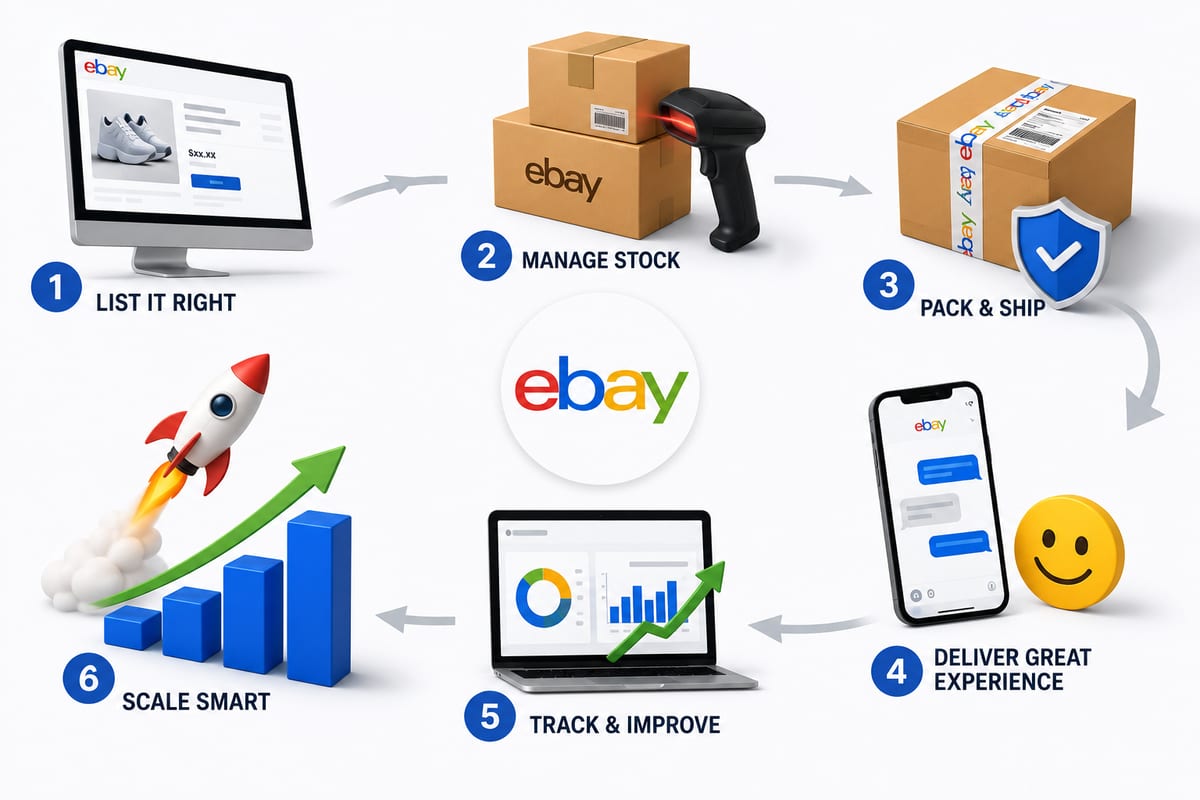
Tips on How to Sell on eBay: Operational Practices at Scale
Tips on how to sell on eBay alongside multiple channels. The operational practices that protect seller standing and produce sustainable margin.
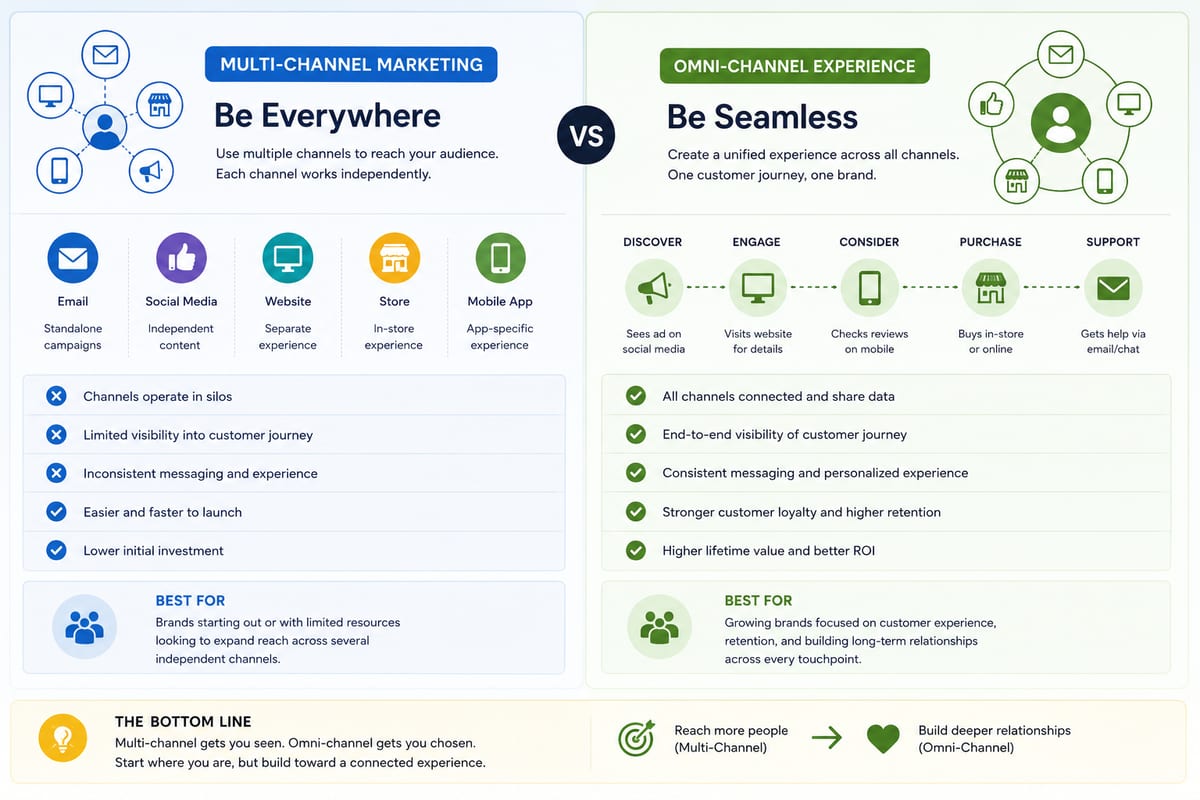
Multi Channel Marketing vs Omni Channel: Honest Comparison
Multi channel marketing vs omni channel breakdown for ecommerce operations. The operational differences that determine which approach fits your business.

ERP Software vs Multi-Channel Platforms: Honest Choice
ERP software comparison for growing ecommerce brands. When ERP fits and when multi-channel platforms produce better outcomes at lower cost.