Ecommerce Returns: The Multi-Channel Operational Playbook
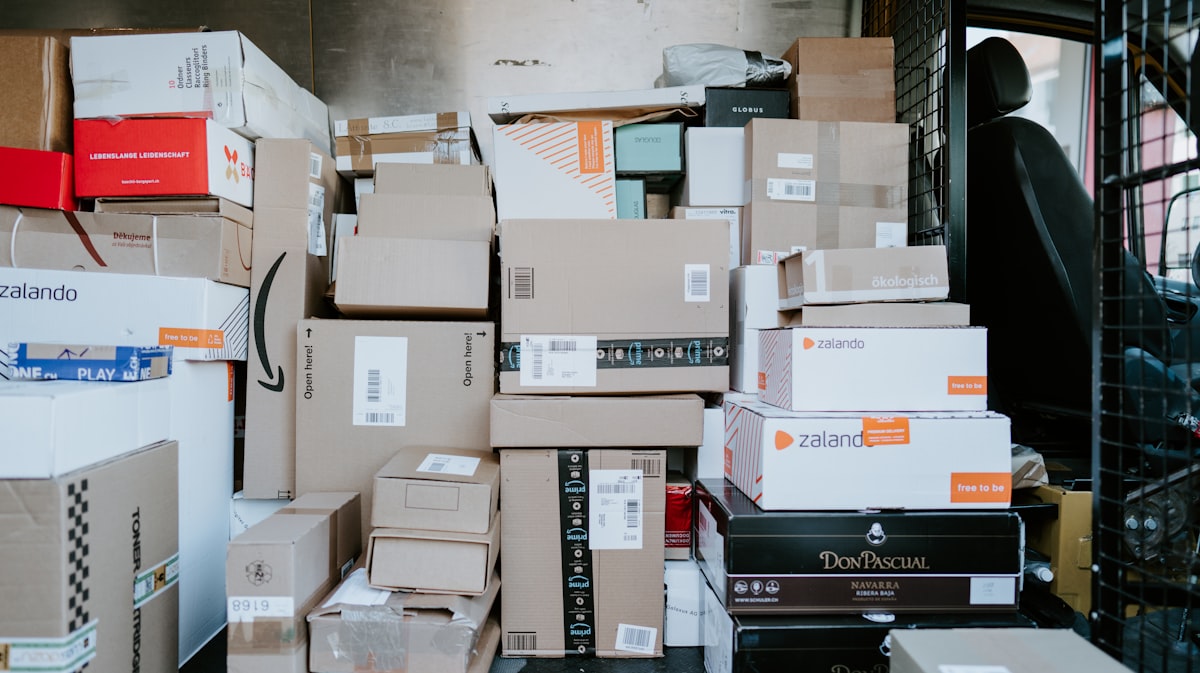
Returns are the operational tax every ecommerce brand pays. The question is not whether you will have returns. The question is whether your returns process protects your margins or silently destroys them.
For single-channel sellers, ecommerce returns management is straightforward: customer sends the item back, you inspect it, you restock or write it off. But the moment you sell across Amazon, Shopify, eBay, Walmart, and your own DTC store, returns become an operational puzzle with moving pieces on every side. Each channel has its own return policies. Each has different refund timelines. Each has different rules about who pays for shipping and who controls the customer experience. And the returned inventory does not automatically reconcile back into your sellable stock across channels.
This playbook is built for ops managers at multi-channel brands doing $1M-$50M in revenue who need a structured, repeatable system for processing returns without hemorrhaging margin. We will cover the numbers, the workflows, the channel-specific policies, and the tactics for recovering as much value as possible from every returned unit.
The Returns Problem at Scale
Before building any process, you need to understand the actual financial impact of ecommerce returns management on your business. The headline return rate numbers most brands track are misleading because they only capture volume, not cost.
Return rates by product category
Return rates vary dramatically by what you sell. If you operate across multiple categories, your blended return rate can obscure the real problem areas.
- Apparel and footwear: 25-30%. Fit is the dominant driver. Customers cannot try on clothing before buying, so they order multiple sizes and return what does not work. Bracketing, ordering two or three sizes intentionally, accounts for a growing share of apparel returns.
- Electronics and tech accessories: 15-20%. Compatibility issues, buyer remorse, and products that do not match marketing claims account for most returns. Open-box electronics also depreciate faster than any other category.
- Home goods and general merchandise: 10-15%. Color, size, and quality-versus-expectation mismatches drive most returns here. Fragile items add a damage-in-transit component that inflates the rate further.
- Health and beauty: 5-10%. Lower return rates due to hygiene restrictions, but returned items in this category are almost never resellable, making each return a total write-off.
The true cost per return: $10-$25 in processing alone
The refund amount is the number your finance team sees. The processing cost is the number your operations team absorbs, and it rarely shows up on a P&L line item. Here is where the $10-$25 per return goes:
- Return shipping label: $4-$8. Whether you provide a prepaid label or reimburse the customer, someone pays for the trip back.
- Receiving and intake: $1-$3. Warehouse labor to scan the package, log the return against the RMA, and route it to the inspection station.
- Inspection and grading: $2-$5. Evaluating the product condition, checking for completeness, and assigning a disposition grade.
- Restocking or disposition: $1-$4. Repackaging sellable items, routing unsellable items to liquidation or disposal, and updating inventory counts.
- Customer service overhead: $2-$5. Handling inquiries about return status, refund timing, and exchange processing. The average return generates 1-2 customer service interactions.
Total return impact on ecommerce profitability
When you combine the refund amount with the processing cost, the real cost of a return on a $50 item looks like this: $50 refund + $15 average processing cost + $1.75 in non-refundable payment processing fees + $5-$15 in product depreciation. That is $71.75-$81.75 in total cost for one returned item that originally generated $50 in revenue. You are underwater by $21-$31 per return before you even attempt to resell the item.
At a 15% return rate on 10,000 monthly orders, that is 1,500 returns costing $31,500-$48,750 per month in pure processing overhead. If your gross margins are 40%, you need $78,750-$121,875 in additional revenue just to break even on returns processing. That is the scale of the problem most multi-channel brands are dealing with, and it is why ecommerce returns management deserves a dedicated operational framework rather than an afterthought process cobbled together from email threads and spreadsheets.
The Multi-Channel Returns Challenge
Single-channel returns are mechanically simple. You control the policy, you control the process, you control the refund timing. Multi-channel returns introduce a layer of complexity that most operations teams underestimate until it starts causing real financial pain.
Why multi-channel makes returns harder
When a customer returns an item purchased on Amazon, that return follows Amazon's rules and Amazon's timeline. When a different customer returns the same SKU purchased on your Shopify store, that follows your rules and your timeline. When a third customer returns the same SKU from eBay, eBay's Money Back Guarantee dictates the process. You are running three different returns workflows for the same product, each with different refund deadlines, different shipping cost responsibilities, and different dispute resolution mechanisms.
The operational challenge is not just the process variation. It is the inventory reconciliation. When a returned item arrives back at your warehouse, your OMS needs to know which channel it came from, whether the refund has already been issued (Amazon often auto-refunds before you receive the item), and where the restocked unit should be allocated. If your inventory system does not handle this cleanly, you end up with count discrepancies that compound over time, and those discrepancies lead directly to overselling and stockouts.
Channel-by-channel returns breakdown
Amazon (FBA and FBM). For FBA orders, Amazon handles the return entirely. The customer gets a prepaid label, Amazon receives the return at their fulfillment center, and Amazon issues the refund: often before they even inspect the item. You get the item back in one of two ways: Amazon restocks it if they grade it as sellable, or Amazon files it as "unfulfillable" and you have to create a removal order to get it back (or let Amazon dispose of it). For FBM orders, the return comes to you, but Amazon's A-to-Z Guarantee still governs the process. Amazon can force a refund even if you disagree with the return reason.
Shopify (DTC). Full control. You set the return window, the refund method, whether you provide a prepaid label, and how quickly the refund is processed. This is the one channel where your return policy is truly your return policy. Use it as your baseline and optimize it aggressively.
eBay. eBay defaults to a 30-day return window for most categories, and the eBay Money Back Guarantee means eBay will force a refund if the buyer claims the item was not as described: even if you believe the claim is fraudulent. Sellers who offer free returns get a search ranking boost, but the cost adds up. eBay has its own return label system, and the process follows eBay's interface, not yours.
Walmart Marketplace. Walmart requires marketplace sellers to accept free returns. Customers can return items to Walmart physical stores or by mail, and you as the seller bear the cost. Walmart's return policy overrides yours in almost every case, and the refund timelines are non-negotiable. Walmart is also increasing its performance standards for seller return processing speed, making compliance a marketplace health metric.
The inventory sync gap
Here is the problem nobody warns you about: returned inventory does not auto-sync back into your available stock across channels. When an Amazon FBA return is restocked by Amazon, your available FBA inventory goes up, but your Shopify and eBay listings do not adjust. When a customer returns an item to your warehouse from an eBay purchase, your warehouse stock goes up, but only if your OMS processes the return and updates the count. Until that happens, you are either underselling (the unit is available but not listed) or overselling (you manually adjusted counts to compensate and now have phantom inventory).
This is why multi-channel ecommerce returns management is fundamentally an inventory synchronization problem, not just a customer service problem. Every return that is not properly reconciled across channels creates a small inventory error, and those errors accumulate into real revenue impact.
The Returns Processing Workflow
Every returned item that arrives at your facility needs to follow a standardized SOP. Without a defined workflow, warehouse staff make ad hoc decisions that lead to inconsistent grading, delayed restocking, and inventory inaccuracies. Here is the step-by-step process your team should follow for every return.
Step 1: Receive and log
When a return package arrives, scan the tracking number or RMA barcode to log receipt in your system. This step does three things: it starts the clock on your refund SLA, it moves the return status from "in transit" to "received" so customer service can respond to inquiries, and it creates the audit trail you need for dispute resolution.
SOP detail: Every return should be logged within 2 hours of delivery. If your return volume exceeds 50 units per day, dedicate a receiving station specifically for returns separate from your inbound purchase order receiving. Co-mingling return intake with regular receiving is the fastest way to lose track of returned items.
Step 2: Inspect
Open the return package and verify the contents against the RMA. Confirm the correct SKU was returned (wrong item returns happen more often than you expect: roughly 3-5% of returns contain the wrong item). Check for completeness: all accessories, documentation, and components should be present. Document the item's condition with photos if your system supports it.
SOP detail: Use a standardized inspection checklist for each product category. Electronics inspections should include a power-on test. Apparel inspections should check for stains, odor, and tag removal. Inspection should take no more than 3-5 minutes per item for standard products.
Step 3: Grade
Assign a disposition grade based on your inspection. Use a three-tier grading system that maps directly to a disposition action:
- Grade A, Resellable as-is. The item is in original condition or like-new condition. Packaging is intact or can be resealed without evidence of tampering. All components are present. No cosmetic damage. This item goes back into sellable inventory at full price.
- Grade B. Needs repackaging or minor refurbishment. The item works perfectly but the packaging is damaged, opened, or missing. The product may have minor cosmetic imperfections that do not affect functionality. This item can be resold but needs work before it is sellable, new packaging, cleaning, or a minor repair.
- Grade C, Damaged or defective. The item has functional damage, significant cosmetic damage, missing critical components, or fails quality testing. This item cannot be sold to a customer through any primary sales channel in its current state.
Step 4: Route based on grade
Each grade triggers a specific disposition route. There should be zero ambiguity about what happens next.
Grade A items: Restock. Update inventory count, allocate to the highest-priority channel, and move the item to the sellable pick location. Target: Grade A items should be back in sellable inventory within 24 hours of receipt.
Grade B items: Refurbish then restock. Move to the refurbishment station. Repackage, clean, or repair as needed. Once refurbished, re-grade to confirm the item now meets Grade A standards. If it does, restock to your primary channels. If the refurbishment result is "good but not new," route to a secondary channel (open-box listing, outlet store, or discount marketplace). Target: Grade B items should be dispositioned within 48-72 hours.
Grade C items: Liquidate or dispose. Run the item through a value recovery decision. If the item has residual value above your liquidation threshold (typically $5-$10), route it to a liquidation partner, donate it for a tax write-off, or list it on a liquidation marketplace. If the item's residual value is below your threshold, dispose of it. Record the write-off. Target: Grade C disposition within 48 hours. Do not let damaged inventory sit in your warehouse occupying space and creating counting confusion.
The grading decision tree
Train your warehouse team on this decision tree for consistent grading:
- Is the item the correct SKU? If no, flag as a wrong-item return and escalate to customer service.
- Is the packaging sealed and intact? If yes, Grade A. If no, continue.
- Is the product in working condition with no cosmetic damage? If yes, Grade B (needs repackaging). If no, continue.
- Is the product repairable at a cost below 30% of its retail value? If yes, Grade B (needs refurbishment). If no, Grade C.
- Is the Grade C item worth more than your liquidation threshold? If yes, route to liquidation. If no, route to disposal.
Print this decision tree and post it at every returns processing station. Consistency in grading is what makes the entire downstream workflow reliable.
Restocking and Inventory Reconciliation
Getting a returned item graded is only half the battle. Getting it back into your sellable inventory accurately, across all your sales channels, is where most multi-channel operations break down.
The return lag problem
Return lag is the gap between when a returned item physically arrives at your warehouse and when it appears as available inventory in your OMS. During this gap, the item exists in the real world but not in your system. The consequences are real:
- Ghost stock: Your system shows fewer units than you actually have. You might trigger a reorder for inventory you already have sitting on a returns processing table. You might mark a listing as out of stock when you actually have sellable units in-house.
- Phantom out-of-stocks: If you manually adjust counts to account for expected returns (a common workaround), you can end up with phantom inventory, counts that exist in the system but not on the shelf. This leads directly to overselling and canceled orders.
The average return processing time across the industry is 3-5 business days from receipt to restock. For brands with high return volumes and limited warehouse staff, it can stretch to 7-10 days. During that entire window, your inventory counts are wrong.
Solving return lag with inventory quarantine
The operational solution is a quarantine zone, a designated inventory status (and ideally a physical location) for returned items that are received but not yet processed. Here is how it works:
- On receipt: Log the return and move the inventory status to "quarantine" or "returns pending." This status is visible in your OMS but does not count toward available-to-promise (ATP) inventory. Your sales channels will not list these units as available.
- On grading: After inspection, Grade A items move from "quarantine" to "sellable." Grade B items move to "refurbishment." Grade C items move to "disposition." Each status change triggers the appropriate inventory count update in your OMS.
- On restock: When the item physically moves to a sellable pick location, your OMS updates the ATP count, and your channel integrations push the new available quantity to Amazon, Shopify, eBay, Walmart, and any other connected channel.
This three-stage status model eliminates both ghost stock and phantom out-of-stocks because every returned item is accounted for at every stage. You always know how many units are in quarantine, how many are being refurbished, and how many are back in sellable inventory.
Channel allocation on restock
When a Grade A item is ready to go back to sellable inventory, where does it go? If you sell on five channels, which channel gets the restocked unit? This is a strategic decision, not a default.
- Margin-first allocation: Route restocked items to the channel with the highest margin. For most brands, that is their DTC Shopify store (no marketplace commission) followed by Walmart (lower fees than Amazon) then Amazon and eBay.
- Velocity-first allocation: Route to the channel where the SKU sells fastest to minimize holding time. This is often Amazon due to traffic volume, even though margins are lower.
- Stockout-first allocation: Route to whichever channel is closest to stocking out on that SKU. This prevents lost sales on the channel that needs the unit most.
The right approach depends on your business priorities, but you need a defined rule, not a warehouse worker making an ad hoc decision. Build the allocation logic into your OMS so that restocking triggers an automatic channel assignment.
Channel-Specific Return Policies
One of the biggest operational headaches in multi-channel ecommerce returns management is that each marketplace enforces its own return policy requirements. You cannot apply a single uniform policy across all channels. Here is what you are working with:
| Channel | Return Window | Who Pays Return Shipping | Refund Timeline | Key Policy Notes |
|---|---|---|---|---|
| Amazon (FBA) | 30 days (most categories) | Amazon provides prepaid label | Refund issued immediately on scan | A-to-Z Guarantee overrides seller preferences. Amazon may auto-refund before inspection. FBA returns restocked or filed as unfulfillable by Amazon. |
| Amazon (FBM) | 30 days (most categories) | Seller provides prepaid label | Refund within 2 business days of receipt | A-to-Z Guarantee still applies. Amazon can force refund on buyer's behalf. Seller handles all return logistics. |
| Shopify (DTC) | You set it (15-60 days typical) | You decide (prepaid or customer-paid) | You decide (instant to 10 business days) | Full policy control. No marketplace override. Use this channel to test and optimize return policies before applying to marketplaces. |
| eBay | 30 days default (eBay Money Back Guarantee) | Buyer or seller depending on reason | Refund within 2 business days of receipt | eBay Money Back Guarantee lets buyers escalate disputes. Sellers offering free returns get search ranking boost. "Not as described" returns always seller-funded. |
| Walmart Marketplace | 30 days (most categories) | Free returns required (seller pays) | Refund within 2 business days of receipt | Walmart's return policy overrides seller policy. In-store returns possible (customer drops item at Walmart store, seller bears cost). Strict seller performance metrics for return processing. |
Operational implications of policy differences
These policy differences create real operational consequences:
- Refund timing mismatches. Amazon may refund the customer before you receive the returned item, which means you are out the product and the revenue simultaneously until the return arrives and you can restock or file a reimbursement claim. Budget for a 2-3 week cash flow gap on Amazon FBA returns.
- Return shipping cost variability. You pay for return shipping on Walmart and Amazon FBM in all cases. On eBay, you pay when the return reason is "not as described" but the buyer pays for "changed mind" returns unless you offer free returns. On Shopify, you decide. Model your return shipping costs per channel and factor them into your channel profitability calculations.
- Dispute resolution asymmetry. Amazon and eBay both have buyer-favoring guarantee programs that can force refunds regardless of your assessment. This means your effective return rate on marketplaces is higher than your stated return policy because the marketplace can override your denial. Build a 2-3% "forced return" buffer into your marketplace financial models.
Building a unified returns SOP across channels
Despite the policy differences, your internal processing workflow should be identical for all channels. The return arrives at your warehouse, gets logged, inspected, graded, and dispositioned the same way regardless of whether it came from Amazon, eBay, or your Shopify store. The only channel-specific elements are:
- Which system to issue the refund through (Amazon Seller Central, Shopify admin, eBay resolution center, Walmart Seller Center).
- The refund deadline for that channel (varies by marketplace).
- Whether the return shipping cost is charged to the buyer or absorbed by the seller.
Create a return processing checklist that your team follows for every return, with a channel-specific section at the refund step. This keeps the process standardized while accounting for the necessary policy variations.
Reducing Return Rates
The most profitable return is the one that never happens. Every return you prevent saves $10-$25 in processing costs and keeps revenue in your bank account. Here are the highest-impact return reduction strategies, ranked by operational effort and effectiveness.
Better product descriptions and specifications
"Not as described" is the number one return reason across all ecommerce categories. This is a content problem, not a product problem. Fix your listings and you fix a significant portion of your returns.
- Include exact dimensions in inches and centimeters, not just S/M/L sizing.
- List materials and composition clearly. "Polyester blend" is not sufficient, specify the percentages.
- Describe the product's limitations, not just its features. If a phone case does not support wireless charging, say so. If a shirt runs small, say so. Honest descriptions set accurate expectations.
- Use comparison language: "This table is the same height as a standard kitchen counter" gives buyers a concrete reference point.
Size guides and fit tools
For apparel and footwear sellers, sizing is the single largest return driver. A well-built size guide can reduce sizing-related returns by 25-30%. Your size guide should include body measurements (not just garment measurements), fit type descriptions (slim, regular, relaxed), and a note on how the product fits compared to the brand's other items.
If you have the budget, implement a virtual fit tool or quiz that recommends sizes based on the customer's height, weight, and body shape. These tools have been shown to reduce apparel returns by 20-35% when implemented correctly.
High-quality photos and video content
Product photography is the closest a customer can get to physically seeing the item. The more visual information you provide, the fewer "not what I expected" returns you generate.
- Show the product from at least 5 angles, including close-ups of material texture and construction details.
- Include a photo with a scale reference (the product next to a hand, a coin, or a ruler).
- Use lifestyle photos that show the product in context: a lamp on a nightstand, a bag on someone's shoulder, shoes with an outfit.
- Add video content. Brands that add product video to their listings report approximately 25% fewer returns. Video shows dimension, scale, movement, and functionality in ways that static images cannot. A 30-second product walkthrough is one of the highest-ROI investments you can make for return reduction.
Quality control at receiving
Defect-based returns are entirely preventable with a receiving inspection process. Every inbound purchase order should be spot-checked before the inventory enters your sellable stock. The inspection rate depends on your supplier's quality track record:
- New supplier or known quality issues: Inspect 20-30% of units.
- Established supplier with good track record: Inspect 5-10% of units.
- High-value items (over $100): Inspect 100% of units.
Track your defect rate by supplier and SKU. If a particular SKU has a defect-based return rate above 3%, escalate to the supplier with documentation and demand corrective action. QC at receiving costs a fraction of what defect-based returns cost in customer dissatisfaction, refund processing, and replacement shipping.
Post-purchase communication
A well-timed post-purchase email sequence can prevent returns by setting expectations and answering common questions before the customer decides to return. Send a "what to expect" email that covers shipping timelines, product care instructions, and setup guides. For products with a learning curve (electronics, software, fitness equipment), send a "getting started" guide within 24 hours of delivery. Brands that implement post-purchase education sequences see a 10-15% reduction in returns from "does not work as expected" and "too difficult to use" reason codes.
Returns Analytics
You cannot improve what you do not measure. Most brands track their overall return rate and call it a day. That is not enough. To actually reduce returns and improve your ecommerce returns management, you need granular analytics that expose where problems originate and where margin is leaking.
KPIs every multi-channel brand should track
Return rate by SKU. This is your most actionable metric. Your blended return rate might be 12%, but inside that average you may have SKUs returning at 35% and SKUs returning at 2%. The high-return SKUs are where you focus your reduction efforts. Sort your catalog by return rate and tackle the top 10 offenders first, fixing these products will have an outsized impact on your overall rate.
Return rate by channel. Compare return rates across Amazon, Shopify, eBay, Walmart, and any other channel. If the same SKU has a 10% return rate on Shopify but a 25% return rate on Amazon, the problem is likely listing quality on Amazon, not the product itself. Channel-specific return rate analysis points you to where your content or fulfillment process needs improvement.
Return reason codes. Categorize every return into standardized reason codes: sizing/fit, defective/damaged, not as described, changed mind, arrived too late, and wrong item received. Track the distribution of these codes over time. If "not as described" is climbing, you have a listing content problem. If "defective" is climbing, you have a supplier quality problem. If "changed mind" dominates, you may have an impulse-buy audience that needs better pre-purchase qualification.
Restock rate. What percentage of returned items make it back into sellable inventory? This measures the effectiveness of your grading and refurbishment process. A healthy restock rate is 60-75%. If you are below 50%, your inspection criteria may be too strict (writing off sellable inventory) or your product quality has a systemic issue. If you are above 85%, verify that your grading criteria are strict enough, you may be restocking items that should be going to Grade B or C.
Time to restock. Measure the elapsed time from when a return is received at your warehouse to when the item is back in sellable inventory with updated counts across all channels. Target: 24-48 hours for Grade A items, 72 hours for Grade B items. Every day a sellable item sits in returns processing is a day you are not generating revenue from that unit.
Building a returns analytics dashboard
Consolidate these KPIs into a weekly returns dashboard that your ops team reviews every Monday. Structure it in three sections:
- Volume metrics: Total returns received this week, returns by channel, returns by category.
- Quality metrics: Grade distribution (% A, % B, % C), restock rate, top 10 returned SKUs.
- Financial metrics: Total processing cost, estimated margin recovery from restocked items, write-off value, return shipping cost by channel.
Review this dashboard weekly and take action on any metric that deviates more than 10% from your trailing 4-week average. Returns analytics should drive operational decisions, not just fill a report.
Recovering Margin from Returns
Not every returned item can go back to your primary sales channels at full price. But that does not mean the item has zero value. A structured margin recovery program can reclaim 30-70% of the value from items that cannot be resold as new. Here are the recovery channels, ranked from highest value recovery to lowest.
Resale on secondary marketplace listings
Grade B items, functional but with imperfect packaging or minor cosmetic issues, can be resold through dedicated secondary listings. The key is transparency: list the item honestly as open-box, describe any imperfections, price it at 15-30% below the new price, and let the marketplace buyer make an informed decision.
- Amazon Warehouse Deals: If you sell on Amazon FBA, Amazon automatically lists some returned items as "Amazon Warehouse" deals. For FBM sellers, you can create separate used/refurbished listings on your existing ASIN. Value recovery: 60-80% of retail price.
- eBay refurbished listings: eBay has a dedicated "Certified Refurbished" and "Seller Refurbished" listing tier. These listings appear in search results alongside new listings and attract price-conscious buyers. Value recovery: 50-75% of retail price.
- Your own outlet or open-box section: Create a dedicated section on your Shopify store for returned/open-box items. This keeps the margin in-house (no marketplace commission) and can become a traffic driver for deal-seeking customers. Value recovery: 60-85% of retail price.
Liquidation partners
For Grade C items or Grade B items that are not worth the effort of individual resale, liquidation partners buy inventory in bulk at a steep discount. The value recovery is lower, but the processing cost is near zero, you ship a pallet of returned goods and receive a lump payment.
- B-Stock Solutions: Online liquidation marketplace used by major retailers. Buyers bid on lots of returned merchandise.
- Direct Liquidation: Similar auction-based model with both consumer and business buyers.
- Local liquidation brokers: Regional buyers who purchase returned inventory for resale in off-price stores, flea markets, and international export. Value recovery: 5-25% of retail price depending on category and condition.
Donation for tax write-off
For items where liquidation recovery would be less than the tax benefit of donation, charitable donation is the financially optimal choice. Work with a qualified donation partner who can provide the necessary documentation (IRS Form 8283 for non-cash charitable contributions). The tax benefit depends on your corporate tax rate and the fair market value of the donated goods, but for many brands, donation recovers more value than selling returned goods at 5-10 cents on the dollar through liquidation.
Important: Consult your accountant on the specific tax implications. The rules for inventory donations changed under the Tax Cuts and Jobs Act, and the deduction calculation differs for C-corps versus pass-through entities.
Building a disposition value matrix
Create a decision matrix that your team uses to route every non-Grade-A return to the highest-value recovery channel. The matrix should consider three variables:
- Item retail value. Higher-value items justify more effort. A $200 returned item is worth listing individually on eBay refurbished. A $12 returned item is not.
- Item condition (grade). Grade B items with minor cosmetic issues go to secondary marketplace listings. Grade C items with functional damage go to liquidation or donation.
- Time in inventory. If a returned item has been sitting in your refurbishment queue for more than 14 days, the holding cost is eating into any recovery value. Move it to liquidation and free up the space.
The goal is to extract the maximum value from every returned unit without letting perfect become the enemy of good. A $15 item sitting in your refurbishment pile for three weeks while you wait for a new box to arrive is costing you more in warehouse space and handling time than it would cost to liquidate it immediately. Speed of disposition matters almost as much as the recovery percentage.
Putting It All Together: Your 30-Day Returns Overhaul Plan
If your current ecommerce returns management process is ad hoc or broken, here is a 30-day implementation plan to build the framework described in this playbook.
Week 1: Audit and baseline
- Pull your return rate by channel, by SKU, and by reason code for the last 90 days.
- Calculate your actual cost per return (include labor, shipping, write-offs, and customer service time).
- Document your current returns workflow end-to-end. Identify where items get stuck, where grading decisions are inconsistent, and where inventory counts go wrong.
- Compile a channel policy reference table listing each channel's return window, shipping cost responsibility, refund timeline, and dispute process.
Week 2: Build the workflow
- Define your three-tier grading system (A, B, C) with written criteria for each grade.
- Print and post the grading decision tree at every returns processing station.
- Set up a quarantine inventory status in your OMS for items received but not yet processed.
- Define disposition routes for each grade: restock, refurbish, liquidate, dispose, donate.
- Set target processing times: 24 hours for Grade A, 48-72 hours for Grade B, 48 hours for Grade C.
Week 3: Implement and train
- Train your warehouse team on the new grading criteria and decision tree.
- Run 2-3 days of parallel processing where returns go through both the old process and the new process to identify gaps.
- Configure your OMS to handle return-to-restock inventory updates with automatic channel sync.
- Set up your margin recovery channels: secondary marketplace listings, liquidation partner accounts, and donation partner relationships.
Week 4: Measure and optimize
- Launch your weekly returns analytics dashboard.
- Review the first week of data under the new process. Identify bottlenecks and grading inconsistencies.
- Begin your return reduction initiatives: update the top 10 highest-return-rate product listings with better descriptions, photos, and size guides.
- Set quarterly targets for return rate reduction, restock rate improvement, and time-to-restock acceleration.
Ecommerce returns management is not a problem you solve once. It is an operational discipline you build, measure, and improve continuously. The brands that treat returns as a structured process, rather than an unavoidable headache, consistently outperform their competitors on margin, customer retention, and inventory accuracy. Build the process, measure the results, and keep tightening the system. Your margins depend on it.
Frequently Asked Questions
The average ecommerce return rate is 10-15% across all product categories. However, the number varies significantly by vertical. Apparel and footwear see the highest return rates at 25-30%, driven primarily by fit and sizing issues. Electronics average 15-20% due to compatibility problems and buyer remorse. Home goods and general merchandise land in the 10-15% range. For multi-channel sellers, marketplace-specific return rates can differ as well. Amazon tends to run higher than direct-to-consumer channels because the return process is so frictionless for buyers.
Restocking to the right channel requires a disposition decision matrix tied to your grading outcome. Grade A items (resellable as-is) should route back to the channel with the highest margin or fastest sell-through velocity. Grade B items (needs repackaging or minor refurbishment) are often better suited for secondary marketplace listings like Amazon Warehouse Deals or eBay refurbished. The key operational step is updating your OMS or inventory management system the moment the item is reclassified as sellable, not when it physically reaches the shelf, so your available-to-promise counts stay accurate across all connected channels.
Yes, and in many cases they must. Amazon, Walmart, and eBay each enforce their own return policy minimums that override whatever policy you would prefer. Amazon requires most categories to accept returns within 30 days. Walmart mandates free returns for marketplace sellers. eBay defaults to a 30-day money-back guarantee. Your Shopify or direct-to-consumer store is the one channel where you have full control. The practical approach is to set your DTC policy as your baseline, then layer marketplace-specific overrides on top. Document each channel's requirements in a single reference table so your customer service team does not accidentally apply the wrong rules.
The most effective return reduction strategies target the root causes of returns rather than making the process harder. Improve product descriptions with detailed measurements, materials, and use-case specifics: vague descriptions are the top driver of 'not as described' returns. Add size guides and fit-finder tools for apparel, which can cut sizing-related returns by 25-30%. Include high-quality photos from multiple angles, and add video content where possible, brands with product video report 25% fewer returns on average. Implement quality control inspections at receiving to catch defective inventory before it ships. Finally, analyze return reason codes by SKU to identify and fix chronic problem products instead of treating all returns as random noise.
Related Articles
View all
Ecommerce and Supply Chain Management: The Complete Guide for Multichannel Brands
A complete guide to ecommerce and supply chain management for multichannel brands, covering the six core stages, failure points, metrics, and systems that keep operations running in real time.

Amazon Just Changed When You Get Paid. Most Sellers Haven't Noticed Yet.
On March 12, 2026, Amazon started holding your money for 7 extra days after delivery. No announcement. No opt-out. If you sell $100K/month, you just lost access to $23K-$33K in working capital overnight, and that is only one of six ways Amazon is squeezing sellers this year.

How War and Fuel Prices Ripple Through Every Layer of E-Commerce Operations
Oil jumped from $72 to $126/barrel. Shipping surcharges hit $4,000/container. Polymer prices up 42%. This is how armed conflict translates into real cost increases across your entire e-commerce operation, warehouse to doorstep.