Micro-Fulfillment Centers for Ecommerce: Cost, Setup, and ROI
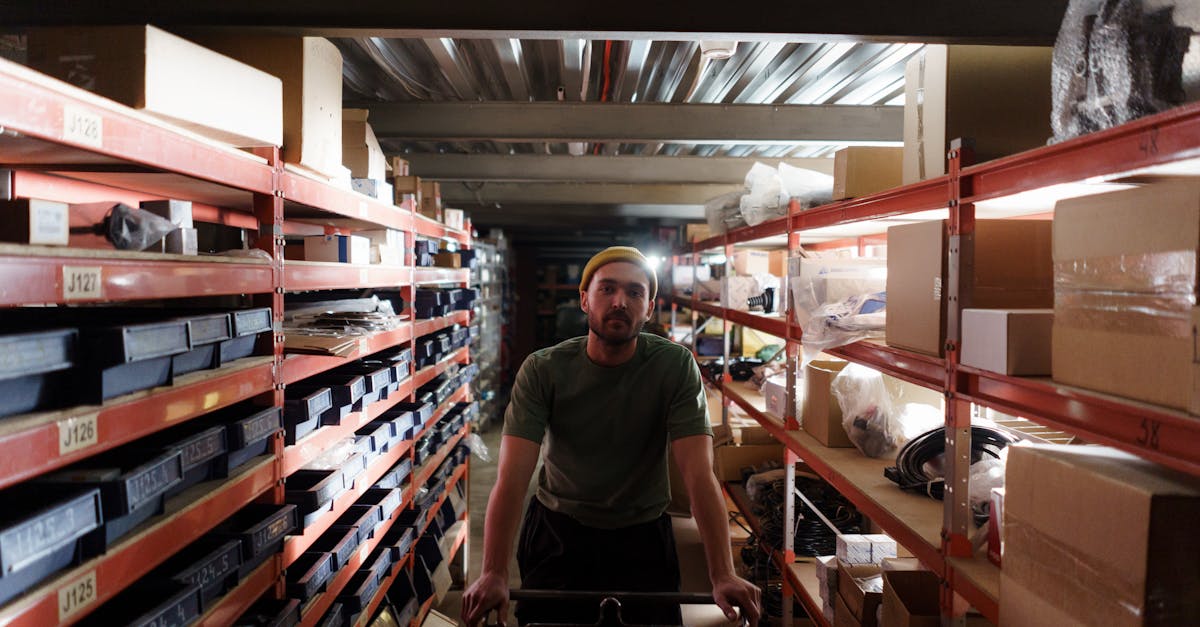
The ecommerce delivery window keeps shrinking. In 2023, two-day shipping was the standard. By mid-2025, same-day became the baseline expectation in metro areas. And now, in 2026, sub-two-hour delivery is what separates brands that grow from brands that lose share to faster competitors.
The infrastructure behind this shift is the micro-fulfillment center (MFC). These compact, automated facilities sit inside or near urban areas, typically within 10 miles of the end customer. They process orders faster and cheaper than traditional warehouses. But they come with real upfront costs, and understanding when an MFC makes financial sense (and when it does not) is the difference between a smart infrastructure investment and an expensive mistake.
This guide breaks down the actual costs, setup process, ROI timelines, and decision criteria for ecommerce brands evaluating micro-fulfillment in 2026.
What Is a Micro-Fulfillment Center and How Does It Work
A micro-fulfillment center is a small-footprint warehouse, typically between 8,000 and 25,000 square feet, positioned in or near dense urban areas. Unlike a traditional distribution center that occupies 200,000 to 500,000 square feet in a suburban industrial park, an MFC fits inside a strip mall, the back of a retail store, or a repurposed commercial space downtown.
The core operational model relies on automation. Robotic systems handle storage, retrieval, and sorting. Human workers focus on packing and exception handling. Vertical storage systems make the most of limited floor space, often holding 15,000 to 20,000 SKUs in under 10,000 square feet.
"We ran the numbers on a traditional warehouse vs. a micro-fulfillment setup near our top zip codes. The MFC cost more per square foot, but cost-per-order dropped by almost half because of proximity and automation. The math only works if your order density in that area justifies it."
r/ecommerce, logistics discussion thread (2025)
The key difference between an MFC and a regular small warehouse is automation density. A manual 10,000-square-foot space might process 80 to 100 units per hour. The same footprint with robotic goods-to-person systems processes 600 or more units per hour. That throughput-per-square-foot ratio is what makes the economics viable despite higher real estate costs.
How Much a Micro-Fulfillment Center Costs in 2026
MFC costs fall into three categories: initial capital expenditure, ongoing operating costs, and technology licensing. The ranges vary significantly based on automation level and location.
Capital Expenditure Breakdown
- Basic MFC with semi-automated systems (conveyor-based picking, manual packing): $1.5 million to $3 million
- Standard MFC with goods-to-person robotics and vertical storage: $3 million to $5 million
- Advanced MFC with full end-to-end automation (robotic picking, sorting, and packing): $5 million to $8 million
- Urban real estate lease for 10,000 to 15,000 square feet: $15 to $35 per square foot annually, depending on the metro area
- Facility buildout and retrofitting: $200,000 to $500,000
Ongoing Operating Costs
- Technology maintenance and software licensing: $8,000 to $20,000 per month
- Labor (reduced headcount due to automation): 40 to 60 percent lower than a manual warehouse of comparable throughput
- Energy costs (robotic systems require climate-controlled environments): 15 to 25 percent higher than a passive storage warehouse
- Inventory carrying costs: typically lower because faster turnover means less capital tied up in stored goods
Per-Order Cost Comparison
The per-order cost is where MFCs pull ahead of traditional fulfillment. Here is how the three main fulfillment models compare on a per-order basis:
| Fulfillment Method | Cost per Order | Pick Time per Unit | Delivery Window | Space Required |
|---|---|---|---|---|
| Manual Warehouse | $10 to $15 | 71 to 114 seconds | 2 to 5 days | 50,000+ sq ft |
| Automated MFC | $3 to $5 | 20 to 64 seconds | Same day to 2 hours | 8,000 to 25,000 sq ft |
| Dark Store (Manual) | $6 to $9 | 33 to 76 seconds | Same day | 10,000 to 20,000 sq ft |
| Third-Party 3PL | $5 to $12 | Varies | 1 to 3 days | N/A (outsourced) |
The cost-per-order reduction comes primarily from two places: lower labor costs per pick and shorter last-mile delivery distances. When your inventory sits 5 miles from the customer instead of 50, the final delivery leg costs 20 to 40 percent less.
ROI Timeline and Payback Period
Payback depends on order volume, order density within the MFC's service radius, and average order value. Here are the realistic timelines based on published data and operator reports from 2025 and 2026.
"Payback on our first MFC took 26 months. Second one was 14 months because we already had the playbook. The difference was knowing which SKUs to stock locally vs. ship from the central DC. If you try to put your whole catalog in an MFC, the economics fall apart."
r/supplychain, fulfillment operations thread (2025)
Key ROI Drivers
- Labor savings: 15 to 35 percent reduction in year one. Pick times drop from 60 minutes per batch to roughly 6 minutes when moving from manual to automated goods-to-person systems.
- Shipping cost reduction: 20 to 40 percent lower last-mile costs due to proximity to the customer base.
- Inventory turnover improvement: MFCs turn inventory roughly 3x faster than traditional warehouses because they stock high-velocity SKUs and replenish from a central DC. Less sitting inventory means less capital locked up.
- Customer retention: 85 percent of consumers prefer same-day delivery when available. Faster delivery reduces cart abandonment and increases repeat purchase rates.
- Lower return shipping costs: proximity to customers cuts the cost of processing returns, which matters in categories with 20 to 30 percent return rates.
Payback Period by Scale
| Daily Order Volume | MFC Type | Estimated Payback | Year-One Labor Savings |
|---|---|---|---|
| 200 to 500 | Shared/3PL MFC | 18 to 30 months | 15 to 20% |
| 500 to 1,000 | Semi-automated owned | 18 to 24 months | 20 to 30% |
| 1,000 to 2,500 | Fully automated owned | 12 to 18 months | 30 to 35% |
| 2,500+ | Multi-node MFC network | 10 to 14 months | 35%+ |
The threshold that most operators cite is 1,000 daily orders within a single metro area. Below that, a shared MFC or 3PL micro-fulfillment partner is more cost-effective than building your own. Above that, owned infrastructure starts to pay for itself within two years.
Setup Process: From Decision to First Order
Standing up a micro-fulfillment center takes 6 to 12 months from lease signing to the first order shipped. Here is the typical sequence broken into phases.
Phase 1: Location Selection and Lease (Weeks 1 to 8)
Start by mapping your order density. Pull the last 12 months of order data and plot delivery zip codes. The ideal MFC location serves the densest cluster of orders within a 10-mile radius. Look for commercial spaces between 8,000 and 15,000 square feet with ceiling heights of at least 20 feet (vertical storage needs clearance), loading dock access, and proximity to major transit routes.
Phase 2: Facility Buildout (Weeks 6 to 20)
This runs in parallel with vendor selection. The buildout includes electrical upgrades for robotic systems, flooring rated for heavy equipment, climate control, fire suppression upgrades, and network infrastructure for real-time inventory tracking.
Phase 3: Automation Installation and Testing (Weeks 16 to 32)
Robotic system vendors typically need 8 to 12 weeks for installation and calibration. During this phase, integrate the MFC's warehouse management system (WMS) with your order management system. This integration is where most delays happen. Your OMS needs to route orders to the MFC based on customer location, SKU availability, and delivery promise, which requires well-configured order routing rules.
Phase 4: SKU Stocking and Soft Launch (Weeks 28 to 36)
Do not attempt to stock your full catalog in the MFC. Start with the top 200 to 500 SKUs by velocity. These high-movers will represent 60 to 80 percent of your order volume. Replenish from your central DC on a daily or twice-daily cadence. Run a soft launch with a subset of orders (10 to 20 percent of metro-area volume) for 2 to 4 weeks before scaling to full capacity.
"Biggest mistake we made was trying to stock 3,000 SKUs in a 12,000 sq ft MFC. We were constantly running out of the fast movers because the slow movers were taking up space. Dropped to 400 SKUs, set up daily replenishment from our main warehouse, and throughput tripled."
r/logistics, warehouse operations discussion (2024)
When Micro-Fulfillment Makes Sense (and When It Does Not)
Micro-fulfillment is not the right move for every ecommerce brand. Here are the conditions where it works and where it fails.
MFCs Make Sense When
- You process 200 or more daily orders concentrated in one or two metro areas
- Your customers expect same-day or next-day delivery and you are losing conversions to competitors who offer it
- Your product catalog has a clear 80/20 split where a small number of SKUs drive most of your volume
- You sell in categories where speed matters: groceries, health and beauty, pet supplies, household essentials
- Your current fulfillment costs per order are above $8 and you have margin to reinvest in infrastructure
MFCs Do Not Make Sense When
- Your orders are geographically dispersed with no clear metro-area concentration
- You sell bulky or oversized products that cannot be stored efficiently in vertical systems
- Your daily order volume is below 100 in any single metro area
- Your product margins are too thin to absorb the $3 to $5 cost-per-order floor that even automated MFCs carry
- You have fewer than 50 high-velocity SKUs (the automation ROI depends on repetitive, high-volume picks)
The market is growing fast. The global micro-fulfillment center market was valued at $6.2 billion in 2024 and is projected to reach $31.6 billion by 2030, growing at a compound annual rate of 31.1 percent. That growth is not driven by speculation. It is driven by unit economics: brands that deploy MFCs in the right markets cut fulfillment costs by 30 to 50 percent while offering delivery speeds that manual operations cannot match.
How to Integrate an MFC Into Your Existing Fulfillment Network
An MFC does not replace your central warehouse. It sits alongside it as a forward-stocking location for your highest-velocity products in your densest markets. The integration challenge is making sure your order management system knows when to route to the MFC versus the central DC versus a 3PL.
Order Routing Logic
Your OMS needs rules that evaluate three factors for every incoming order:
- Is the customer within the MFC's service radius (typically 10 to 15 miles)?
- Are all ordered SKUs available in the MFC's inventory?
- Can the order be fulfilled within the delivery promise without splitting the shipment?
If all three answers are yes, route to the MFC. If the MFC has partial inventory, evaluate whether splitting the shipment costs more than shipping the full order from the central DC. In most cases, a single shipment from a farther location costs less than two separate shipments.
Inventory Visibility Across Nodes
The operational risk with micro-fulfillment is inventory fragmentation. When you spread stock across a central DC, one or more MFCs, and possibly a 3PL, you need real-time visibility into every node. Without it, you will either overstock the MFC (tying up capital) or understock it (forcing fallback to slower shipping from the central DC).
A mesh network approach to inventory control treats every fulfillment node as part of a connected system where stock levels, replenishment triggers, and routing decisions update in real time. This prevents the fragmentation problem that plagues brands running multiple fulfillment locations on disconnected systems.
Replenishment Cadence
MFCs hold limited inventory by design. Your replenishment process needs to be tight. Most operators replenish MFCs from the central DC on a daily basis, with some running twice-daily transfers for the fastest-moving SKUs. The replenishment trigger should be automated: when a SKU drops below a defined threshold in the MFC, the system generates a transfer order from the central DC without manual intervention.
The Market in 2026: What Has Changed
Three shifts in the last 18 months have made micro-fulfillment more accessible to mid-market ecommerce brands.
First, shared MFC operators have expanded. Brands no longer need to build and operate their own facility. Companies now offer MFC-as-a-service, where you pay per order processed rather than investing millions in your own buildout. This drops the barrier to entry from a $3 million capital investment to a per-order fee that scales with your volume.
Second, modular automation systems have matured. Instead of committing to a full robotic buildout on day one, brands can start with a semi-automated pilot (conveyor-based picking, manual packing) and add robotic modules as volume grows. The phased approach reduces upfront risk and lets you prove the economics in a 90-day pilot before scaling.
Third, the tariff and shipping cost increases of late 2025 and early 2026 have made proximity-based fulfillment more attractive. When fuel surcharges and carrier rates climb, the cost advantage of shipping from 5 miles away versus 50 miles away widens. Brands running MFCs in their top metro areas reported 20 to 40 percent lower last-mile costs compared to shipping from regional DCs, according to operator data from Q1 2026.
The cumulative opportunity is projected at $32 billion by 2030, with annual MFC installations growing 20x from 2024 levels to approximately 5,600 units globally (over 50 percent of those in the United States). For ecommerce brands doing $2 million or more in annual revenue with concentrated metro-area demand, micro-fulfillment is no longer a question of whether, but when.
The brands that move first lock in urban real estate at current rates, build operational expertise ahead of competitors, and capture the customer loyalty that comes with consistently delivering in hours instead of days. The ones that wait will pay more for the same infrastructure once the market catches up.
Frequently Asked Questions
A standard micro-fulfillment center costs between $3 million and $5 million for initial setup, with highly automated facilities reaching $8 million. The range depends on automation level, square footage (typically 8,000 to 25,000 sq ft), and urban real estate costs in your target market.
Most micro-fulfillment centers reach payback in 2 to 3 years when processing 1,000 or more daily orders. Focused pilots targeting high-velocity SKUs can reach payback in 12 to 18 months. The primary savings come from labor reduction (15 to 35 percent in year one), lower shipping costs (20 to 40 percent via proximity), and faster inventory turnover.
No. While early adopters were large grocers and big-box retailers, the shared and modular MFC models available in 2026 allow mid-market ecommerce brands processing 200 or more orders per day to access micro-fulfillment through third-party operators. You do not need to build your own facility.
Automated micro-fulfillment centers process 600 or more units per hour, compared to fewer than 100 units per hour in a manual warehouse. Pick times drop from 60 minutes per batch to roughly 6 minutes. This speed enables same-day and sub-two-hour delivery windows in dense metro areas.
Related Articles
View all
Ecommerce and Supply Chain Management: The Complete Guide for Multichannel Brands
A complete guide to ecommerce and supply chain management for multichannel brands, covering the six core stages, failure points, metrics, and systems that keep operations running in real time.

Amazon Just Changed When You Get Paid. Most Sellers Haven't Noticed Yet.
On March 12, 2026, Amazon started holding your money for 7 extra days after delivery. No announcement. No opt-out. If you sell $100K/month, you just lost access to $23K-$33K in working capital overnight, and that is only one of six ways Amazon is squeezing sellers this year.
How War and Fuel Prices Ripple Through Every Layer of E-Commerce Operations
Oil jumped from $72 to $126/barrel. Shipping surcharges hit $4,000/container. Polymer prices up 42%. This is how armed conflict translates into real cost increases across your entire e-commerce operation, warehouse to doorstep.