Ecommerce Supply Chain Resilience Playbook for 2026
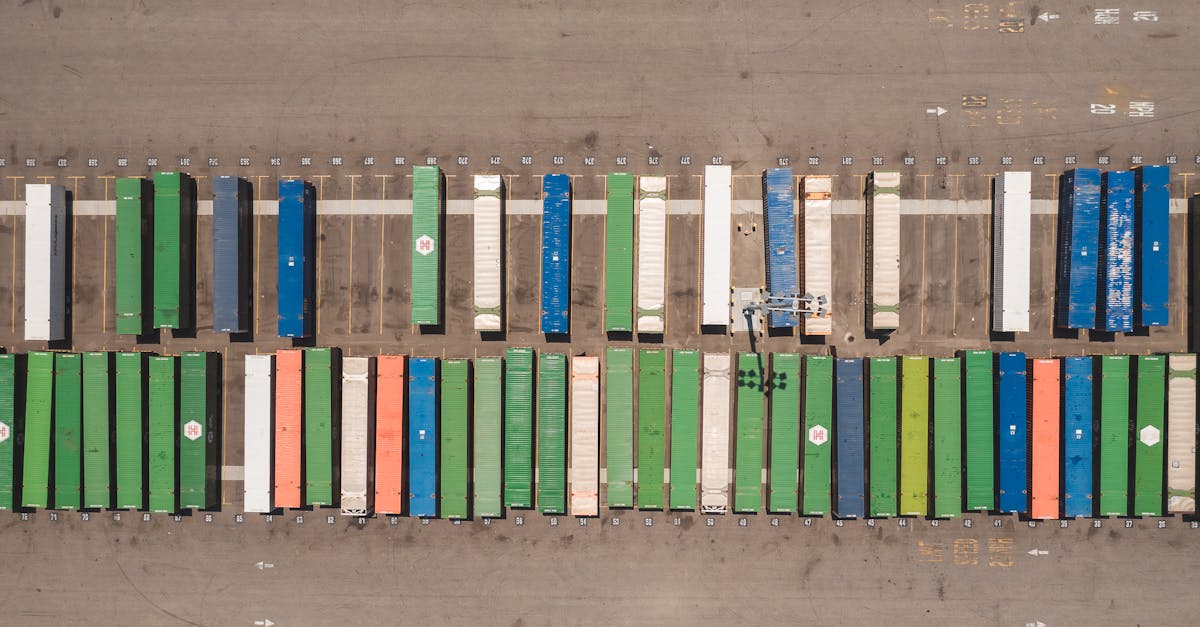
80% of organizations experienced at least one supply chain disruption in the past year. The average disruption costs $1.5 million per day in total losses. And significant disruptions now hit every 3.7 years on average, up from roughly every 5 years a decade ago.
For ecommerce sellers, these are not abstract statistics. They translate directly into stockouts, delayed shipments, eroded margins, and lost customers. The Strait of Hormuz crisis, Red Sea rerouting, new tariff waves, and fuel price spikes have all landed within 18 months of each other. Each one alone would strain operations. Together, they expose every weakness in a supply chain that was built for stability rather than resilience.
This playbook covers the specific strategies, frameworks, and operational changes that ecommerce businesses can implement now to absorb the next disruption rather than scramble through it.
Why Resilience Is No Longer Optional for Ecommerce
The old model was straightforward: find the cheapest supplier, ship via the cheapest route, hold minimal inventory, and reorder when stock gets low. That model worked when disruptions were rare and resolved quickly. It does not work in 2026.
The data tells a clear story. According to the BCI Supply Chain Resilience Report, 80% of organizations reported disruptions in the past 12 months, with most experiencing between 1 and 10 separate incidents. The World Economic Forum puts the annual probability of a significant disruption at 27% per business. Disruptions surged 38% year-over-year in 2024 alone.
"We ran lean for years. One container ship stuck in the wrong place and we had 6 weeks of backorders on our top 3 SKUs. The customers we lost during that window never came back. Now I keep 45 days of safety stock on anything that does more than 50 units a month."
- r/ecommerce, seller discussion on supply chain buffers (2024)
The cost of not being resilient is steep. Research from Deloitte and industry data show that the average total cost of a supply chain disruption runs $1.5 million per day, including $610,000 in direct manufacturing and fulfillment losses. US companies lost an average of $228 million from disruptions in 2021. And 84.6% of affected businesses report increased operating costs that persist well after the disruption itself resolves.
For ecommerce specifically, the damage compounds across channels. A stockout on Amazon tanks your Best Seller Rank. A delayed shipment on Walmart damages your seller scorecard. Late deliveries on your own store erode customer trust. Each channel penalizes failure differently, but they all penalize it.
The Four Pillars of Ecommerce Supply Chain Resilience
Resilience is not one thing. It is four distinct capabilities working together. Getting one right while ignoring the others leaves you exposed.
| Pillar | What It Means | Key Metric | Target for 2026 |
|---|---|---|---|
| Supplier Diversification | Multiple qualified suppliers across different geographies and shipping routes | % of top SKUs with 2+ suppliers | 80% or higher |
| Inventory Buffers | Strategic safety stock that absorbs lead time variability without excessive carrying cost | Weeks of cover on top 20% SKUs | 4-6 weeks above reorder point |
| Demand Visibility | Accurate, real-time view of inventory and demand across every channel and location | Inventory sync latency | Under 5 minutes across all channels |
| Operational Agility | Ability to reroute, reallocate, and reprice within hours rather than weeks | Time to implement contingency plan | Under 48 hours |
Each pillar addresses a different failure mode. Supplier diversification protects against source disruptions. Inventory buffers protect against lead time shocks. Demand visibility prevents overselling and misallocation. Operational agility lets you respond before the disruption becomes a crisis.
Pillar 1: Supplier Diversification That Actually Works
Most ecommerce sellers know they should diversify suppliers. Few actually do it in a way that provides real protection. Having two suppliers in the same Chinese province shipping through the same port is not diversification. It is the illusion of diversification.
Effective supplier diversification requires geographic separation and route independence. Your backup supplier should not share a shipping lane, a port, or a geopolitical risk profile with your primary supplier.
How to Structure Your Supplier Portfolio
- For your top 20 SKUs by revenue, qualify at least two suppliers in different countries or regions. One in East Asia and one in Latin America, for example, or one overseas and one domestic.
- Map every supplier to its shipping route. Does it pass through the Strait of Hormuz? The Suez Canal? The Red Sea? The Panama Canal? Each chokepoint is a separate risk factor.
- Maintain active relationships with backup suppliers, not just a contact list. Place small orders regularly so your backup suppliers keep your account active, know your product specs, and can scale up when needed.
- Negotiate split-production agreements where your primary supplier handles 70% of volume and your backup handles 30% during normal operations. This keeps both suppliers engaged and production-ready.
"After 2021 I started splitting orders 60/40 between two factories in different countries. My COGS went up about 8% but when one factory shut down for three weeks last year, the other ramped to cover. That 8% cost increase paid for itself in the first disruption."
- r/FulfillmentByAmazon, seller on supplier diversification (2023)
Regional Sourcing Options for US-Based Sellers
- Mexico: USMCA-compliant goods face 0% tariff. 3-5 day ground transit to most US locations. Growing manufacturing base for textiles, electronics assembly, and consumer goods.
- Eastern Europe (Poland, Czech Republic, Romania): Strong manufacturing for electronics components and textiles. Baltic or Mediterranean shipping avoids Hormuz and Red Sea routes entirely.
- India and Southeast Asia (Vietnam, Thailand, Indonesia): Alternative to China for many product categories. Different shipping lanes, different geopolitical risk profile.
- Domestic US manufacturing: Highest per-unit cost, but zero exposure to maritime chokepoints, tariffs, or multi-week transit. Worth evaluating for your highest-margin, highest-velocity products.
Pillar 2: Inventory Buffers Without Breaking the Bank
The pendulum has swung. After decades of just-in-time orthodoxy that minimized inventory to cut carrying costs, the last five years of rolling disruptions have made the case for strategic buffers. But "hold more inventory" is not a strategy. It is a path to bloated warehouses and cash flow problems if you do it indiscriminately.
The right approach is tiered buffering: different safety stock levels for different product segments based on their revenue contribution, margin, and supply risk.
Tiered Safety Stock Framework
- Tier A (top 20% of SKUs by contribution margin): These products drive your business. Hold 4-6 weeks of additional safety stock above your normal reorder point. The carrying cost is justified by the revenue protection.
- Tier B (middle 60% of SKUs): Add 2-3 weeks of extra buffer. Reorder earlier than usual by shifting your reorder point forward to account for increased lead time variability.
- Tier C (bottom 20% of SKUs): Reduce stock levels. Let these products run down and redeploy the freed-up capital into Tier A and Tier B buffers. If a Tier C product stocks out during a disruption, the revenue impact is minimal.
This tiered approach typically increases total carrying costs by 15-25% while reducing stockout risk on critical products by 60-70%. That is a favorable tradeoff for any business where stockouts cost more than warehouse space.
"The math is simple once you run it. We were spending $12k/month on extra warehouse space for buffer stock. One stockout on our best seller cost us $45k in lost revenue and tanked our BSR for two months. The buffer pays for itself 3x over."
- r/ecommerce, seller on inventory buffer ROI (2024)
One critical detail: buffer stock only works if you can see it and allocate it in real time. If your buffer sits in a warehouse while one channel stocks out because your inventory system did not redistribute it, you are paying for insurance you cannot use.
Pillar 3: Demand Visibility Across Every Channel
During normal operations, a 30-minute inventory sync delay is a minor inconvenience. During a supply crunch when you have 50 units left across four channels, a 30-minute delay is the difference between controlled allocation and selling inventory you do not have.
Demand visibility means three things working together:
- Real-time inventory counts across every warehouse, 3PL, FBA location, and in-transit shipment, unified in one view.
- Automated sync between sales channels so that a sale on Amazon immediately reduces available inventory on Shopify, eBay, Walmart, and every other connected channel.
- Demand forecasting that accounts for disruption-driven demand shifts, not just historical sales patterns. When competitors stock out, your demand spikes. When shipping costs rise, price-sensitive demand drops. Your forecasting needs to capture both dynamics.
The practical benchmark: your inventory should sync across all channels in under 5 minutes. Anything slower creates an overselling window that grows more dangerous as stock levels drop. During the 2026 Hormuz disruption, sellers running 15-minute sync intervals reported overselling rates 3-4x higher than those on near-real-time sync.
Pillar 4: Operational Agility for Rapid Response
Resilience is not just about absorbing a hit. It is about how fast you respond after the hit lands. The difference between sellers who navigate disruptions well and those who struggle is not always their inventory position or supplier base. It is how quickly they can execute a contingency plan.
Build Your Disruption Response Playbook
Document these decisions in advance so you are not making them under pressure:
- Channel priority order: which channels get inventory first when supply is constrained? Base this on contribution margin per unit, not revenue or volume.
- Price adjustment thresholds: at what cost increase do you raise prices, and by how much, on each channel? Pre-calculate these so you can implement within hours.
- Supplier activation triggers: what events cause you to shift volume to backup suppliers? A 2-week delay? A 30% cost increase? A shipping lane closure? Define the trigger and the response.
- Communication templates: pre-written customer communications for each channel covering shipping delays, price changes, and product availability. When a disruption hits, you update the dates and publish rather than drafting from scratch.
The target is 48 hours from disruption detection to full contingency activation. That means every step, from identifying the impact to reallocating inventory to updating channel settings to notifying customers, should be mapped out and assignable before the disruption happens.
Weekly Resilience Monitoring Checklist
- Check shipping lane status for all active supplier routes (use Freightos Baltic Index for rate trends and MarineTraffic for vessel tracking)
- Review landed cost calculations against current freight rates and surcharges
- Verify safety stock levels on Tier A and Tier B products
- Confirm backup supplier readiness and lead times
- Test inventory sync latency across all channels
- Review fuel price trends and their projected impact on last-mile delivery costs
Putting It All Together: A 30-Day Implementation Plan
Resilience is not built overnight, but meaningful progress is achievable in 30 days. Here is a prioritized sequence:
Week 1: Audit. Map every supplier to its geography and shipping route. Calculate current safety stock levels by SKU tier. Measure your inventory sync latency. Identify single points of failure.
Week 2: Diversify. Begin qualifying backup suppliers for your top 10 SKUs. Request quotes, samples, and lead time estimates. Place trial orders where possible to establish the relationship.
Week 3: Buffer. Increase safety stock on Tier A products to 4-6 weeks above reorder point. Reduce Tier C stock and redeploy capital. Adjust reorder points for Tier B to account for current lead time variability.
Week 4: Systematize. Document your disruption response playbook. Pre-write communication templates for each channel. Set up weekly resilience monitoring. Ensure your inventory system provides real-time visibility across all channels and locations.
The businesses that treated resilience as a priority after 2021 are the ones navigating 2026 with controlled operations and stable margins. The ones that treated each disruption as a one-off event are scrambling again. The pattern is clear, and the frequency of disruptions is only increasing.
Building resilience costs money and effort upfront. Not building it costs more, every time a disruption hits, for as long as you are in business.
Frequently Asked Questions
Start with three foundational steps. First, map every supplier to its geographic origin and shipping route so you can identify single points of failure. Second, qualify at least two backup suppliers for your top 20 SKUs by revenue. Third, increase safety stock on high-velocity products from 2 weeks to 4-6 weeks. These three actions address the root causes of most ecommerce supply chain failures: over-reliance on one source, one route, or one thin inventory buffer.
For your top-selling SKUs (top 20% by contribution margin), hold 4-6 weeks of buffer stock above your normal reorder point. For mid-tier products, add 2-3 weeks. For slow movers in the bottom 20%, reduce stock and redeploy that capital to your best sellers. The exact calculation depends on your lead time variability, demand variability, and service level target. Use the formula: Safety Stock = Z-score x square root of (lead time x demand variance + demand squared x lead time variance).
A full switch is rarely the right move. The cost of carrying excess inventory across your entire catalog will erode margins. Instead, apply a hybrid approach: just-in-case buffers for your top 20% of SKUs that drive 80% of revenue, and leaner just-in-time for everything else. This targeted approach typically increases carrying costs by 15-25% while reducing stockout risk on critical products by 60-70%.
On average, a significant supply chain disruption lasting more than a month occurs every 3.7 years, according to McKinsey research. But the frequency is increasing. In 2024, disruptions surged 38% year-over-year, and 80% of organizations reported at least one disruption in their most recent 12-month period. The question is not whether a disruption will happen, but whether your operations can absorb it when it does.
The top risks in 2026 are geopolitical conflict disrupting shipping lanes (Strait of Hormuz, Red Sea), tariff escalation increasing landed costs by 10-25%, port congestion from rerouted container traffic, fuel price volatility adding unpredictable surcharges, and cyber attacks on logistics infrastructure. Each of these has already occurred at least once in the past 18 months. Building resilience means planning for all five, not just the one making headlines today.
Related Articles
View all
Strait of Hormuz Supply Chain Response Plan for Ecommerce Brands
Oil above $110, carrier surcharges climbing, and lead times stretching. The response plan ecommerce brands need now to protect inventory and margins.

Shopify Stores Are Now Inside ChatGPT. Here's Why That's a Problem.
Shopify is enrolling every store into ChatGPT by default in late March 2026. There's a 4% fee, AI agents decide what gets recommended, and if your inventory isn't synced across channels, you're one viral prompt away from overselling everywhere.

Google's March 2026 Core Update: What E-Commerce Sites Need to Fix Right Now
Google's first full core update of 2026 is live. Sites with original research gained ~22% visibility. AI-generated content dropped. Here is what changed, who won, who lost, and the concrete fixes for e-commerce sites.