The Real Cost of 'Free' Returns: How Return Policies Are Bankrupting Small Sellers.
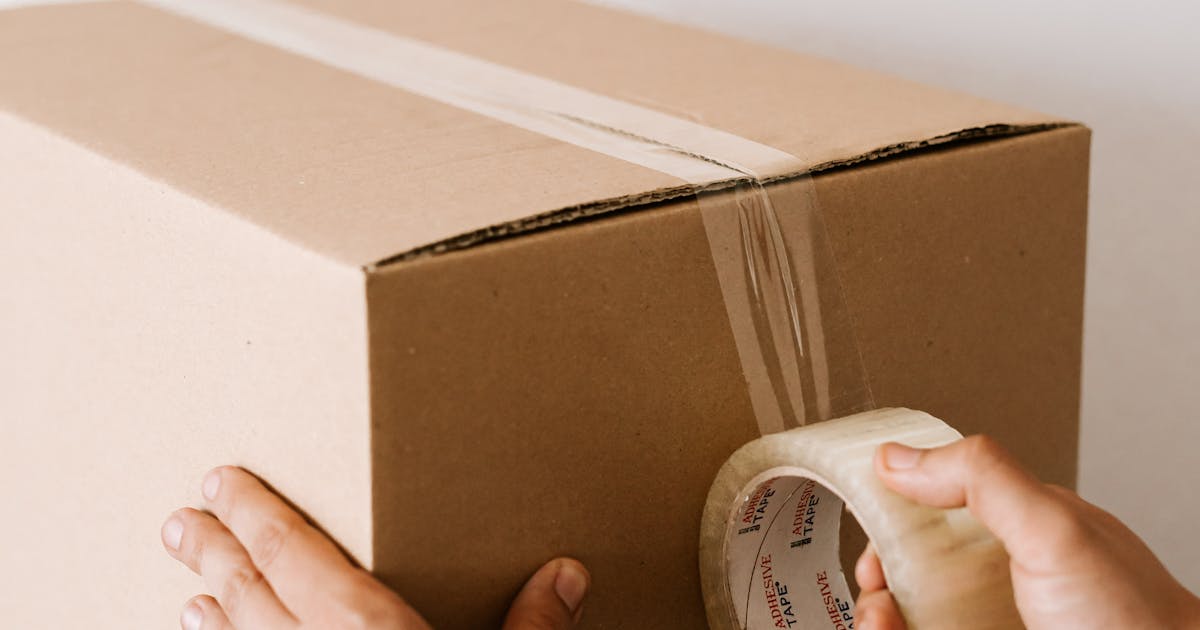
A customer buys your product for $30. Three days later, they return it. Amazon refunds the full $30 to the customer and charges you for the privilege.
How much did that return cost you?
If you said "$30", the refunded amount, you are off by a factor of two. That single return just cost your business somewhere between $20 and $30 when every cost is accounted for. And the worst part: even the products that are not returned are more expensive because of the ones that are.
Let me walk through every cost, line by line. Then I will show you what this means at scale, and what you can actually do about it.
The Full Cost of a Single Return on a $30 Product
1. Return Shipping: $4-8
Someone has to pay for the return label. On Amazon, the seller pays for most category returns through prepaid return labels. On Shopify or DTC, it depends on your policy, but competitive pressure from Amazon means most sellers offer free return shipping or risk losing conversions.
A USPS First Class return label costs $4-5 for lightweight items. Priority Mail runs $7-12. For FBA sellers, Amazon deducts a return shipping fee that varies by weight and size but averages $4-8 for standard-size products.
This cost is unavoidable if you offer free returns. Even if you make the customer pay return shipping, you still bear the processing costs on the back end.
2. Processing Labor: $2-3
Someone has to receive the return, open the package, inspect the product, decide if it is resellable, update the inventory count, and process the refund. In a warehouse, this takes 5-8 minutes per return.
At a loaded warehouse labor cost of $20-25/hour (including benefits, management overhead, and facility costs), 5-8 minutes costs $1.67-$3.33 per return. If you are processing returns yourself, your time is worth at least that much, probably more.
3PL providers typically charge $2-5 per return for receiving and processing, depending on complexity and whether the item needs to be re-prepped for resale.
3. Restocking and Inspection: $1-2
Once a return is received, it needs to be inspected for damage, tested for functionality (if applicable), repackaged if the original packaging was opened, and re-labeled. This is separate from the initial processing, it is the work required to make the product sellable again.
For simple products (a kitchen utensil returned in original packaging), this might cost $0.50-$1.00. For complex products (electronics that need testing, apparel that needs steaming and retagging), it can run $3-5.
4. Re-listing and Re-photography: $1
If the returned product cannot go back into your existing inventory as "new," it needs to be listed as refurbished, open-box, or used. This requires new product photos, a separate listing, and often a reduced price. The labor and listing fees for creating a secondary market listing average about $1 per unit.
On Amazon, returned items processed through FBA go into "Unfulfillable" inventory. You can have them repackaged and relisted (at a fee) or removed. Either way, there is a cost to getting that product back to a sellable state.
5. Unsellable Rate: $1.50-2.00 (averaged)
Not every returned product can be resold. Industry data shows 15-20% of returned products are damaged, defective, or in unsellable condition. That means for every 10 returns you receive, 1-2 units are a total loss.
On a $30 product that cost you $8 to source, each unsellable return is an $8 loss. Averaged across all returns (where 15-20% are unsellable), that adds $1.20-$1.60 per returned unit. Add disposal or liquidation costs, and the average climbs to $1.50-$2.00.
This is the most insidious return cost because it is probabilistic. You cannot predict which returns will be unsellable. You just know that roughly 1 in 6 will be, and that cost has to be spread across all returns.
6. Payment Processor Fee (Non-Refundable): $0.30-0.90
When you refund a customer, most payment processors keep their transaction fee. Stripe refunds your payment minus their 2.9% + $0.30 fee. PayPal keeps $0.30 per refund. Amazon charges a "refund administration fee" of $5.00 or 20% of the referral fee, whichever is less.
On a $30 product on Amazon, the referral fee is $4.50. Twenty percent of that is $0.90: the refund administration fee Amazon keeps from your refund. You processed a sale, fulfilled an order, handled a return, and Amazon pocketed $0.90 for the trouble.
7. Wasted Customer Acquisition Cost: $10-15
This is the cost most sellers never count. If you acquired that customer through advertising (Sponsored Products, Meta ads, Google Shopping), you paid $10-15 to bring them to your listing and convert them. When they return the product, that acquisition cost is completely wasted. The customer may or may not buy from you again, but the money you spent to get them to this purchase is gone.
Not every sale involves advertising. But across a blended portfolio where 40-50% of sales are ad-driven, the wasted acquisition cost averages $4-7 per return.
The Total
| Return Cost Component | Low Estimate | High Estimate |
|---|---|---|
| Return Shipping | $4.00 | $8.00 |
| Processing Labor | $2.00 | $3.00 |
| Restocking/Inspection | $1.00 | $2.00 |
| Re-listing/Re-photography | $0.50 | $1.00 |
| Unsellable Rate (averaged) | $1.50 | $2.00 |
| Payment Processor Fee | $0.30 | $0.90 |
| Wasted Customer Acquisition | $4.00 | $7.00 |
| Total Per Return | $13.30 | $23.90 |
At the midpoint, each return on a $30 product costs $18.60. If you include the full range of customer acquisition costs (some sellers pay $15-20 per customer), the total approaches $25-30 per return.
You refunded $30 to the customer and lost another $18.60 in costs. A single return on a $30 product costs your business nearly $50 in total economic impact.
What Returns Cost Per Unit Sold (Not Per Return)
Here is where the math gets painful. Returns do not just cost money on the returned units, they increase the cost of every unit you sell.
At a 15% return rate with a $18.60 average return cost, the per-unit return burden is:
$18.60 x 15% = $2.79 per unit sold
For every unit you sell, including the ones that stay sold, $2.79 goes toward covering the cost of returns. On a $30 product, that is 9.3% of revenue consumed by returns before you even consider your cost of goods, platform fees, or operating expenses.
Let us scale this by return rate:
| Return Rate | Cost Per Unit Sold | % of Revenue |
|---|---|---|
| 5% | $0.93 | 3.1% |
| 10% | $1.86 | 6.2% |
| 15% | $2.79 | 9.3% |
| 20% | $3.72 | 12.4% |
| 25% | $4.65 | 15.5% |
| 30% | $5.58 | 18.6% |
Look at that 30% row, common in apparel. Nearly one-fifth of total revenue is consumed by return costs. If your gross margin is 60% and Amazon takes 52% of revenue in fees, returns at 30% push you deep into negative territory.
The Category Problem
Return rates are not equal across categories, and neither are the costs:
Apparel: 25-40% Return Rate
Clothing is the return-rate nightmare. Customers order multiple sizes, keep one, return the rest. "Bracketing", intentionally ordering 2-3 sizes, is standard behavior on Amazon, where returns are free and frictionless. An apparel seller with a 35% return rate and $18.60 per-return cost adds $6.51 per unit sold in return overhead. On a $30 shirt, that leaves almost nothing after COGS and platform fees.
Electronics: 12-18% Return Rate
Electronics returns are expensive because testing is required. A returned Bluetooth speaker needs to be charged, paired, tested for audio quality, inspected for physical damage, and repackaged. The processing labor alone is $4-6 per unit. Plus, electronics have a higher unsellable rate, around 25% of returned electronics cannot be resold as new.
Home and Kitchen: 8-12% Return Rate
Lower return rates, but returned items are frequently damaged in transit (the same product packaging that protected the item on the way out often is not reused by the customer for the return). Breakage rates on returned home goods run 20-30%.
Beauty and Personal Care: 5-8% Return Rate
Low return rates, but virtually 100% of returns are unsellable. Opened skincare, cosmetics, and personal care products cannot be resold for safety and regulatory reasons. Every return is a total loss. Despite the low rate, the cost per return is high because there is zero recovery value.
The Amazon Return Machine
Amazon has trained customers to return products without friction. Drop off at a UPS store, Whole Foods, Amazon locker, or Kohl's. No box needed. No label to print. Scan a QR code and walk away.
This is great for customers. It is devastating for sellers.
Amazon's return rate is 2-5 percentage points higher than the same products sold on DTC stores. The reason is not product quality, it is process friction. When returning something takes 60 seconds and zero effort, the threshold for "I'll just return it" drops dramatically.
Sellers cannot opt out of Amazon's return policy. You cannot charge restocking fees on most categories. You cannot require customers to contact you before initiating a return. Amazon's return system is designed to maximize customer satisfaction at the seller's expense.
5 Strategies to Reduce Return Costs
1. Better Product Listings Reduce Return Rates by 20-30%
The number one reason for returns (excluding apparel sizing) is "item not as described" or "not what I expected." Both are failures of your product listing, not your product.
- Add a product video: Sellers who add video demonstrations report 20-30% fewer returns. Video shows scale, texture, functionality, and quality in ways photos cannot.
- Include exact dimensions with reference objects: "6.5 inches tall" means nothing. "6.5 inches tall, slightly shorter than a standard water bottle" sets expectations.
- Show the product being used incorrectly: If your product is commonly misused (leading to "does not work" returns), include a "How NOT to use this" section.
- Add a comparison chart: If customers frequently return your product because they bought the wrong size/model, a comparison chart reduces selection errors.
2. Returnless Refunds on Low-Value Items
If your product costs less than $8 to source and the return shipping plus processing costs $6-10, do not ask for the product back. Issue a returnless refund.
The math: standard return processing costs you $30 (refund) + $6 (return shipping) + $3 (processing) = $39, and you get back a product worth $8 (if sellable). Returnless refund costs you $30 (refund) + $0 (no shipping, no processing) = $30. You save $9 per return and your customer has a better experience.
Amazon allows you to set returnless refund rules by price point and category. For products under $15 with COGS under $5, returnless refunds are almost always the cheaper option.
3. Restocking Fees Where Allowed
Shopify and DTC stores can charge restocking fees, typically 15-25% of the product price. This does two things: it discourages frivolous returns and partially offsets your processing costs.
A 20% restocking fee on a $30 product recovers $6 per return, cutting your net return cost from $18.60 to $12.60, a 32% reduction. The risk: some customers will choose not to buy from a store that charges restocking fees. You need to test the conversion rate impact against the return cost savings to find the right balance.
On Amazon, restocking fees are only allowed in specific situations (items returned after 30 days, items not in original condition). You cannot charge a blanket restocking fee on Amazon returns.
4. Improve Packaging to Reduce Damage Returns
Shipping damage accounts for 15-25% of all returns. Better packaging reduces this significantly:
- Use product-specific inserts rather than generic void fill
- Double-box fragile items, the cost of an extra $0.50 box is far less than a $18.60 return
- Add "Fragile" and orientation labels for products that cannot be flipped
- Use frustration-free packaging that customers are less likely to damage during unboxing
A $0.30-$0.80 investment in better packaging materials can reduce damage-related returns by 40-60%. On 1,000 units with a 15% return rate where 20% of returns are damage-related, that is 30 avoided returns x $18.60 = $558 saved versus $300-$800 in added packaging costs.
5. Post-Purchase Communication
Many returns happen because the customer does not know how to use the product, expected different results, or experienced a minor issue that could be resolved without a return. Post-purchase emails can intercept these returns:
- Day 1: "Your order is on the way" with usage tips and a getting-started guide
- Day 5: "How is your product working?" with troubleshooting FAQ and direct contact for issues
- Day 14: "We want to make sure you love it" with an offer to help before the return window closes
Sellers who implement post-purchase email sequences report 10-15% reductions in return rates. On Amazon, you are limited in what you can email customers, but on Shopify and DTC channels, this is fully under your control.
The Multichannel Return Advantage
One of the underappreciated benefits of selling on multiple channels is the ability to tailor return policies to each platform:
- Amazon: Free returns, no restocking fee. Accept it as a cost of access to 310 million customers.
- Shopify: 30-day returns with customer-paid return shipping. Or free returns for exchanges only (converting returns into retention).
- eBay: 30-day returns with buyer-paid shipping on most categories. eBay's return rate is naturally lower because of this friction.
- Walmart: Free returns on qualifying items. Similar to Amazon but with lower overall return rates due to customer demographics.
A multichannel seller can accept Amazon's high-return-rate reality while maintaining more favorable policies on other channels. If 40% of your revenue comes from Shopify with a 10% return rate and 60% comes from Amazon with a 20% return rate, your blended return rate is 16% instead of 20%. That 4-point reduction saves $1.80 per unit sold across your entire business.
Managing returns across multiple channels does add complexity. You need to know which channel each return came from, apply the correct policy, and track return inventory separately. This is where a multichannel OMS like Nventory helps, it tracks returns by channel and automatically adjusts available inventory when returned items are restocked, ensuring your return processing does not create inventory discrepancies that lead to overselling.
The Return Problem Is Getting Worse
Online return rates have increased from 8-10% in 2015 to 16-20% in 2025. Three forces are driving this trend:
- Free return expectations: Amazon's free return policy has become the consumer standard. Stores that charge for returns see 10-20% lower conversion rates.
- Buy-to-try behavior: Customers deliberately order multiple options knowing they will return most of them. This is rational behavior when returns are free.
- Social media influence: Impulse purchases driven by TikTok and Instagram ads have higher return rates because the purchase was emotional, not deliberate.
The trajectory is clear: return rates will continue climbing, and sellers who do not build return costs into their pricing and margin models will find profitability eroding year after year.
What to Do This Week
- Calculate your true return rate by channel and category. Not Amazon's reported number, your actual returns divided by actual sales for the last 90 days.
- Calculate your per-return cost. Use the framework above. Include every cost, especially the ones you have been ignoring (wasted acquisition cost, unsellable rate).
- Identify your top 5 return reasons. Most sellers find that 2-3 reasons account for 60% of returns. Fix those specific issues and your return rate drops significantly.
- Set up returnless refund rules for any product where return shipping plus processing exceeds the product's value.
- Add a product video to your top 10 listings. This single change consistently reduces returns by 20-30% and often increases conversion rates simultaneously.
Free returns are not free. They never were. Someone pays for every return, and unless you are tracking, reducing, and pricing for that cost, the someone is you.
Frequently Asked Questions
On a typical $30 product, a single return costs the seller $20-30 when all costs are included: return shipping ($4-8), processing labor ($2-3), restocking and inspection ($1-2), re-listing or re-photography ($1), the chance the product is unsellable (15-20% of returns are damaged, adding an averaged $1.50-2 per return), the payment processor keeping their fee on the refund ($0.30-0.90), and the wasted customer acquisition cost ($10-15 if acquired through advertising). The exact amount varies by product category, shipping method, and acquisition channel.
The overall ecommerce return rate is approximately 16-20% across all categories. However, rates vary dramatically by product type: apparel runs 25-40%, electronics sit at 12-18%, home goods at 8-12%, beauty products at 5-8%, and consumables at 2-4%. Amazon's return rate tends to be higher than DTC stores because Amazon's return process is extremely easy, conditioning customers to buy multiple sizes or versions with the intent to return most of them. Apparel sellers on Amazon report return rates above 30%.
Generally no. Most payment processors, including Stripe, PayPal, and Shopify Payments, keep their processing fee when you issue a refund. If you collected $30 and the processor took $1.17 (2.9% + $0.30), you refund $30 to the customer but only get back $28.83 from the processor. You lose $1.17 on a transaction that generated zero revenue. On Amazon, the math is slightly different: Amazon charges a 'refund administration fee' of $5.00 or 20% of the referral fee, whichever is less. Either way, you pay to process a sale that did not stick.
A returnless refund means you refund the customer without requiring them to ship the product back. This sounds counterintuitive, but it can save money when the return shipping cost exceeds the product's residual value. On a product that costs $5 to source and $6 to ship back, it is cheaper to tell the customer to keep it and issue a full refund ($30 cost) than to pay for return shipping and receive back a product you might not be able to resell ($30 refund + $6 return shipping + $3 processing = $39 cost). Returnless refunds work best for low-cost items, consumables, and products with high damage rates during return shipping.
Amazon return rates are typically 2-5 percentage points higher than equivalent Shopify DTC stores. The main drivers: Amazon's ultra-easy return process (print a label, drop off at a UPS store or Whole Foods), Prime customers who have zero friction in returning, and the 'try before you buy' mentality Amazon encourages. On a DTC Shopify store, the return process requires more effort from the customer (often including paying return shipping), which naturally reduces frivolous returns while still accommodating legitimate ones.
Better product information reduces returns more than any policy change. Include multiple high-resolution photos from every angle, add a sizing chart with specific measurements (not just S/M/L), include a product video showing the item in use with scale references, and write honest descriptions that set accurate expectations. Sellers who add detailed product videos to their listings report 20-30% reductions in return rates. After content, the next highest-impact change is improving packaging to reduce shipping damage, which accounts for 15-25% of all returns.
Related Articles
View all
Ecommerce and Supply Chain Management: The Complete Guide for Multichannel Brands
A complete guide to ecommerce and supply chain management for multichannel brands, covering the six core stages, failure points, metrics, and systems that keep operations running in real time.
Amazon Just Changed When You Get Paid. Most Sellers Haven't Noticed Yet.
On March 12, 2026, Amazon started holding your money for 7 extra days after delivery. No announcement. No opt-out. If you sell $100K/month, you just lost access to $23K-$33K in working capital overnight, and that is only one of six ways Amazon is squeezing sellers this year.

How War and Fuel Prices Ripple Through Every Layer of E-Commerce Operations
Oil jumped from $72 to $126/barrel. Shipping surcharges hit $4,000/container. Polymer prices up 42%. This is how armed conflict translates into real cost increases across your entire e-commerce operation, warehouse to doorstep.