What Your 3PL Isn't Telling You About Their Actual Error Rate.
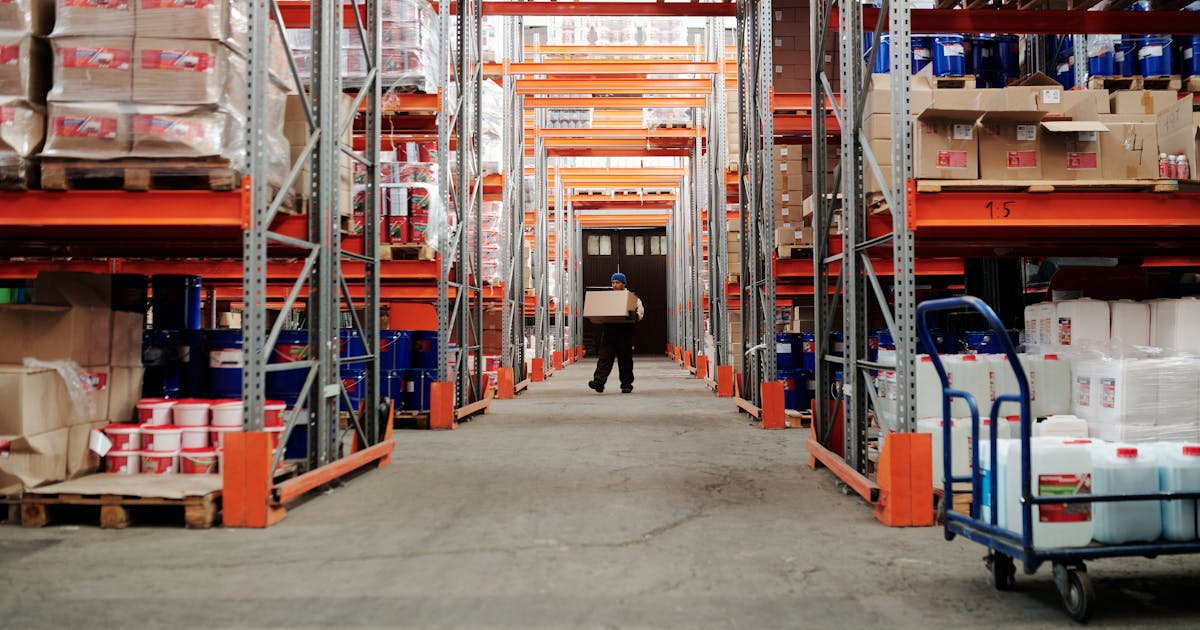
Every 3PL sales deck has the same number: 99.5%+ accuracy rate. Sometimes it is 99.7%. Sometimes it is 99.8%. The number is always north of 99%, and it always comes with a reassuring smile and a confident handshake.
Here is the problem. That number is pick accuracy. It measures one thing: did the warehouse worker grab the right item from the shelf? That is it. One step in a process that has six steps where things can go wrong.
When you account for all the ways a 3PL can screw up your order, the real error rate is typically 2-5%. Not 0.5%. Two to five percent.
At 1,000 orders per month, that is 20 to 50 orders with problems. Each problem costs $12-$18 to resolve. That is $240-$900/month in error costs that your 3PL is not measuring, not reporting, and definitely not including in their sales pitch.
Let me show you exactly where the errors hide.
The 6 Error Types Your 3PL Is Not Counting
Error Type 1: Wrong Item Shipped
Frequency: 0.3-0.8% of orders
This is the one error the 99.5% number partially captures. A picker grabs the wrong SKU. The customer opens the box and finds a blue shirt instead of a red one.
But pick accuracy does not catch every wrong-item scenario. Some errors happen after the pick:
- Two orders get swapped at the pack station (right items picked, put in the wrong boxes)
- A multi-item order gets the right products but the wrong sizes or variants
- A shipping label gets applied to the wrong package
These post-pick errors are not counted in pick accuracy metrics. They show up as customer complaints, wrong-item returns, and re-ships.
Cost per incident: $15-$25 (return shipping + re-ship + processing + customer service)
Error Type 2: Wrong Quantity Shipped
Frequency: 0.2-0.5% of orders
Customer orders 3 units. They receive 2. Or they receive 4. Both are problems. Short-ships generate complaints and re-ships. Over-ships cost you product you did not charge for, and most customers do not tell you they got an extra.
Quantity errors are especially common with:
- Small, similar items (picking 5 black socks from a bin of black socks, easy to miscount)
- Multi-SKU orders with quantities above 1
- Bulk or wholesale orders
Cost per incident: $8-$15 (re-ship for short, lost product cost for over-ship)
Error Type 3: Damage During Packing
Frequency: 0.5-1.5% of orders
Your product arrived at the 3PL in perfect condition. It left the 3PL in a box that was too big with insufficient packing material. It arrived at the customer crushed, cracked, or cosmetically damaged.
Packing damage is the most underreported error type because 3PLs often do not consider it their problem. "The product was packed according to standard procedure." But if their standard procedure is throwing your fragile product in an oversized box with one sheet of paper padding, the standard is the problem.
Common packing failure modes:
- Wrong box size (too large, product rattles around)
- Insufficient cushioning for fragile items
- No void fill (empty space in the box allows movement)
- Stacking heavy items on top of light items in multi-item orders
Cost per incident: $20-$40 (replacement product + shipping + customer service + potential negative review)
Error Type 4: Late Shipment
Frequency: 1-3% of orders
You promise 2-day shipping. The 3PL does not ship the order until day 2. The customer receives it on day 4. No error from the 3PL's perspective, the order was "processed." But from the customer's perspective, it was late.
Late shipments are the highest-frequency error type and the one 3PLs are least likely to flag proactively. Causes include:
- Order received after the daily cutoff time
- Inventory was in receiving and not yet stowed
- Staffing shortages (especially Mondays and post-holiday)
- System delays between your OMS and their WMS
- Carrier pickup missed
On Amazon, late shipments directly hurt your seller metrics. A late shipment rate above 4% can result in account suspension for FBM sellers.
Cost per incident: $5-$10 (customer service + platform metric damage + potential marketplace penalty)
Error Type 5: Inventory Count Discrepancy
Frequency: 1-3% variance at any given time
Your system says you have 500 units. The 3PL says they have 487. Where are the other 13?
Inventory shrinkage at 3PLs comes from:
- Receiving miscounts (they received 98 units, logged 100)
- Damaged items disposed of without notification
- Mis-stowed items (placed in the wrong bin, effectively lost)
- Theft (rare at reputable 3PLs but not zero)
- Return processing errors (returned item logged but not restocked)
The real cost of inventory discrepancies is not the lost product, it is the downstream effect. If your inventory system thinks you have 500 units but the 3PL has 487, you will oversell 13 orders. Thirteen cancellations. Thirteen unhappy customers. Thirteen hits to your marketplace metrics.
Cost per incident: $0-$50 (ranges from a data correction to a full oversell cascade)
Error Type 6: Mislabeled or Wrong Documentation
Frequency: 0.1-0.3% of orders
Customer A receives a package with Customer B's packing slip inside. Or the shipping label is correct but the customs declaration is wrong (critical for international orders). Or the return label included in the box is for a different order.
This is the rarest error type but potentially the most damaging. A packing slip with another customer's name and address is a privacy issue. A wrong customs declaration can result in a package being held at customs for weeks.
Cost per incident: $10-$50 (depending on whether it is a domestic documentation mix-up or an international customs issue)
The Math: What Your Actual Error Rate Looks Like
Let me calculate the total error rate for a hypothetical 3PL performing at mid-range levels for each error type:
| Error Type | Rate | Per 1,000 Orders | Cost Each | Monthly Cost |
|---|---|---|---|---|
| Wrong item | 0.5% | 5 | $20 | $100 |
| Wrong quantity | 0.3% | 3 | $12 | $36 |
| Packing damage | 0.8% | 8 | $30 | $240 |
| Late shipment | 2.0% | 20 | $7 | $140 |
| Inventory discrepancy | 0.5% | 5 | $25 | $125 |
| Mislabeled | 0.2% | 2 | $15 | $30 |
| Total | 4.3% | 43 | $671 |
4.3% error rate. Not 0.5%. And $671/month in error costs at just 1,000 orders. Scale to 5,000 orders/month and that is $3,355/month, $40,000/year in fulfillment errors.
Your 3PL reports a 99.5% accuracy rate. Your actual experience is a 95.7% accuracy rate. That gap is where your money goes.
How to Audit Your 3PL (The 90-Day Process)
You cannot fix what you do not measure. Here is how to build a real picture of your 3PL's performance:
Step 1: Set Up Tracking (Week 1)
Create a simple spreadsheet with these columns: order ID, error type, date discovered, description, cost to resolve, root cause (if known). Every time you encounter a fulfillment issue, customer complaint, return, inventory mismatch, log it. This is your error database.
Step 2: Categorize Returns (Ongoing)
When processing returns, tag each one with a reason code:
- Wrong item: Customer received a different product
- Wrong size/color: Right product, wrong variant
- Damaged: Product damaged in transit (packing issue)
- Not as described: Listing issue, not 3PL's fault
- Changed mind: Not 3PL's fault
- Defective: Manufacturing issue, not 3PL's fault
The first three categories are 3PL-attributable. Track their percentage of total orders, not just total returns.
Step 3: Conduct an Inventory Cycle Count (Monthly)
Pick 20-30 random SKUs. Ask your 3PL for their current on-hand count. Compare it to your expected count (starting balance + units received - units shipped). Calculate the variance for each SKU and the total variance percentage.
A well-run 3PL should show less than 1% total variance. 1-2% is acceptable. Above 2% needs investigation. Above 3% is a serious problem.
Step 4: Track Ship-By Compliance (Ongoing)
For every order, compare the promised ship-by date (when you told the customer it would ship) to the actual ship date (when the 3PL generated the shipping label). The gap is your late shipment rate. Run this weekly.
Step 5: Calculate the Total Error Rate (After 90 Days)
After 90 days, sum all error instances across all categories. Divide by total orders. That is your real error rate. Compare it to your 3PL's advertised accuracy. The gap will tell you everything you need to know.
The Conversation to Have With Your 3PL
Once you have 90 days of data, schedule a meeting. Bring the spreadsheet. Here is how to frame it:
- Share the data. "Over the last 90 days, we shipped 4,200 orders through your facility. We documented 168 errors across all categories. That is a 4.0% total error rate. Here is the breakdown by type."
- Quantify the cost. "These errors cost us approximately $2,400 in direct costs (re-ships, returns, credits) and an estimated $3,600 in indirect costs (customer service time, marketplace metric impact, lost repeat customers). Total: $6,000 over 90 days."
- Ask for root causes. "What is causing the late shipments? What is causing the packing damage? What is your process for inventory cycle counts?" A good 3PL will engage with these questions. A bad one will get defensive.
- Propose an SLA. "I would like to agree on measurable targets: less than 0.3% wrong-item rate, less than 1% late shipment rate, less than 1% inventory variance, and less than 0.5% packing damage rate. Can we build a quality improvement plan with monthly check-ins?"
When to Switch 3PLs
Switching 3PLs is expensive and disruptive. Typical transition takes 4-8 weeks, including inventory transfer, system integration, and testing. Do not switch lightly. But do switch when:
- Total error rate exceeds 5% for two consecutive months despite documented feedback
- Inventory variance exceeds 3% at any cycle count
- They cannot explain discrepancies: "shrinkage happens" is not a root cause
- Late shipment rate exceeds 3% and the causes are internal (not carrier delays)
- They are unresponsive to quality discussions: if they do not care about your error rate, they do not care about your business
What Good Looks Like
To be fair, good 3PLs exist. Here is what a top-tier 3PL's real metrics look like:
| Metric | Average 3PL | Top-Tier 3PL | Target for Your SLA |
|---|---|---|---|
| Pick accuracy | 99.5% | 99.9% | 99.7% |
| Total order accuracy | 96% | 99% | 98% |
| Late shipment rate | 2-3% | 0.5% | 1% |
| Inventory variance | 2-3% | 0.5% | 1% |
| Packing damage rate | 0.8-1.5% | 0.2% | 0.5% |
The "Target for Your SLA" column is what you should negotiate for. It is achievable for any competent 3PL and represents meaningful quality improvements over the industry average.
The Bigger Picture: Visibility Is the Fix
The fundamental problem with 3PL error rates is visibility. You send inventory into their building and you lose direct control. The only way to maintain quality is to measure it, which requires data flowing from their systems to yours in real-time.
This is why your OMS (order management system) matters so much in a 3PL relationship. If your Nventory or equivalent system is tracking inventory levels across your 3PL and all your sales channels simultaneously, you catch discrepancies faster. An inventory variance that would go unnoticed for 3 weeks in a manual audit shows up in 24 hours when your system sees that the 3PL's count does not match expected levels.
Same with late shipments, if your OMS tracks ship-by dates and actual ship dates across every order, you have a real-time late shipment dashboard that your 3PL cannot argue with.
You are outsourcing fulfillment. You cannot outsource accountability. The 3PL handles your boxes. You handle the data. And the data is what tells you whether the 99.5% on their website has any relationship to the accuracy you are actually getting.
Start measuring. The number you find will not be 99.5%. But at least it will be real.
Frequently Asked Questions
It means pick accuracy: the percentage of times a warehouse associate picks the correct item from the shelf. It does not account for packing errors, shipping label mistakes, late shipments, inventory count discrepancies, items damaged during packing or transit (due to inadequate packing), mislabeled products, or wrong quantities shipped. Pick accuracy is one metric in a multi-step fulfillment process. Advertising it as the overall accuracy rate is technically truthful but functionally misleading.
When you account for all error types, wrong item, wrong quantity, damage from packing, late shipment, and inventory discrepancies, the total order accuracy rate at most 3PLs is 95-98%. Top-tier 3PLs operating with strong quality systems hit 98-99%. Average 3PLs sit around 96-97%. Below-average 3PLs can drop to 93-95%. The gap between 99.5% (advertised pick accuracy) and 96% (actual total order accuracy) represents 3.5% of orders with some kind of issue.
It depends on the error type. A wrong item shipped costs $15-$25 (return shipping + re-ship + processing labor). A late shipment costs $5-$10 in customer service time and potential platform penalties. An inventory count discrepancy costs $0-$50 depending on whether it results in an oversell or just a data correction. Damage during packing costs the full replacement value of the product plus shipping. On average, a 3PL error costs $12-$18 when you factor in all types weighted by frequency.
Track five metrics for 90 days: wrong item rate (compare what was ordered vs. what was received, based on customer complaints and returns tagged 'wrong item'), damage rate (returns tagged 'arrived damaged' where the product was not damaged before shipping to the 3PL), late shipment rate (orders shipped after the promised ship-by date), inventory variance (difference between 3PL's count and your expected count based on receipts minus shipments), and mislabel rate (customer receives a product with a label or invoice for a different order). Sum all error instances and divide by total orders for your true accuracy rate.
Consider switching when: total order accuracy is below 96% for two consecutive months, inventory variances exceed 2% at any cycle count, the 3PL cannot explain discrepancies with specific root causes, customer complaints about fulfillment are increasing quarter-over-quarter, or the 3PL is unresponsive to quality improvement requests. Before switching, give your current 3PL a written improvement plan with specific targets and a 90-day timeline. If they cannot hit the targets, you have documentation for the transition.
Generally yes, but not linearly. A 3PL charging $3.50/order versus $2.80/order may invest the $0.70 difference in quality control staff, better WMS software, and training programs that meaningfully reduce errors. But a 3PL charging $5.00/order is not necessarily more accurate than one at $3.50: at that point you are often paying for premium services (custom packaging, kitting, returns processing) rather than incremental accuracy. The best approach is to negotiate accuracy-based SLAs with financial penalties for errors above agreed thresholds.
Related Articles
View all
Ecommerce and Supply Chain Management: The Complete Guide for Multichannel Brands
A complete guide to ecommerce and supply chain management for multichannel brands, covering the six core stages, failure points, metrics, and systems that keep operations running in real time.

Amazon Just Changed When You Get Paid. Most Sellers Haven't Noticed Yet.
On March 12, 2026, Amazon started holding your money for 7 extra days after delivery. No announcement. No opt-out. If you sell $100K/month, you just lost access to $23K-$33K in working capital overnight, and that is only one of six ways Amazon is squeezing sellers this year.

How War and Fuel Prices Ripple Through Every Layer of E-Commerce Operations
Oil jumped from $72 to $126/barrel. Shipping surcharges hit $4,000/container. Polymer prices up 42%. This is how armed conflict translates into real cost increases across your entire e-commerce operation, warehouse to doorstep.