Split Shipment Reduction Playbook
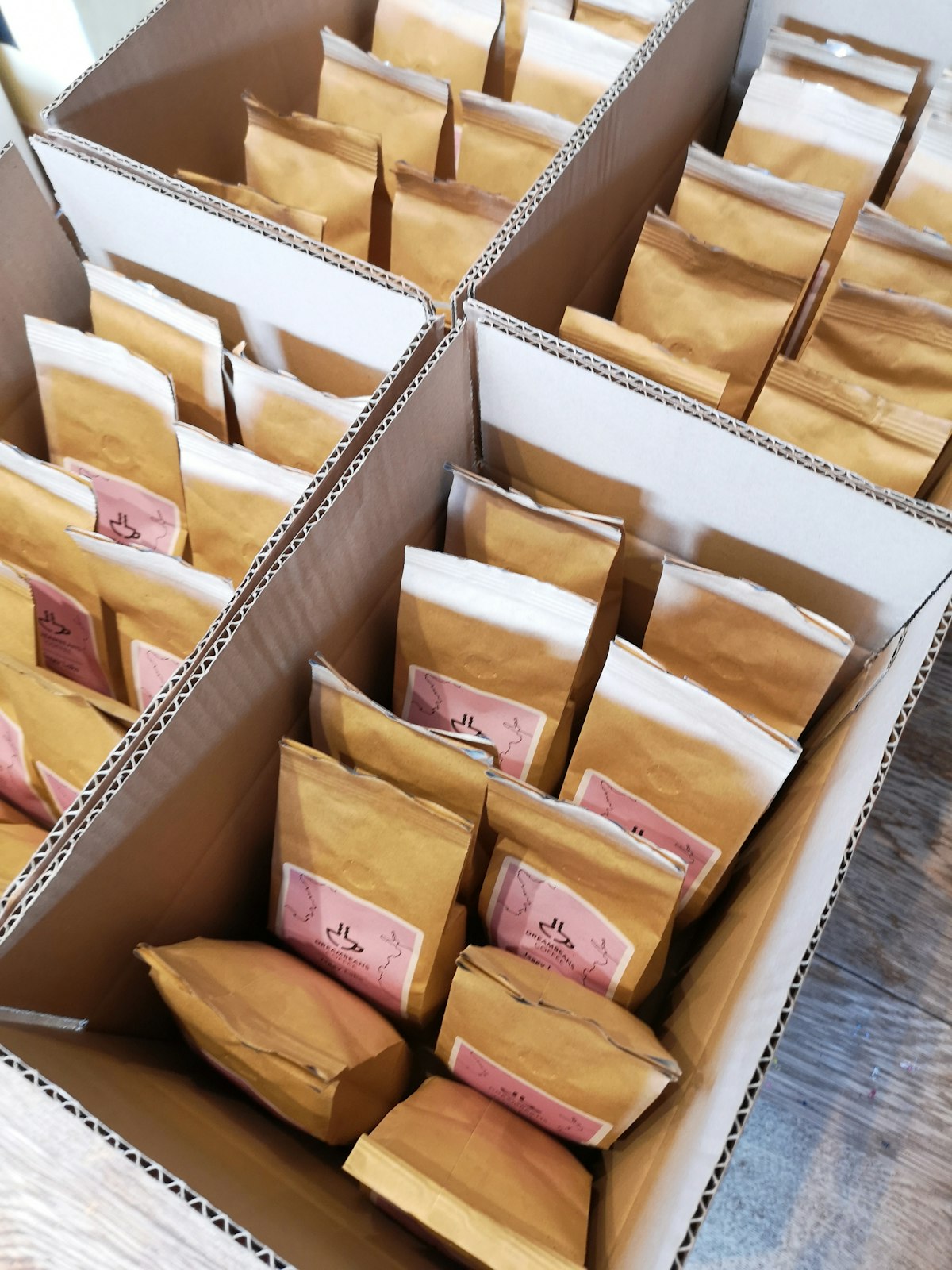
Split shipments are one of the most expensive and underreported cost drivers in ecommerce operations. A single split adds $6-$18 in direct costs per order, and that figure does not include the downstream damage: customer confusion, elevated WISMO contacts, and the reputational hit of delivering two boxes on two different days when the customer expected one. If your split shipment rate is above 15%, you are almost certainly leaving five to six figures of margin on the table every year.
This playbook gives you the complete tactical framework to diagnose the root causes of your splits, fix them with inventory positioning and routing adjustments, and build the KPI infrastructure to maintain gains over time. The strategies here are drawn from operations running 2,000 to 200,000 orders per month across two to twelve fulfillment nodes.
The True Cost of Split Shipments
Most finance teams only count the incremental shipping charge when they report split shipment costs. That understates the true cost by 40-60%. Here is the complete cost picture.
Direct Parcel Costs
Every split adds a second base parcel rate to the order. At UPS Ground rates for a 2-lb package, that is $8-$14 depending on zone. Add a residential delivery surcharge ($5.15 as of 2026 UPS rates), a fuel surcharge (currently 20-23% of base rate), and a dimensional weight penalty if the second package is lightly loaded, and the incremental carrier cost per split easily reaches $10-$18.
Packaging and Materials Waste
A split requires a second box, second dunnage fill, second label, and second set of inserts. At scale, packaging materials for a second shipment run $0.75-$2.00 per occurrence. This cost is almost never tracked against the split shipment problem specifically, so it disappears into a general packaging line item.
Pick-and-Pack Fees
3PL and warehouse pick-and-pack fees are charged per shipment, not per order. A standard pick-and-pack fee of $1.50-$4.00 doubles when an order splits. If you are running a 3PL arrangement with per-shipment billing, your contract is actively penalizing every split at the same rate as a new order.
Customer Experience Friction
Research from the Baymard Institute shows that 34% of customers who receive split shipments contact customer service at least once about the missing package. The average customer service contact costs $4-$7 to handle. For brands processing 10,000 orders per month with a 20% split rate, that is 680 contacts per month: $2,720-$4,760 in avoidable service cost every month.
Carrier Surcharge Compounding
Carrier surcharges compound per package, not per order. Extended area surcharges, large package surcharges, and address correction fees all apply at the package level. A single order that splits into three packages in a rural zip code can accumulate $25-$40 in surcharges alone. See the shipping management features section for tooling that tracks surcharge accumulation at the order level.
Split Shipment Cost Model (per occurrence):

  Incremental base parcel rate: $8.00 - $14.00
  Residential delivery surcharge: $5.15
  Fuel surcharge (21% of base): $1.68 - $2.94
  Packaging materials (2nd box): $0.75 - $2.00
  Pick-and-pack fee (2nd shipment): $1.50 - $4.00
  CX contact (34% probability x $6): $2.04
  ─────────────────────────────────────────────────
  Total per-split cost: $19.12 - $30.13
  Commonly cited estimate: $6 - $18
  Undercount factor: 1.5x - 2x
Root-Cause Analysis Framework
Before you start fixing splits, you need to know why they are happening. There are four primary root causes, and the fix for each is different. Applying the wrong solution to the wrong cause is the most common reason split reduction programs stall after initial gains.
Inventory Imbalance Across Nodes
The most common root cause. SKU A is in stock at your East Coast warehouse but not your West Coast warehouse. A customer in California orders SKU A and SKU B. SKU B is only in stock at the West Coast warehouse. The order splits because the inventory positioning does not reflect the co-purchase behavior. This is a supply chain problem, not a routing problem. Routing changes will not fix it.
Naive Routing Logic
Routing systems that assign each line item to the nearest warehouse independently, without checking whether all line items can be fulfilled from the same location, will generate splits mechanically. This is an extremely common configuration in default OMS and WMS setups. The system optimizes each line item in isolation, which is locally optimal per SKU but globally expensive per order. This is a routing logic problem, and it is fixable through rule adjustments covered in the next section.
Catalog Structure Mismatches
Product catalog decisions, how SKUs are grouped, how bundles are defined, how kit components are warehoused, directly affect split rates. If a kit's component SKUs are stocked at different nodes because they were set up by different buyers on different timelines, every kit order will split. If accessories for a hero product are warehoused separately from the hero product, cross-sell orders will split systematically. This is a catalog and procurement problem.
3PL Contractual Limitations
Some 3PL agreements restrict which product categories can be stored at which facilities for compliance, hazmat, or operational reasons. If a customer orders a restricted item alongside a standard item, the order must split by contract. Understanding your 3PL constraint map is a prerequisite for any split reduction program. You cannot route around a contractual hard wall.
To quantify which root cause dominates your split rate, pull 90 days of split orders and tag each with the reason: inventory stockout at preferred location, routing logic assigned to two locations, catalog grouping issue, or 3PL restriction. Even a rough manual sample of 100 split orders will reveal which category accounts for the majority of your volume. The order management dashboard can export split order details with fulfillment location data to support this analysis.
Inventory Positioning Tactics
Inventory positioning is the highest-use lever for long-term split reduction. Routing rules are easier to implement, but inventory fixes deliver larger and more durable gains.
Forward-Stocking High-Affinity SKU Pairs
Run a market basket analysis on your last 90 days of multi-item orders. Identify every SKU pair that appears together in at least 15-20% of orders. These are your high-affinity pairs. Every warehouse node that stocks one member of a high-affinity pair should stock the other. If you cannot afford the inventory capital to stock all pairs at all locations, prioritize by order volume: the 20 highest-volume pairs at your three highest-volume nodes will cover 60-70% of your split exposure at a fraction of the carrying cost.
Affinity Pair Identification Query (pseudocode):

SELECT
  a.sku AS sku_a,
  b.sku AS sku_b,
  COUNT(DISTINCT a.order_id) AS co_purchase_count,
  COUNT(DISTINCT a.order_id) * 1.0 / total_orders.cnt AS co_purchase_rate
FROM order_lines a
JOIN order_lines b ON a.order_id = b.order_id AND a.sku < b.sku
CROSS JOIN (SELECT COUNT(DISTINCT order_id) AS cnt FROM order_lines) total_orders
WHERE a.order_date >= CURRENT_DATE - 90
GROUP BY a.sku, b.sku, total_orders.cnt
HAVING co_purchase_rate >= 0.15
ORDER BY co_purchase_count DESC
LIMIT 50;
ABC Velocity Analysis at Each Node
Not every SKU needs to be at every location. A velocity segmentation at each node tells you which SKUs justify the carrying cost of multi-node stocking. Apply the following framework:
- A-velocity SKUs (top 20% by units sold): Must be stocked at all fulfillment nodes. Stock-outs on A-velocity SKUs at any location create splits that are both expensive and high-frequency. Maintain minimum 30 days of supply at every node.
- B-velocity SKUs (next 30% by units sold): Stock at two or more nodes based on regional demand distribution. Use 90-day sell-through by ship-to geography to determine which nodes need B-velocity coverage.
- C-velocity SKUs (bottom 50% by units sold): Consolidate at one or two nodes. Use hold-and-consolidate routing windows (described in the next section) to avoid forced splits when C-velocity SKUs are ordered alongside items at other nodes.
Re-run this analysis quarterly. SKU velocity changes with seasonality, marketing campaigns, and product lifecycle. A C-velocity SKU that gets featured in a major campaign will jump to A-velocity within days and generate splits at every node that is not stocked. Early warning via the velocity analysis lets you pre-position before the demand event. The multi-warehouse fulfillment strategy guide covers the network-level inventory design that makes this positioning sustainable.
Routing Rule Adjustments
Routing rules are the fastest path to split reduction. Most improvements can be configured without infrastructure changes and show results within days of deployment.
Single-Location Preference Logic
The most impactful routing change you can make: before the routing engine assigns line items to individual warehouses, first check whether any single warehouse can fulfill the entire order. If yes, route the entire order to that location even if it is not the absolute cheapest or closest option for each individual line item. This logic prevents the line-item-level optimization that generates most naive-routing splits.
Configure a cost threshold for the single-location preference. If the single-location option costs up to $X more than the optimal per-line-item split routing, choose the single location anyway. Based on the split cost model above, a threshold of $12-$15 is almost always justified because the true cost of a split exceeds $19 in most scenarios. Learn more about configuring this logic in the ecommerce order routing rules guide.
Cost-Threshold Split Override
When no single location can fulfill the entire order (a genuine inventory gap), evaluate whether the cost of expediting stock from a secondary location to consolidate at the primary location is less than the cost of the split. For high-value orders where the customer relationship justifies the effort, this can be worth configuring as an automatic escalation path. More commonly, define a split penalty value in your routing engine: splits are only authorized when the single-location alternative costs more than the split cost plus the penalty. Set the penalty at $15-$20 to reflect true split cost, not just incremental shipping.
Hold-and-Consolidate Windows
For C-velocity SKUs that are only stocked at one location, configure a hold-and-consolidate window: if the order contains a C-velocity SKU that requires fulfillment from Node A, hold all other items in the order for up to 24-48 hours to see if they can be transferred to Node A for same-shipment dispatch. This is most effective for items with 3-5 day delivery expectations where the hold window does not compromise the delivery promise. It is not appropriate for express or same-day orders.
Routing Decision Tree (simplified):

1. Does any single node have ALL line items in stock?
   YES → Route to single node (apply cost threshold check)
   NO → Continue

2. Is a hold-and-consolidate window available for the SLA?
   YES → Hold and attempt consolidation for [configurable] hours
   NO → Continue

3. Calculate true cost of each split option (including split penalty)
   Splits where cost delta > $15 → Override to single-node, accept stockout risk
   Splits where cost delta < $15 → Authorize split, log for inventory review

4. Assign split legs to minimize total packages (prefer 2-leg over 3-leg)
Connect these routing decisions to your shipping configuration so that the split authorization logic is visible in your fulfillment workflow, not buried in a routing engine log no one checks.
Packaging and Kit Strategy
Packaging and catalog design decisions made upstream of fulfillment have a direct impact on split rates. These changes require cross-functional coordination but deliver structural improvements that routing rules cannot achieve on their own.
Virtual Kits That Force Single-Pick
A virtual kit is a product listing that represents multiple individual SKUs bundled together for purchase but picked separately at the warehouse. When a virtual kit order enters the fulfillment system, it explodes into its component SKUs. If those component SKUs are at different warehouses, the kit order will split unless you have configured the routing engine to treat virtual kit components as a unit that must ship together.
Fix: tag virtual kit orders in your OMS so that the routing engine applies single-location preference logic exclusively. No virtual kit order should ever be authorized to split. If the preferred node cannot fulfill all components, the order should escalate to a supervisor queue for manual handling rather than auto-splitting. Virtual kit split rates above 2% indicate an inventory positioning problem at the kit-component level that requires a dedicated stocking review.
Pre-Assembled Bundles
Where virtual kits allow component-level picking, pre-assembled bundles are physically packed at the warehouse before an order arrives. A pre-assembled bundle of your top-3 co-purchased SKUs eliminates the split risk entirely: it is a single SKU with a single unit of inventory, picked and shipped as one item. Pre-assembly programs require upfront labor investment and carry the risk of mis-assembled inventory, but for your highest-volume affinity pairs, the split reduction ROI typically justifies the operational cost within 60-90 days.
Box-Size Standardization
Carriers charge dimensional weight on packages where the volume exceeds the weight-based rate. Many split shipments create two lightly loaded boxes that each trigger dimensional weight penalties. Standardizing your box sizes to reduce void space, and configuring your WMS to select the smallest box that fits all items, reduces the per-package cost when splits are unavoidable. It also makes the cost comparison between single-shipment and split-shipment options more accurate, which improves the quality of routing decisions. Aim for three to five standard box sizes that cover 85%+ of your SKU assortment.
Carrier Consolidation Programs
When splits are unavoidable, carrier consolidation programs can reduce the incremental cost per additional package significantly.
UPS and FedEx Multi-Package Shipment Discounts
Both UPS and FedEx offer multi-package shipment rates for orders that must ship as multiple boxes from the same origin to the same destination on the same day. Under UPS's multi-package shipment program, you can receive 5-12% discounts on the second and subsequent packages in a shipment. FedEx's equivalent program (FedEx One Rate for multi-package) provides flat-rate pricing that eliminates zone-based surcharges for packages up to 50 lbs. These programs are available to accounts with minimum volume thresholds (typically 50+ multi-package shipments per month). Ask your carrier rep specifically about multi-package pricing if you have not negotiated this provision.
USPS Regional Rate Boxes
For orders where the second package is small and light, USPS Regional Rate boxes provide a cost-effective alternative to UPS/FedEx ground rates for shorter-zone deliveries (zones 1-4). Regional Rate box pricing is fixed regardless of zone within the eligible range, which eliminates the zone-based cost escalation that makes split shipments especially expensive for coast-to-coast orders. Integrating USPS Regional Rate into your carrier selection logic for split shipment legs can reduce the incremental cost of unavoidable splits by 20-35% for packages under 20 lbs.
Negotiate Per-Shipment Minimums Out of Your 3PL Contract
If your 3PL charges a per-shipment base fee (common in contracts negotiated before split reduction was a priority), renegotiate to a per-order model for the base fee with per-shipment surcharges only for splits that exceed one package. This realigns your 3PL's incentive structure with your operational goal of single-shipment fulfillment. 3PLs with high split rates in their operation benefit from per-shipment billing. 3PLs with efficient consolidation benefit from per-order billing. The pricing model you accept signals which behavior you are implicitly funding.
KPI Framework for Split Shipment Reduction
A split reduction program without a measurement framework is an expense without accountability. These four KPIs belong on your operations dashboard with weekly refresh cadence and quarterly trend reporting to leadership.
Split Rate Trend
Your primary metric. Split Rate = (Orders with more than one shipment / Total shipped orders) x 100. Track week-over-week and month-over-month. Segment by product category, warehouse origin, and order size. A declining split rate across all segments indicates the program is working. A declining aggregate rate with a rising rate in a specific category indicates a localized inventory positioning problem. Target: below 10% for standard assortments. Below 5% after 90 days of active program management.
Cost Per Split
Use the full cost model from Section 1 to calculate average cost per split, not just incremental shipping cost. Track whether your interventions are reducing the cost per split (through carrier consolidation programs and packaging optimization) in addition to reducing the rate. A program that reduces split rate but increases cost per split has partially fixed the problem. Target: reduce cost per split by 25-40% through carrier program optimization within 60 days.
Consolidation Success Rate
Track the percentage of orders where the routing engine attempted single-location fulfillment and succeeded versus the percentage where it attempted single-location fulfillment but fell back to a split due to inventory unavailability. A low consolidation success rate indicates the inventory positioning work is not keeping pace with the routing logic improvements. If routing rules are requesting single-location fulfillment but inventory is not there to support it, the program is routing correctly but inventory is the binding constraint. Target: 85%+ consolidation success rate within 90 days of implementing affinity pair stocking.
Customer Satisfaction Delta
Measure post-purchase satisfaction scores (NPS or CSAT) for split-shipment orders versus single-shipment orders on a rolling 30-day basis. The gap between split-order satisfaction and single-order satisfaction quantifies the CX cost of splits beyond the direct financial model. Most brands find a 12-18 point NPS gap between split and single shipments. As your split rate decreases, your average NPS should improve proportionally. If it does not, investigate whether delivery speed or product quality issues are masking the improvement. The operations features overview includes post-purchase analytics that can be configured to track this segmentation automatically.
30-Day Action Plan
Here is the concrete execution sequence to move from current state to measurable improvement within one month.
Week 1: Audit
- Pull 90 days of fulfilled orders with fulfillment location and tracking data. Calculate your baseline split rate by category and region.
- Tag the root cause of a random sample of 100 split orders (inventory gap, naive routing, catalog issue, 3PL restriction).
- Identify your top 30 high-affinity SKU pairs using co-purchase frequency analysis.
- Check current inventory levels for all affinity pair members at all nodes. Identify which pairs have coverage gaps.
- Pull carrier invoice data for last 60 days and calculate average true cost per split using the full cost model.
Week 2: Quick Wins
- Configure single-location preference logic in your order management system with a $15 cost threshold for split override. This one change typically reduces split rate by 20-30% within the first week for brands with naive routing.
- Submit replenishment requests for the top 10 affinity pair inventory gaps. Prioritize pairs at your highest-volume nodes.
- Contact your UPS and FedEx account reps to inquire about multi-package shipment discount programs. Request a rate comparison for your last 30 days of split shipments.
- Tag virtual kit products in your OMS for single-location routing enforcement.
Week 3: Structural Fixes
- Complete ABC velocity segmentation at each node. Update replenishment minimums to reflect the tiered stocking strategy (A-velocity at all nodes, B at 2+, C consolidated).
- Configure hold-and-consolidate windows for C-velocity SKU orders with 4+ day delivery expectations.
- Review 3PL contract billing structure. Initiate renegotiation if per-shipment fees are creating split cost compounding.
- Identify top 5 pre-assembly bundle candidates based on affinity pair analysis and production feasibility.
Week 4: Measure and Iterate
- Calculate week-4 split rate versus week-1 baseline. Document root cause breakdown to confirm you are reducing the right categories.
- Review consolidation success rate. If below 70%, accelerate inventory replenishment for affinity pairs before adding more routing logic complexity.
- Calculate cost per split before and after carrier program enrollment. Confirm the financial model validates the program investment.
- Set 90-day targets for split rate, consolidation success rate, and cost per split. Schedule monthly reviews.
Split shipment reduction is not a one-time project. It is an ongoing operational discipline that requires quarterly re-analysis as your SKU mix changes, your warehouse network evolves, and your carrier contracts are renegotiated. The brands that maintain split rates below 8% long-term treat inventory positioning and routing rule governance as standing agenda items in their operations reviews, not as one-time initiatives.
For the routing rule architecture that sits beneath the split reduction logic, the ecommerce order routing rules guide provides the complete framework for designing, prioritizing, and maintaining routing logic at scale. For the network design decisions that determine how many nodes you need and where, see the multi-warehouse fulfillment strategy guide.
See how Nventory's intelligent routing eliminates unnecessary splits, book a demo.
Frequently Asked Questions
A split shipment occurs when a single customer order is fulfilled from two or more separate warehouse locations, resulting in multiple packages delivered at different times. It happens when no single fulfillment location carries every SKU in the order, when naive routing logic assigns line items to the nearest warehouse independently, when catalog structure separates high-affinity products across different nodes, or when 3PL agreements restrict which SKUs can be held where. The root cause is almost always a mismatch between inventory distribution and the way routing rules make assignment decisions.
A split shipment typically costs $6-$18 more than a single shipment when you account for all components: an additional base parcel rate ($4-$8), a second set of carrier surcharges ($1-$3), extra packaging materials ($0.50-$1.50), a second pick-and-pack fee at the fulfillment center ($1-$4), and increased customer service contacts tied to multi-package confusion (estimated $1-$3 per incident). Brands shipping 5,000 orders per month with a 25% split rate are spending $7,500-$22,500 per month in avoidable split costs: between $90,000 and $270,000 per year.
Routing rules can reduce split shipments significantly, typically by 30-50%, but they cannot solve the problem on their own. Routing rules can enforce single-location preference logic and hold-and-consolidate windows, but if inventory is chronically imbalanced across your network, no routing rule can override a genuine stock-out at the preferred warehouse. Sustainable split reduction requires routing improvements paired with inventory positioning strategy: specifically, co-locating high-affinity SKU pairs at the same nodes and maintaining minimum stock thresholds for top-volume items at each facility.
Pull your last 90 days of fulfilled orders from your order management system. Count the total number of orders and the number of orders that generated more than one outbound shipment (i.e., more than one tracking number). Split Rate = (Orders with more than one shipment / Total orders) x 100. Segment the result by product category, warehouse region, and order size to identify where splits concentrate. A split rate above 15% warrants immediate investigation; above 25% indicates a structural inventory or routing problem requiring a formal remediation plan.
Forward-stocking high-affinity SKU pairs at the same fulfillment nodes is the single highest-impact inventory strategy for split reduction. Use 90-day order data to identify which SKUs are ordered together at least 20% of the time. Ensure every warehouse that stocks SKU A also stocks SKU B. Complement this with ABC velocity analysis at each node: A-velocity SKUs should be available at all locations; B-velocity SKUs at two or more; C-velocity SKUs can be consolidated at one or two nodes with hold-and-consolidate routing windows to avoid forced splits. This approach alone can reduce split rates by 30-45% within 60 days.
Related Articles
View all
Ecommerce and Supply Chain Management: The Complete Guide for Multichannel Brands
A complete guide to ecommerce and supply chain management for multichannel brands, covering the six core stages, failure points, metrics, and systems that keep operations running in real time.

Amazon Just Changed When You Get Paid. Most Sellers Haven't Noticed Yet.
On March 12, 2026, Amazon started holding your money for 7 extra days after delivery. No announcement. No opt-out. If you sell $100K/month, you just lost access to $23K-$33K in working capital overnight, and that is only one of six ways Amazon is squeezing sellers this year.

How War and Fuel Prices Ripple Through Every Layer of E-Commerce Operations
Oil jumped from $72 to $126/barrel. Shipping surcharges hit $4,000/container. Polymer prices up 42%. This is how armed conflict translates into real cost increases across your entire e-commerce operation, warehouse to doorstep.