Dropshipping Products: What Actually Sells in 2026
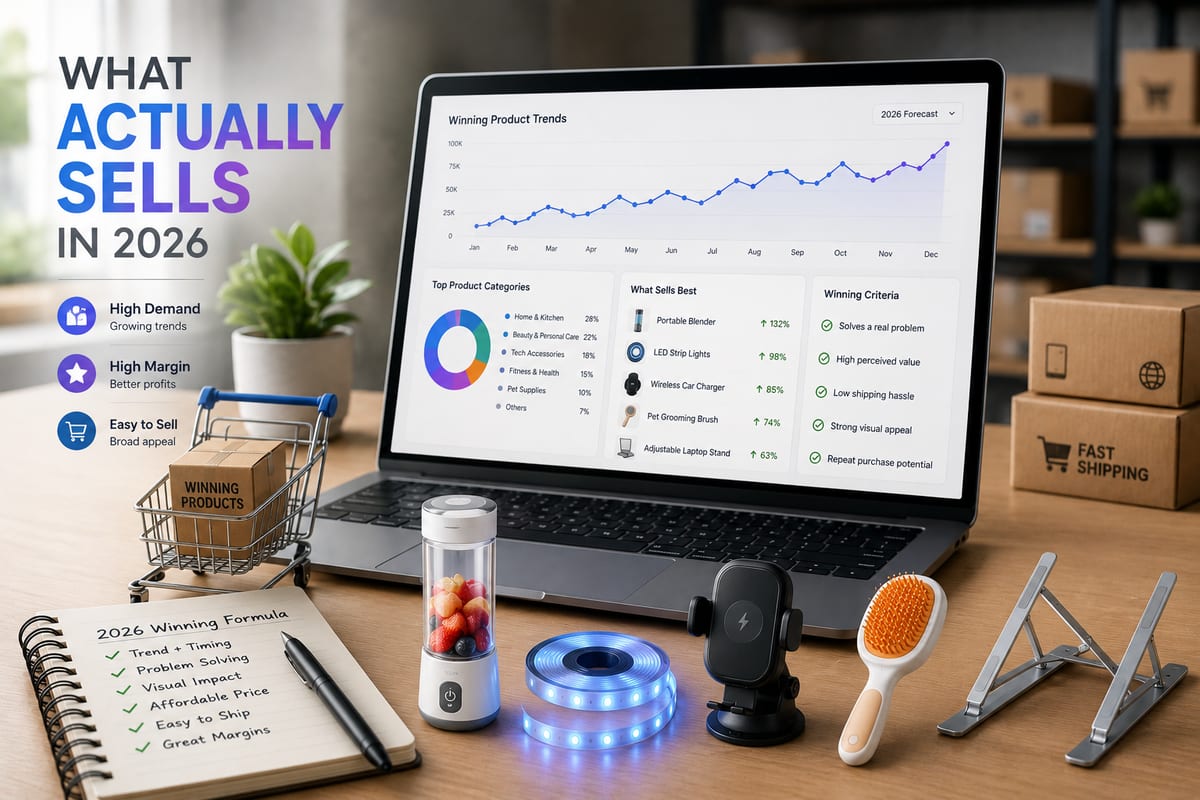
Articles about dropshipping products typically follow the same formula. List 25 trending items. Promise these are this year's winners. Recycle 70% of the list from last year and previous years. Operators who follow these lists usually end up in saturated niches where ad costs exceed margins and the only winners are the article authors collecting affiliate revenue from product sourcing platforms.
This article approaches dropshipping products differently. It walks through what actually distinguishes profitable products from saturated ones in 2026, the selection framework that produces sustainable margin, and how successful dropshipping operations choose products instead of chasing trends.
What Most Dropshipping Products Lists Miss
The standard winning-products listicle has a structural problem. By the time a product is publicly identified as a winner, the saturation race has already started. Thousands of operators see the same lists, source the same products, run the same ads, and crush each other's margins through ad auction competition.
The dropshipping products that actually produce sustainable margin in 2026 share structural characteristics rather than belonging to trending categories. The characteristics are knowable. The specific products that fit them are different for every operator based on their audience access, marketing capability, and operational sophistication.
Operators chasing listicle products typically experience the same pattern: initial sales as the trend ramps, then collapsing margins as competition floods in, then dead inventory as the trend dies. Operators selecting products based on structural characteristics build operations that sustain through multiple trend cycles.
The Six Structural Characteristics of Profitable Dropshipping Products
Across successful dropshipping operations, six characteristics consistently distinguish products that produce sustainable margin.
Characteristic 1: Average Order Value Above $80
Margin compression from ad cost inflation hits low-AOV products hardest. A $20 product at 30% margin makes $6 profit per unit, which cannot absorb a $40 customer acquisition cost. A $200 product at 30% margin makes $60 profit, which absorbs $40 CAC easily.
Profitable dropshipping products in 2026 typically have $80+ average order values. Operations primarily selling $15 to $30 products struggle to make the math work regardless of operational quality.
Characteristic 2: Demonstrated Demand Over 12+ Months
Products with stable demonstrated demand over a year or more produce sustainable operations. Products spiking on TikTok this week tend to die before operations can ramp to capture meaningful revenue.
Tools like Google Trends, Amazon best-seller history, and category-specific demand data surface stable demand patterns. The signal: consistent search volume and sales velocity over 12+ months, not viral spikes that crash within weeks.
Characteristic 3: Manageable Competition
Niches with overwhelming competition have saturated SERPs and saturated ad auctions. Searching the candidate product on Amazon, eBay, and Etsy reveals competition levels. Niches with 50,000+ reviewed listings are typically saturated; niches with 500 to 5,000 well-reviewed listings often have manageable competition.
The sweet spot is enough demand to support an operation with enough competition to validate the market but not so much that margins are crushed.
Characteristic 4: Replenishment or Accessory Potential
Customers who buy once and return for more or for complementary products create dramatically better lifetime value than one-time purchasers. Consumables (refills, replacements), accessories (cases, charges, attachments), and category-loyalty products (someone who buys gardening tools tends to buy more gardening products) all fit.
A 1.5x lifetime-value-to-CAC ratio is unprofitable at current ad costs. 3x is good. 5x+ is excellent.
Characteristic 5: Visual or Demonstrable Differentiation
Products where visual demonstration produces compelling buying signals outperform commodity products where everything looks similar. Visual differentiation supports content marketing, organic social media, and brand building beyond pure ad-driven acquisition.
Characteristic 6: Supplier Reliability
Niches with multiple reliable suppliers offering reasonable shipping times. Niches dominated by 30+ day shipping from single suppliers destroy customer satisfaction and review scores under 2026 customer expectations.
For broader context on dropshipping operations, see our dropshipping platforms framework on how successful operations select sites and stacks.
The Categories That Consistently Fit These Characteristics
Without naming specific products that would saturate immediately upon publication, the categories that consistently fit the six characteristics include several reliable patterns.
Specialty pet products. Higher-AOV pet accessories, supplements, training equipment, and specialty foods. Pet owners are passionate, demand is stable, and replenishment potential is excellent.
Home office and ergonomic equipment. Standing desk accessories, ergonomic furniture additions, monitor mounts, lighting solutions. AOV is high, demand is stable post-pandemic.
Hobbyist tooling. Specialty tools for woodworking, gardening, music production, crafts, sports. Hobbyists pay premium prices for quality. Replenishment through consumables and accessories is strong.
Wellness and self-care. Aromatherapy products, supplement-adjacent items, wellness technology. AOV is high, replenishment is excellent.
Specialty kitchen and culinary. Premium kitchen gadgets, specialty cookware, gourmet ingredients, food preparation tools. Foodie audiences pay premium prices.
Outdoor and adventure equipment. Specialty hiking, camping, fishing, biking accessories. High AOV, visual differentiation, passionate audiences.
Eco-conscious products. Sustainable alternatives to everyday items. Premium pricing, stable demand growth, customer values alignment.
The list is not exhaustive and should not be treated as a directory of guaranteed winners. The point is that profitable dropshipping products share structural characteristics rather than belonging to specific trending categories.
The Operational Layer That Supports Product Selection
Even within structurally profitable product categories, operations fail without the right operational infrastructure. Product selection determines whether the operation has a chance; operational infrastructure determines whether the chance becomes profit.
Multi-channel inventory sync is non-negotiable. Operations selling on the storefront plus 2 to 4 marketplaces produce significantly better margins than single-channel operations. According to Cloudflare's documentation on webhooks, event-driven sync handles high-velocity multi-channel inventory changes far more reliably than polling alternatives.
For dropshipping operations specifically, this matters because supplier-driven stock changes propagate unpredictably. Operations without real-time sync produce cancellation cascades that destroy customer satisfaction and marketplace standing regardless of product selection quality. The inventory sync architecture supports product profitability.
How Nventory Supports Dropshipping Product Operations
Nventory.io handles the multi-channel inventory sync layer that profitable dropshipping operations require. The platform connects WooCommerce, Shopify, and other storefronts to Amazon, eBay, Walmart, TikTok Shop, Etsy, and 30+ other channels through webhook-driven sync.
For dropshipping operations specifically, when supplier feeds update inventory in your storefront, Nventory propagates changes to every connected marketplace in seconds rather than minutes. The cancellation cascades that destroy dropshipping operations become structurally impossible.
For WordPress and WooCommerce stores, download Nventory free from WordPress.org. For Shopify operations, install Nventory from the Shopify App Store. Both versions provide the same multi-channel sync infrastructure.
The free tier includes core multi-channel functionality without subscription cost. The architectural value for dropshippers specifically: the platform does not replace supplier integration tools, it complements them by handling the multi-channel sync layer they are not built for. For complementary context, see our best dropshipping products framework on category selection.
How to Evaluate Dropshipping Products Before Committing
Before sourcing any candidate product, run these six specific checks.
Check 1: AOV math. What is the realistic average order value? Calculate AOV x margin % = profit per order. Profit per order needs to be at least 2x projected CAC.
Check 2: Demand stability. Pull 24 months of Google Trends data. Stable or growing demand supports long-term operations. Declining or seasonal-only demand does not.
Check 3: Competition assessment. Search Amazon, eBay, and Etsy for category keywords. Niches with 50,000+ reviewed listings are typically saturated.
Check 4: Supplier audit. Identify 3+ potential suppliers. Verify shipping times, quality, communication. Single-supplier dependence creates operational risk.
Check 5: Replenishment mapping. Map the customer purchase journey. Does first purchase naturally lead to second purchases through consumables, accessories, or category loyalty?
Check 6: Visual differentiation test. Can the products be photographed and content-marketed distinctively? Or do they look identical to generic alternatives?
Products passing all six checks are candidates. Products failing two or more should be eliminated regardless of how trending they appear.
Common Dropshipping Products Selection Mistakes
A few patterns that lead to unprofitable operations.
Picking based on viral product lists. Viral products spike and crash on timescales faster than dropshipping operations can ramp profitably.
Ignoring AOV math. Low-AOV products were profitable when ads were cheap. They are not in 2026.
Underestimating supplier dependence. Single-viable-supplier niches are operations built on someone else's risk tolerance.
Skipping demand validation. Picking products based on personal interest rather than demonstrated demand.
Overlooking lifetime value math. Single-purchase products require ad-driven acquisition for every sale. Replenishment products build compounding customer bases.
According to Wikipedia's overview of inventory management, product selection interacts with inventory and operational discipline to determine long-term operational outcomes. Operations that get product selection right but fail on operations or vice versa produce limited results.
Final Thoughts
Dropshipping products selection determines whether operations have a chance to be profitable; operational infrastructure determines whether the chance becomes profit. The six structural characteristics, AOV above $80, demonstrated demand over 12 months, manageable competition, replenishment potential, visual differentiation, supplier reliability, separate sustainable products from saturated trends. Operations selecting products based on these characteristics produce dramatically better outcomes than operations chasing listicle trends.
If you are running dropshipping operations and need the multi-channel inventory infrastructure that supports profitable product selection, install Nventory on your platform of choice. For WordPress and WooCommerce stores, download Nventory free from WordPress.org. For Shopify stores, install Nventory from the Shopify App Store. Visit nventory.io to see how the platform supports dropshipping operations across multiple channels.
Frequently Asked Questions
Products matching the six characteristics, high AOV, demonstrated demand, manageable competition, replenishment potential, visual differentiation, supplier reliability. Specific products vary by operator; the structural characteristics are consistent.
Rarely. Ad cost inflation since 2023 made $20-AOV products structurally unprofitable for most operations. High-AOV products absorb CAC; low-AOV products do not.
Look at adjacent niches to popular categories rather than the popular categories themselves. Specialty hobby niches, professional tools, and category-specific accessories often have less competition than mass-market products.
Skeptically. Most listicles are affiliate-driven content from product sourcing platforms. By the time a product appears on multiple lists, saturation is already happening.
Multi-channel inventory sync platforms with webhook-driven architecture. Nventory is one example, available on WordPress.org and the Shopify App Store.
Most successful operations run 4 to 8 week tests with controlled ad spend before scaling. Tests that produce clear profitable unit economics get scaled. Tests that do not get killed quickly to preserve capital for better opportunities.
Related Articles
View all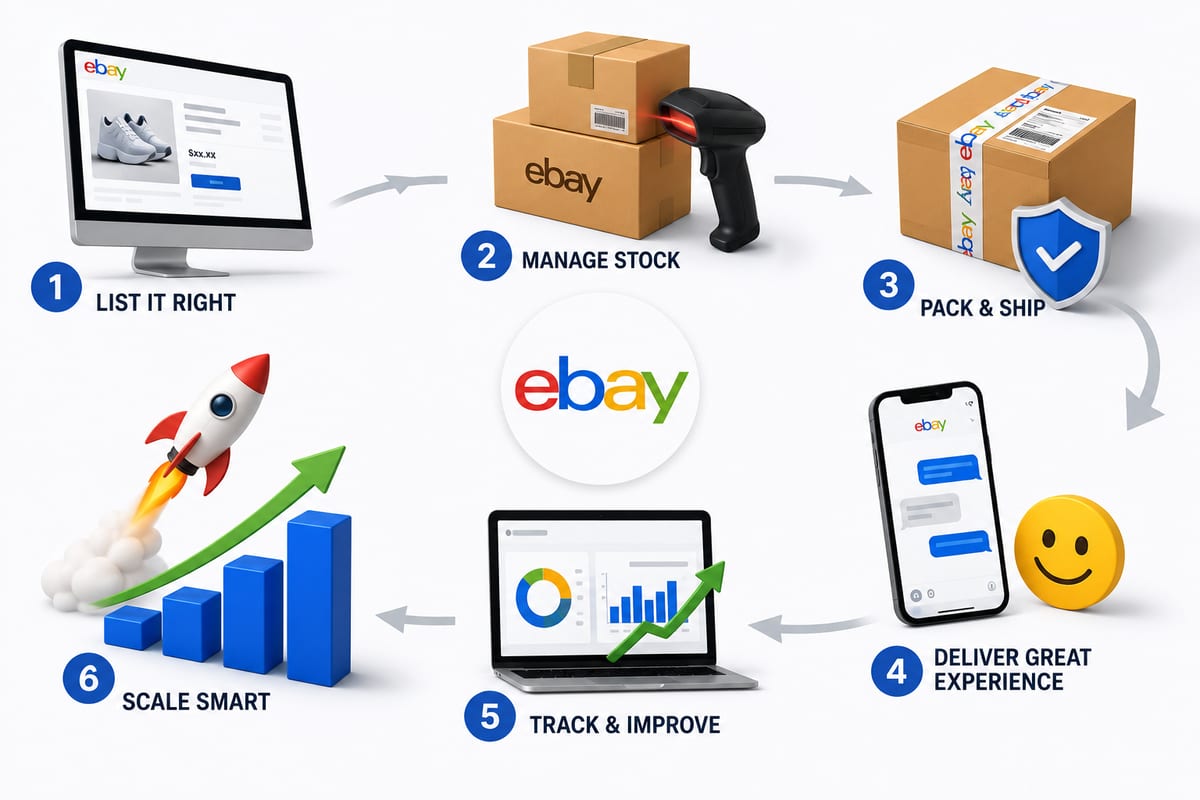
Tips on How to Sell on eBay: Operational Practices at Scale
Tips on how to sell on eBay alongside multiple channels. The operational practices that protect seller standing and produce sustainable margin.
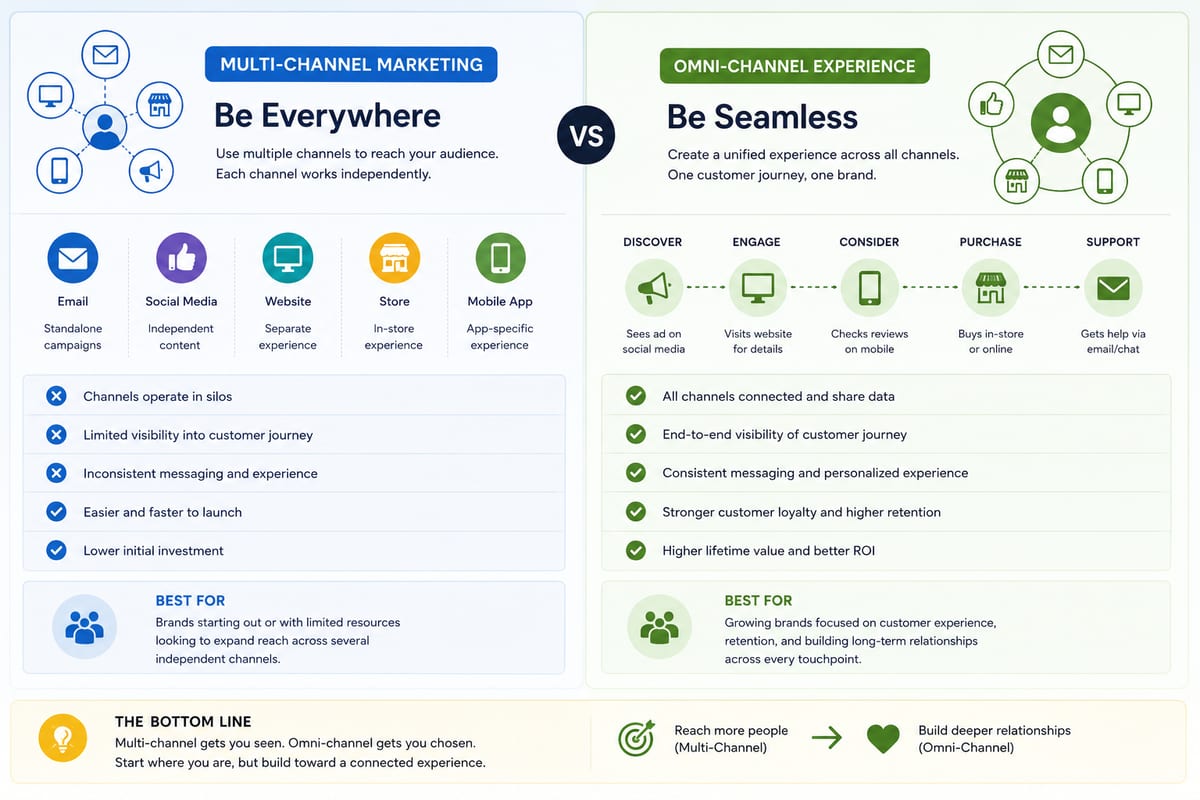
Multi Channel Marketing vs Omni Channel: Honest Comparison
Multi channel marketing vs omni channel breakdown for ecommerce operations. The operational differences that determine which approach fits your business.
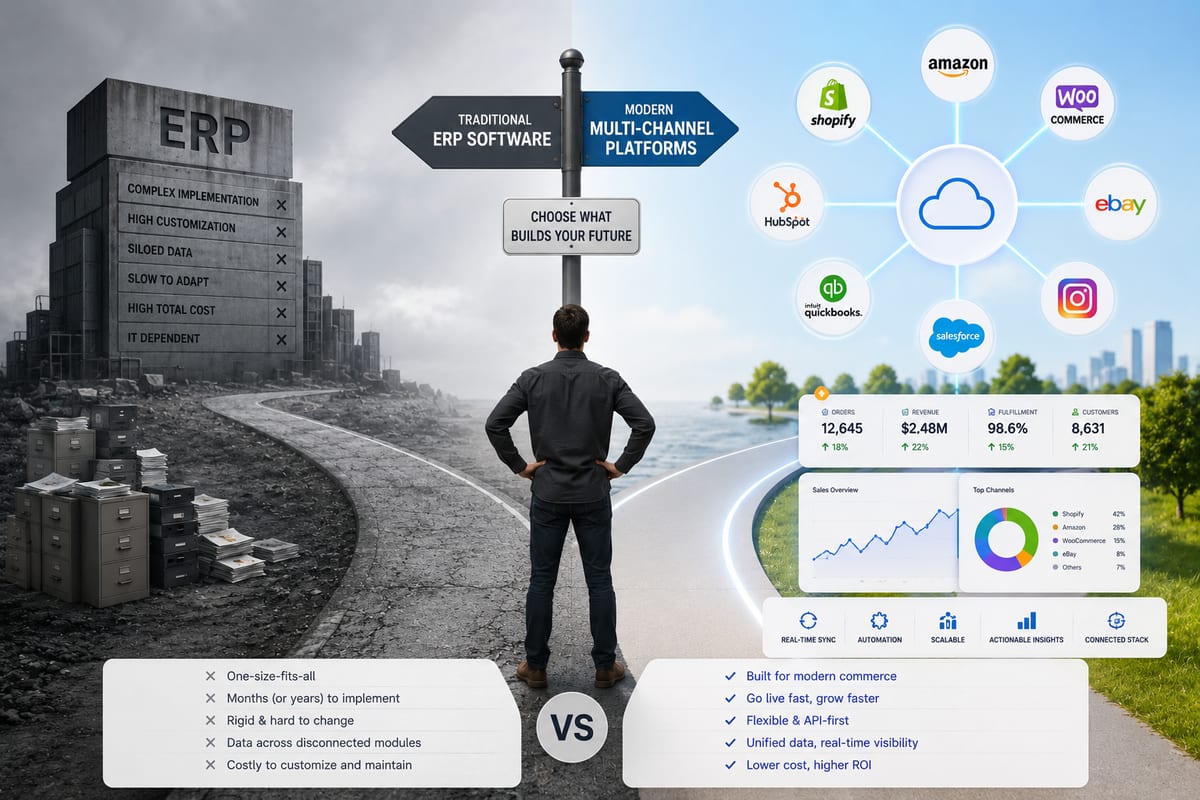
ERP Software vs Multi-Channel Platforms: Honest Choice
ERP software comparison for growing ecommerce brands. When ERP fits and when multi-channel platforms produce better outcomes at lower cost.