Fulfillment Software That Connects to Your Whole Stack
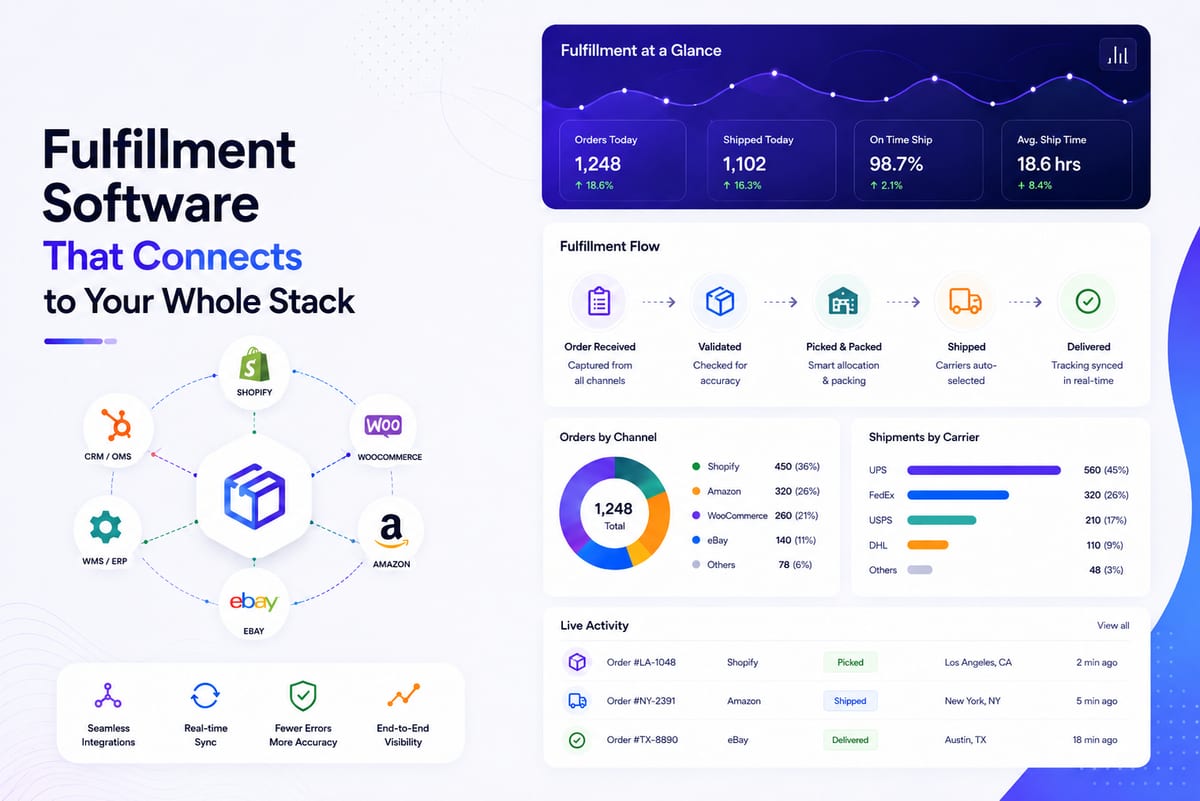
Fulfillment software gets evaluated on the wrong criteria most of the time. Buyers focus on which carriers it integrates with, what label formats it supports, and how its picking interface looks. Those features matter, but they are not what determines whether fulfillment software actually works at scale. The harder problem is integration with the broader operational stack, connecting to order management, inventory, channels, and accounting systems cleanly enough that fulfillment does not become a coordination nightmare.
This article walks through what fulfillment software needs to do at scale beyond the obvious feature set, the integration patterns that prevent fulfillment chaos, and the practical decisions that separate well-integrated operations from operations fighting fulfillment fires.
What Fulfillment Software Should Actually Do
The basic function of fulfillment software is processing orders into shipped packages. The complexity lives in everything that has to happen around that core function.
Order intake from multiple channels. Orders flow in from Shopify, WooCommerce, Amazon, eBay, TikTok Shop, and other channels with different formats and timing. Fulfillment software needs to handle this variety cleanly.
Inventory availability checks. Before processing, the software needs to verify the order can actually be fulfilled. This requires real-time integration with inventory systems, not snapshot data from yesterday.
Pick and pack workflow management. The actual warehouse work, generating pick lists, managing batch picks, coordinating pack stations, happens within fulfillment software.
Multi-carrier shipping integration. Different orders may need different carriers based on weight, destination, service level, or customer preference. Fulfillment software needs to compare rates and select appropriate carriers.
Tracking number propagation. Once shipped, tracking numbers flow back to the originating channel, get attached to customer communications, and update order status across systems.
Returns processing coordination. Returns arrive, get inspected, and either restock inventory or move to disposition workflows. The fulfillment software needs to coordinate this with inventory and refund systems.
Fulfillment software that handles the core workflow well but does not integrate cleanly with the rest of the operational stack creates as many problems as it solves.
Why Integration Matters More Than Features
Fulfillment software lives in the middle of a complex operational stack. It receives orders from channels (via order management), checks inventory (via inventory management), generates shipping labels (via carriers), updates tracking (back to channels and customers), and triggers stock adjustments (back to inventory).
Operations with poor fulfillment software integration produce predictable problems.
Stale inventory data. Fulfillment software running on inventory data that is hours old cannot reliably verify whether orders can actually be fulfilled. According to Cloudflare's documentation on webhooks, event-driven architectures handle this far more reliably than polling alternatives.
Channel notification gaps. When tracking numbers do not propagate cleanly back to originating channels, customers do not get shipping notifications and channel performance metrics degrade.
Inventory drift from fulfillment. Stock adjustments from picking and shipping that do not flow back to inventory systems correctly produce drift. The fulfillment side shipped 100 units; the inventory side only deducted 95.
Returns processing chaos. Returns that do not trigger appropriate inventory and refund actions become operational orphans that consume team attention.
Operations with strong fulfillment software integration eliminate these problems structurally. The architecture handles coordination automatically rather than relying on manual reconciliation.
The Integration Properties That Matter
Fulfillment software integration quality comes down to specific architectural properties. For broader operational context, see warehouse management.
Real-time inventory connection. Fulfillment software needs current inventory state, not snapshot data. Webhook-driven connection produces sub-5-second freshness; polling-based connection lags by minutes.
Bi-directional channel sync. Tracking numbers and order status need to flow back to originating channels cleanly. Native channel integrations outperform middleware connections for reliability.
Event-driven stock adjustments. Stock deductions from shipping and additions from returns need to propagate to inventory systems through events, not scheduled batch processes.
Operator-accessible audit trails. Every fulfillment action logs with timestamps and replay capability. When problems occur, the trail enables fast diagnosis.
API-first architecture. Clean APIs that other systems can consume. Operations regularly need fulfillment data flowing into analytics, customer service tools, and accounting systems.
Multi-warehouse coordination. Operations with multiple physical locations need fulfillment software that handles location-aware routing, transfers, and consolidated reporting.
According to Wikipedia's overview of inventory management, centralized data ownership across distributed operations is foundational to accuracy. Fulfillment software that connects to centralized inventory and order data produces accurate operations; software that maintains separate data creates the coordination overhead that consumes team attention.
The Three Fulfillment Software Stack Patterns
Operations typically organize fulfillment software in one of three architectural patterns.
Pattern 1: Standalone WMS
A dedicated warehouse management system handles fulfillment with its own data model. Order data feeds in from external systems; tracking data feeds back out. The fulfillment side operates as an isolated system.
Strengths: deep fulfillment-specific features, mature workflows for complex warehouse operations.
Weaknesses: integration with other systems requires significant work, reconciliation between fulfillment and other systems creates overhead.
Pattern 2: Integrated Multi-System Platforms
Platforms that handle fulfillment alongside inventory, order management, and channel sync in one unified architecture. Data flows naturally between functions because everything lives in the same system.
Strengths: clean integration by default, no reconciliation overhead, fast deployment.
Weaknesses: less depth on specialized fulfillment workflows than standalone WMS for complex warehouse operations.
Pattern 3: Best-of-Breed With Strong Integration Layer
Specialized fulfillment software connected to specialized inventory, order management, and channel sync software through a strong integration layer. Each component is best-in-class but glued together effectively.
Strengths: maximum capability depth in each function.
Weaknesses: integration layer becomes complex and expensive to maintain, vendor coordination overhead.
For most multi-channel ecommerce operations between $500K and $10M revenue, Pattern 2 produces the best operational outcomes. The integration overhead of Pattern 1 and Pattern 3 outweighs the capability advantages at this scale. This connects to broader multichannel ecommerce architectural decisions.
How Multi-Warehouse Operations Use Fulfillment Software
Operations with multiple physical locations or 3PL relationships have specific fulfillment software requirements that single-warehouse operations do not share.
Location-aware order routing. Orders need to route to warehouses based on stock availability, customer location, and channel-specific rules. Generic routing produces wrong decisions when location-specific factors matter.
Inter-warehouse transfer management. Stock moves between locations for various reasons. Fulfillment software needs to track transfers, manage receiving, and update counts at both source and destination.
3PL integration depth. 3PL partners typically have their own systems with specific integration requirements. Fulfillment software needs to handle 3PL workflows alongside in-house warehouse operations.
Consolidated reporting. Operations need to see fulfillment metrics across all locations to identify bottlenecks, balance loads, and plan capacity. Per-warehouse reports without consolidation produce incomplete visibility.
Channel-to-warehouse mapping. Different channels may have preferred fulfillment locations for various reasons. The routing logic needs to incorporate channel preferences alongside other factors.
How Nventory Integrates With Fulfillment Operations
Nventory.io handles inventory and channel sync in the integrated multi-system pattern (Pattern 2), connecting cleanly to fulfillment workflows whether handled in-house or through 3PL partners. The platform provides the real-time inventory foundation, channel coordination, and order routing that fulfillment software needs to operate cleanly.
For operations running fulfillment in-house, Nventory provides order management that flows directly into warehouse workflows. For operations using 3PL partners, Nventory's open API allows clean integration with 3PL systems and consolidated reporting across fulfillment locations.
For WordPress and WooCommerce stores, download Nventory free from WordPress.org. For Shopify operations, install Nventory from the Shopify App Store. Both versions provide the inventory and order management foundation that fulfillment workflows build on.
The platform connects to Amazon FBA, Multi-Channel Fulfillment, and other channel-specific fulfillment options through native integrations. For Amazon-heavy operations, this includes FBA-aware inventory routing that handles FBA-on-hand and merchant-fulfilled inventory correctly.
Common Fulfillment Software Mistakes
A few patterns to avoid when evaluating or deploying fulfillment software.
Picking based on warehouse-side features alone. Fulfillment software needs to handle physical operations well AND integrate cleanly with the broader stack. Tools excelling at one but not the other create operational gaps.
Underestimating returns workflows. Returns handling at scale requires the same rigor as outbound flows. Tools treating returns as edge cases produce inventory drift.
Choosing best-of-breed too early. Pattern 3 architectures with sophisticated integration layers fit enterprise operations. Most growing brands get better outcomes from Pattern 2 platforms.
Ignoring multi-location readiness. Single-warehouse tools that do not generalize to multi-warehouse operations force expensive rebuilds when expansion happens.
Skipping integration testing. Fulfillment software integrations to inventory, channels, and carriers need to be tested on staging with realistic data before production deployment.
Final Thoughts
Fulfillment software at scale requires deep integration with the broader operational stack, inventory, order management, channels, carriers, and accounting. Operations evaluating fulfillment software on feature checklists alone miss the integration properties that determine real-world reliability. Real-time inventory connection, bi-directional channel sync, event-driven stock adjustments, operator-accessible audit trails, and API-first architecture separate fulfillment software that works at scale from software that creates coordination overhead.
If you want to test the inventory and order management foundation that fulfillment software builds on, install Nventory on your platform of choice. For WordPress and WooCommerce stores, download Nventory free from WordPress.org. For Shopify stores, install Nventory from the Shopify App Store. Visit nventory.io to review platform architecture and integration capabilities.
Frequently Asked Questions
Pattern 2 integrated platforms for most operations between $500K and $10M revenue. Nventory handles the inventory and channel coordination that fulfillment workflows build on, available on WordPress.org and the Shopify App Store.
Warehouse management focuses on physical operations (receiving, picking, shipping). Fulfillment software focuses on order processing workflows that span from channel intake through shipping. They overlap significantly but emphasize different aspects.
For operations past 1,000 orders/month, typically yes. Below that volume, basic fulfillment workflows can run on storefront-native tools plus shipping integrations.
Yes, the right ones can. Modern fulfillment software treats 3PL partners as virtual warehouses with appropriate integration and reporting capabilities. Look for tools with strong 3PL connector ecosystems.
Order intake and inventory verification should complete in seconds. Label generation typically takes 1 to 5 seconds depending on carrier API speed. Picking and packing depends on warehouse processes, not software.
Always. Disconnected fulfillment and inventory systems produce drift through stock adjustment gaps. Integration is non-negotiable for accurate operations.
Related Articles
View all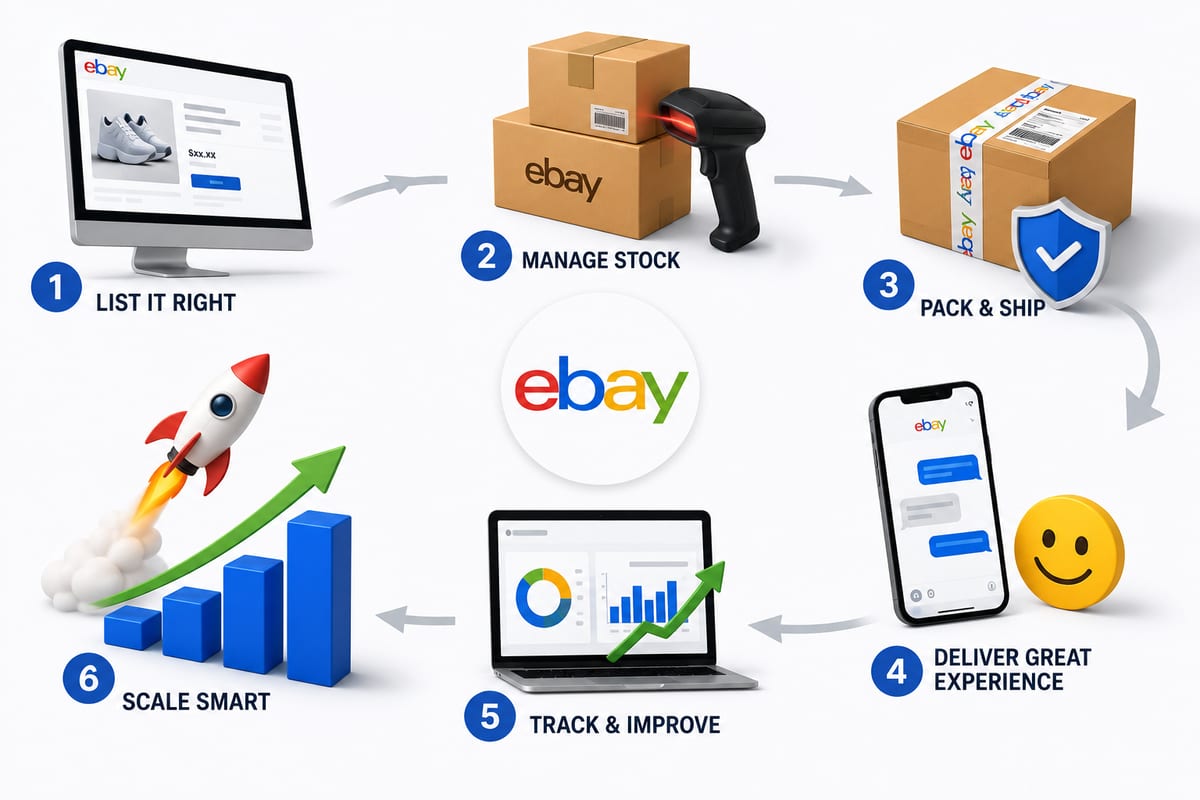
Tips on How to Sell on eBay: Operational Practices at Scale
Tips on how to sell on eBay alongside multiple channels. The operational practices that protect seller standing and produce sustainable margin.
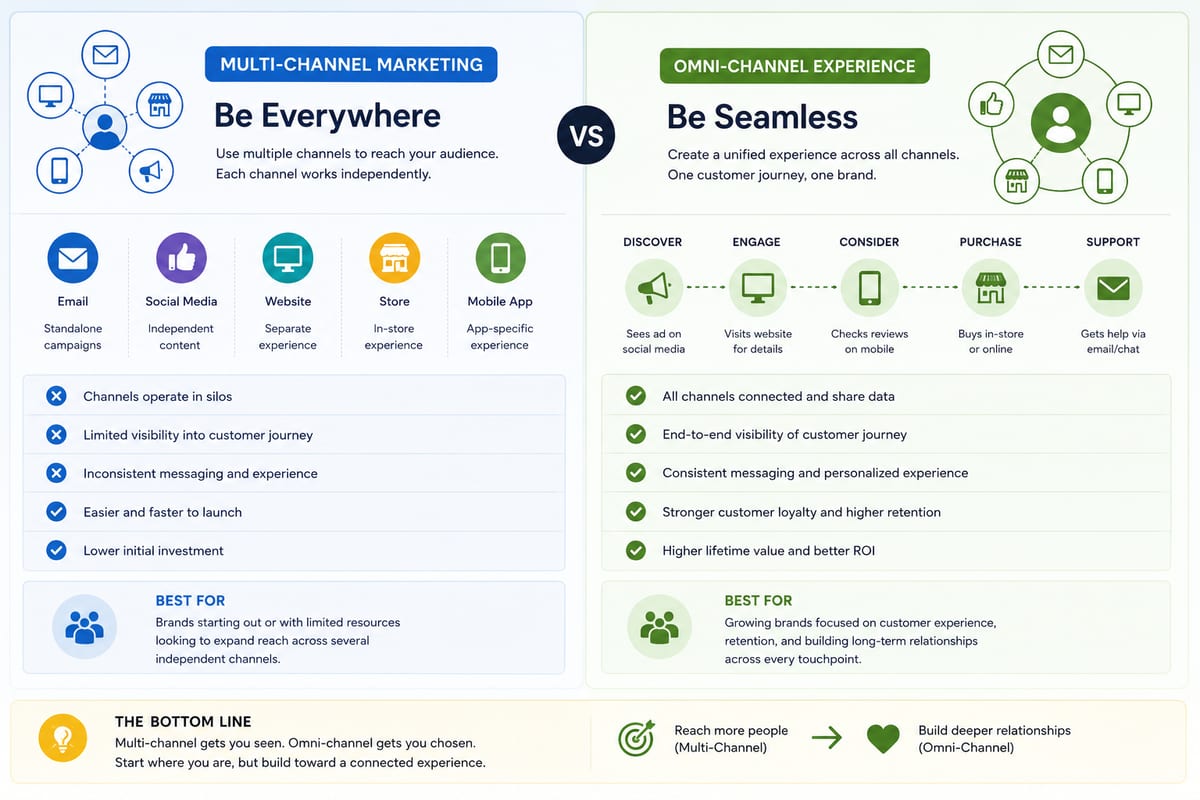
Multi Channel Marketing vs Omni Channel: Honest Comparison
Multi channel marketing vs omni channel breakdown for ecommerce operations. The operational differences that determine which approach fits your business.
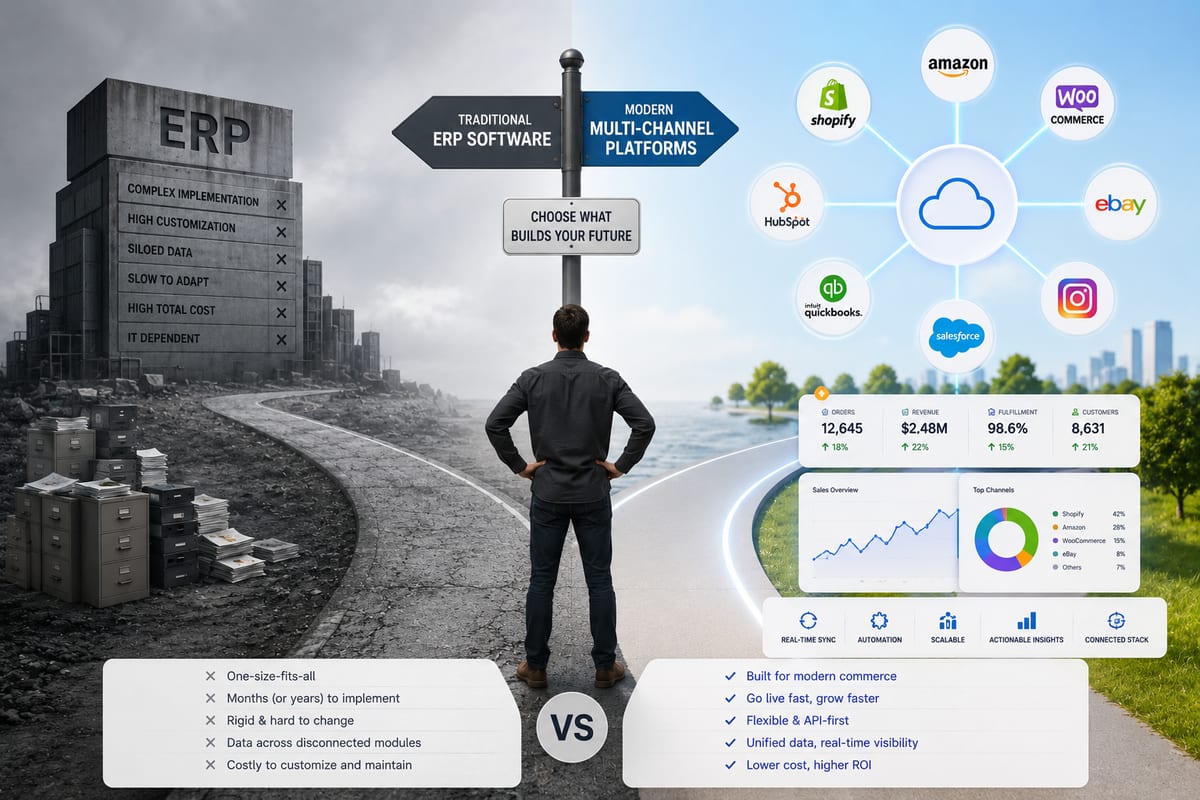
ERP Software vs Multi-Channel Platforms: Honest Choice
ERP software comparison for growing ecommerce brands. When ERP fits and when multi-channel platforms produce better outcomes at lower cost.