Inventory Management System Built for Modern Ecommerce
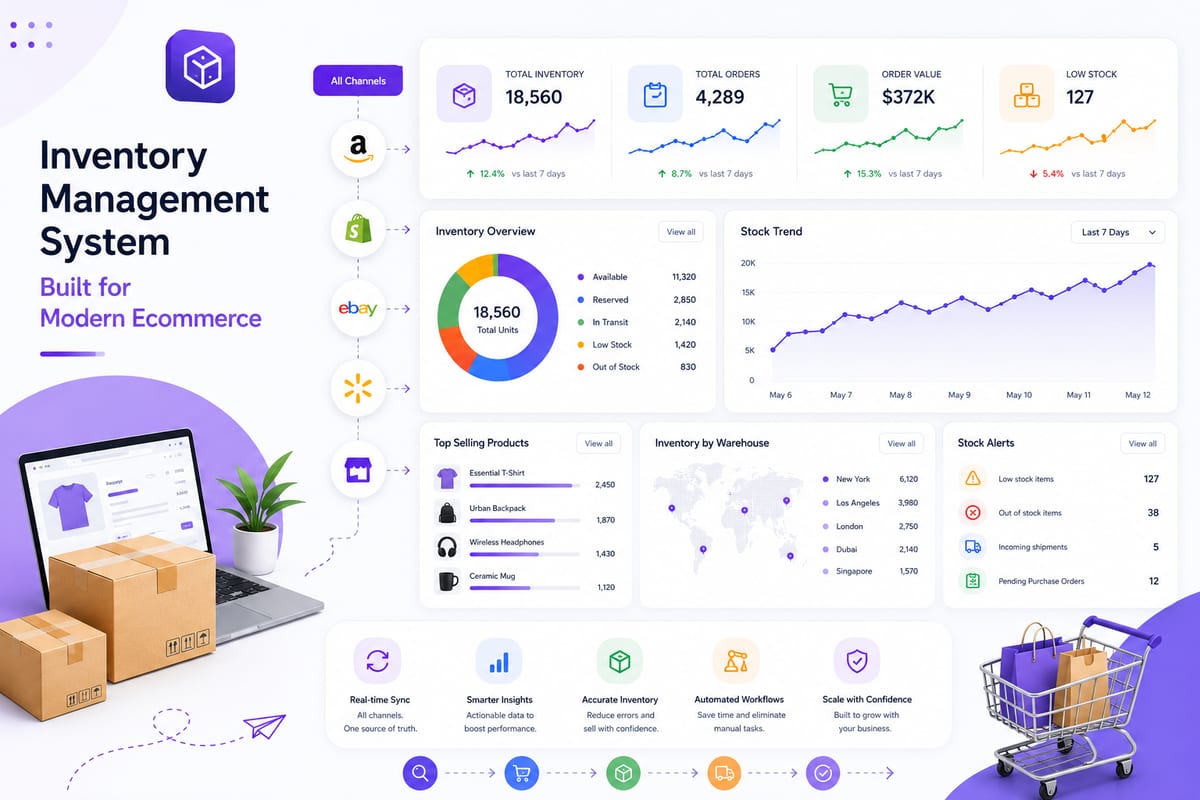
The inventory management system category covers a wide range of tools, from enterprise platforms like NetSuite and SAP to specialized SaaS for specific ecommerce niches. The differences between them matter enormously for which operations they fit. A system designed for industrial manufacturing handles different problems than one designed for multi-channel ecommerce, even when their feature lists overlap. Buyers who do not recognize the distinction often end up with systems that look comprehensive but do not actually fit how their operations work.
This article walks through what an inventory management system needs to do specifically for modern ecommerce operations, the categories of tools that actually fit, and how to evaluate options based on operational fit rather than feature breadth.
What Modern Ecommerce Inventory Management Systems Need
Ecommerce inventory management has fundamentally different requirements from traditional industrial inventory management. The differences shape what a fit-for-purpose system looks like.
Real-time multi-channel sync. Sales happen concurrently across multiple channels. Stock counts need to propagate across channels within seconds, not minutes. Traditional inventory systems with overnight batch processing fundamentally cannot handle this.
Variation-level granularity. Ecommerce catalogs typically include variable products with multiple variations per parent. Traditional systems built around manufacturing SKUs handle variations awkwardly. Ecommerce-native systems treat each variation as first-class data.
API-first integration model. Modern ecommerce operations have stacks of 10 to 30 connected services. The inventory management system needs to expose data through APIs and consume data through webhooks. Traditional systems built around proprietary integration frameworks create lock-in.
Marketplace integration depth. Amazon, eBay, Walmart, Shopify, TikTok Shop, and other channels have specific API requirements, rate limits, and behavioral quirks. Systems with deep native integrations outperform systems with generic middleware connections.
Channel-aware order routing. Orders from different channels may need different fulfillment paths. The inventory management system needs to support routing logic based on channel-specific rules.
Operator self-service. Ecommerce operations move fast and cannot wait for vendor support for routine operations. The system needs operator-accessible audit trails, configuration management, and troubleshooting tools. For broader context, see inventory management.
The Five Categories of Inventory Management System
Inventory management systems fall into five distinct categories. Understanding which category fits your operation matters more than comparing features across categories.
Category 1: Native Storefront Inventory
WooCommerce native inventory, Shopify native inventory, BigCommerce native inventory. Built into ecommerce platforms. Free, simple, sufficient for single-channel operations under 200 SKUs.
Best for: brand new operations, single-channel selling, simple catalogs without variations.
Hits ceiling: when adding marketplaces or growing past 500 to 1,000 SKUs.
Category 2: Single-Purpose Plugins and Apps
Stock managers, bulk editors, low-stock alerters, single-channel sync plugins. Extends storefront inventory with specific features. Best for stores adding modest complexity to single-channel operations.
Best for: operations adding one specific capability gap.
Hits ceiling: when adding 2+ external channels or complex variation requirements.
Category 3: Multi-Channel Sync Platforms
Dedicated platforms handling inventory across multiple sales channels through unified architectures. Designed specifically for the multi-channel ecommerce use case. Nventory.io sits in this category.
Best for: operations selling on 2 to 8 channels with up to 10,000 SKUs and standard operational complexity.
Hits ceiling: when adding manufacturing complexity, multi-currency wholesale operations, or enterprise compliance requirements.
Category 4: Inventory Management Software (Standalone IMS)
Full standalone platforms handling inventory, purchasing, suppliers, and warehouse operations. Connect to ecommerce platforms via APIs but operate as separate systems. Cin7, Linnworks, DEAR Systems represent this category.
Best for: operations with significant inventory complexity but no manufacturing.
Hits ceiling: at the boundary with manufacturing or enterprise complexity.
Category 5: Enterprise Resource Planning (ERP)
NetSuite, SAP Business One, Microsoft Dynamics. Inventory plus accounting, manufacturing, HR, CRM. Right answer at significant scale with manufacturing or multi-entity complexity. Almost always overkill below $10M revenue.
Best for: enterprise operations with broad ERP needs beyond inventory.
For most multi-channel ecommerce brands between $500K and $10M annual revenue, Category 3 is the right fit. This is where most growing ecommerce operations should focus their inventory management system search. For the broader category landscape, see ecommerce inventory software and inventory software.
How to Evaluate Inventory Management Systems
Beyond category fit, specific architectural properties determine whether an inventory management system actually delivers value in production.
Property 1: Sync architecture. Webhook-driven or polling-based. For modern ecommerce velocity, webhook-driven is the only architecture that scales. According to Cloudflare's documentation on webhooks, event-driven sync handles high-velocity inventory changes far more reliably than polling-based alternatives.
Property 2: Integration depth. Native API connections to your specific channels or middleware-routed integrations. Native outperforms middleware for reliability and feature depth.
Property 3: Variation data model. Variation-first or parent-first. Variation-first models handle ecommerce catalogs correctly.
Property 4: Operator self-service capability. Audit trails accessible without support tickets, configuration changes possible by operators, troubleshooting tools available to in-house teams.
Property 5: Data portability. Standard format exports, public APIs, no administrative gatekeeping. Operations retain control of their data.
Property 6: Total cost of ownership. Subscription plus implementation plus ongoing maintenance plus eventual migration cost. The cheapest subscription often has the highest total cost.
According to Wikipedia's overview of inventory management, centralized data ownership across distributed sales channels is foundational to operational accuracy. Inventory management systems that embody this principle while delivering on the six properties above produce dramatically better outcomes than systems that violate them.
The Migration Path Between Categories
Operations typically move between categories as they scale. Understanding the migration paths helps avoid wrong-direction decisions.
Category 1 to Category 2. Stores add a specific capability gap plugin while still operating on native inventory. Easy migration.
Category 2 to Category 3. Stores consolidate stacked single-purpose plugins to one multi-channel platform. Moderate migration requiring 2 to 4 weeks of staging work.
Category 3 to Category 4. Operations adding warehouse management complexity or purchasing workflows move to full IMS platforms. Significant migration requiring 1 to 3 months.
Category 4 to Category 5. Operations adding manufacturing or multi-entity complexity move to ERP. Major implementation typically requiring 6 to 12 months.
Skipping categories usually does not work. Operations trying to jump from Category 1 to Category 5 typically overbuild and underutilize. Operations staying too long in Category 1 when complexity demands Category 3 accumulate operational damage from stacked-plugin chaos.
How Nventory Implements a Category 3 Inventory Management System
Nventory.io is a Category 3 multi-channel inventory management system built specifically for ecommerce operations selling on 2 to 8 channels. The platform implements all six architectural properties, webhook-driven sync, native integrations, variation-first data, operator self-service, data portability, and clear total cost.
The platform connects WooCommerce, Shopify, and other storefronts to Amazon, eBay, Walmart, TikTok Shop, Etsy, and 30+ other channels through native API integrations. Sync propagation completes in under 5 seconds. Variations track at the SKU level. Comprehensive logging is accessible to operators. Data exports use standard formats.
For WordPress and WooCommerce stores, download Nventory free from WordPress.org. For Shopify operations, install Nventory from the Shopify App Store. Both versions connect to the same multi-channel platform with identical capabilities.
The free tier includes the core inventory management system functionality without subscription cost. Setup takes about 10 minutes for the first channel. Paid tiers add multi-warehouse routing and advanced fulfillment workflows for operations approaching the Category 3 to Category 4 boundary.
Common Inventory Management System Selection Mistakes
A few patterns that produce expensive migrations later.
Buying outside your category. Operations buying Category 5 ERPs when Category 3 fits, or running on Category 1 when Category 3 is overdue. Match the system to the operation.
Picking based on feature checklist completion. All vendors check most boxes. Architecture and operational fit matter more than feature breadth.
Ignoring migration paths. Systems chosen for current scale that cannot grow into the next stage force expensive migrations within 18 months.
Underestimating implementation time. Category 4 and 5 systems often take 3 to 12 months to implement correctly. Operations need to plan for this timeline rather than expecting fast deployment.
Not verifying data portability. Systems that lock data create expensive future migrations regardless of current quality.
Final Thoughts
Inventory management system selection comes down to category fit and architectural properties. The category determines whether the system addresses your operational complexity; the architectural properties determine whether the system delivers reliably under load. For most multi-channel ecommerce brands between $500K and $10M revenue, Category 3 multi-channel sync platforms with webhook-driven architecture, native integrations, variation-first data models, and operator self-service capabilities are the right fit. Operations that match systems to their actual scale and complexity produce dramatically better outcomes than operations that overbuy or underbuy.
If you want to test an inventory management system built for the Category 3 multi-channel ecommerce use case, install Nventory on your platform of choice. For WordPress and WooCommerce stores, download Nventory free from WordPress.org. For Shopify stores, install Nventory from the Shopify App Store. Visit nventory.io to review platform capabilities and category fit.
Frequently Asked Questions
Category 3 multi-channel sync platforms for most operations between $500K and $10M revenue. Nventory implements this category, available on WordPress.org and the Shopify App Store.
When you add a second sales channel, cross 1,000 SKUs, hit 4+ hours of weekly reconciliation, or experience your first overselling incident. Any of these signals indicates native inventory has reached its limits.
Probably not unless you are past $10M revenue with manufacturing complexity or multi-entity operations. Most growing ecommerce brands fit Category 3 platforms cleanly.
Category 3 platforms: 2 to 4 weeks for staging plus a cutover weekend. Category 4: 1 to 3 months. Category 5: 6 to 12 months. Match expectations to category.
Yes, when the architecture is right. The free Nventory tier handles Category 3 operations without subscription cost.
Buying outside the appropriate category, usually overbuying to Category 4 or 5 when Category 3 fits. Match the system to the operation rather than buying for hypothetical future needs.
Related Articles
View all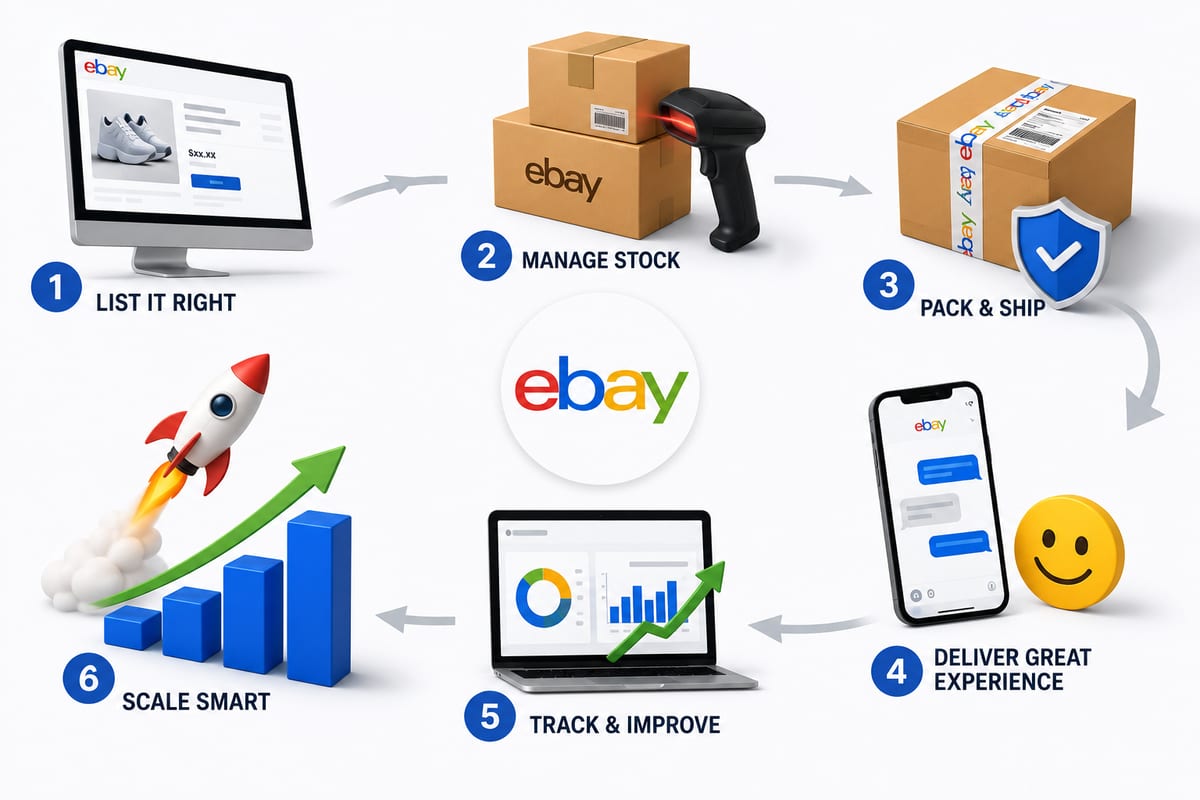
Tips on How to Sell on eBay: Operational Practices at Scale
Tips on how to sell on eBay alongside multiple channels. The operational practices that protect seller standing and produce sustainable margin.
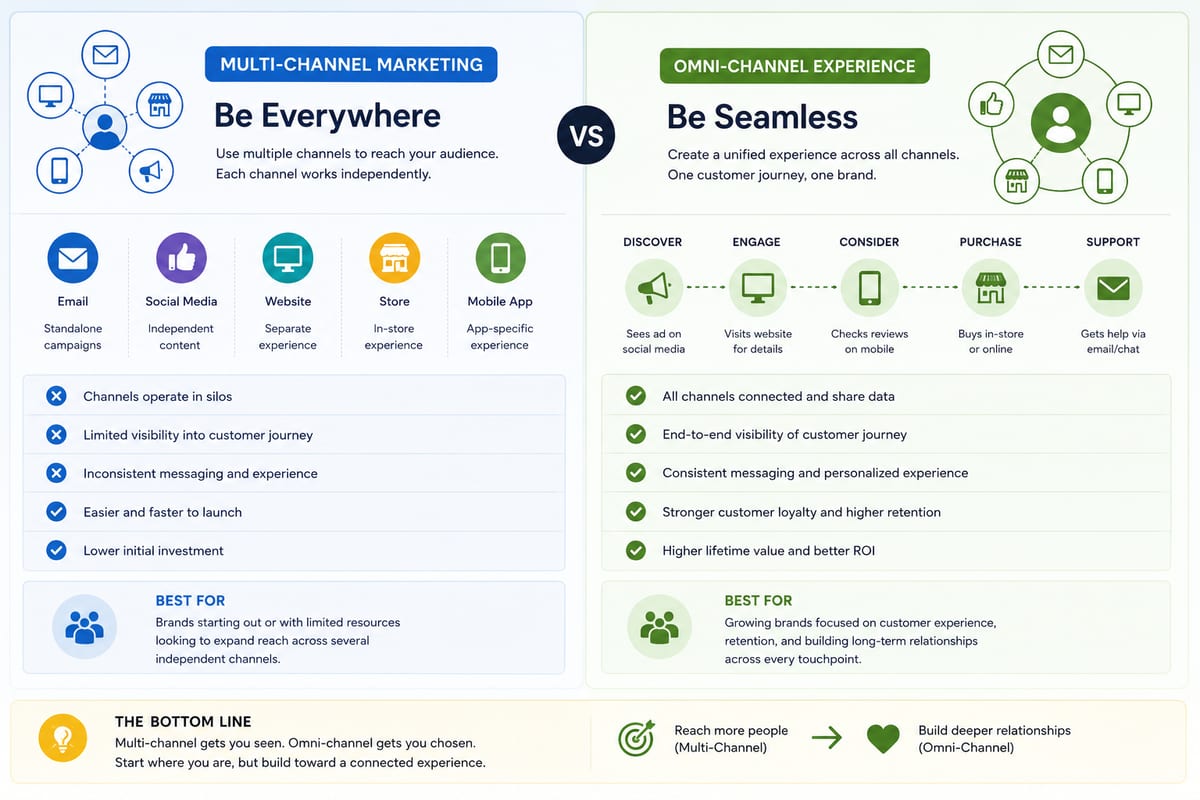
Multi Channel Marketing vs Omni Channel: Honest Comparison
Multi channel marketing vs omni channel breakdown for ecommerce operations. The operational differences that determine which approach fits your business.
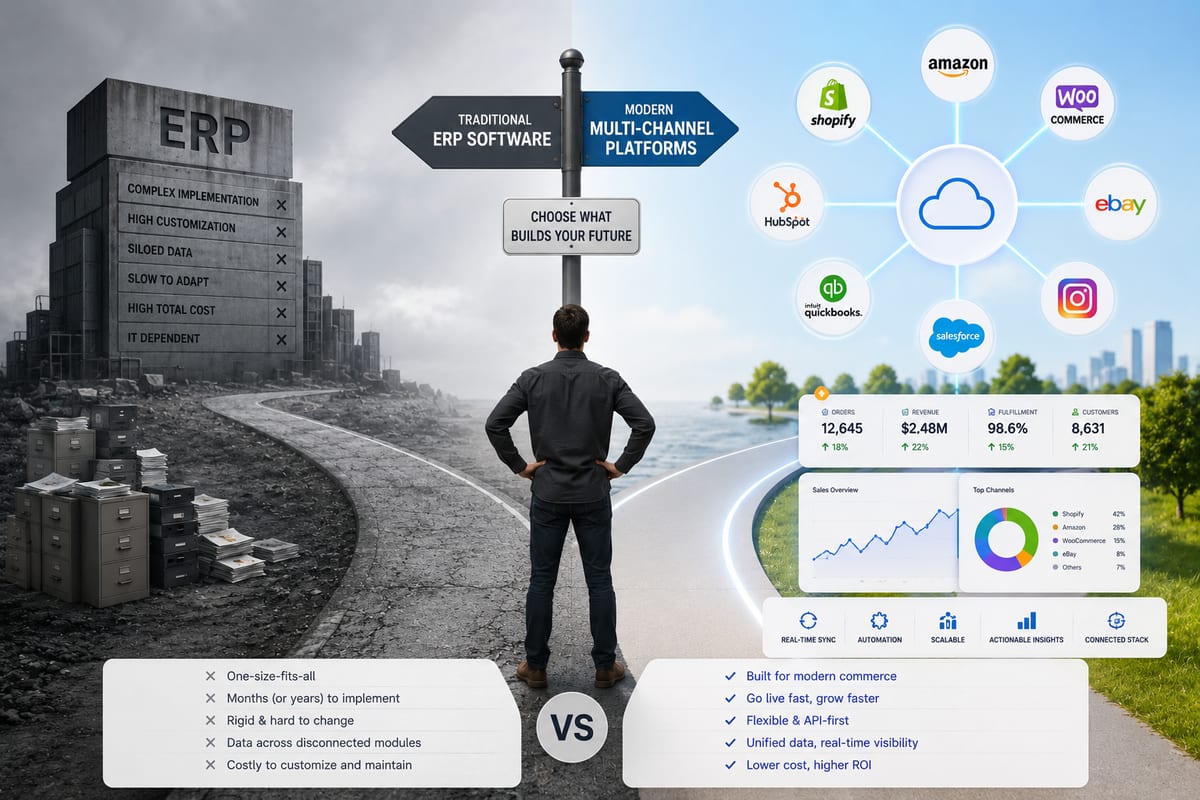
ERP Software vs Multi-Channel Platforms: Honest Choice
ERP software comparison for growing ecommerce brands. When ERP fits and when multi-channel platforms produce better outcomes at lower cost.