Inventory Accounting for Multi-Channel Ecommerce Brands

Inventory accounting sits at the intersection of operations and finance. It is where operational inventory data has to translate into financial statements, tax calculations, and audit-ready records. For single-channel ecommerce operations, the discipline is relatively contained. For multi-channel operations, inventory accounting becomes a coordination challenge that consumes finance team attention and produces year-end surprises if handled badly. Operations that do not take inventory accounting seriously during the year end up doing painful reconciliation work in January and February that should have been automated.
This article walks through what inventory accounting actually requires for multi-channel ecommerce brands, the operational practices that prevent reconciliation nightmares, and how the right architecture makes inventory accounting straightforward rather than painful.
What Inventory Accounting Actually Covers
The discipline includes several specific accounting and operational areas.
Cost of Goods Sold (COGS) calculation. Determining what each unit sold actually cost, purchase price plus inbound freight, handling, and other capitalized costs. The number that determines gross margin.
Inventory valuation method selection. Choosing between FIFO (first-in-first-out), LIFO (last-in-first-out), weighted average cost, or specific identification. Each method produces different financial results and has different operational implications.
Period-end inventory valuation. Calculating the value of inventory on hand at period close for balance sheet reporting. Requires accurate physical inventory data and consistent valuation methodology.
Inventory adjustment accounting. When physical counts disagree with system counts, the discipline of recording adjustments correctly. Write-downs, write-offs, and shrinkage all need specific accounting treatment.
Returns and refund accounting. Returned inventory needs to flow back through accounting correctly. Refunds need to reverse revenue; restocked inventory needs to restore COGS impact; non-restockable returns need write-off treatment.
Multi-channel revenue recognition. Different channels have different fee structures, settlement timing, and accounting implications. Revenue from Amazon shows up differently than revenue from Shopify.
Operations that handle these areas with discipline produce clean financial statements. Operations that handle them sporadically produce the year-end reconciliation chaos that becomes a recurring problem.
Why Multi-Channel Operations Have Harder Inventory Accounting
Single-channel operations have relatively contained inventory accounting requirements. Sales happen on one channel; inventory moves on consistent patterns; reconciliation is straightforward.
Multi-channel operations face several specific complications.
Channel-specific fee accounting. Amazon's referral fees, FBA fulfillment fees, and advertising fees all need accounting treatment. eBay's final value fees, store fees, and listing fees need similar treatment. Each channel has its own fee structure.
Settlement timing differences. Channels remit revenue on different schedules. Some pay daily; some bi-weekly; some monthly. Accounting needs to handle the timing differences correctly for period close.
Refund processing variance. Different channels handle refunds differently, some deduct from future settlements, some issue separate refunds, some have specific dispute processes. Accounting needs to recognize the variance.
Multi-currency complications. Operations selling internationally need to handle currency conversion accounting consistently across channels and time periods.
FBA inventory accounting. For Amazon FBA operations, inventory held at Amazon warehouses needs separate accounting from in-house inventory. Reserved, in-transit, and unfulfillable inventory categories all need treatment.
Channel-specific returns rules. Return windows, restocking fees, and refund timing vary by channel. Returns accounting needs to handle the variance correctly.
These complications compound. Operations without architectural support for multi-channel inventory accounting end up with finance teams doing significant manual work that should be automated. For broader operational context, see inventory management.
The Architectural Foundation Inventory Accounting Needs
Modern inventory accounting requires architectural foundations that make accuracy possible at multi-channel scale.
Centralized inventory data. One canonical source of truth for inventory state that accounting can rely on. Distributed data with reconciliation overhead produces accounting chaos.
Comprehensive audit trails. Every inventory transaction logged with timestamps, channel attribution, and replay capability. Accounting reconciliation depends on this audit data.
Channel-aware fee tracking. Inventory transactions associated with channel-specific fees automatically. Manual fee allocation at period close is the most common inventory accounting bottleneck.
Returns workflow integration. Returns automatically flow through accounting with appropriate revenue reversal, inventory restoration, and disposition tracking.
Multi-currency handling. Currency conversion happens consistently and gets recorded with appropriate audit trail for accounting review.
Open data architecture. Accounting teams need to extract inventory data into their accounting systems (QuickBooks, Xero, NetSuite, Sage). Closed architectures create extraction chaos.
According to Wikipedia's overview of inventory management, centralized data ownership and proper audit trails are foundational to operational accuracy, and for inventory accounting specifically, they are foundational to financial accuracy as well. For the technical side, see inventory tracking.
The Five Inventory Accounting Practices That Prevent Year-End Chaos
Across well-run ecommerce operations, five practices consistently prevent the year-end reconciliation chaos that plagues less-disciplined operations.
Practice 1: Continuous COGS Tracking
COGS for each SKU gets tracked continuously rather than calculated at period close. Each purchase order updates landed cost; each sale references current COGS automatically.
Result: period close becomes faster because COGS is already calculated. Year-end audit becomes easier because the COGS history is auditable.
Practice 2: Channel Fee Allocation Automation
Channel-specific fees get allocated to the corresponding orders automatically rather than reconciled manually at period close.
Result: gross margin calculations are accurate within days of sales rather than weeks after period close.
Practice 3: Monthly Physical Reconciliation
Physical inventory counts compared to system inventory monthly. Variances investigated and corrected with proper accounting treatment.
Result: small variances get caught and corrected throughout the year rather than compounding into large period-end surprises.
Practice 4: Standardized Adjustment Categories
Inventory adjustments classified consistently, damage, shrinkage, returns, write-offs, reclassifications. Each category gets specific accounting treatment.
Result: adjustment data feeds cleanly into financial statements with appropriate classification. Auditors can trace adjustments back to causes.
Practice 5: Returns Workflow Discipline
Returns flow through standardized workflows with consistent accounting treatment. Restocked vs disposed returns get correct accounting classification.
Result: returns do not create accounting drift. The discipline that handles operational returns also handles accounting returns correctly.
How Multi-Channel Operations Implement Inventory Accounting
Multi-channel operations need specific implementation patterns beyond the basic practices.
Channel-by-channel revenue reconciliation. Each channel's settlement reports get reconciled to the order data flowing through the operations system. Discrepancies surface immediately rather than at period close.
Fee structure modeling. Each channel's fee structure modeled in the operations system so fees can be allocated to orders automatically.
Multi-currency accounting. Operations selling internationally need consistent currency conversion methodology and recording.
FBA-specific accounting. Amazon FBA operations need separate accounting for FBA inventory, FBA fees, and FBA-fulfilled vs merchant-fulfilled revenue.
Cross-channel order coordination. When the same customer purchases across channels, accounting needs to handle the customer relationship correctly across the multi-channel revenue picture.
These patterns become significantly easier when the underlying operations platform provides the data foundation. For multichannel ecommerce operations specifically, choosing the right operational platform has direct implications for inventory accounting quality.
How Nventory Supports Inventory Accounting Workflows
Nventory.io provides the operational data foundation that clean inventory accounting builds on. The platform delivers centralized inventory data, comprehensive audit trails, channel-aware tracking, returns workflow integration, and open data architecture.
According to Cloudflare's documentation on webhooks, event-driven architectures naturally produce the granular audit data that accounting reconciliation depends on. Polling-based architectures with multi-hour data lag produce reconciliation gaps that accounting teams have to address manually.
For WordPress and WooCommerce stores, download Nventory free from WordPress.org. For Shopify operations, install Nventory from the Shopify App Store. Both versions provide the same data foundation for inventory accounting work.
The platform's open API allows accounting systems (QuickBooks, Xero, NetSuite, Sage) to consume inventory transaction data directly. This eliminates the manual extraction work that consumes finance team time in operations using closed data architectures.
For ecommerce inventory software generally, the inventory accounting implications are part of the total cost of ownership that buyers should evaluate but often do not.
Common Inventory Accounting Mistakes
A few patterns that produce year-end reconciliation chaos.
Treating inventory accounting as separate from operations. When finance teams use different data than operations teams, reconciliation becomes constant work. Unified data foundations prevent this.
Skipping monthly reconciliation. Operations that reconcile only at year-end accumulate the year's drift into one massive reconciliation project.
Manual fee allocation. Calculating channel-specific fees manually at period close is unnecessary and error-prone. Automation should handle fee allocation continuously.
Inconsistent adjustment categorization. Adjustments classified inconsistently produce financial statement noise. Standardized categories with clear definitions prevent this.
Ignoring returns accounting. Returns are part of the revenue picture. Operations that do not account for returns systematically produce financial statements that overstate net revenue.
Final Thoughts
Inventory accounting for multi-channel ecommerce operations requires architectural foundations and operational practices that prevent the year-end reconciliation chaos that plagues less-disciplined operations. Continuous COGS tracking, channel fee allocation automation, monthly physical reconciliation, standardized adjustment categories, and returns workflow discipline produce financial statements that accurately reflect operational reality. The underlying data foundation matters as much as the accounting practices, clean data makes clean accounting possible.
If you want to test the operational data foundation that clean inventory accounting builds on, install Nventory on your platform of choice. For WordPress and WooCommerce stores, download Nventory free from WordPress.org. For Shopify stores, install Nventory from the Shopify App Store. Visit nventory.io to review platform capabilities for inventory accounting workflows.
Frequently Asked Questions
Operations platforms with comprehensive audit trails and open data architectures, combined with accounting systems that can consume the operational data. Nventory provides the operational foundation, available on WordPress.org and the Shopify App Store.
Weighted average cost is the most common for ecommerce because it handles continuous purchasing and selling well. FIFO is also common. Specific identification fits operations with unique high-value items. LIFO is rare in modern ecommerce.
Monthly is the minimum cadence for serious operations. Weekly cycle counts feed into monthly reconciliation. Quarterly reviews ensure the monthly process is working.
Yes, but with simpler implementation. Single-channel operations can run on basic accounting plus monthly reconciliation. Multi-channel operations need more architectural support.
Mostly, with the right foundations. Continuous COGS tracking, automated fee allocation, and integration with accounting systems handle the bulk of inventory accounting automatically. Exception handling and adjustment classification still need human attention.
Skipping monthly reconciliation. Operations accumulating year-end variance produce reconciliation projects that consume weeks of finance team time. Monthly reconciliation catches variance while it is small.
Related Articles
View all
Tips on How to Sell on eBay: Operational Practices at Scale
Tips on how to sell on eBay alongside multiple channels. The operational practices that protect seller standing and produce sustainable margin.
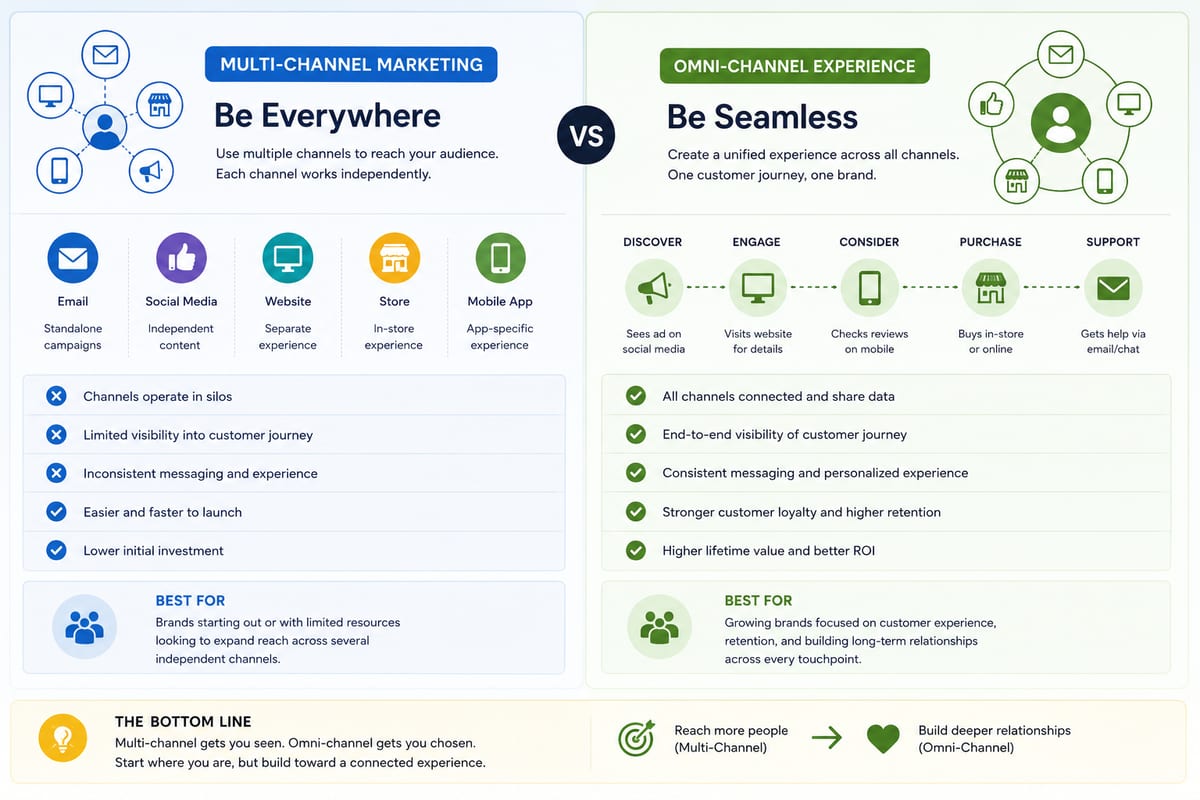
Multi Channel Marketing vs Omni Channel: Honest Comparison
Multi channel marketing vs omni channel breakdown for ecommerce operations. The operational differences that determine which approach fits your business.
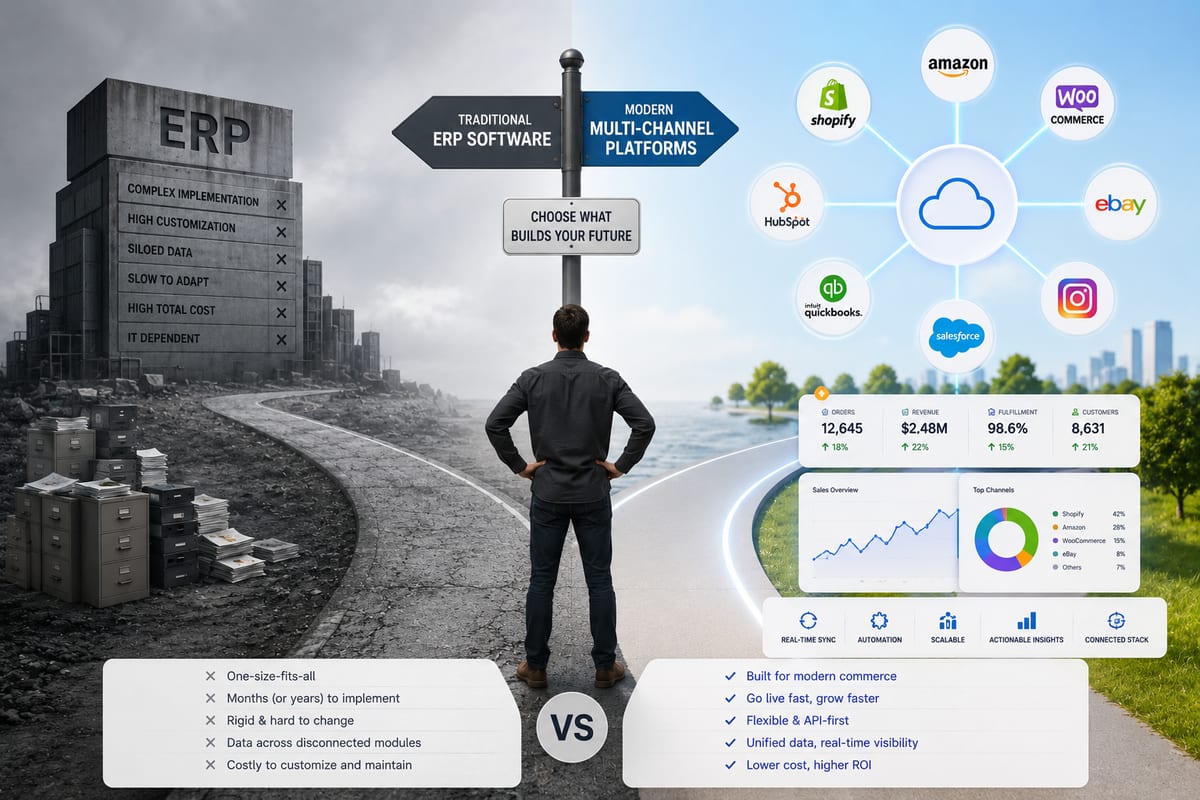
ERP Software vs Multi-Channel Platforms: Honest Choice
ERP software comparison for growing ecommerce brands. When ERP fits and when multi-channel platforms produce better outcomes at lower cost.